
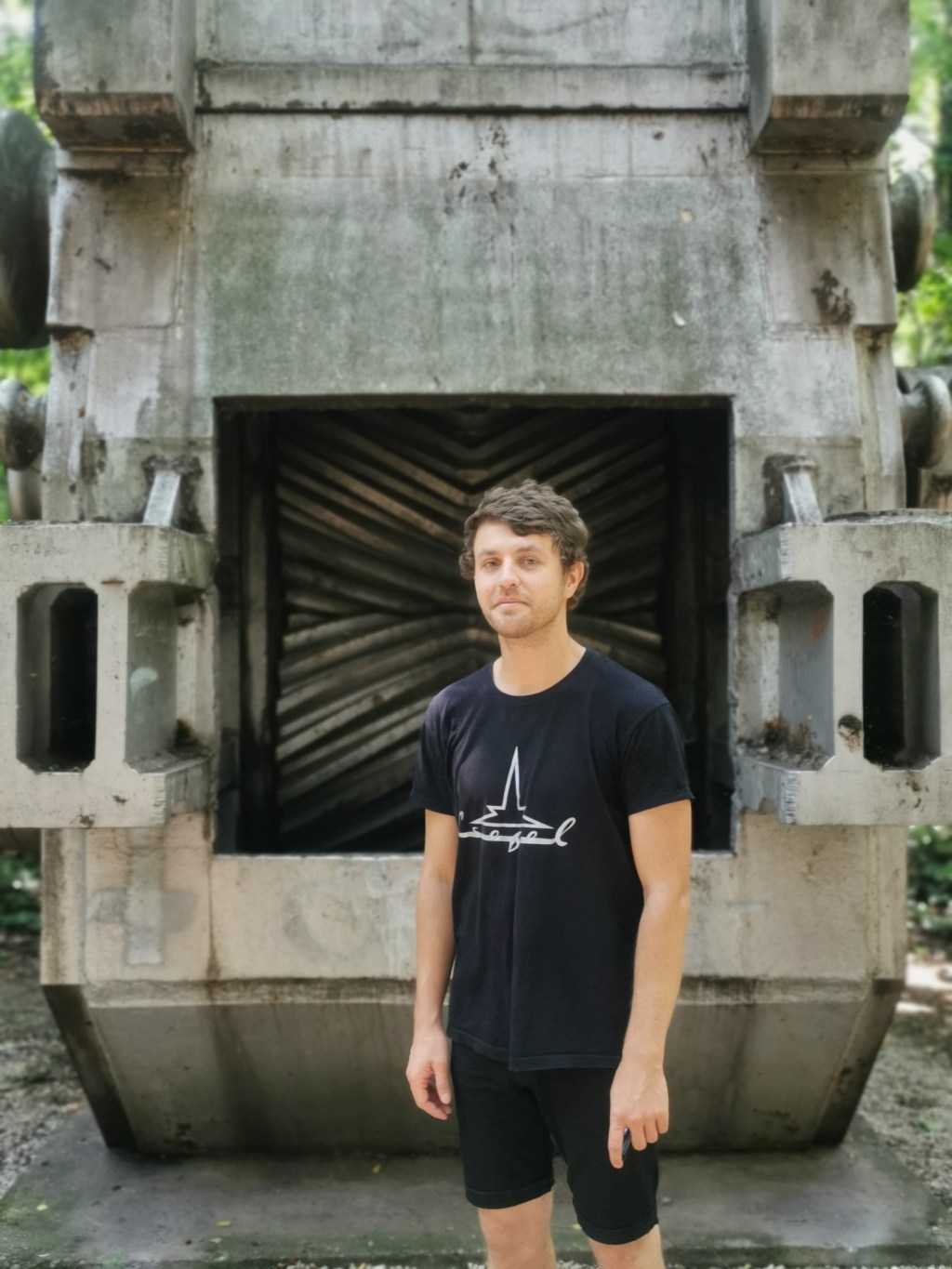
Visionary and prolific, Karim Rashid is one of the most distinctive and influential voices in design today. With over 4,000 designs in production, more than 400 international awards, and projects realized in over 47 countries, he continues to redefine the role of design in contemporary life.
1. What’s the first thing that inspired you to create — and does that source of inspiration still guide you today?
As a child, I was obsessed with the idea of shaping the world around me. I would rearrange my room, sketch futuristic cities, and imagine alternative realities. That desire to humanize our physical world, to make it more fluid, sensual, and poetic, has never left me. I’m still driven by the same impulse: to improve everyday life through beauty, intelligence, function and emotion.
2. How would you describe your current work in three words?
Sensual. Minimal. Vibrant.
3. What role does emotion or intuition play in your creative process?
Emotion is the essence of my work. Design should move us, not just function. Intuition is how I navigate form, color, and proportion. I trust my instincts more than trends or data; they connect me to the universal human experience that design should express.
4. Where do you find beauty in the everyday?
Everywhere, in a plastic spoon, a reflection on glass, a digital interface. I believe the banal can be elevated into something poetic. Beauty is not a luxury; it’s a human need that inspires optimism and connection.
5. How do you balance tradition and experimentation in your practice?
I respect tradition as the foundation. craftsmanship, proportion, and material honesty, but I see it as a springboard, not a boundary. Experimentation is the evolution of tradition. My work merges timeless sensibility with the technologies and materials of our time. I never look back, only forward.
6. What’s one misconception people often have about your work or the art world in general?
People sometimes mistake color and sensuality for superficiality. But my use of color is deeply human with it’s emotional intelligence in form. Design is not decoration; it’s a language of cultural expression and progress.
7. How has technology (or the digital world) changed the way you create or think about art?
Technology has liberated creation. I can visualize and prototype ideas instantly, but more importantly, the digital realm has democratized design and allows anyone to access beauty and participate in shaping culture. AI, 3D printing, and virtual environments are expanding what “making” even means.
8. If you could collaborate with any artist — living or dead — who would it be, and why?
I would have loved to collaborate with Isamu Noguchi and Pierre Cardin infused together. Their work bridges sculpture, design, energy, and philosophy in a perfect harmony of the sensual and the spiritual. We share that belief that objects can be living, emotional presences.
9. What do you hope people feel or think when they encounter your work?
I want people to feel uplifted — to sense optimism, pleasure, and connection. Design should remind us that we are living in the 21st century, not the past. I want my work to inspire people to live more consciously and joyfully in the present. Let go of the past.
10. What’s next for you — any projects, dreams, or directions you’re excited to explore?
Presently I am working on many furniture projects, bathroom products, architecture, branding, shoes, jewelry, housewares, and lighting but I’m exploring new territories, from AI-generated forms to lab-grown materials, from immersive interiors to digital objects. My dream is to continue dissolving boundaries between art, design, and life, to make the physical and the virtual merge into one seamless, poetic experience.
 ART HUB
Leave a comment