
Across all creative sectors it seems that the complex relationship between creativity and mental health is largely ignored in these times with so few empathetic souls even acknowledging that there’s a problem, let’s just say that within the established systems regulating the world of Art, it’s not a pressing issue.
Looking at the pitfalls facing hopeful artists embracing uncertainty who seek inclusion in exhibition participation, to the onlooker it seems that little consideration aforethought is given to the impact upon mental health from standard rejection emails sent from judging panels. The problem with this repeated rejection by email format, where no feedback is available, is that there is an actual very real and vulnerable person on the receiving end of thoughtlessly composed rejection notifications, not a piece of Art work. The perceived value of that ‘rejected’ talent is undoubtedly damaged and undermined by the imposition of each rejection label inflicted upon them, from groups, panels or curators judging the artist’s work. Creators seek acceptance and affiliation into groups and societies for professional recognition and career advancement, but appreciation and understanding of their talent or potential, and indeed them, is not forthcoming, one could say obstructed. Perhaps it’s all about the money, honey! Fees to join groups or enter exhibitions are mandatory where so many enter but few are chosen, and many of the chosen ones are often already members of the exclusive clubs potentially offering opportunity. Artists lucky enough to have been selected to exhibit are faced with the loss of the artwork’s value to them, as high commission fees are deducted from any accepted works sold, simply for the privilege of acceptance and display in the chosen venue.

An Artist’s Bio is now also a standard requirement for competition and exhibition entry alongside the creative submission. These missives are given to judges and curators for their perusal, in order that the submitting artist’s status information may be ascertained, which includes their previous record of acceptability history by other galleries and institutions, obviously putting those without past kudos at a further disadvantage. However, the demoralising standard lines sent in a rejection email are the real bone of contention and a clear red light to mental health danger. The notification may say that, it was a really strong field this year, or that there were so many more entries this time, or that the judging selection process was based on the quality and merit of submissions judged by a panel of experts, or that we chose from an excellent niche few, all of which does nothing, of course, for the mental health of less resilient talented applicants, who will often need additional support in order to continue to create confidently towards success.
Rejection notifications automatically prompt a reaction of disappointment, but when the wording in them is also poorly constructed, inevitably further unnecessary body-blows will affect the health of the receiver. The worst of all lines, ‘we had a strong field’ is used regularly in put downs by ‘judging panels’, which obviously implies that work sent by hopeful talents to them, is of a lesser standard than the works of those chosen by the panel or curator, in their opinion. The key words here are ‘in their opinion’, hold that message.
Beware those who are quick to judge
C.Bukowski
Here emotional resilience and a clear Joe Root type swipe is needed to rebound and reinforce personal Zen, checking the essential shield of personal boundaries is in place to rebalance what is given and how it is received. The alternative to these unsuccessful random applications is of course, to seek other positive routes outside of the recognised Art establishments.
This approach would take a free-thinking spirit, courage, support, research and possibly cash. This pathway has been the chosen route of many artistic greats historically, whose talents have been consistently rejected and ridiculed by the establishment of the day. Charles Bukowski, a writer challenged by his own mental health issues, wrote memorable and wise words from his own soul-searching, which resonate anew with audiences today:
Your life is your life
Don’t let it be clubbed into dank submission
Be on the watch, there are ways out
There is a light somewhere
It may not be much light but it beats the darkness
Be on the watch, the gods will offer you chances
You are marvellous
The gods wait to delight in you
C.Bukowski
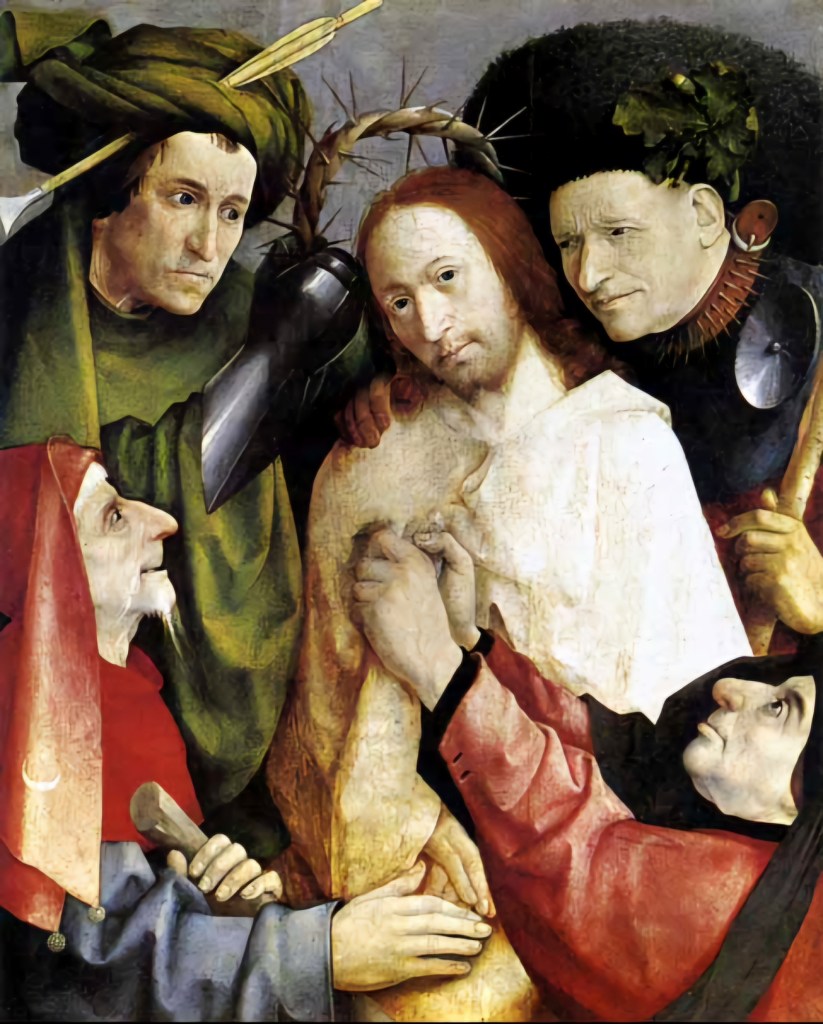
Among the many who suffered continued rejection and fought mental health issues, but were later revered by all establishments, and indeed the world, were the incredible works of troubled souls, Hieronymus Bosch and Vincent van Gogh. Both transcended mental health difficulties and went their own way in the face of cruel criticism of both their character and their craft from institutions, and, against all odds, achieved personal creative success in their lifetimes, note that I didn’t say financial success. Art was not only their precious gift and their life, but also their saviour in dire circumstances. When talented colourist George Seurat lost his son he consumed himself in colour theory development which he practised in his paintings. It served as a means of therapy and recovery for him at a time of loss and trauma, in addition to fostering excellence in his Fine Art.

I would argue that a more sensitive and considerate approach is needed towards artists in all sectors, than the one adopted at present by those in a trusted capacity passing judgement on creative talents today who have submitted their works hopefully and in good faith.
Beware the knowers,
Beware those who are quick to censor
They are afraid of what they do not know
Not being able to create art, they will not understand art
They will consider their failure as creators, only as a failure of the world.
C.Bukowski
Unnecessary discontent and confusion may be avoided by analysis of the varying current definitions of what is described as ‘contemporary’ Art, before submitting any work anywhere, if contemporary is a preferred genre as a Fine Artist. This term has become an ambiguous label in the Art-world today where understandings of the definition of ‘contemporary’ may be misunderstood by the submitter. Interpretations may vary!
Much newly-created Art advertised under this label falls outside of the anticipated experimental or innovative expectations of the new, where works often visually reiterate familiar subject-matter, skills and techniques, but lack different outcomes. The question of direction for all creators seeking personal development of their practice may be the decision-dilemma of whether to follow existing routes endorsed by establishments, walking approved pathways, or whether these options are seen as incompatible with a personal set of artistic goals and preferences, opting to explore the open road of possibilities. Following, not leading from the front may be a challenge if your inclinations differ. Adherence to current trends of accepted thinking within Art organisations on the off-chance that the dice may roll in your favour, should prompt further personal introspection at the crossroads. ‘Out of the in-box’ thinking may leave artists excluded from group exhibition acceptability and increase pressure to please curators and institutions at any cost. Neither does it take into account learnt experiences or possible recurring limitations of judgement in assessors, who may consistently lean towards choices appealing to their own sense of familiarity in any decision-making, leading to rejection of works presented by artists, whose personal style and development falls outside of known cycles of preference, in a sort of groundhog day scenario.
Nothing grows under big trees
A. Rodin
Gallery sponsorship sources may also need clarification, but a few brave independent galleries are prepared to give a platform to the unknown, the unaffiliated and the obscure. A search for these gems in the dark caves of this niche industry may well be worth the effort, not only for the exhibiting opportunities offered, but also for the mutual support potential from like-minded creators seeking the same, with an awareness that there is a fragile balance between hope and despair where mental health issues are involved, be they innate or induced. ‘Kafkaesque’ has become a by-word for surreal and inexplicable experiences. The term heralds from the written art of Frank Kafka, whose own mental health struggles and self-worth challenges formed the foundation of his extraordinary writing. Anne Sexton explored the bi-polar and depression issues which plagued her life through her poetry in an attempt to comprehend what was happening to her, as did talented authors Edgar Allan Poe and Virginia Woolf, who both suffered the same diagnoses, but left us a rich legacy in their wake, as did a plethora of other tortured talents.
One creative genre providing an empathetic platform in print is receiving increased exposure and praise. The world of the Graphic Novel with appealing new formats, uses story-telling with illustration to communicate how mental health affects our life journeys and creativity. These works often draw inspiration from shared personal experiences, offering a source of support through publications. Graphic books and comics are filling a gap where consideration of impactful mental health issues, have ceased to be a priority elsewhere within the Arts. Relatable characters are given a voice in print, sharing emotional responses within their real or perceived realities, or imagined scenarios. Below, a few examples from a large selection of graphic writings addressing challenges in mental health today, and the complex life journeys emanating from them.

Marbles: Mania Depression Michelangelo and Me, by Ellen Forney. This graphic novel highlights living with bi-polar as a creative. Ellen brings to light the highs and lows of the condition and the impact of medication on her own artistic skills capability and mood changes, and although first published in 2012, is relevant today.

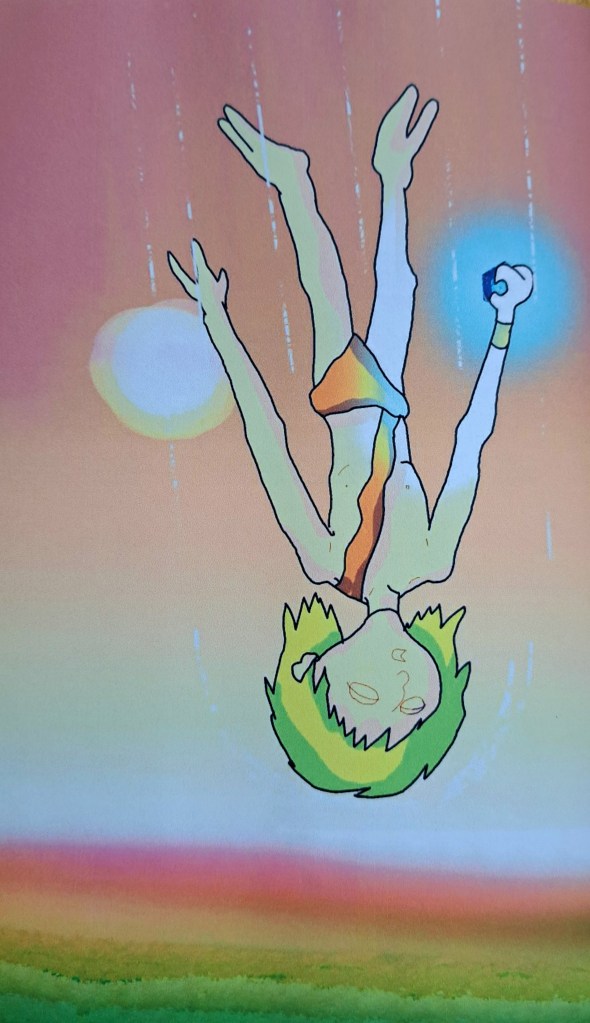
Tales of Mestrya, Book 1: Krochus Quest by Joey S. Hutton, published 2025, is a unique 300 page graphic novel in hardback from Orbus Studios. Beautifully illustrated, the book follows Krochus on his life journey and adventures. He undertakes brave decision-making, shedding inhibitions and fear to ultimately achieve personal fulfilment and reunion with unconditional love and support. A cast of diverse characters are met on-route who influence in different ways, making the characterisation and inter-relationship formations in this work colourful, complex and identifiable.
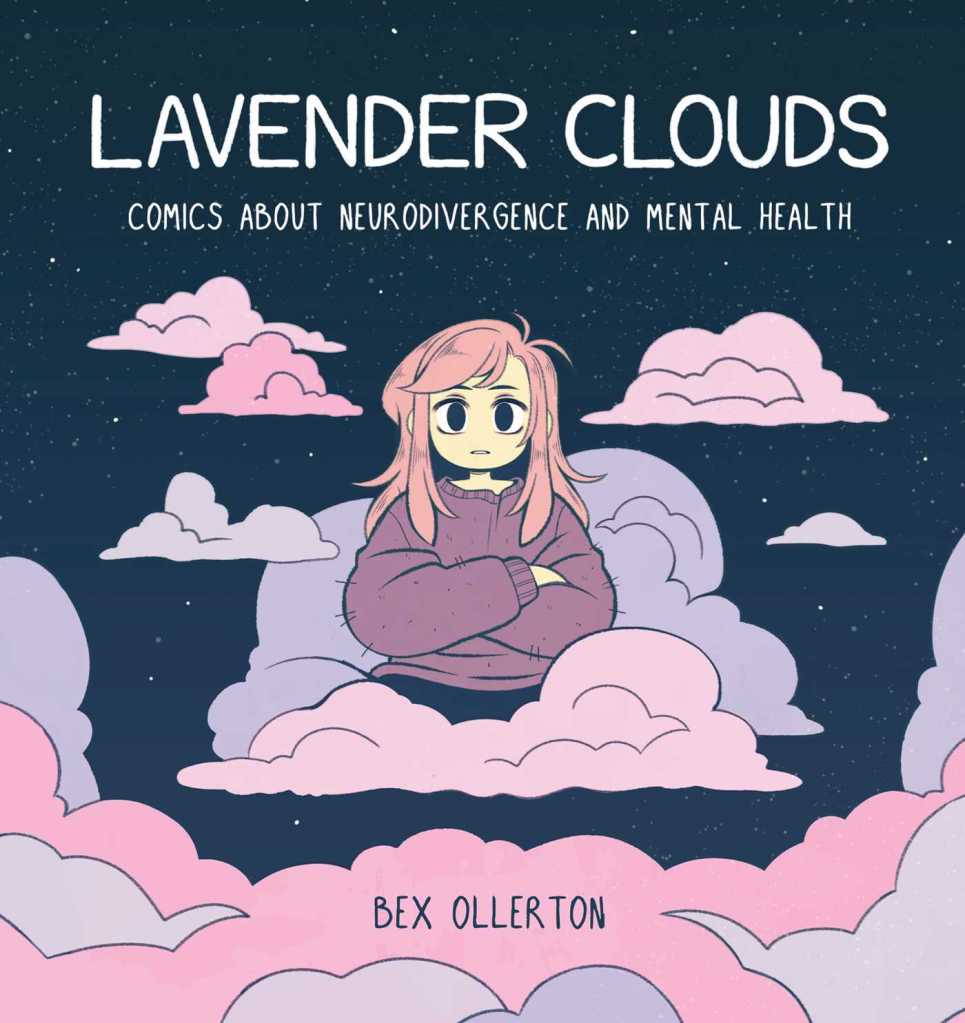
Lavender Clouds by Bex Ollerton, published 2024, is a brave graphic comic which outlines her own personal neuro-divergent experiences, highlighting the lights, darks and the colourless within Autism and ADHD. With beautiful and sensitive illustrations this publication offers resilience solutions from the author’s own experiences.
Theatre and dance have their own intense challenges often linked to anxiety, but that is a piece for another day!
Be true to yourself.
Deanna de Roche 2025


 ART HUB
Leave a comment