
Movement has always been a core aspect of human experience, yet it’s often missing from the design of everyday objects. While many objects may appear light or dynamic, they are typically static. This is where kinetic design comes in, where motion is deliberately integrated into an object’s structure and purpose. Kinetic design has the potential to change the way we interact with the world, making our daily routines not just more practical, but also more engaging. From the delicate balance of Alexander Calder’s mobiles to the captivating movement of Theo Jansen’s Strandbeests and the poetic energy of Amsterdam-based Studio DRIFT, kinetic art has long fascinated both designers and artists. Today, a new wave of innovators is redefining movement in design, exploring how motion can elevate both aesthetics and function.
The Evolution of Kinetic Design
The integration of movement into design has been explored for centuries, with artists and architects experimenting with kinetic elements to create structures that interact with their surroundings. As Jasia Reichardt explains in her article Kinetic Masters Feature Exhibition Art on the Move, for Kinetica Museum’s feature exhibition at Kinetica ArtFair 2010, kinetic art involves two types of movement: real and illusory. Real movement refers to objects in motion, while illusory movement occurs when a spectator moves in front of a static work, causing it to appear as though it is changing. Reichardt notes that all kinetic art undergoes transformation, operating on multiple levels and creating a more complex and engaging experience for the viewer, who may wonder if they have seen everything the work has to offer. This shared characteristic can be seen in works ranging from Julio Le Parc’s focus on formal anonymity, Alexander Calder’s air creations, to Bruce Lacey’s cautionary robotic sculptures, which warn humanity of the consequences of its own actions. Reichardt further observes that the term “kinetic” broadly refers to motion, but its application in various art forms has become so vast that providing a precise definition has become challenging. Kinetic artists demonstrate diverse techniques for releasing movement, showcasing the wide range of expression.
A series of pioneering kinetic art exhibitions was also organised by the Kinetica Museum, which has played a significant role in advancing public understanding and appreciation of kinetic, electronic, and new media art. Founded in 2006, the museum has provided a vital platform for artists exploring the convergence of science, technology, and motion in art. Through its exhibitions, the museum has helped to position kinetic art within a broader cultural and technological context, inspiring new generations of creators, which is closely connected with the development of future initiatives such as the InterPlay24.
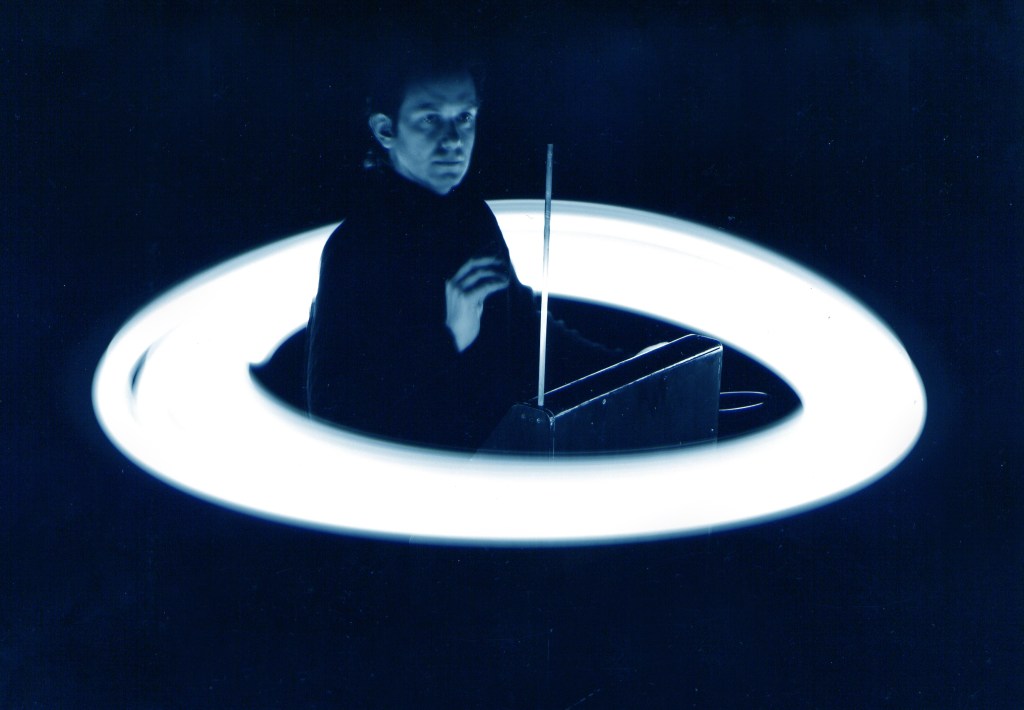
InterPlay24: a competition for creativity and innovation
InterPlay24, an annual competition hosted by the Design Education Trust, encourages students to push the boundaries of kinetic aesthetics by integrating movement into consumer products, emphasizing ‘4D design,’ where motion is integral to both form and function. Launched in 2023, the competition supports young talent and inspires greater focus on kinetic aesthetics in design education. The inaugural INTERPLAY Kinetic Design Competition featured a panel of expert judges, including Alec Robertson (4D design), Rosemarie Fordham (arts psychotherapist), Dianne Harris (kinetic artist and Art Director Kinetica Museum), sculptor David Worthington, and Jason Bruges of Bruges Studio. The 2024 edition, InterPlay24, aligned with the ‘Cyber-Physical Workshop’ of the joint RCA and Imperial master’s courses, tailored to support the competition’s goals. One of the key drivers behind the growing accessibility of kinetic design is material innovation, with advances in lightweight composites, shape-memory alloys, and responsive polymers enabling designers to incorporate motion in ways once thought impractical. The rise of robotics, machine learning, and AI has further made kinetic experimentation more feasible. The Major Award of the InterPlay23 competition was awarded to ‘Urban Elegance,’ a design for a pedestrian crossing that makes an artistic statement by showing that functional designs can also embody cultural value without sacrificing usefulness.
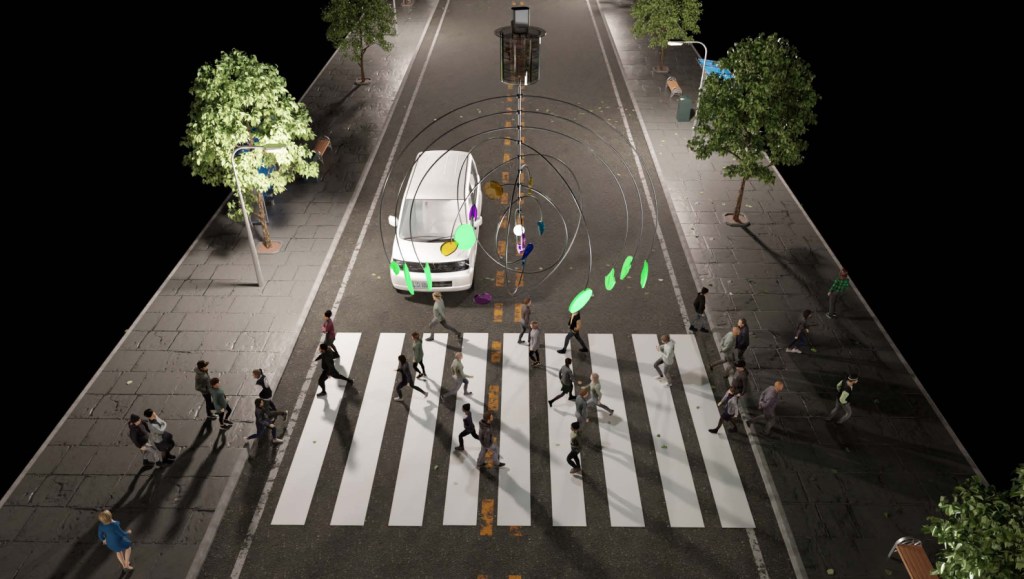
Urban Elegance draws inspiration from Alexander Calder’s mobiles and the dynamic energy of Tokyo’s Shibuya Scramble Crossing, blending the concepts of orrery planetariums and mechanical models of the solar system with elements of the first traffic lights from 1868. This design goes beyond a traditional pedestrian crossing, making more of an artistic statement. While it may seem more like a future concept, it envisions a time when all vehicles are autonomous and controlled by the system, still incorporating traffic lights at the end for safety. The project aims to enhance the anticipation felt while waiting at a traffic light, transforming an ordinary pause into a cultural experience. However, real-world testing will be necessary to ensure it doesn’t inadvertently encourage distracted behavior, as pedestrians must stay attentive while crossing. With advanced gear calculations, wireless communication via microcontrollers, and precise mechanical design, Urban Elegance strives to merge artistic expression with everyday functionality. The challenge will be balancing engagement with safety. The full-scale working design was showcased by Joe Jones at the Hockney Gallery of the Royal College of Art in July 2024.
The Impact of InterPlay24
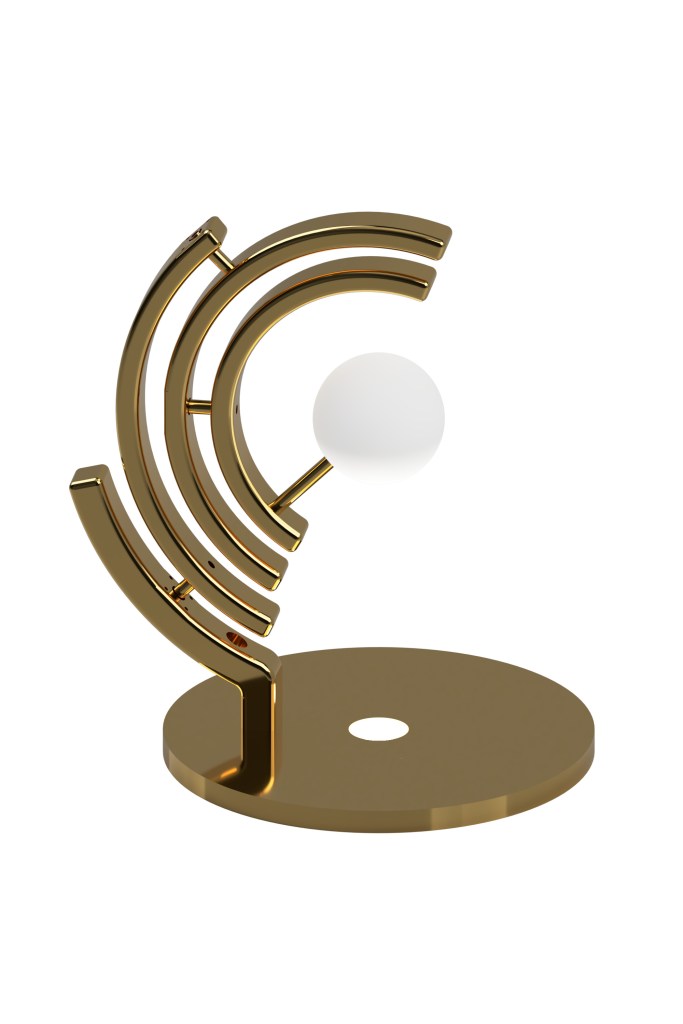
InterPlay24, was the second exciting design competition hosted by the Design Education Trust. It awarded first place to Planetary Projector, a hybrid art piece and tabletop lamp designed by Liu Guannan and Tong Zhang (MA/MSc Innovation Design Engineering joint course of RCA/IMPERIAL). Drawing from their backgrounds in interaction design and engineering, the designers explored the beauty of chaotic motion, noting that “everything is chaotic” yet “there is also certainty within the chaos.” Inspired by the pendulum, often found on desks as a motion sculpture or in physics classes to demonstrate chaos theory, they combined this concept with models of planetary systems, where “everything orbits around a center point.” In one state, the Planetary Projector moves unpredictably, aiming to “bring peace of mind to the observer.” When manually adjusted, it locks into a stable position with a “satisfying magnetic snap,” transforming into a lamp that casts a soft, diffused glow. Through extensive prototyping, including early versions made from Lego and wooden pendulums, the designers refined their vision, ultimately centering the structure around a star illuminated by a spotlight at its base. Its design “embodies the duality of chaos and order,” inviting users to find beauty in randomness and balance. This beautiful kinetic design proposal for a sculptural table-top lamp is being developed into a final full working prototype and to be more interactive. This was exhibited at the Royal Society of Sculptors on 20th and 21st May 2025.
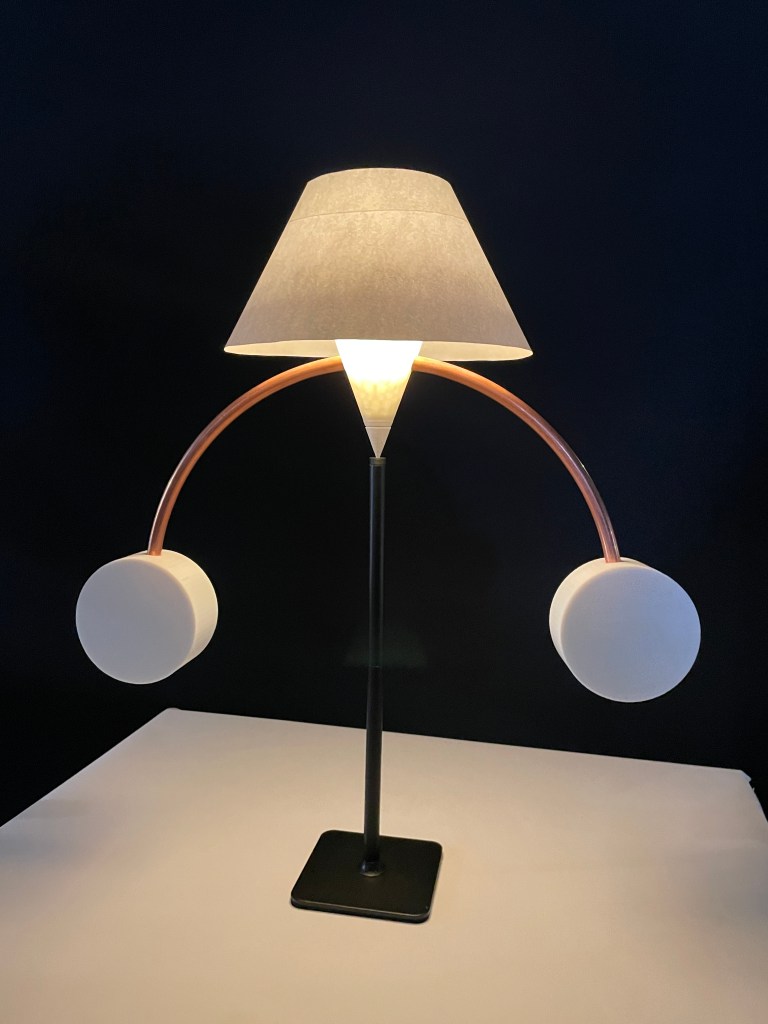
Second place of InterPlay24 went to Balance Lamp by Alex Clark, a design that transforms a simple act into a meaningful experience. The lamp only switches on when it is delicately placed on a single, almost impossibly small balancing point, requiring the user’s full attention. “Balance is the key,” not only in its physical form but also in the way it engages the person interacting with it. By demanding focus, Balance Lamp turns an everyday action into “a quiet discovery,” reminding users of the delicate equilibrium present in both design and life itself. It enriches the user’s life, offering a moment of pause amid the fast-paced rhythm of modern cities, where people are often rushed by routines, goals, and responsibilities, sometimes without a moment to sit or someone to talk to. This lamp becomes more than just an object; it acts as a silent companion, one that “shines when we reach peace.” Unlike typical mass-produced lamps, which often lack a personal narrative, this design carries a story, one that speaks not just through its function but through the interaction it invites. By requiring focus and balance to be seen, it transforms an ordinary act into something meaningful, creating a quiet connection between the object and its user.
Alec Robertson, Director of the InterPlay competitions, points out that aesthetic motion is often neglected in design, despite its ability to enrich our daily experiences. By merging artistic expression with engineering precision, the competition encourages the creation of objects that not only serve practical purposes but also captivate, engage, and inspire. It envisions a future where the objects around us—furniture, tools, and everyday items—are more kinetic, more playful, and almost creature-like, accompanying us through the rituals of daily life. InterPlay24 champions a 4D approach to design, complementing traditional 3D sculpture and 2D visual art. At its core, the competition promotes elegant movement as a powerful and underutilised design language that deserves greater attention in contemporary design practice.
Further information
4D Design – https://www.4d-dynamics.net/whatis4d.htm
Urban Elegance – https://www.josephsmjones.com/urban-elegance
Planetary Projector – https://www.youtube.com/watch?v=S1GmNUhItPQ
Balance Lamp – https://www.youtube.com/watch?v=qmYdCLd_IA4
The Design Education Trust – https://www.designeducationtrust.org.uk/competition/
InterPlay Competition Awards – https://www.youtube.com/@InterPlay23
Studio Drift – https://studiodrift.com/work/shy-society/
Guggenheim Museum – https://www.guggenheim.org/artwork/745
Kinetic Art – https://www.kinetica-museum.org/kinetica/about-us.html
‘Art On The Move’ by Jasia Reichardt – https://www.kinetica-museum.org/exhibitions/selected-essays/jasia-reichardt-kinetic-masters—art-on-the-move.html
Cyber-Physical Systems Workshop – https://youtu.be/F8J6L_X2jtA?si=iCFtdrgU0qiMZQhu


 ART HUB
Leave a comment