
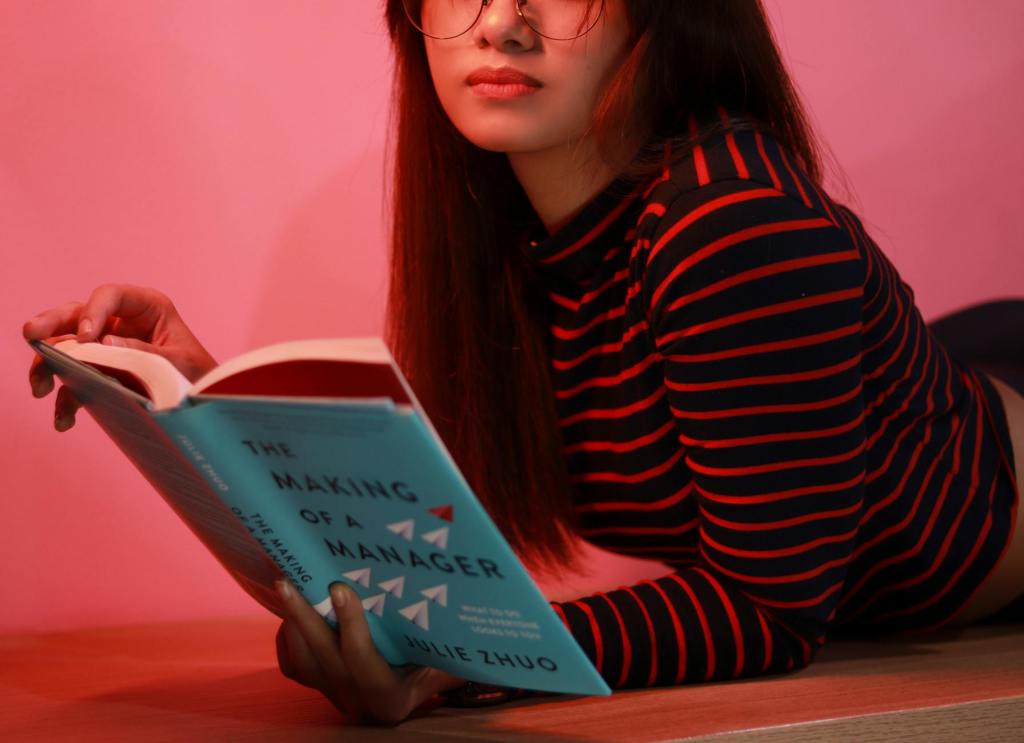
by Małgosia Cygan
—Hi, I’m Robert!
—And I’m Kitt!
—Who wrote you?
—Ah, listen, you won’t believe it.
—Come on, tell me!
—The author, from this city!
—Impossible! How did he do?
—Not great, because I have no personality.
Creating characters is like giving your imagination feelings and passing your emotions onto them. Every hero or heroine is not just a name and a few physical traits, let alone cliché dialogues delivered at the worst possible moment. A character is a collection of experiences and emotions, dreams and failures. It’s a moral backbone—or lack thereof—political and religious beliefs, and everything that makes a person real.
But how many characters from all the books or films we’ve encountered do we actually remember? Probably not many. And why is that? Well, let’s think.
Let’s consider a hypothetical story: a man—let’s call him Steve—has an idea for a book. He sits down in a café with a notebook. Raindrops trickle down the windowpane. Stevetakes a sip of hot coffee while staring at the blank pages set on his lap. He has drawn two columns. One titled “plot,” the other “characters.” Both are empty, even though this new idea has been bugging him since morning. He starts jotting down a rough outline of the plot and after filling two pages, he finally looks at the “characters” column. Still empty. It hasn’t magically filled itself “in the meantime.” He grimaces and comes up with names for an unidentified group of people who are supposed to face challenges in the world he’s imagined. Whew, tough job, but done. There’s the main character Mark, his friend Henry, some random Fred, and of course there has to be Jessica, so Mark has someone to jump into fire for. Steve smiles to himself, satisfied, and returns to refining the plot, assuming the characters’ personalities will “shape themselves.” Let’s assume that eventually the book hits the bookstore shelves. The plot is brilliant, compelling, captures readers’ hearts—and yet critics are disappointed.
Again, the question arises: why? The plot was fantastic! True, but when you push a snowball down a hill, you’re not just interested in which direction it rolls, you want to know whether it’s growing, shrinking, getting dirty, or falling apart. Maybe it even veers off-course and crashes into a tree. We focus not just on the snowball’s path, but on what happens to it along the way.
It’s the same with characters. The plot drives the characters just as much as the characters drive the plot. They must be dependent on each other, otherwise the story may leave the reader unsatisfied. What’s the point of the characters winning a great battle if the heroine makes the exact same stupid mistake at the end as she did in the beginning? Seriously, girl? You learned nothing over 800 pages? Hmm… maybe there’ll be a sequel…
A satisfying plot is one that shows spiritual or emotional growth in the characters. Of course, that’s not easy to pull off, and main characters often fall into the trap of what I call the SOS: stereotype and OverStatement
And here, for the third time, we ask: why?
A girl offers her hand to a man… he won’t shake? What a shame…
Creating characters can become a real burden if everything else in the text fits—except the humans who are supposed to carry the plot forward. This issue only gets worse if you start building characters during the editing phase, when it should have been the first step!
How a character is perceived depends even on the narration style. Let’s return to our hypothetical author, Steve. If he writes his novel in first-person narration and includes a line like “I’m the best warrior of this generation,” we understand that Mark—the main character, whose perspective we’re in—is someone with a high opinion of himself. If he repeats this often, without any narrative support, we also know Markprobably has an inflated ego and might be an egotist (or the author aimed for something and failed). On the other hand, if Steve wrote the same line in third-person omniscient narration, it wouldn’t tell us much about the character, just something about the author’s writing skills. And narration is one of the first decisions in writing! Okay, maybe the second, right after necessary research.
Exactly! Research!
Typing into Google “most effective poisons” or “how long does it take a person to bleed out” isn’t the be-all-end-all of research. It’s not just about collecting information. Research is also observation and the attempt to understand. Neglecting this leads to poor character development. May publishers protect us from female characters written by men who failed in the subject called “understanding women.” I’m not trying to discriminate anyone here—male characters written by women are also sometimes hilariously off—but more on that later.
This all comes down to a lack of understanding or even desire to understand the other side. Women differ from men, and men differ from women. This is no grand revelation. What seems obvious to one side might not be so clear to the other, and that’s perfectly normal. It’s what gives us different perspectives and diverse reactions to life’s problems. It would just be nice if these differences were reflected in characters, bringing variety to the narrative. Easier said than done. “How am I supposed to know how Jessica would react to Mark’s flirting?” Steve would ask. Well, dear Steve, you decide on how she reacts—just don’t shove her into a stereotype, or everyone, especially your female readers, will feel disappointed.
There are certain and common traits (though not always!) found in female characters written by men: here comes the SOS again—stereotype and overstatement. A female character is either innocent and slightly dumb or a badass with the personality of a man—with boobs (big ones, naturally, be respectful). These women often lack any real personality or are entirely dependent on the male lead.
Take Jessica in Steve’s novels – she’s only there so Mark has someone to fall in love with. Would the book lack anything without her? Probably not. And that’s really sad—especially for the female audience.
We’ll never fully understand the opposite sex, but maybe we can try? Maybe listen a little? Or perhaps read two or three books written by women from a female perspective? Just a suggestion.
I’m petite and silly, he’s perfect, nothing less—what comes out of it? Probably publishing success…
So you don’t think I’m only criticizing men—male characters written by women are sometimes more laughable than kids’ cartoons adults secretly enjoy.
In that case, though, the problem is usually not lack of understanding—but the desire to make money. Because stereotypical male characters sell ridiculously well! You seetall, handsome, dark-haired, mysterious. What do you do? You buy it!
But ladies… how long can we keep this up?
When I got back into reading a few years ago, books with this kind of male protagonist were my favorites. After dozens of muscular, roguish manipulators, I started to feel a little bored. But at first? I was SO hooked! I spent quite a bit of money on it too.
So, what’s the difference?
Men describe women as they think women think, while many female authors (again—not all!) don’t care how a real man might react. They write as they wish he would react. And that’s exactly why romance novels written by women are often accidental guides titled: “What She Actually Wants.”
You walk into a bookstore’s “women’s section” (whatever that means—men can read romance too, right?) and see a row of naked chests on the left, and cute cartoon couples on the right, where the man is always a head taller than the woman. And you start to wonder: “In how many ways the same story can be told?” The answer? As many as it takes for you to realize you’ve seen it all before. That’s when you start to notice just how harmful stereotypical characters can be.
A guy is a walking red flag? Marry him! He can’t be that bad!
The word “pretty” can mean both “beautiful,” and “quite”—as in “pretty ugly” or “pretty awesome.” It’s ironic how fitting this is when applied to how female readers view stereotypical male characters. He’s “pretty ugly” on the inside, but we only see “pretty” because he’s tall and leaning against a doorframe.
By the way, isn’t it fascinating how books can objectify both women and men—even though they’re just ink on dead trees?
At first glance, the hypothetical John—the main character in a book written by fictional Josephine—is practically perfect. Handsome, tall, caring, loyal. And to make him less boring? He’s incredibly mysterious. This builds tension, creates uncertainty. But in real life, a guy like John might not be such a great catch. Mysterious often means secretive, dishonest, or manipulative. “But he said he’d love her in this life and the next!” So what?
A mature reader will put the book down; aware it’s fiction and that certain tropes exist to drive the plot. A less mature reader might take it as an ideal man and model her expectations accordingly. He lied to her, yeah, but nobody’s perfect!
If it was just one book, clearly marked with proper age-rating, it wouldn’t be an issue. Everyone has the right to create whatever character they want. The problem is that this trope has become a highly marketable stereotype. Books create a specific standard for both men and women—and it’s not always healthy.
So, why do we love toxic characters so much?
For the same reason we read Christmas books in winter and beach reads in summer—we’re drawn to a particular mood. It’s a literary version of a horror movie. We seek the unknown, the adrenaline spike, the thrill of uncertainty. Toxic characters often come with a set of genuinely desirable traits. The hard part of writing is balancing them. We all have flaws—that’s what makes us human. But how they’re distributed compared to a person’s virtues determines if someone is “good” … or not. If Josephine slaps a flaw onto her male lead just to make him “more realistic,” she might accidentally turn him into a toxic manipulator. If that one flaw leads to a single fight in the whole book, causing a temporary breakup—is that relationship even worth saving?
You think you see the shadow of a psycho killer—turns out it’s just the neighbor’s babysitter.
Now, since we’re talking about toxic characters—which, as we know, we absolutely adore—maybe it’s time to consider the villains in novels. Because they’re evil, right? But really—why? Why is the handsome, mysterious, toxic antagonistconsidered evil, while the handsome, mysterious, toxic protagonist is not? What sets them apart?
Well, it’s the narrative that makes the difference. We can call it a manipulation introduced by the author, who deliberately takes the protagonist’s side. Do you remember dystopian novels, so popular, especially among young adult novels in 2010s. post-apocalyptic worlds where a newly established government tries to restore order on Earth. These stories showcased how the author manipulates the audience, steering them toward supporting one particular side.
We’d spend an entire trilogy rooting for the protagonist and the rebellion fighting against the inhumane practices of the new government. And then—plot twist! That new “better” side turned out to be just as bad as the one it overthrew. The only difference? Better PR and seemingly justified motivation. Although that trend has somewhat faded, I still love this movebecause it shows that depending on your point of view, anyone can be good—or bad.
It can go another way, too. Sometimes we spend an entire book hating a character, only for the next installment to give them a redemption arc. Will it fully redeem them? No. But will it make us feel sympathy for the character? Probably, because the feeling of compassion often outweighs critical thinking. That’s how layered, multidimensional characters are born—if, of course, the story doesn’t swing into irrational extremes and make an interesting villain flat-out boring.
I want to mention a title that absolutely blew me away in terms of character development and stayed in my mind long afterward. To be honest, I don’t remember the protagonist’s name or even what she looked like—but she’s still one of the very few characters out of the hundreds of books I’ve read that comes to my mind when I think of “well-written characters.”
I’m talking about Yellowface by R.F. Kuang. In this book, the main character is simultaneously the protagonist and the antagonist of the story. The traits we’re shown are, for lack of a better word, unlikable. The main character is constantly jealous, constantly living in the shadow of her own expectations. Whether she acted rightly or wrongly is left entirely up to us, the readers. The author never tells us what to think. What we get is a character constructed almost perfectly—because even though she can be awful at times, it’s incredibly easy to relate to her.
Stereotypical characters are given flaws that don’t pushreaders away—flaws that are often unrealistic. But Kuang isn’t scared of giving her character a minor, yet painfully real flaw. One that makes her feel like she could be an actual person.
That’s why I love villains so much—they often reveal how carefully (or carelessly) the author constructs their characters. Sometimes the only difference between the protagonist and the villain they’re fighting with is who’s holding the gun—and in that case, I’d rather know what made the villain buy the gun in the first place. We don’t always need a full backstory or forced empathy, but it’s still valuable to know what motivates them. Maybe, from their perspective, they’re not doing anything wrong at all?
There’s so much more that could be added—or left unsaid.
Every person is different, and so every character can be different too. A toxic guy with an inflated ego can turn out to be decent and a sixteen-year-old girl can defeat a monster who’s been alive for centuries. After all, it’s just fiction. Literature doesn’t have to be sophisticated to be enjoyable. In fact, sometimes the more cliché it is, the more joy it brings. The important thing is that it’s done consciously.
It’s worth remembering that characters are always liked morewhen they’re equipped with traits we can identify with. Even if we don’t know what’s going on in other people’s minds, we know what’s going on in our own—and if we see a reflection of that in literature, even a fragment of it, doesn’t that come with a sense of being understood?
The main character in Yellowface might have been jealous—but doesn’t that make us feel like maybe others have felt the same? Doesn’t it offer some relief when we catch ourselves feeling that way? Or perhaps it makes us feel worse, embarrassed even and gives us motivation to self-reflect. Or maybe we prefer those characters who offer us the comfort of unreality—and those are the ones we’ll seek out in the stories. The question is, will we remember any of them afterward?
There’s no recipe for the perfect character—because that would just lead us back to the SOS trope again. But there is a compass—and that compass is real people. The ones we meet every day. All we have to do is observe and try to understand—and maybe, just maybe, our story will gain something that has been missing since the very first page of prologue.




 ART HUB
Leave a comment