
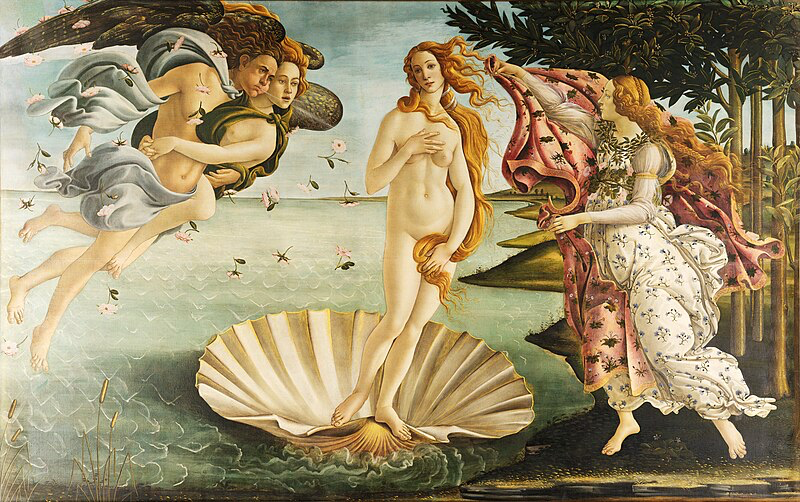
Lately, mythology has been making a powerful return, not just in literature or film, but in the way we dress and create. There’s an undeniable pull toward ancient stories, symbols, and deities, showing up everywhere from high fashion runways to contemporary art. It feels like we’re trying to reconnect with something timeless, something bigger than ourselves.
In a world that moves too fast, mythology offers something solid, stories packed with symbolism, emotion, and universal truths. These myths remind us of fate, transformation, power, and beauty. They give us something ancient to hold onto, even as we move forward.
If you’ve watched recent runway shows, you’ve seen mythology woven into the collections. Versace, long associated with Medusa, continues to embrace its mythic roots. But beyond that, designers across the board are pulling from the past, Greek drapery, armor-like corsets, Renaissance inspired embroidery, and celestial motifs. Fashion isn’t just referencing mythology, it’s reviving it.
Even in everyday style, influences are creeping in. Pearls that look like they belong in a Botticelli painting, corseted silhouettes sculpting the body like a goddess statue, sheer fabrics creating an ethereal, nymph-like effect. The idea of dressing like a modern-day deity isn’t limited to couture anymore. Draped fabrics reminiscent of Greek statues, metallics that mimic celestial armor, and flowing silhouettes that transform wearers into something otherworldly—fashion is making us believe in gods again.
It’s more than just aesthetics; it’s a presence. Gold, pearls, symbolic embroidery, sculptural jewelry that carries weight. Heavy fabrics that demand attention. This isn’t just dressing up, it’s transformation. Wearing mythology means embodying an idea, a force, a legend.
The Corset Revival: A Return to Mythic Femininity
Corsets are back, not as a relic of the past, but as a reclaiming of power. In an era of Ozempic fueled body obsessions, many are turning to classic corsetry, not just for shaping but for its undeniable presence. Celebrities like Taylor Swift and the Kardashians have been spotted wearing corsets, both casually and formally, bringing the once-restrictive garment back into the mainstream.
For Valentino’s Spring 2017 Couture collection, Pierpaolo Piccioli turned to mythology as a way to name human emotions. He created gowns inspired by goddesses, each design carrying its own mythology. Look 45, named after Pasithea, one of the Three Graces, embodied meditation, with hand-embroidered pearls and shimmering flowers evoking a peaceful garden.
Then there was Pandora, arguably one of mythology’s most misunderstood figures. Piccioli reimagined her story in a nude caped gown, embroidered with images of Pandora herself, delicately stitched in safflower thread. She holds a jar spilling yellow and orange beads, a reference to the myth that explains how curiosity unleashed chaos into the world. The embroidery took five seamstresses 900 hours to complete using antique looms mythology stitched into fabric, history woven into the present.
Feminism Meets Myth at Dior
Maria Grazia Chiuri’s Spring 2020 Haute Couture collection for Dior fused feminism and Greek mythology, envisioning a world ruled by women. The runway was draped in banners asking, “What If Women Ruled the World”?
A question answered in gold fringe, gossamer gowns, and gunmetal tailoring.
Dior’s collection wasn’t just about dressing like a goddess; it was about reclaiming mythology as a space for women. While myths have long shaped perceptions of power and beauty, they’ve also told stories of transformation, resilience, and strength. Through fashion, these narratives are being rewritten.
It’s not just about looking like a goddess, it’s about feeling like one.
Why Are We Returning to Myth?
I think the reason we are returning to Greek Mythology it’s because the modern world is unfulfilling. Technology has given us access to everything, yet we feel more disconnected than ever. We consume endless content, but it rarely means anything. Myth offers what we’ve lost, depth, symbolism, a connection to something beyond the surface.
For centuries, myths explained what logic couldn’t. Desire, power, fear, fate. Today, we see those same themes everywhere, just repackaged. Medusa isn’t a monster, she’s a symbol of female defiance. Narcissus isn’t just a tragic figure, he’s the prototype for social media obsession. Myths survive because they evolve, and we keep coming back to them because, deep down, we know that data and algorithms will never tell the full story of what it means to be human.


 ART HUB
Leave a comment