In the last decade, artificial intelligence has ceased to be the exclusive domain of research laboratories and has begun to actively participate in areas previously reserved for humans, including art.
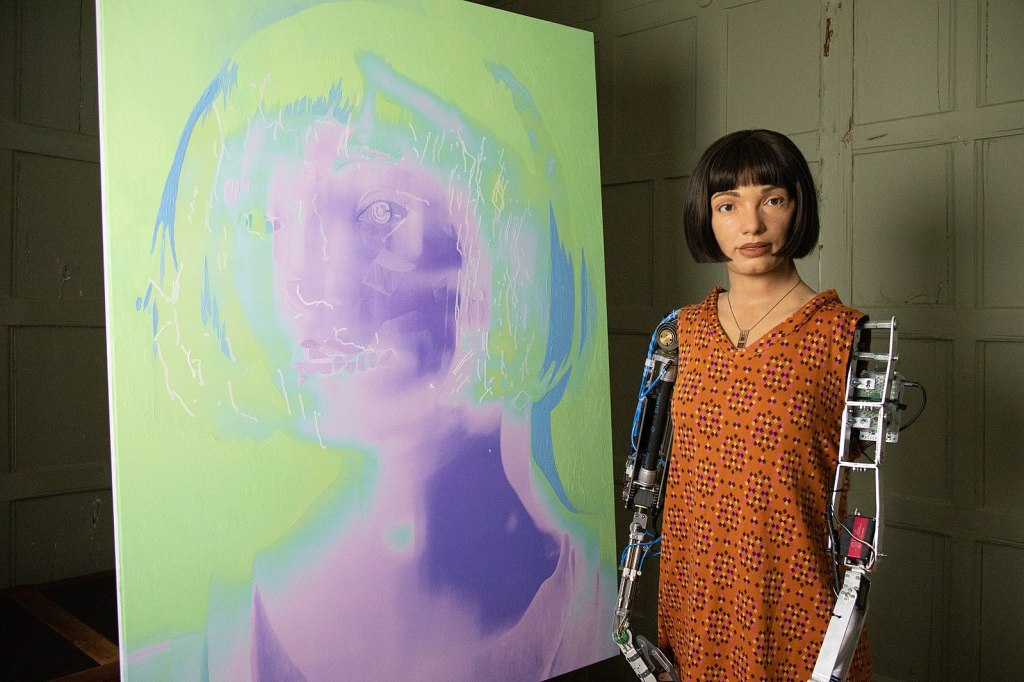
Image-generating algorithms such as DALL·E, Midjourney, and GANs, programs that create musical compositions (e.g., AIVA), and language models that write poetry and stories (e.g., ChatGPT) not only imitate human actions but are increasingly becoming their competitors. Exhibitions of machine-generated art are emerging, AI-created compositions are being performed in concert halls, and texts written by algorithms are beginning to appear in the media.
This rapid technological development raises fundamental questions about the nature of creativity. Can a machine truly be creative, or does it merely imitate human creative processes? And if we attribute the ability to create to it, what does this mean for the concept of authorship, which has been attributed to the individual human subject for centuries? Does the artist now become a programmer, a curator of data, or perhaps a “collaborator” with the algorithm?
This debate is not solely academic. The lines between tool and co-creator are increasingly blurring — between AI as the “brush” in the artist’s hand and AI as an entity that independently proposes new aesthetic forms beyond human intentions. This phenomenon leads to a revaluation of traditional categories of aesthetics, creativity, and creative responsibility. This article attempts to analyze these issues, pointing to the need to redefine authorship in the 21st century.
What is Creativity?
Before trying to answer the question of whether artificial intelligence can be creative, it is necessary to define what creativity actually is. While the concept is widely used, its definition still sparks much debate. Philosopher and artificial intelligence researcher Margaret Boden distinguishes three types of creativity: exploratory, combinational, and transformational. Exploratory creativity involves seeking new possibilities within an established system of rules — just as Bach expanded the boundaries of Baroque tonality.

Combinational creativity is about merging elements from different fields—for example, architect Zaha Hadid combined geometric forms with the paintings of Suprematists. Transformational creativity, on the other hand, involves a complete transformation of the system—like Picasso did when creating Cubism or Joyce when introducing Modernism to literature.
Marcus du Sautoy, in his book The Creativity Code, emphasizes that creativity is not only about creating something new but also something surprising and valuable. Something may be new but banal, surprising but meaningless, or valuable only in a specific cultural context. An essential element of creativity is thus the ability of the recipient to recognize its value, which gives meaning to the work and distinguishes creative acts from random actions.
Creativity also requires intuition, context, and the breaking of patterns —something that evades purely algorithmic approaches. And yet, as the development of AI shows, many aspects of creativity can be described as rule-based or probabilistic processes. This raises the question: is creativity truly something solely human, or are we perhaps more like machines than we are willing to admit?
Introduction to AI and Art
Artificial intelligence, particularly its contemporary form—machine learning—has begun to significantly impact artistic practices in the second decade of the 21st century. Thanks to the development of neural networks, generative models (e.g., GANs—generative adversarial networks), and large language models (such as GPT), machines can now not only analyze works of art but also create their own images, musical compositions, literary texts, and films. This phenomenon, initially regarded as a technological curiosity, has now become a legitimate movement in contemporary art.
The first reflections on the creative potential of machines date back to the 19th century. Ada Lovelace, when analyzing Babbage’s Analytical Engine, observed that it could only perform tasks that were specifically programmed into it. The machine, she wrote, “does not claim to create anything original.” This position—known as the “Lovelace Theorem“—for decades served as the foundation for skepticism toward the idea of machine creativity.
A turning point in thinking about machine intelligence was the Turing Test, proposed by Alan Turing in 1950. Turing suggested that a machine’s intelligence is not determined by its internal structure, but by its behavior, which is indistinguishable from that of humans. This shift in focus—from essence to effect—opened the door to recognizing machine creativity as potentially authentic.
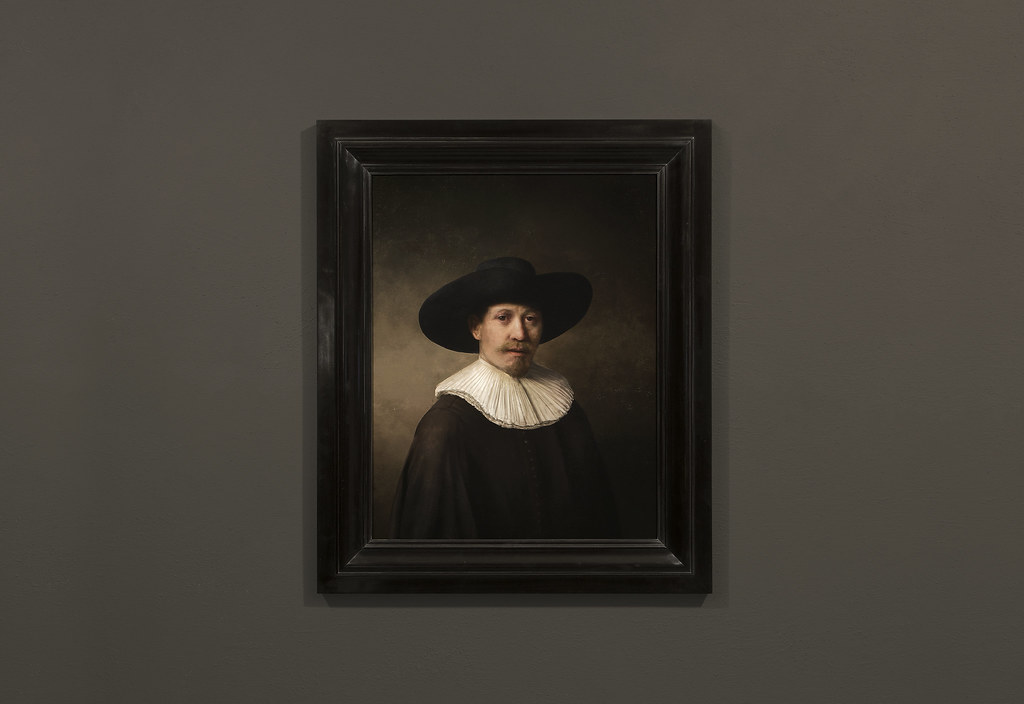
Today, AI not only replicates human styles but creates new aesthetic proposals. Algorithms that generate images in the style of Rembrandt, compose “new” symphonies by Bach, or write stories à la Hemingway show that machines can operate at the level of form. However, the question arises: is form enough to define something as art? Does AI understand what it creates, or does it merely simulate the actions of an artist?
As Sofian Audry points out, AI is no longer just a tool in the hands of the creator but is increasingly taking on the role of an active participant in the creative process —systems capable of reacting, adapting, and surprising their user. This shifts the focus of the analysis from the question “Can AI create art?” to the question “What kind of art does AI create—and with whom?”
AI as an Expression Medium
In traditional terms, technologies were seen as tools that assist the artist in the creation process — from brushes to cameras or computers. With artificial intelligence, however, we are dealing with something qualitatively new. As Sofian Audry emphasizes in Art in the Age of Machine Learning, AI should be considered not just as a tool but as a new artistic medium—possessing its own structure, logic, aesthetics, and limitations.
AI does not so much “transform” data as it learns from it and then generates responses based on patterns that cannot easily be predicted. For this reason, an artist working with AI does not have complete control over the final result—instead, they engage in a dialogical process with the algorithm, adjusting input data, parameters, and training conditions. This makes the process as important as the outcome.
An example of this is the operation of GAN networks (generative adversarial networks), in which two networks compete: one generates images, while the other evaluates their “credibility.” The aesthetics resulting from such models (e.g., “glitch aesthetics,” random artifacts, blurred forms) are often unintentional but gain their own aesthetic and critical significance, which would be difficult to achieve in a traditional manner.
Thus, AI as a medium influences the way art is created and perceived. As Audry notes, the artist using AI does not only use a new technology but must also accept the system’s limitations and unpredictability. The medium shapes the work — not only formally but conceptually as well.
In contrast to earlier technologies that expanded human expressive possibilities, AI becomes a co-creator of the process—reacting, transforming, and generating new variations. As a result, it plays a role not only as a means of expression but also as an initiator of artistic gestures.
Machine Autonomy vs. Artist Intention
One of the most controversial aspects of AI-assisted creativity is the question of machine autonomy. Can AI systems act independently, make creative decisions, and thus assume part of the artistic subjectivity? Or are all actions of artificial intelligence ultimately reflections of human intention — of the programmer, the user, or the model trainer?
Sofian Audry warns against easily attributing agency to AI. In his view, learning systems remain entangled in human decisions — from the selection of training data, through the model structure, to evaluation criteria. The final result — though often unpredictable — does not emerge in a vacuum but within the tightly defined conditions and goals created by humans.
A similar caution was expressed by Ada Lovelace, who argued that a machine cannot “initiate” anything new but can only follow instructions. Even the most advanced modern AI systems lack awareness or intention—their “decisions” are the result of statistical patterns, not reflection or purpose.
On the other hand, as Marcus du Sautoy notes, deep learning algorithms can generate solutions that surprise even their creators. The example of the 37th move in the AlphaGo match against Lee Sedol—considered “inhuman yet brilliant”—demonstrates that AI can produce results that go beyond the programmer’s intentions. This raises the question: if the creator cannot predict the behavior of their system, do they still bear full creative responsibility for it?
In this sense, AI approaches the role of co-author, but only in the context of the process. It lacks what is most essential in human creativity—a conscious act of will. Thus, machine autonomy is functional but not intentional. What appears to be independence is rather a result of system complexity than genuine subjectivity.
Expression Medium vs. Authorship
The emergence of artificial intelligence as an artistic medium changes the way we perceive authorship. In the traditional sense, authorship assumes the existence of a subject who not only creates a work but also bears responsibility for it—both aesthetically and ethically. With AI, these boundaries blur, leading to a redefinition of authorship as a cultural concept.
An artistic work involving AI is a multi-stage process. The artist selects training data, defines algorithm parameters, and makes corrections at various stages of the work’s generation. As Sofian Audry notes, the artist is no longer a “creator” in the classical sense but acts as a curator, trainer, or architect of the process. Thus, authorship becomes a distributed activity—both between the human and the machine and within the AI system itself.
This phenomenon is perfectly illustrated by generative art, where algorithms like GAN (generative adversarial networks) play a key role in the final shape of the work. The result generated by AI is often unpredictable, making it difficult to fully attribute it to the artist’s intention. In such cases, should authorship be attributed to the algorithm, its programmer, or the user who chose the result as valuable?
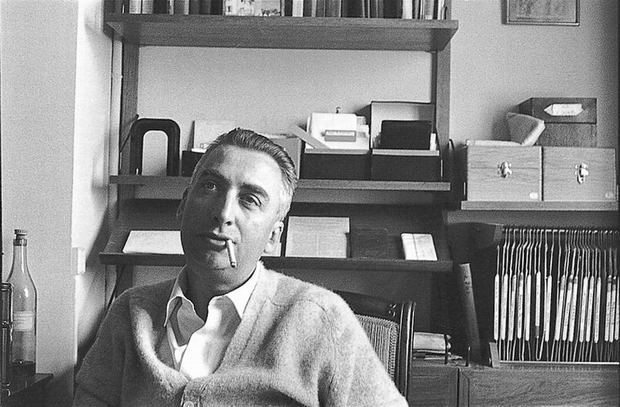
As Roland Barthes writes in his essay The Death of the Author, the meaning of a work arises in the act of reception, not at the moment of creation. In the context of AI, this observation becomes particularly significant. Authorship is increasingly less tied to the creator and more to the interpretation of the work by its audience. In this sense, AI can be seen as an intermediary tool that enables new ways of aesthetic reception.
At the same time, the issue of authorship also takes on a legal dimension. Works generated by AI are increasingly the subject of disputes regarding intellectual property. Who owns an image created by an algorithm? Can we recognize AI as a legal entity? These questions demonstrate that the redefinition of authorship extends beyond art philosophy, entering the realms of ethics, law, and technology.
Can Machines Be Creative?
The question of machine creativity is at the heart of contemporary debates surrounding artificial intelligence. Can AI create something truly new, or is it merely processing existing patterns? Can creativity be “programmed”? And most importantly, is what we consider machine creativity actually a reflection of the creativity of the humans who created them?
Marcus du Sautoy, in his book The Creativity Code, formulates what is known as the Lovelace test – the opposite of the Turing test. In order for AI to be considered creative, it must create something that:
- cannot be reduced to the intentions of the programmer,
- is new, surprising, and valuable,
- and whose creator cannot fully explain.
According to this criterion, some contemporary AI systems are approaching the threshold of creativity, but they have not yet surpassed it. The example of AlphaGo – the DeepMind algorithm that defeated Lee Sedol in the game of Go – is often cited as proof of AI’s creative potential. Particularly famous is the 37th move in the second game, which was deemed “genius and inhuman.” However, even this case can be interpreted as the result of statistical optimization rather than a conscious act of creation.
Similarly, generative neural networks such as GPT and DALL·E are capable of creating texts and images that seem original. However, their operation is based on analyzing vast data sets and creating variations in line with established patterns. Therefore, they lack the internal purpose, intention, and self-awareness traditionally associated with creativity.
At the same time, du Sautoy notes that AI can serve as an initiator of human creativity – for example, by suggesting unexpected combinations or provoking a response from the creator. In this view, AI does not replace creativity; rather, it enhances and stimulates it, acting as a partner in the creative process.
Thus, one could say that AI imitates creativity, and at times even simulates it, but it has not yet possessed it. Machine creativity, if it exists, is always secondary to human creativity – rooted in data, aesthetics, and contexts that we ourselves have created.
Creativity and Emotions
One of the key factors distinguishing human creativity from machine simulation is the emotional dimension of the creative process. For many artists, creation is not merely an intellectual challenge but a deeply rooted experience – an act of expressing emotions, intuition, and inner experiences. In this context, the question arises: can machines, which lack consciousness and feelings, truly create art?
Marcus du Sautoy emphasizes that in mathematics – as in art – creativity is associated with a sense of “revelation,” a moment of sudden insight that is both aesthetic and emotional in nature. He compares this feeling to the joy, excitement, or even awe that accompanies creators when discovering something new. Meanwhile, AI, even if it generates aesthetically interesting works, does not experience any emotions related to their creation.
Art is also a way of communicating emotions – a message between the artist and the audience. A human can identify with the creator, empathizing with them through the work. AI has no emotions to convey, and if it generates emotionally charged text or images, it is simply the result of statistical models that learn from human data.
However, this leads to an important paradox. The recipient may experience emotions when engaging with a work generated by AI. They might be moved by a text written by a language model or captivated by an image created by a neural network. Does this mean that the emotions of the recipient give the work artistic status, regardless of the creator’s intent – or lack thereof?
In this sense – as Audry notes – AI can serve as an emotional mirror: reflecting our own experiences, expectations, and aesthetic sensibilities. However, as long as the machine does not possess consciousness, self-awareness, or the ability to feel, its “creativity” will remain a simulation – not an authentic expression of an emotional creative act.
Conclusion
The development of artificial intelligence in recent years has profoundly transformed the way art is created, experienced, and interpreted.
It is becoming increasingly difficult to draw a clear line between the role of a tool and that of a co-creator. Contemporary AI systems not only generate images, musical compositions, and literary texts, but also influence how we perceive the creative process and the notion of authorship.
As shown in the reflections of Marcus du Sautoy, Sofian Audry, Margaret Boden, and other researchers, machines can imitate many aspects of human creativity – they can explore stylistic spaces, combine elements into new configurations, and sometimes even break conventions. However, they lack emotion, intention, and self-awareness, traditionally considered essential to creativity in its fullest sense. Their “autonomy” is functional rather than ontological; their “creativity” – though surprising – is rooted in human input: data, code, intentions.
In this context, the redefinition of authorship in the 21st century does not signal its end, but rather a new model of co-creation – the human as initiator, architect, and interpreter, and AI as a processual partner provoking new aesthetic solutions. There is a growing need to think of authorship not as a singular act, but as a network of relationships: between the human, the machine, the data, the audience, and the context.
Perhaps the greatest potential of artificial intelligence lies not in replacing human creativity, but in enhancing and redefining it – freeing us from habitual patterns, provoking new questions, and confronting us with the boundaries of what we consider to be art. In this sense, AI may not so much “create” as remind us of what creation is – and who we are as creators.


 ART HUB

Leave a comment