
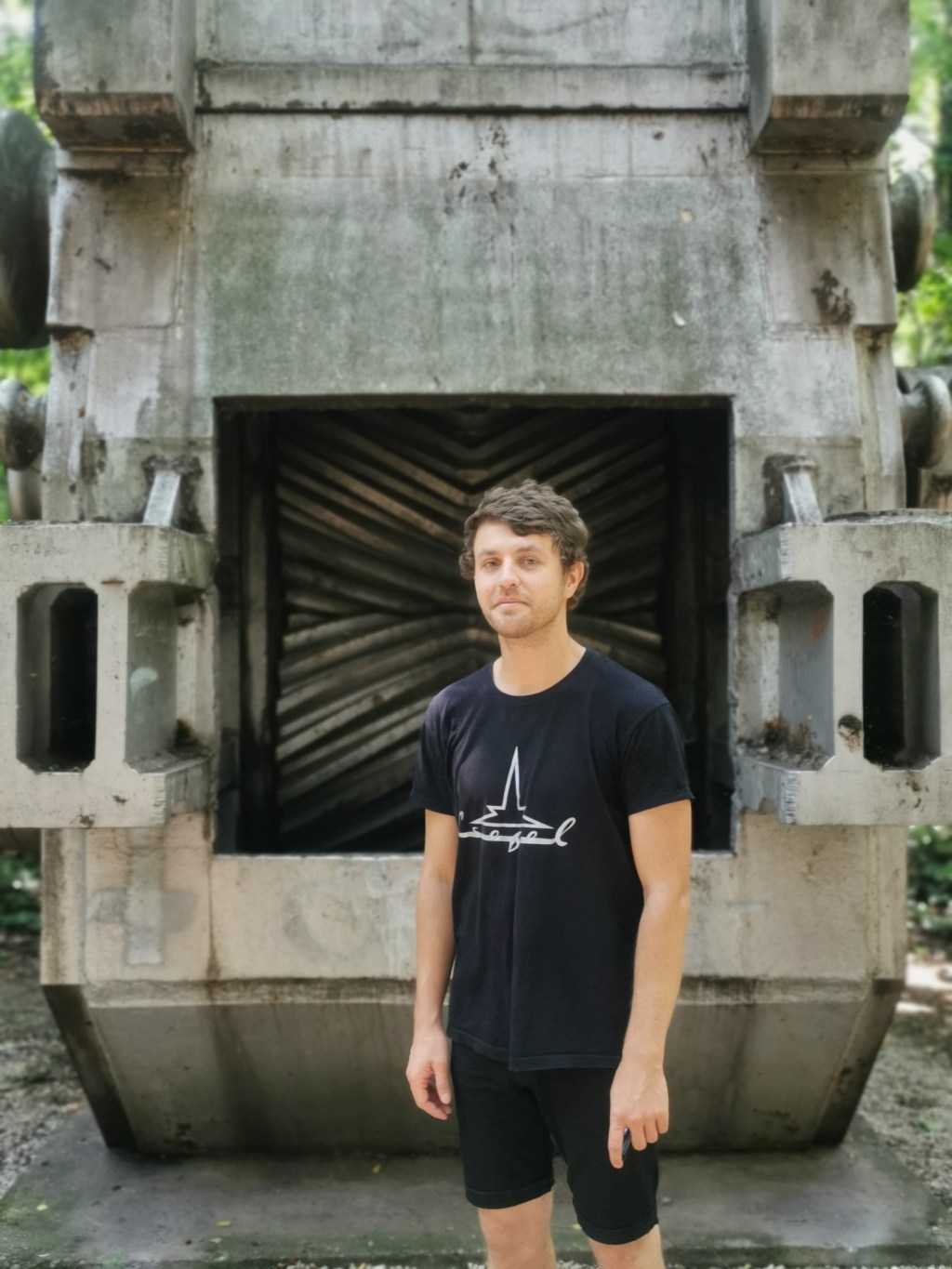
Kevin Yaun (b. 1986) is a Los Angeles based painter whose transient lifestyle moved him across the US as well as Northern Europe and Southeast Asia. His paintings go on a journey themselves as they emerge from layers of paint, arriving at a balanced state of distant yet optimistic. He explores the complex relationship we have with our idea of home and asks us to picture it as an abstract concept.
In 2024, Kevin graduated with an MFA from Laguna College of art. That year also marked his first solo show with the Billis Williams Gallery in LA. His paintings have been shown in public settings like the Laguna Art Museum and are permanently featured in the Pacific Art Foundation, Fulton County Art Collection and many private collections around the world. He shows a range of sizes of paintings including monumental scales that invoke feelings of a kind of “architectural sublime”, inspired by painters like Mark Rothko, Clifford Still, and Caspar David Friedrich.
1. Your work is deeply influenced by your transient lifestyle. How do your experiences in Northern Europe and Southeast Asia manifest in your art? Can you share a specific moment or place that profoundly shaped your artistic vision?
I lived in Amsterdam for several years and I’d always hop on my bike to get around town. Dutch culture is very community driven and they like to keep their windows open. You see inside everyone’s homes as you’re pedaling through the city. To this day I still have a fascination with windows and the contrast of public vs private. They’re like living paintings where you get to have a glimpse into someone else’s worldview mixed with the reflection of what they see from that viewpoint.

2. The theme of “home” is central to your work. How has your understanding of home evolved over the years, and how do you convey this abstract concept to viewers through your paintings?
Home has always seemed out of reach because I move around so much. Since coming to California I’ve been captivated by all the houses nestled in with nature and I like to imagine having one of my own. There’s of course this primal urge we have for nesting and I think our identities tend to be intertwined in it. Last year I moved from Laguna Beach, which is this lushious beach town, to the Arts District in LA. The transition is obvious in my work as the paintings have gone from distant architectural observations to more distorted close-ups, reflecting the density of my surroundings.

3. You’ve spoken about your paintings as “journeys” that arrive at a state of distant yet optimistic balance. Could you elaborate on this process and how you know when a painting has reached its destination?
Typically my painting ideas come from casual everyday moments. Something may catch my eye and make me feel a way I can’t capture with a photograph. The painting is then all about trying to get to the essence of that original thing I had in my head. Sometimes it takes many versions and layers of paint to get it there and unfortunately I’ve had to kill off several dear figures in the process.
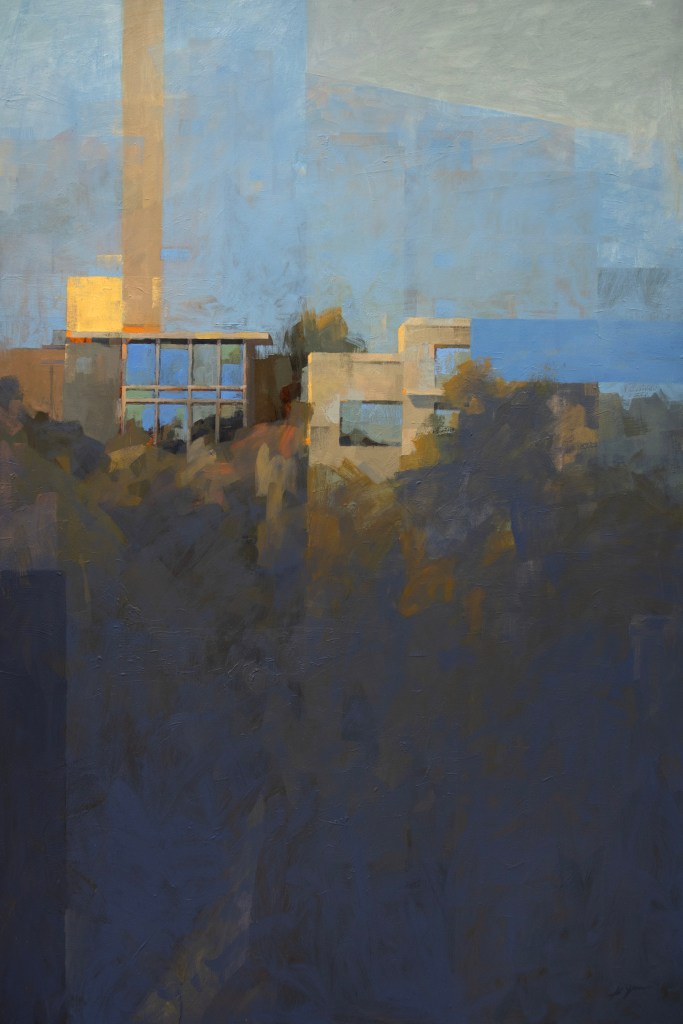
4. You’ve cited influences like Mark Rothko, Clifford Still, and Caspar David Friedrich. How do you integrate their approaches into your own work while maintaining your distinct voice?
The paintings I get the most inspired by tend to have a feeling a bit like Edmund Burke’s “delightful horror” when he described the sublime. Staring deep into a Rothko is a bit like pulling back the curtain of reality and bypassing the everyday material illusion. Little details like Rothko’s matte surface pull you into the piece whereas something more glossy would create a barrier.
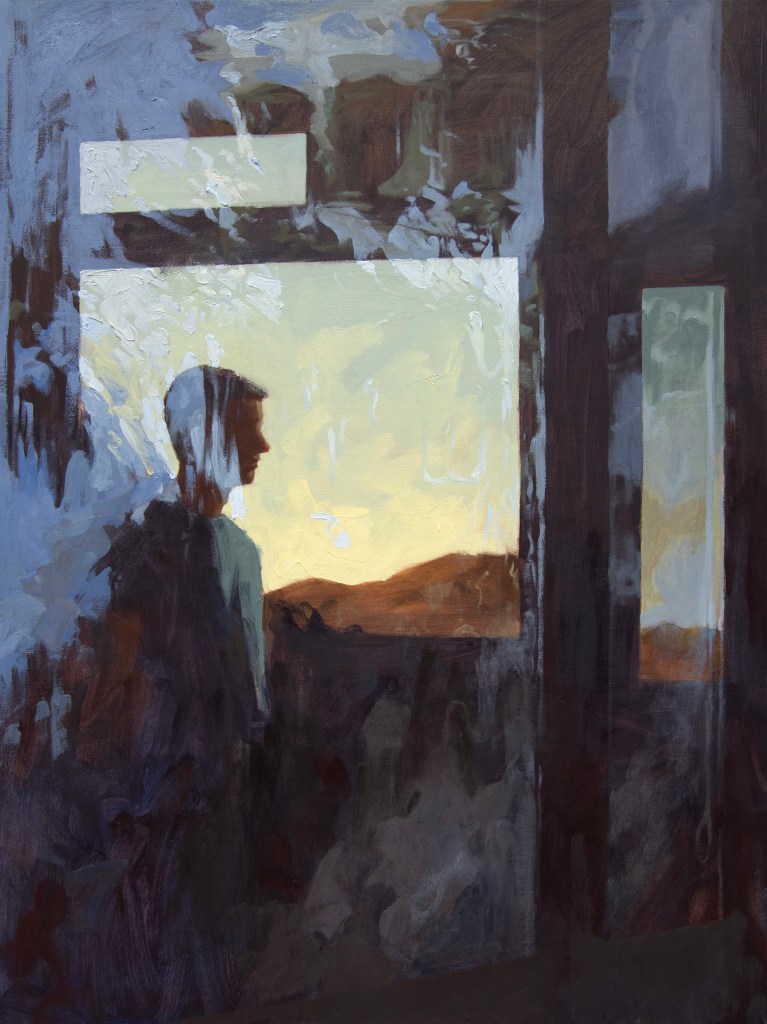

5. Many of your pieces are on a monumental scale, invoking what you call an “architectural sublime.” What draws you to work at such large scales, and how does size influence the impact of your art?
Recently, I saw a Clyfford Still piece at SFMOMA while on a trip in San Francisco. He was painting the abstract sublime, referencing nature with his organic shapes. I loved how I could get fully immersed because of the size of his pieces. Looking at an impressive house on a hill makes me feel like a Caspar David Friedrich character gazing into the abyss of nature. It’s beautiful but also terrifying. The idea of home is full of positive emotions like family experience but also daunting ones like the immense financial responsibility. Large scale canvases are just a great way for me to capture that overwhelming sublime-like feeling in paint.

6. Your paintings have been displayed in public and private collections worldwide. How does the context of where your work is exhibited—whether a museum, gallery, or private collection—affect how you think about its reception?
I like to think about how the artworks fit together and build off of each other. Even though a painting may end up in a home on its own, I still look at it as one point in an evolving body of work.

7. The year 2024 marked significant milestones in your career, from earning your MFA to your first solo show. How did these experiences shape your artistic growth and confidence?
Getting an MFA helped me narrow down what I wanted to paint about and gave some insight into where I saw myself in the art world. Writing a thesis can be a little tedious but it gave me such a good opportunity to research things I was interested in like overlaps in existential philosophy and abstract expressionist art. The solo show was something tangible to work toward after graduating and helped to concentrate my thinking further.
8. As someone whose work has been described as distant yet optimistic, how do you approach balancing emotional depth with accessibility in your art?
Something I’ve noticed over the years is that I always show some sky in each piece, even if it’s just a reflection. This seems to give a positive feeling, even if it’s just the tiniest amount. I’ve always preferred being an optimist but am not one to shy away from the occasional existential pondering. I see paintings a bit like meaningful conversations with the viewer as opposed to monologues.
9. Your pieces often layer paint to achieve their final form. Can you walk us through the technical process behind creating one of your works? How do these layers contribute to the themes you explore?
My most recent body of work, “In Between Walls”, was all about exploration on the canvas. I would essentially make a whole painting, let it sit for a while, and then paint over what wasn’t working. The cycle would repeat until I was happy with the color, composition, and overall feel. This would create intuitive and unpredictable moments that made for a rich piece. Lately I’ve been doing much more planning ahead through digital art and charcoal studies. There’s still intuitive layering involved but it’s more thought through ahead of time since I’m more confident now in what I’m producing.

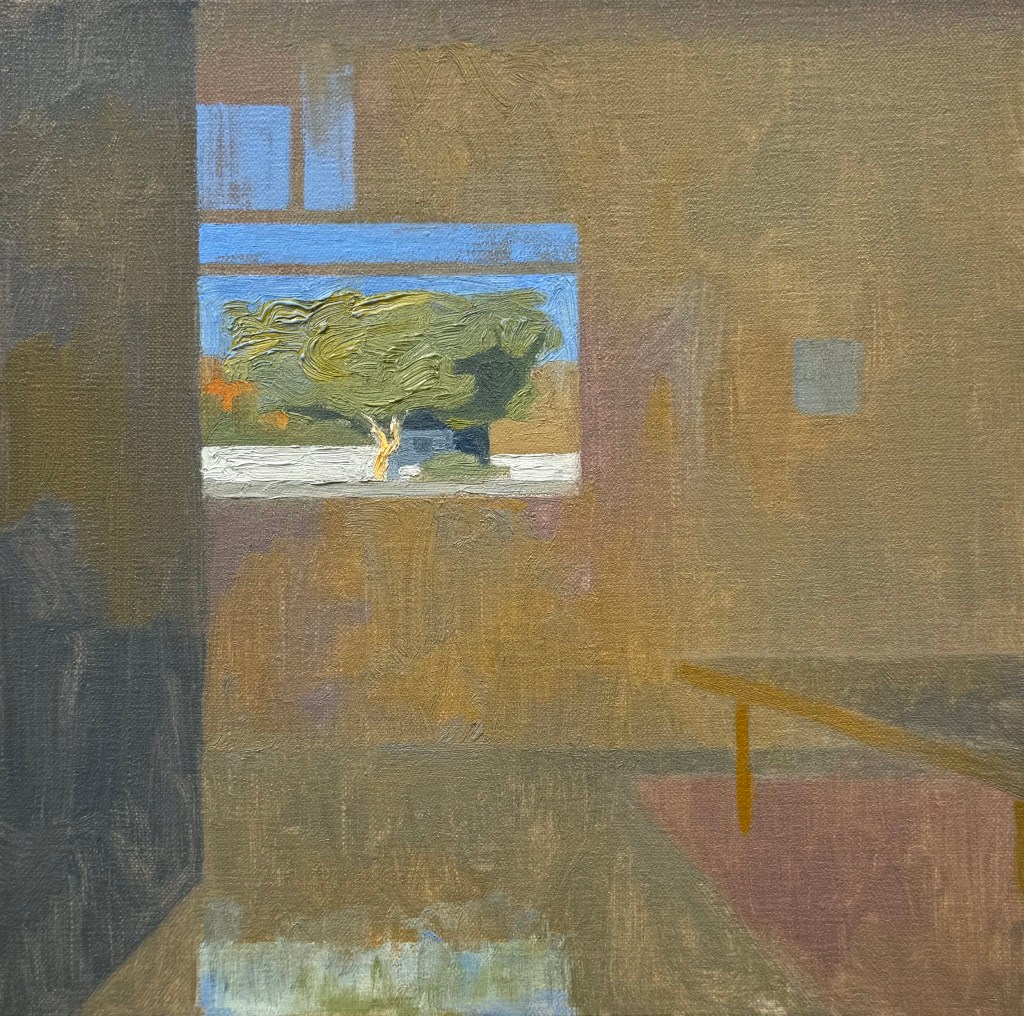
10. Looking forward, are there any themes, mediums, or scales you are eager to explore in your future work? How do you see your art evolving in the next few years?
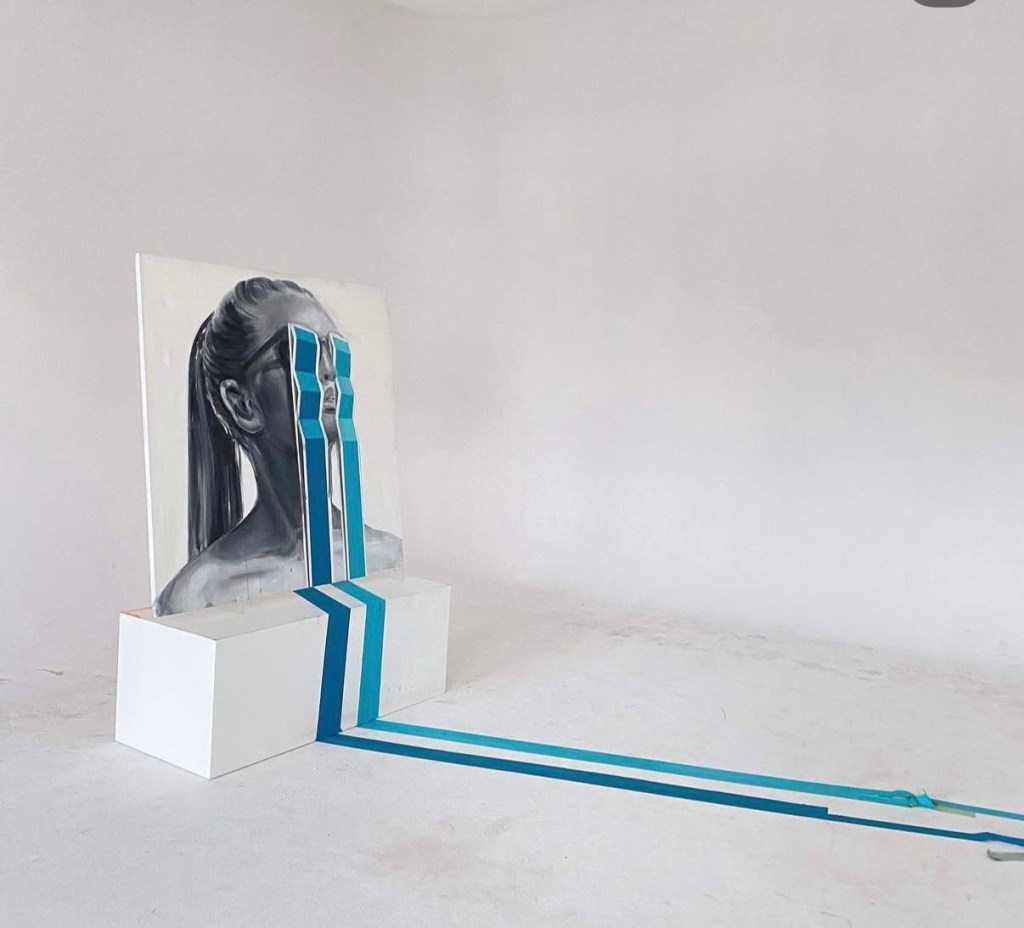
I’m currently obsessed with different canvas textures and have been layering cut out pieces over each other to create a more 3d surface to paint over. I think it’s given my work some nice variety and pushes the abstraction in interesting ways. I’ve been experimenting with mediums and paint thickness over the past couple years so this is just the latest way I’m making my paintings more textural.

 ART HUB
Leave a comment