
René Magritte, the Belgian painter, is one of the most prominent representatives of surrealism, and his works, full of mysteries and enigmatic images, continue to captivate art lovers around the world. Born in 1898 in Lessines, Belgium, he began developing his artistic abilities from a young age. His work encompassed various painting techniques, from precise realistic depictions to subtle details aimed at exploring the boundaries of reality. However, it was not just his artistic talent but also his extraordinary ability to pose questions about the perception of reality, the understanding of phenomena, and the nature of vision that made Magritte such an exceptional figure in the art world. His paintings were full of hidden meanings that forced viewers to reflect more deeply and explore new perspectives on what is considered true.

Magritte’s early life
René Magritte grew up in a small town, where his interest in art was not initially met with much approval from his family. His mother, Louise, passed away when Magritte was only fourteen years old. This tragic event had an immeasurable impact on his psyche and is often interpreted as a turning point in both his life and artistic career. Magritte witnessed her death, and some scholars argue that this experience shaped his approach to art and his concept of mystery. Interestingly, in his paintings, such as The Son of Man, which depict figures with their faces obscured, echoes of this event can be seen. In this famous painting, a man in a bowler hat has his face hidden by a floating apple, and it is considered one of the most iconic works of the artist. Magritte’s works often served as riddles, designed to make the viewer ponder the nature of perception and hidden meanings.
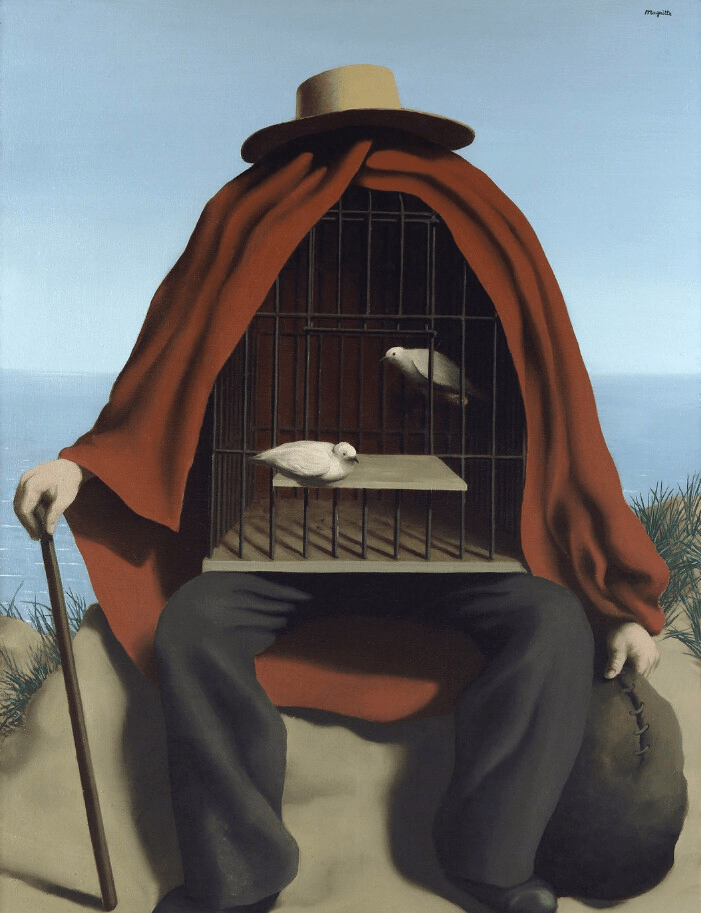
After finishing high school in 1916, Magritte began studying at the Royal Academy of Fine Arts in Brussels. Although he was a rather average student, over the years he developed his artistic interests and shaped his own, unique style that was ahead of its time. His work gradually took on a surrealist character, and his connection to this artistic movement had a profound influence on him. Surrealism not only attracted him with its ideas but also prompted deeper reflections on reality and perception.
Discovering the mysteries of surrealism with Magritte
In the 1920s, Magritte joined the surrealist movement, which was gaining popularity at the time. Surrealism, inspired by Freud’s theory of the unconscious, advocated that the deepest psychological processes could only be discovered through dreams and spontaneous actions. Magritte embraced this idea but gave it his own unique form. Unlike other surrealists, such as Salvador Dalí, whose works were full of emotions and subjective experiences, Magritte took a more intellectual approach in his art. His paintings were like mathematical puzzles that forced philosophical reflections on the limits of perception and the nature of reality.
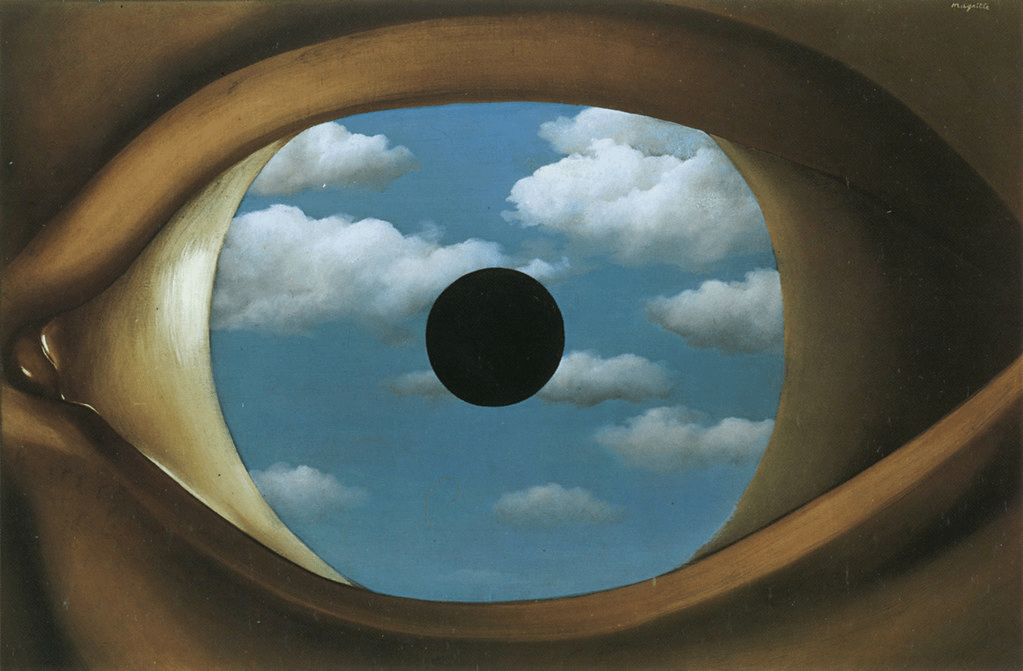
For Magritte, surrealism was a tool for questioning reality, not merely an artistic expression. In his paintings, everyday objects—such as chairs, tables, and windows—took on entirely new, surprising meanings. His works were like visual riddles that went beyond the traditional boundaries of art. Magritte often created pieces in which he depicted the contradiction between what we see and what is real. These contradictions were elements of his own philosophy, aiming to show how our senses can deceive our perception of the world.
One of Magritte’s most famous paintings is The Treachery of Images, which features a pipe with the inscription: “This is not a pipe.” This painting is an artist’s manifesto, questioning the role of art and its ability to imitate reality. For Magritte, art was not meant to imitate reality but to pose questions about its nature and our ability to understand it. This painting is one of the most important works in the history of 20th-century art because it directly challenges the traditional role of the image as a representation of reality.
Great themes, small objects: the repetition of motifs in Magritte’s work
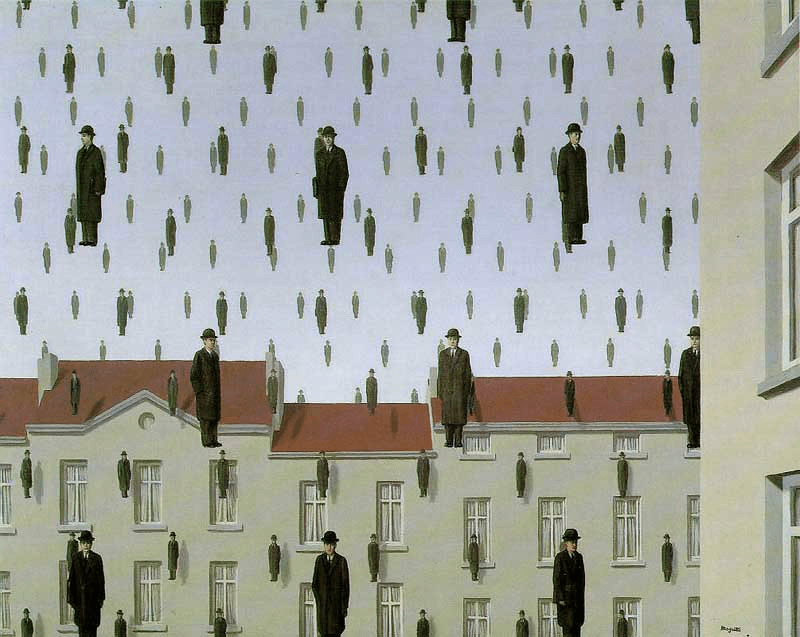
In René Magritte’s work, recurring motifs appear, becoming symbolic elements of his personal world. One of them is the melon, which appears in many of his paintings. It symbolizes invisibility, mystery, and the ability to look at the world from a different perspective. The melon, as an everyday object, when placed in a surreal context, becomes a catalyst for discovering hidden meanings and questions about the nature of the perceived world.
Another motif is the window, which appears in works such as The Infinite (La Limite de la Vision) and becomes a tool for showing the boundary between what we see and what we cannot capture with our eyes. The window here is a symbol of peeking into reality but also points to its limitations. Magritte also used the motif of the sky and clouds, creating works in which he painted clouds in a way never seen in art. In works such as The Empire of Light, where a bright blue sky spreads against the backdrop of dark night, the artist uses the contrast between these two elements to emphasize the elusive and ambiguous nature of what we see. Clouds in his works often become symbols of illusions of which we are unaware, even though they are all around us. Through these recurring motifs, Magritte not only builds his own, unique artistic language but also forces the viewer to reflect on the way we perceive the world.
Magritte in the context of philosophy
Not only artists but also philosophers were influenced by Magritte’s work. His paintings, full of riddles, illusions, and paradoxes, became an inspiration for thinkers who sought to uncover what Magritte was trying to convey to his viewers. The artist asked questions about the nature of reality, how we perceive the world, how we translate what we see into words, and what consequences arise from what remains invisible. Magritte encouraged reflection on the boundary between reality and its representation, questioning the certainty with which we accept the image of the world that reaches us. Magritte’s philosophy was close to the ideas of Immanuel Kant, who argued that humans would never be able to know reality in its full form.
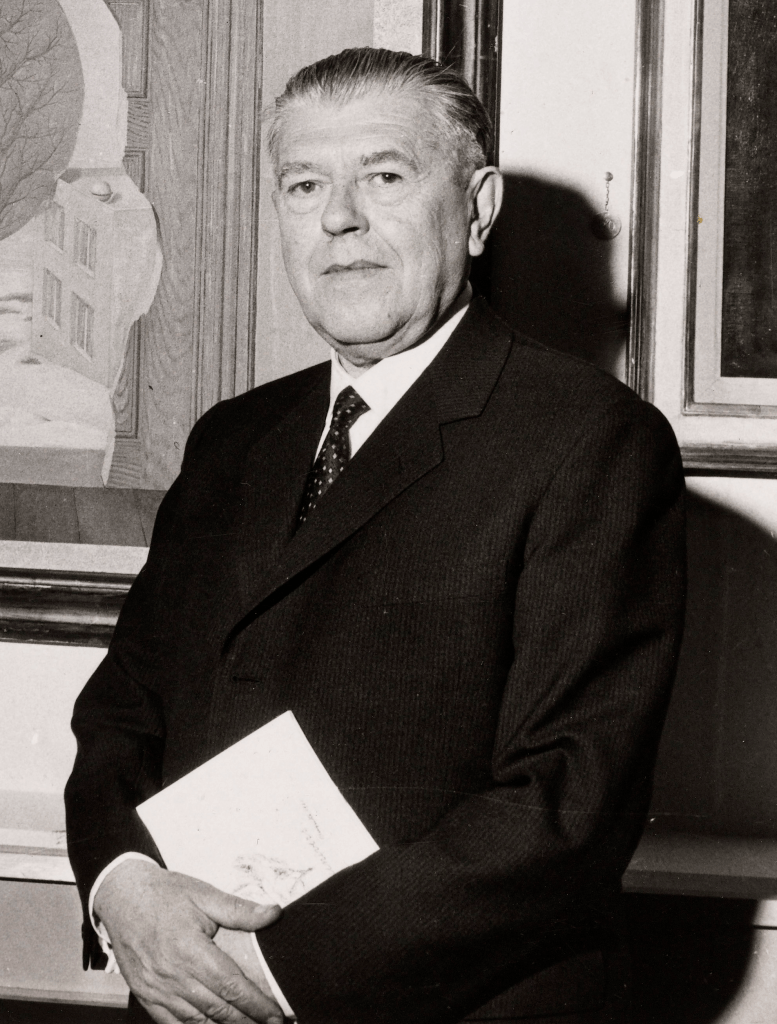
Kant contended that our knowledge is limited by our sensory impressions and the structures of the mind, which filter and interpret data. In Magritte’s work, there is also the idea that our perception of the world is always subjective, and our ability to know reality is limited by our senses and language. By playing with conventions, the artist raises questions about the limits of what we are able to understand and how our minds form images that appear real but may only be illusions.
The painter, poet, and intellectual
Magritte was not only a painter but also an intellectual and poet who combined art with philosophy and literature. His paintings were deep reflections on language, perception, and the limits of human knowledge. The artist used simple, everyday objects, such as apples, windows, keys, or chairs, imbuing them with new meanings and changing our view of the world. Thanks to his intellectual insight, he was able to extract riddles from these ordinary elements of reality that went beyond their everyday functionality, engaging the viewer in deeper reflection.
His works, full of surrealist images, constituted a form of poetic philosophy—art that not only told stories but also raised questions about what is true, the nature of reality, and our perception of the world. Through his intellectual unease and ability to ask questions, Magritte forced the viewers to question what they consider certain and obvious, thus getting closer to the essence of human experience.
Magritte and contemporary art
René Magritte left a rich artistic legacy that still fascinates and inspires artists, philosophers, and ordinary viewers. His works not only became a permanent part of the 20th-century art canon but continue to remain alive within the context of contemporary art. The artist created works that go beyond the aesthetics of surrealism and raise questions about the boundaries of our perception and how, in reality and art, everything can be ambiguous. His paintings, full of mystery, illusion, and paradoxes, provoke reflections on the nature of the world, identity, and the very act of perception.

Magritte, with his unique approach to surrealism, made us reconsider how we perceive the world and how the reality we experience may be merely an illusion or construct. In his work, we see an effort to show that our cognitive abilities are limited and that what we see may hide something entirely different. For example, paintings like The Man in the Bowler Hat or Rejection convince us that not everything we see has a simple and straightforward explanation. Each painting from his work can be interpreted in multiple ways, and what it depicts simultaneously becomes a question of how far our perception diverges from the actual state of things.
Contemporary art, especially within the postmodernist movement, continues to draw inspiration from what Magritte did. His work became the foundation for many artistic experiments that explore the themes of subjectivity, identity, and the limits of perception. Contemporary artists such as Banksy or Damien Hirst are fascinated by using simple, everyday objects as carriers of deeper meanings, just as Magritte did. Many modern creators, like the Belgian surrealist, are unafraid to use illusion and surprising contrasts to evoke a sense of confusion or force the viewer to think.
In contemporary philosophy, particularly in the fields of aesthetics and epistemology, Magritte’s work remains an inspiration. His paintings ask questions about the nature of reality and how our perception of the world may be merely a superficial interpretation of hidden, more complex processes. As in his art, contemporary philosophers address issues of illusion, identity, and the limits of human knowledge.
Magritte remains not only one of the most important representatives of surrealism but also a creator who continues to be rediscovered within the context of contemporary art. His works, full of ambiguity and hidden meanings, force us to constantly analyze and reinterpret reality. Thanks to this, his legacy not only lives in museums but also in everyday art, philosophy, and mass culture, forming the foundation for modern artistic and intellectual pursuits.


 ART HUB
Leave a comment