
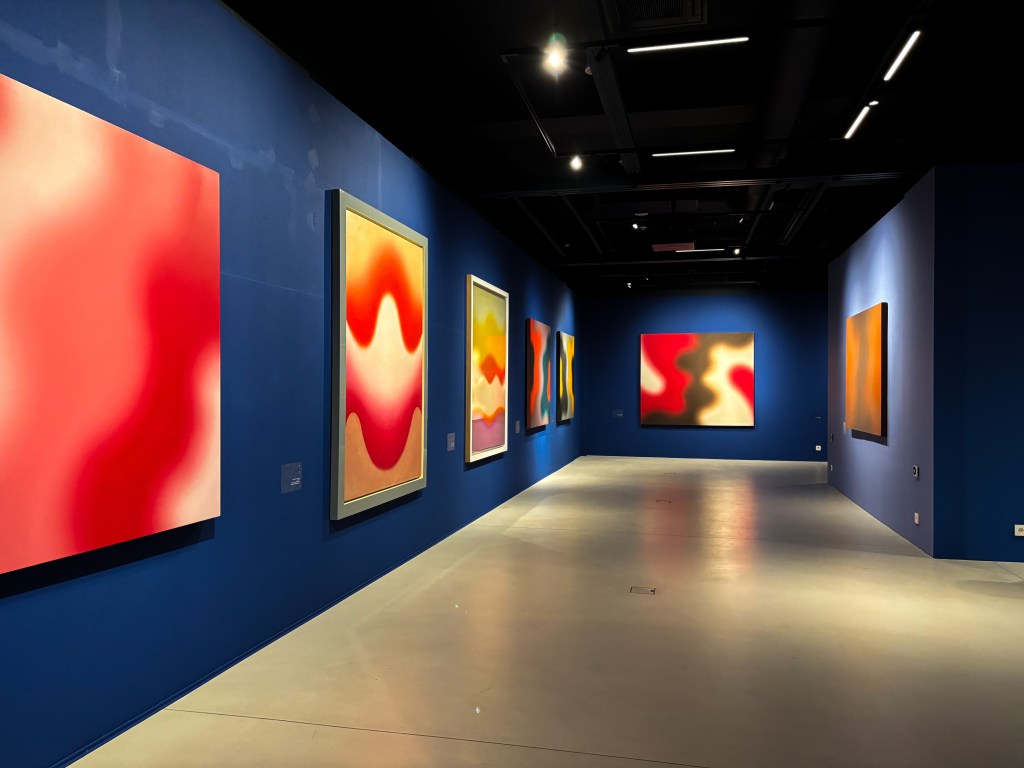
Wojciech Fangor, although best known as a pioneer of Op Art, was an artist whose work transcended the boundaries of a single movement. His creations, characterized by hypnotic shapes and a masterful play of space and color, engage the senses of viewers, evoking a sense of movement and depth that is difficult to describe in words. Fangor was an artist who made painting a space to immerse oneself in. But who was the man who forever changed the face of contemporary art?
From Poland to New York – a brief history of Wojciech Fangor
Fangor was born in 1922, and like many artists of his generation, his career was shaped by the turbulent period of World War II. In his youth, he studied in Warsaw, where his artistic talent was quickly recognized. Throughout the 1950s and 1960s, he experimented with various forms of art, but it was his fascination with space and color that defined him as an artist. By the 1960s, when he firmly established himself in the Op Art movement, his works began attracting attention from critics and collectors abroad.
A key moment in Fangor’s career was his move to the United States. In the U.S., the artist found room for further experimentation and became one of the few Polish painters to exhibit at New York’s MoMA. The international art scene opened doors to modern galleries, and his signature works began traveling worldwide, from Paris to Tokyo.

Op Art, where senses become tools
While Wojciech Fangor gained fame as a creator of Op Art, his approach to the style was original. Op Art, or Optical art, focuses on visual illusions that create a sense of movement and depth on a flat surface. However, for Fangor, illusion was merely a means, not an end in itself.
His works represent a deliberate dialogue with space and color. Unlike other Op Art creators, who often focused on geometric shapes, Fangor explored more organic forms. His famous “pulsating circles” are examples of how color can create a sense of depth while also influencing the perception of motion. By painting circles that seem to expand and contract on the canvas, Fangor created effects reminiscent of shimmering air or flickering light, compelling the viewer to actively engage with the artwork.
Fangor’s work, however, goes far beyond simple visual play. Drawing from traditions of Impressionism and Abstraction, he developed a unique artistic language in which shape and color coexist on equal terms. It is this ability to maintain a dialogue between these two elements that makes his work so mesmerizing.

H2: The play of color – illusion and reality in one
In Fangor’s works, color takes center stage. It creates movement, forms space, and builds a relationship between the artwork and the viewer. In his compositions, colors are never random – every shade, gradient, or contrast is meticulously planned. By utilizing color theory, Fangor creates spatial illusions that give the viewer the impression of looking at something three-dimensional, despite interacting with a flat surface.
One of the most fascinating aspects of his work is his ability to manipulate perception. When observing his paintings, one can feel as though the painted space expands and contracts, while the forms on the canvas appear to be in constant motion. This phenomenon relies not only on technical precision but also on a deep understanding of how the human brain perceives colors and shapes.
The colors – often surprising and intense – act as catalysts for emotions. On one hand, they can be soft and almost soothing, while on the other, they can be intense, evoking a sense of unease or tension. In this dynamic play of colors, Fangor found a way to express not only movement but also mood and emotion.
Art that transcends time
Wojciech Fangor’s works are more than just optical illusion – they are an invitation to a deeper dialogue with reality. His paintings carry a powerful emotional and intellectual charge. Over the years, his works have inspired both critics and younger artists, becoming an integral part of the conversation around contemporary art. Fangor not only redefined the boundaries of painting but also transformed the way viewers perceive art.
His influence on younger generations of artists is still evident today, as many contemporary creators draw from his achievements, experimenting with space and perception. Moreover, his works are increasingly sought after by collectors and investors worldwide. At auctions of contemporary art, Fangor’s paintings achieve record prices, reaffirming his enduring significance in the art market.

The exhibition “Wojciech Fangor. American Dream” in Wrocław
The Wrocław exhibition “Wojciech Fangor. American Dream” is a unique opportunity to delve into his work. The featured pieces, mostly from the 1960s and 1970s, are works that have become part of art history due to their unique approach to space and color. These paintings, which the artist described as “positive illusionary space,” continue to evoke strong psychophysical reactions, drawing the viewer into a sensory experience.
Of particular note are the paintings loaned from both Polish and international collections, including seven pieces from Fangor’s groundbreaking 1970 exhibition at the Guggenheim Museum in New York – the event that brought him international fame. Many of these works, now on display in Wrocław, are being shown for the first time, making this exhibition even more special.
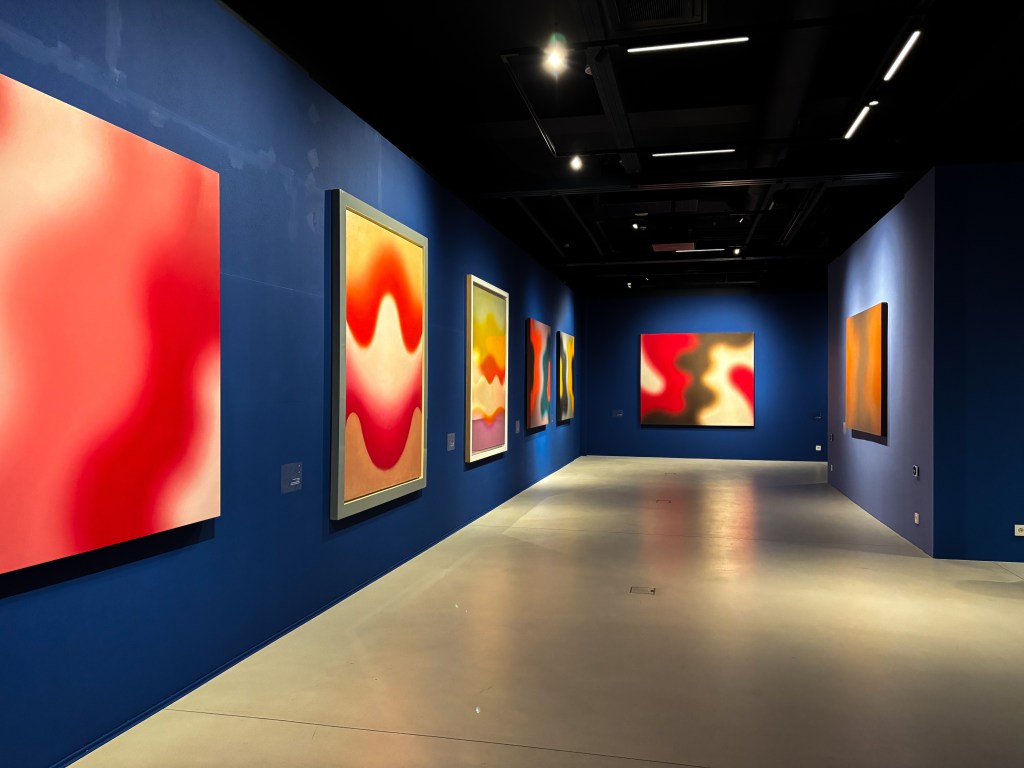
Dorota Monkiewicz and Robert Rumas have carefully designed the space to maximize the impact of Fangor’s psychedelic color effects. The arrangement of the exhibition rooms, with matching wall colors, creates an immersive environment. As curator Dorota Monkiewicz emphasized:
“This is not a typical museum exhibition – it’s an experience that engages the viewer’s entire perception.”
The exhibition “Wojciech Fangor. American Dream” is not only a journey through one of the most important periods of the artist’s work but also a testament to his global success. It can be viewed in Wrocław, at the Krupa Art Foundation, which – supported by the Fangor Foundation and DESA Unicum – brings the phenomenon of the artist closer to Polish audiences.

 ART HUB
Leave a comment