
1. Can you share what initially inspired you to pursue a career in art, and how your experience at the Pennsylvania College of Art and Design shaped your artistic journey?
My interest in art began in childhood. Having artists in my immediate family was fortunate for me as they encouraged my creativity. I do not remember the time when I did not want to be an artist. When I was in College I had a hard time trying to figure out if I wanted to pursue illustration or fine art. I did a year as an illustration major and then switched to fine art. I have a lot of respect for illustrators but I realized I have a brain for fine art.
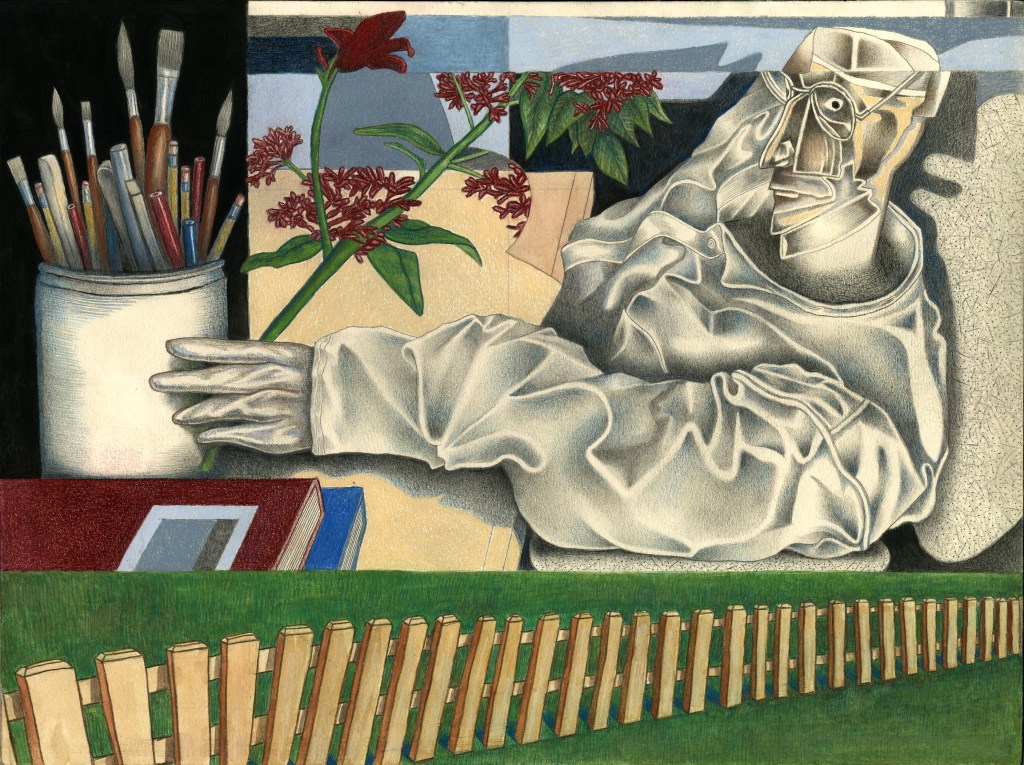
2. Your work explores the concept of dualism, particularly through the lens of near-death experiences. What drew you to this theme, and how do you approach it in your artwork?
Dualism is interesting because we as humans tend to have an innate sense of our own consciousness that seems separate from our physical body. As an artist, subjective thinking and how the world is perceived is interesting to me. Science may see existence through the lens of determinism and a material reality. My hope is that consciousness is not seen as a simple manifestation of neurological functions but a phenomenon that has brought us to where we are and that our experience is a rare gift. It is like the universe grew us to experience itself.

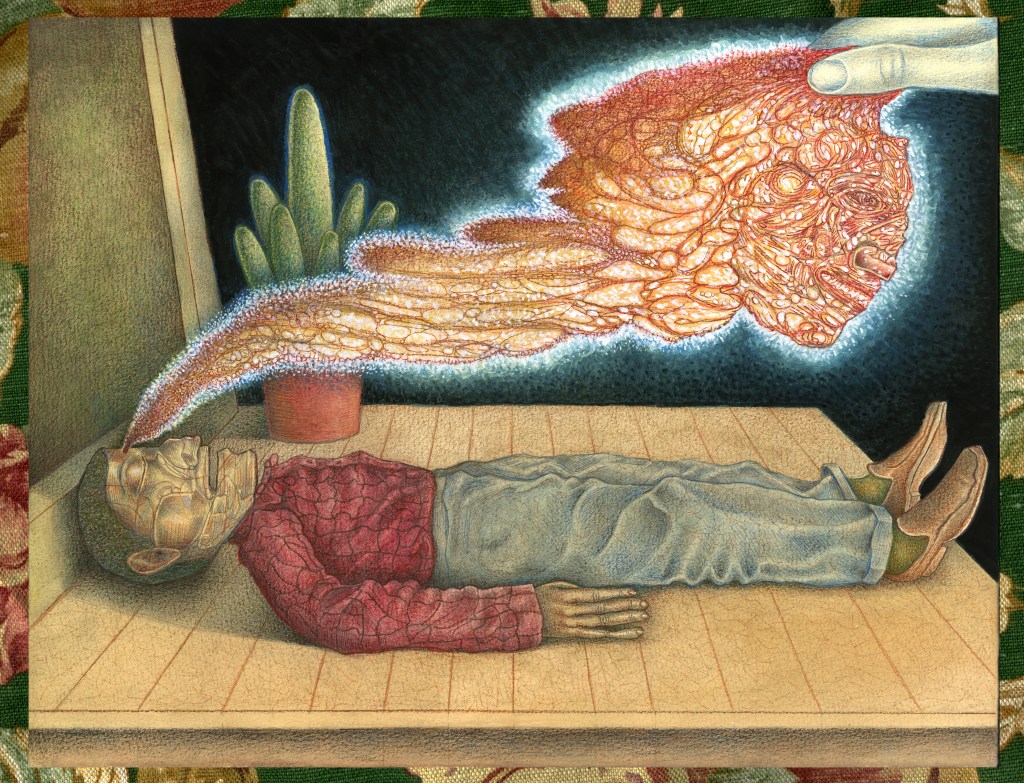
3. How did Ernest Hemingway’s quote about his near-death experience influence your artistic vision and the themes you explore in your work?
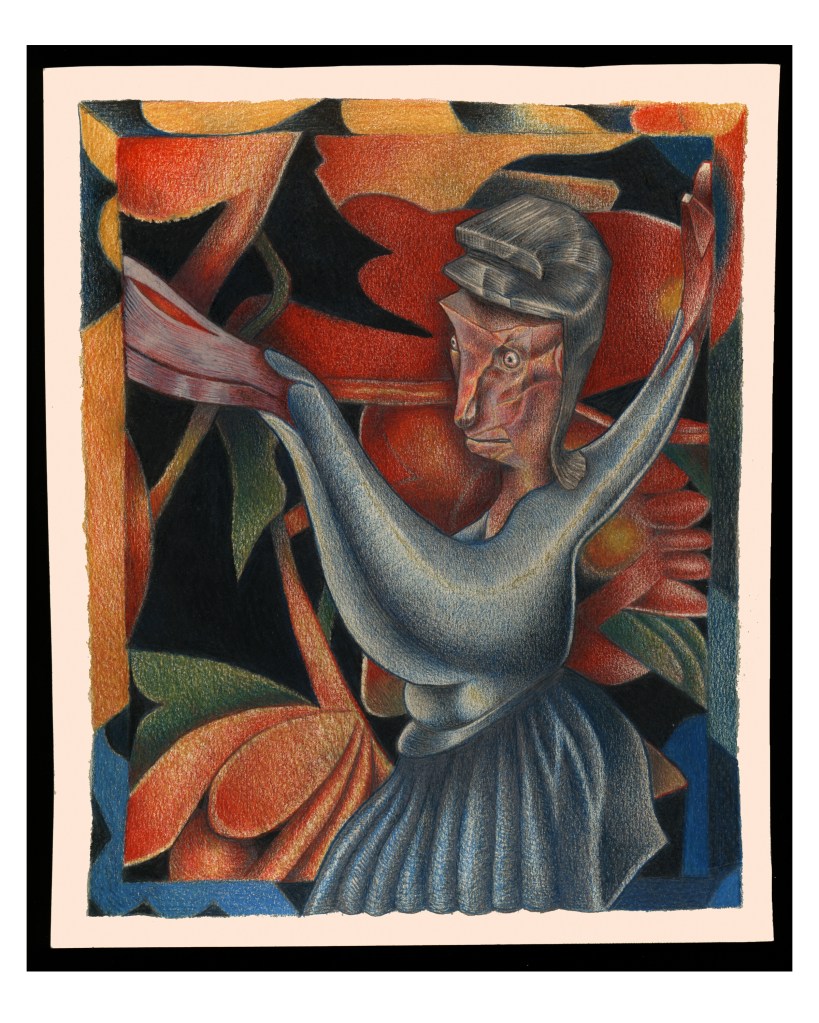
When I read the quote I had a very visual reaction in my head. The quote reads “so badly wounded in a burst of shellfire that he felt life slip from his body, ‘like you’d pull a silk handkerchief out of a pocket by one corner”. The thought of feeling your consciousness being pulled from your body and returning, and it being a pleasantly profound experience. This was very inspiring to me.

4. Could you describe your creative process when starting a new piece? What techniques and materials do you prefer to use?
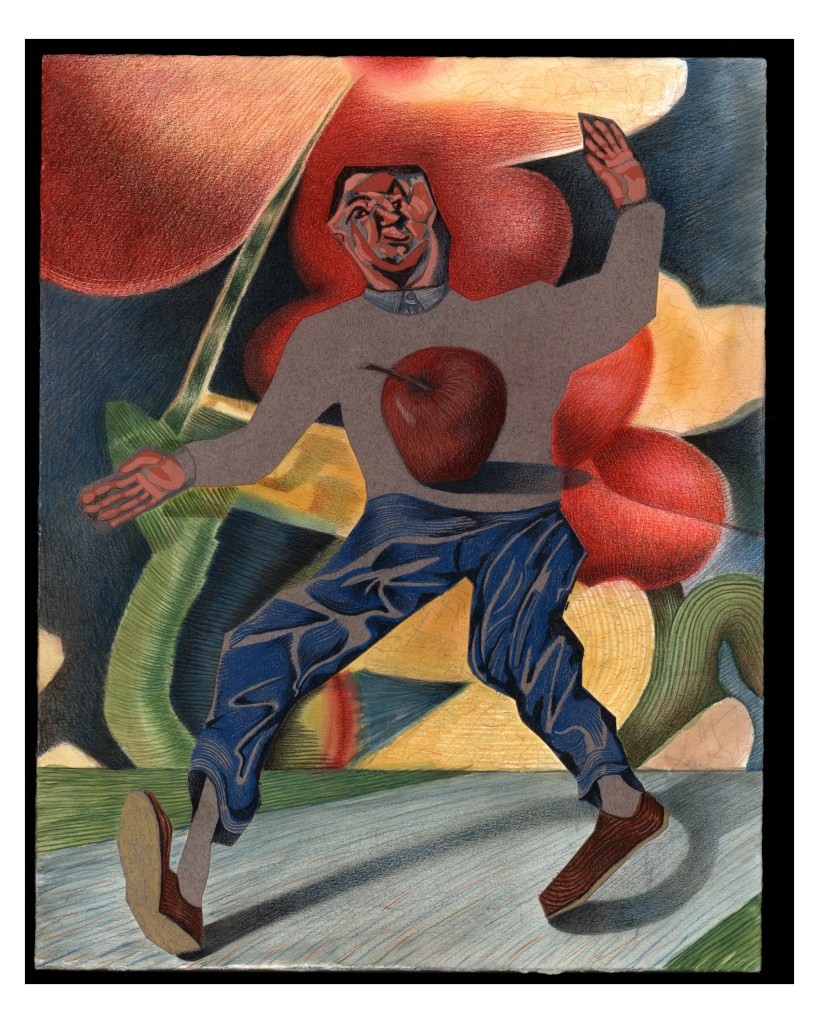
I am big into having a sketch book. I also like to take photographs and mess with them in photoshop. I don’t have one set way, inspiration tends to strike when you’re not trying. I use mixed media on watercolor paper. I usually start with pencil then add layers of colored pencil, watercolor, ink, and acrylic paint.
5. You have exhibited in various locations, including Lancaster, Harrisburg, Philadelphia, New York City, and Leeds, England. How have these diverse experiences influenced your work and perspective as an artist?
I was part of a show at Halle Saint Pierre in Paris and was fortunate enough to be able to travel there. Meeting many other artists there who exhibit internationally was a great experience. Anytime you can see new places and gain new perspectives provides a lot of inspiration to stay open to new ideas.
6. Winning the best in show for the Thrive exhibit at the Sunshine Gallery in 2014 was a significant achievement. How did it impact your career and artistic development?
That was a local gallery here in Lancaster called Sunshine Gallery. It was the first and only time I won best in show. It was an honor but I honestly don’t ow how it specifically changed me.
7. You have contributed illustrations for various publications. How does your approach to illustration differ from your approach to other forms of art?
Illustration work is interesting because it is like trying to look through someone else’s eyes as well as your own. I haven’t done any illustration work lately but would be open to the right project. When I was in school I realized I am more comfortable as a fine artist. I found it difficult to make something that the client and I both liked. It is hard enough to make something I’m satisfied with, that is why I have a lot of respect for successful illustrators.
8. Can you share a particularly challenging piece you’ve worked on and how you overcame any obstacles during its creation?
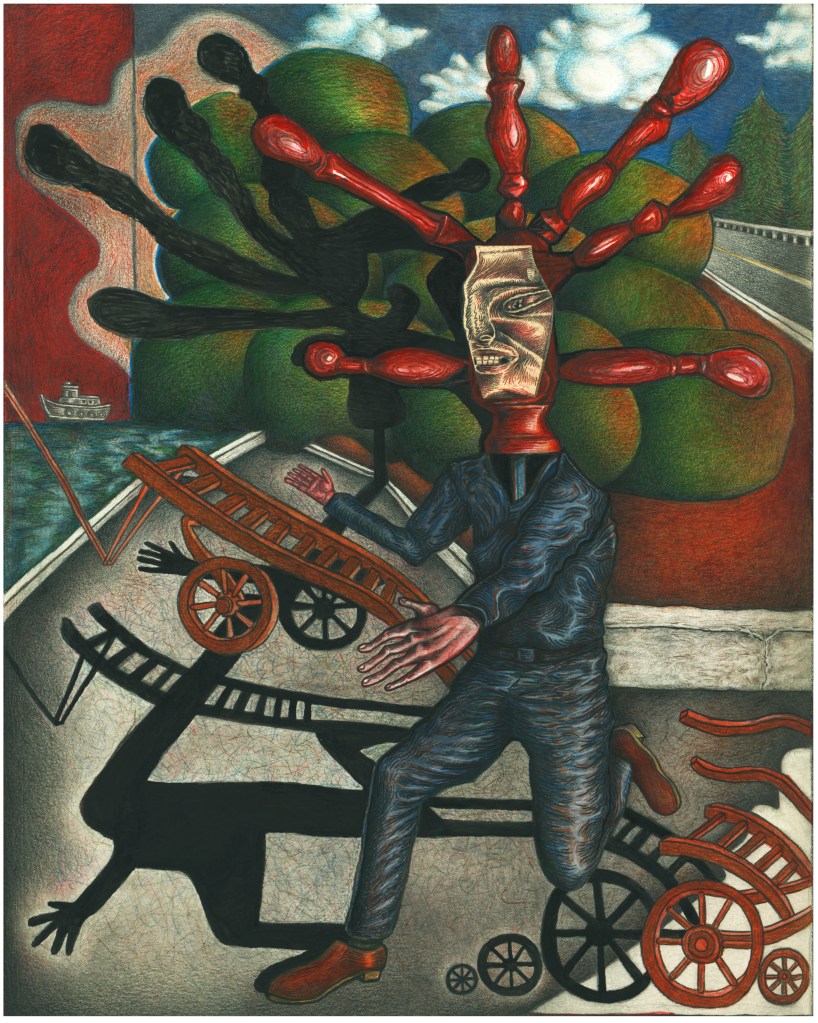
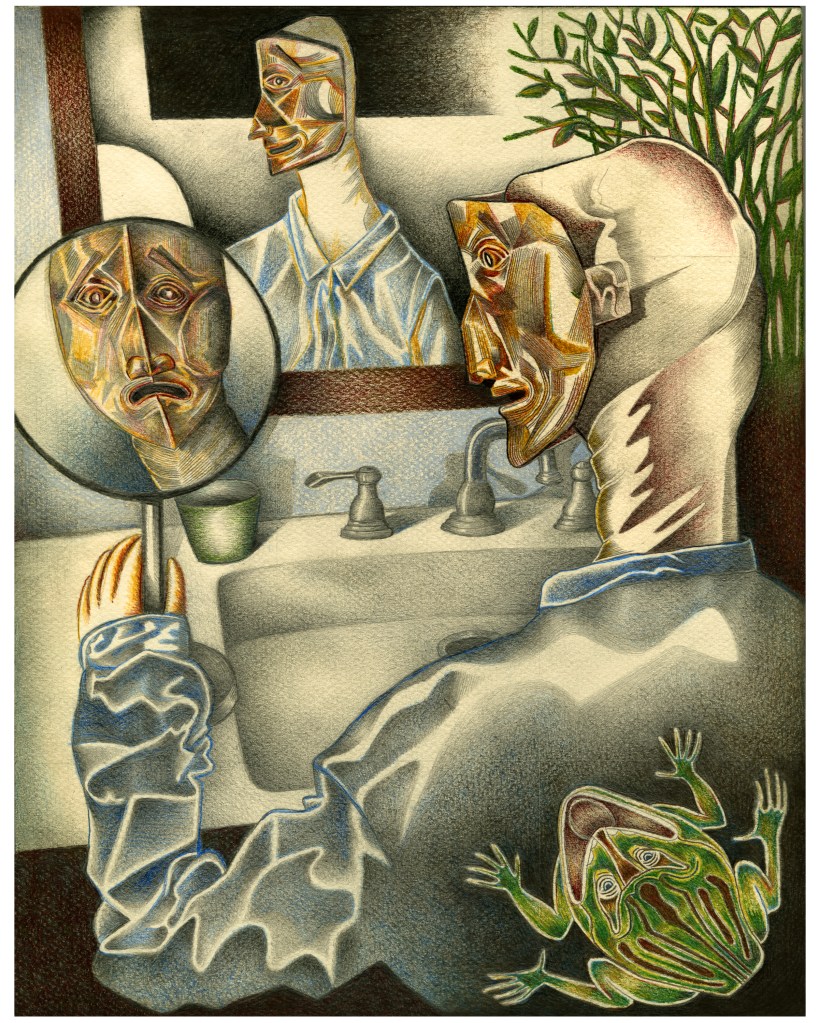
There is a piece called “Out Looking In” in which I was attempting to convey how we experience the world in several different ways within any given moment. I struggled to find a way to show this visually until I saw an image of the Triune Brain which shows the reptilian brain which is instinct, the limbic which is emotional, and the neocortex which is logical. When I saw this I made several sketches and the whole thing felt absurd. Life seems so random and chaotic and we experience it biologically, emotionally, and logically all at the same time. Creativity helps give meaning to the absurd. After I sketched it out and thought about it more I loosened up a bit and the imagery flowed more easily.
9. What advice would you give to aspiring artists looking to make their mark in the art world?
Advice is a funny thing because everyone has a different idea of success, and a lot of times that changes throughout a person’s lifetime. I would say just make a lot of art. Get in the habit of drawing as much as possible, experimenting with different media, be open to new ideas and perspectives, take a sketchbook with you and explore your surroundings. Think about things that bother you, excite you, scare you, things that you love and give life meaning. Take all of that and find ways to express that visually in an interesting way.
10. What does a typical day in your workshop look like?
I am always trying to improve my habits in the studio. I fall short a lot and tend to give into anxiety and procrastination. Looking at art books inspires me to get going. Looking and feeling. Then once I get going I get really focused and can work late into the night. Everyday is different.

 ART HUB
Leave a comment