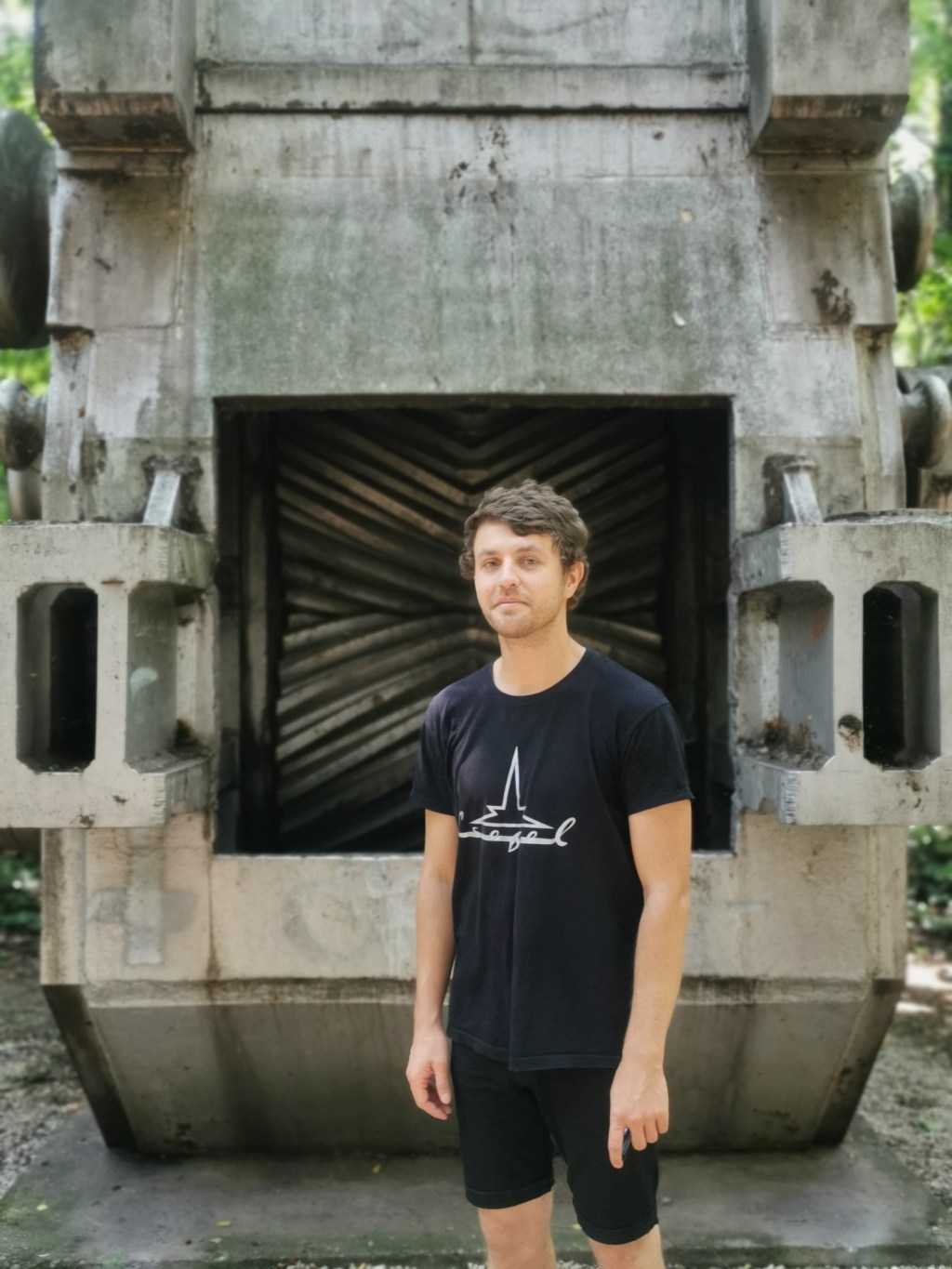
Michele Del Campo grew up in San Nicandro Garganico, a small town in southern Italy. Isolated in the countryside, he would spend his time drawing and cycling long distances, when not at school. When he was 18 his family moved to Milan, and after beginning to study Fine Arts, disappointed with the learning, at the age of 20 he began a pilgrimage which led him to live in many places around the world. After studying Illustration in Falmouth (England) and then Dundee (Scotland) he went to Madrid (Spain) where he resumed his studies in Fine Arts and at the same time he began exhibiting in art galleries. In 2006 he won the most prestigeous painting prize in Spain, the “Premio BMW”, and in 2007 he finished his Master of Fine Arts.
In 2008 he moved to London, where he had several solo exhibitions, and in 2016 to Glasgow (Scotland). In this city, where there is hardly any of the sun that he grew up with, and while he was preparing solo exhibitions for international galleries in Lima (Perú), Madrid (Spain) or San Francisco (USA), he decided there was no point in struggling to find a good artist studio and commit to spending years in the same place.
He stopped accumulating objects, got rid of possessions and began to travel and paint wherever he was, and then take the rolled-up canvases to the galleries with which he collaborated. In 2017 he began to travel with two suitcases and a tube for the canvases, where he captured the inspiration found in each place. In 2023 Del Campo moved to Miami. Del Campo has had solo shows in Madrid, Valencia, Barcelona, London, Milan, Lugano, Lima, San Francisco and Dallas, and has participated in group shows and art fairs in Europe, Asia, the United States and Latin America.
1.Your artistic journey has taken you from San Nicandro Garganico to various cities around the world. After studying Fine Arts in Milan, you embarked on a pilgrimage that led you to study and work in several countries. How did these experiences shape your artistic style and perspective?
In fact I grew up in the countryside, the nearest town was San Nicandro Garganico, and, apart from going to school, I could not see my friends very much. Therefore I would spent my spare time drawing or making small sculptures. When I was 18, my family moved to Monza, north Italy, a very industrial area, and I didn’t like it in the beginning, people were different, the environment was different too. When I was finally allowed to follow my dream and study Fine Arts in Milan, I still felt lost in that environment, as the trend was to paint abstract and my figurative work was not encouraged. It was the Erasmus exchange program that helped me find myself and realise my dream of becoming an artist.

I went to study Illustration first in Falmouth (England), then in Dundee (Scotland), and I felt good because I could be around ambitious and supportive friends. I then went on living in many other places, always abroad, I got back to studying Fine Arts in Madrid, I lived in London, Glasgow, and many other places. From my beginnings as a professional artist in Spain to my long stays in the UK I could notice how the light would change, the themes also would become more introspective, and I would focus more on themes of solitude and inner search, I looked for sunny, colourful backgrounds, but I painted sad gazes.

Eventually, I believe that by changing places so many times, my art became richer and more deep, I got to be influenced by masters who were so different from each other because they were popular in one country more than another, in an age where TV, books and exhibitions were still the way one discovered new art, when the social media were still not a thing. Therefore, I learned to paint by observing works of Sorolla, Edward Hopper, Lucian Freud, Antonio Lopez García and Liu Xiaodong.
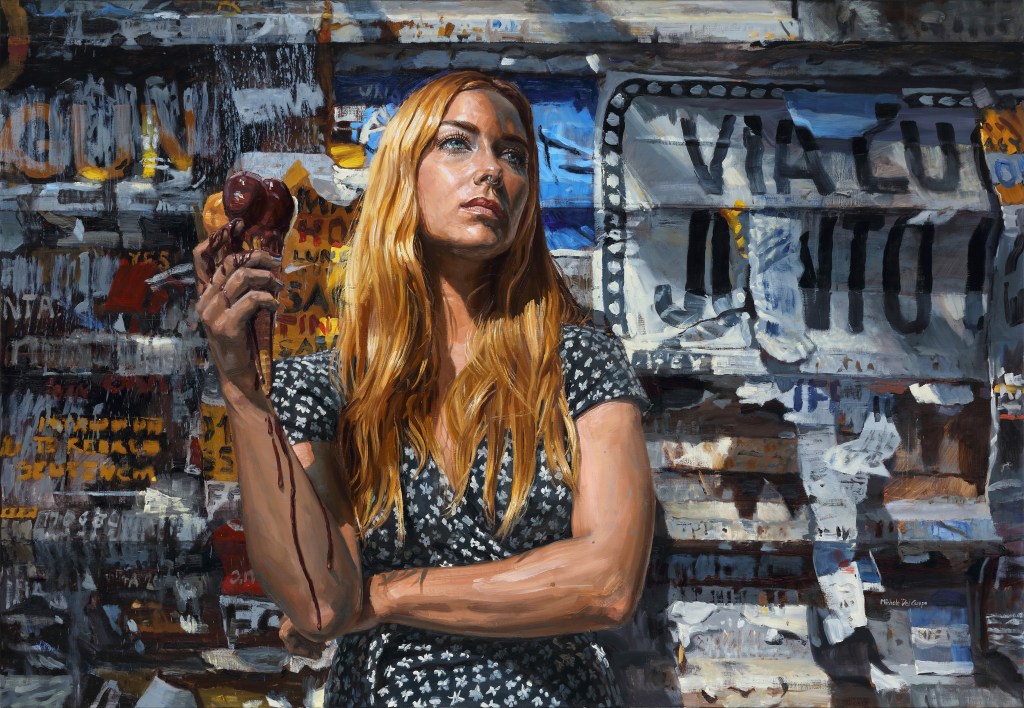
2. You won the prestigious Premio BMW in 2006 and completed your Master’s of Fine Arts in 2007. How did these milestones impact your career and artistic development?
Winning the BMW Painting Prize was the dream of all Spanish painters. I participated 3 times and the first 2 I was not even selected for the exhibition, but the third time I was taken aback completely when I got the call from BMW after the jury’s decision!
At that time, 35.000 Euros were a huge amount, and I was still studying at university. I used those money to plan my next move to London, which I made the following year, when I completed my master. However, I was already having sold-out solo shows every year since 2004, while I was still a student in Madrid, that was an intense period because as soon as I finished my classes I had to rush back home to paint for my next solo show! I can say that those achievements didn’t make my career, however, they might have helped make a few extra sales.
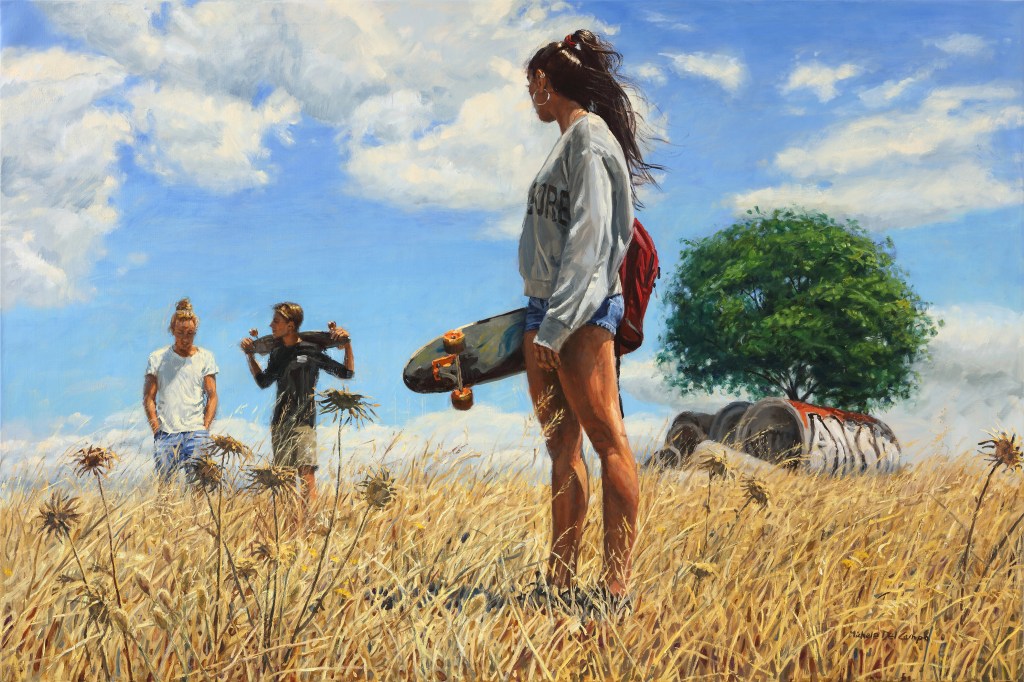
3. You made the decision to travel and paint on the go, rather than settling in one location. What inspired this approach, and how does it affect your creative process?
I was in London for 8,5 years. In those times, I realised that stability was not a thing for artists. There was a huge waiting list for artists to get any decent available studio space and even when I got one, it was temporary. In London I changed studio 3 times, even those studios that were considered permanent ended up being re-developed into luxury apartments and artists had to pack and leave.

Then I moved to Glasgow, after succeeding in getting another very coveted big art studio there. I never realised how much stuff I had accumulated until a move had to be made, I even had a very heavy etching press, I loved it and I used to do printmaking, but I needed 4 men to move it from place to place! In my two years in Glasgow, I felt trapped, I had to constatnly travel to find inspiration in the sun, and I had my solo shows in Madrid, in Lima, and I started preparing one for San Francisco. In those travels I learned to bring only the essencials with me and set up a studio wherever I went.
I even stopped renting apartments long-term, I saved, living in my art studio in Glasgow and I rented temporary apartments in the countries I would visit. It felt liberating, and even more when I left Glasgow, I sold my etching press and threw so much stuff that I had accumulated but I was not using. By traveling and living temporarily in different places I would open up to make new friends, to experience new places and get a constant flow of new ideas for my next paintings.
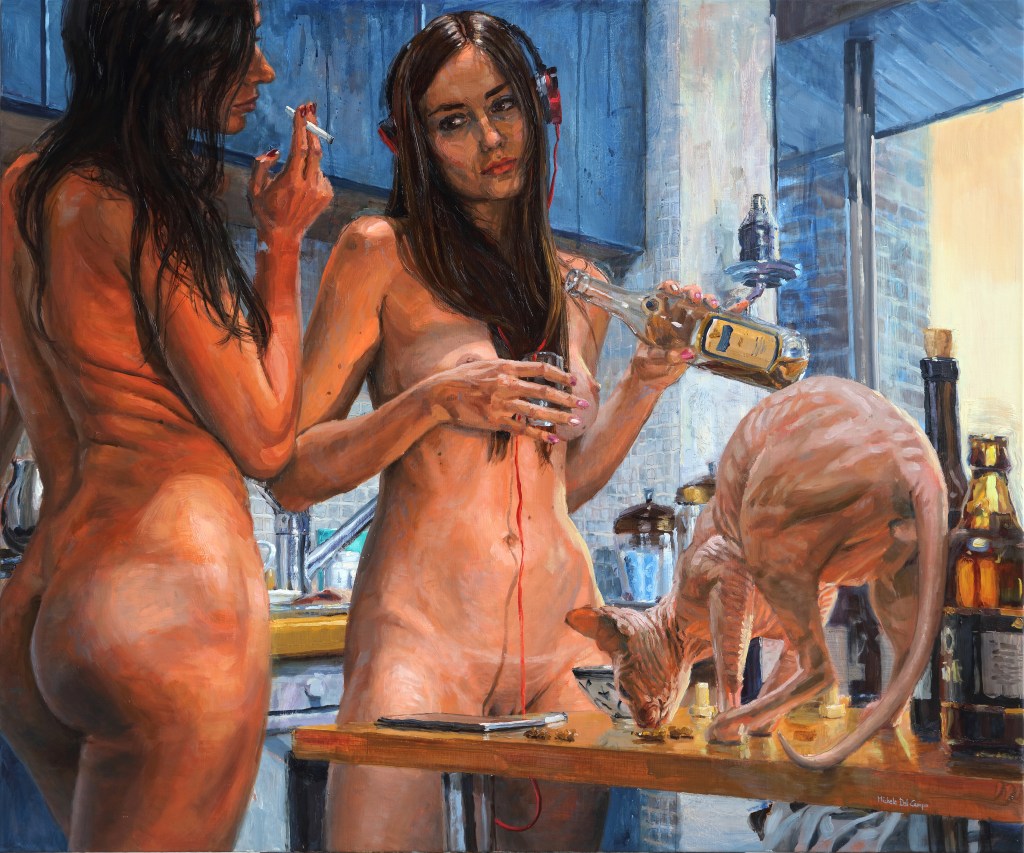
4. Your work often blends elements from different cities and locations. Can you discuss how you weave these diverse influences into your art and the narrative you aim to create?
I always take many separate photos of elements and people that I might use to create an image. However, when I ask somebody to pose for me, I already have an idea of the image I want to create, and that dictates the direction of the light, the point of view of the camera, the gesture and the emotion expressed by the subject, and everything else that makes a painted “reality” plausible.
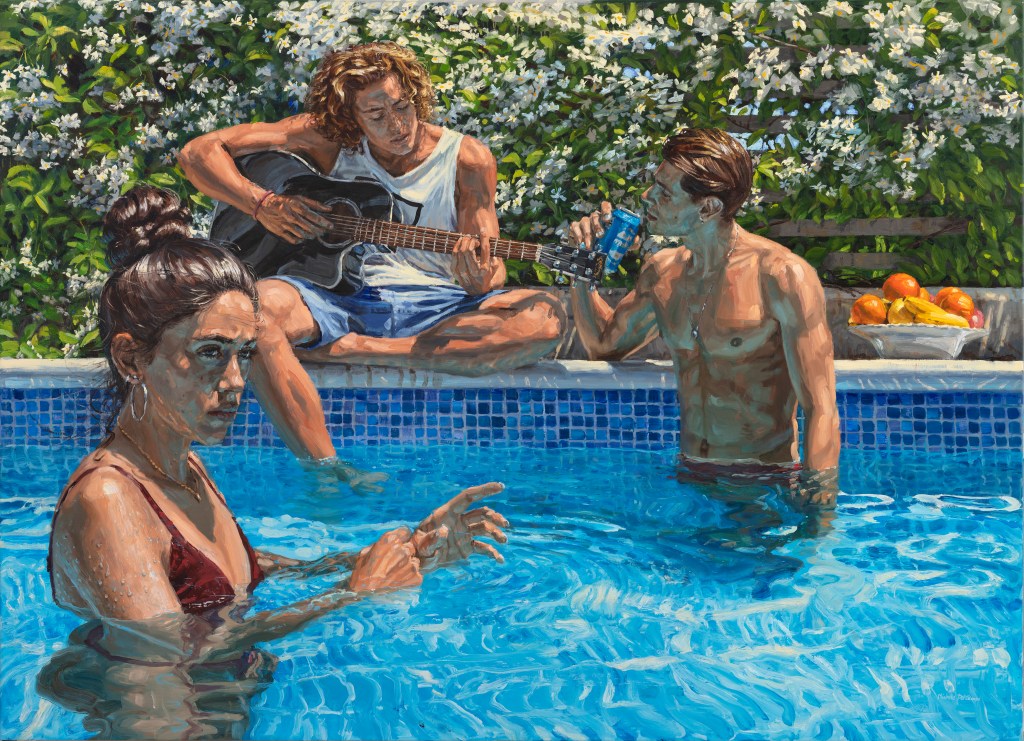
5. You focus on individuals and their stories rather than specific locations. How do you choose the subjects for your paintings, and what narratives or emotions do you aim to convey?
I paint the subjects that are close to me. I observe continuously how they interact, their movements, their gestures and I also listen to their stories. Sometimes I don’t notice somebody as a potential subject until I visit him or her in their place, then I discover peculiarities that spark my imagination and make me want to paint them. I am especially attracted to scenes of daydreaming and melancholy, but there are also paintings where the mood is of delight and zest for life.
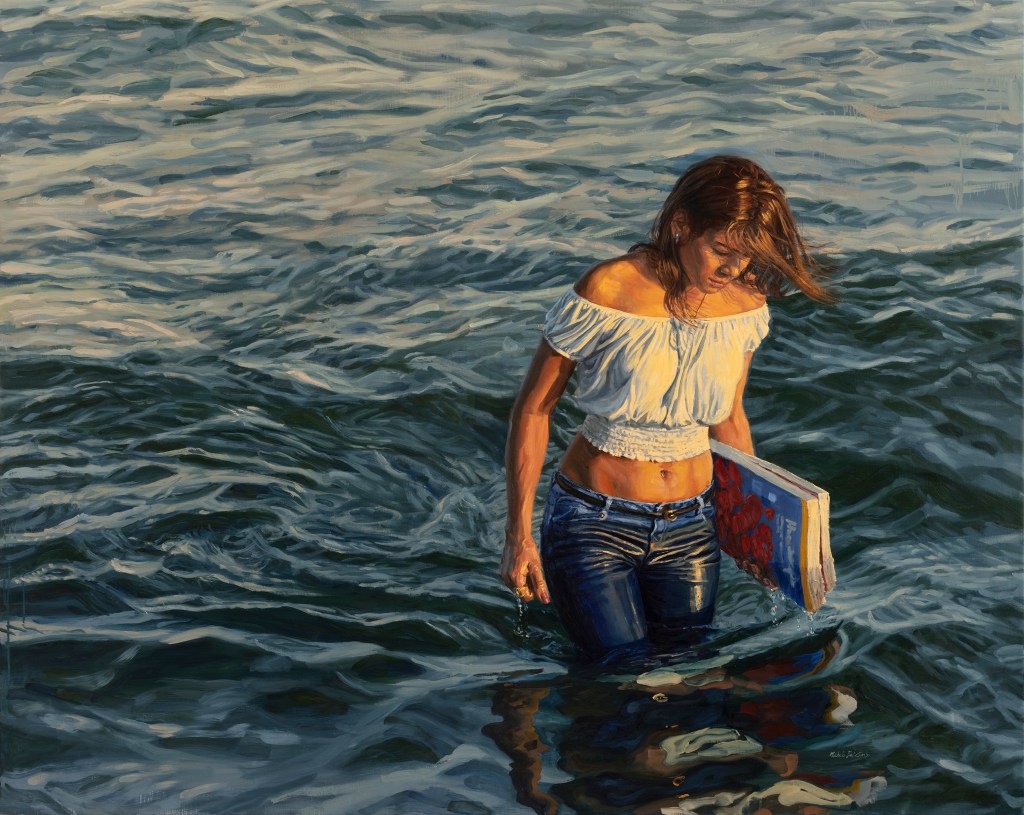
6. How has your recent move to Miami influenced your work, and are there new themes or styles you are exploring?
The landscape, the light and the ocean, they all create a special positive energy in me, and that is reflected in the positive general mood of my latest paintings. However, I keep traveling, doing artist residencies, experiencing old and new environments and those places also tend to surface in my themes.

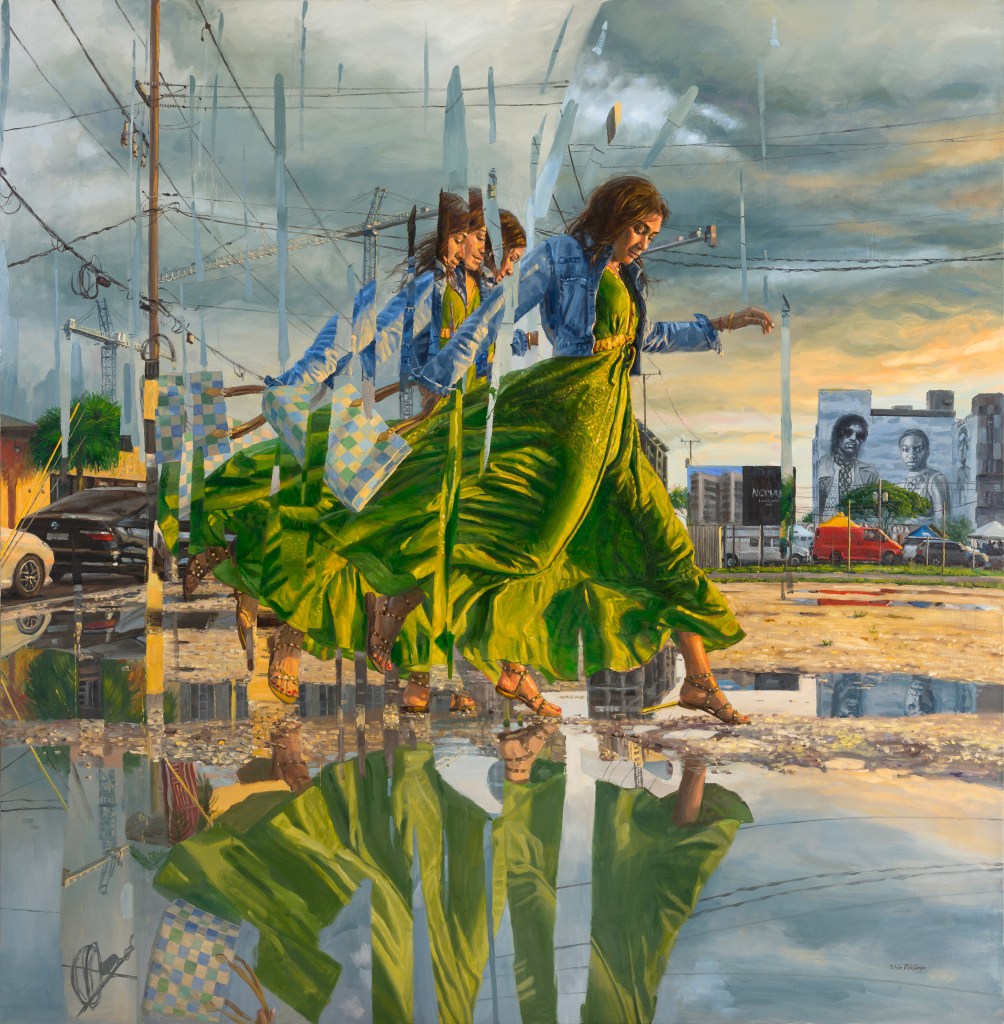
7. Your recent paintings transcend realism, combining fragments of different realities. Can you explain this approach and how it reflects the way we interact with images today?
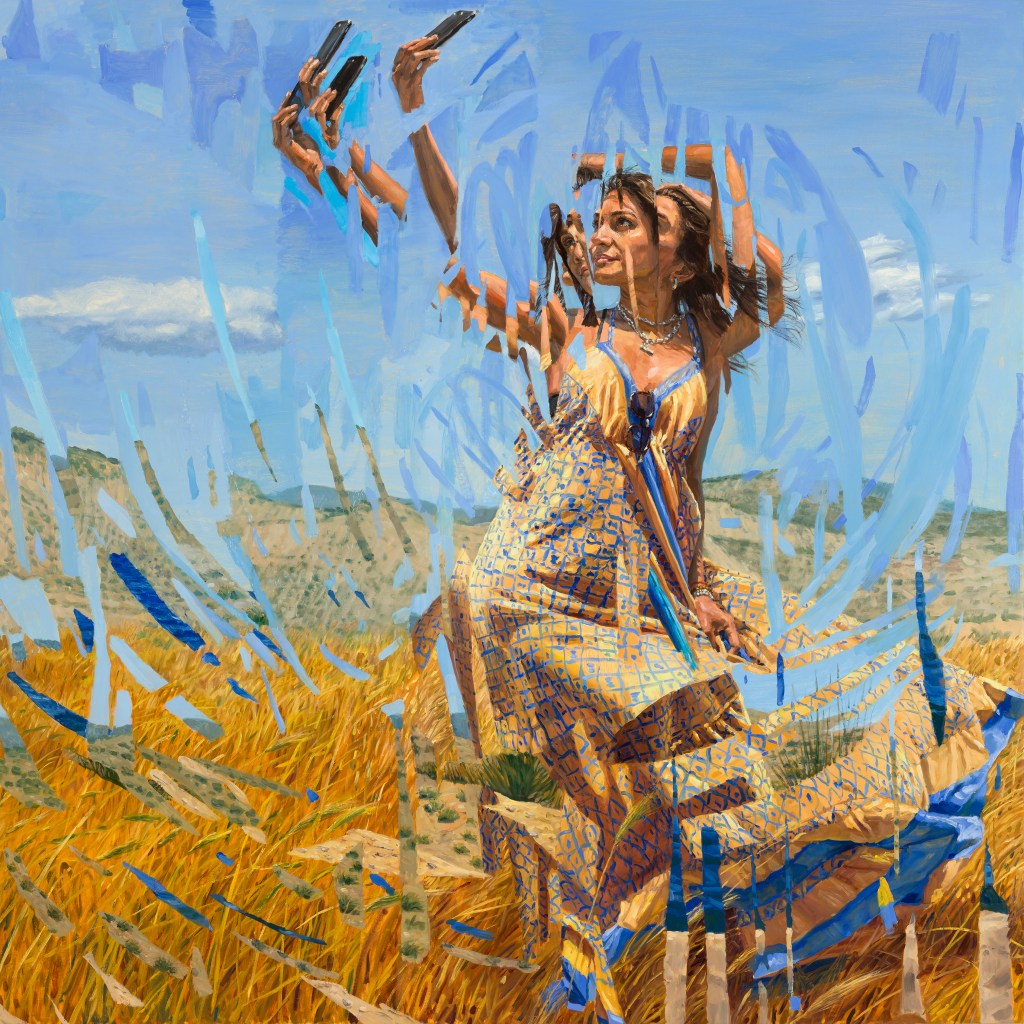
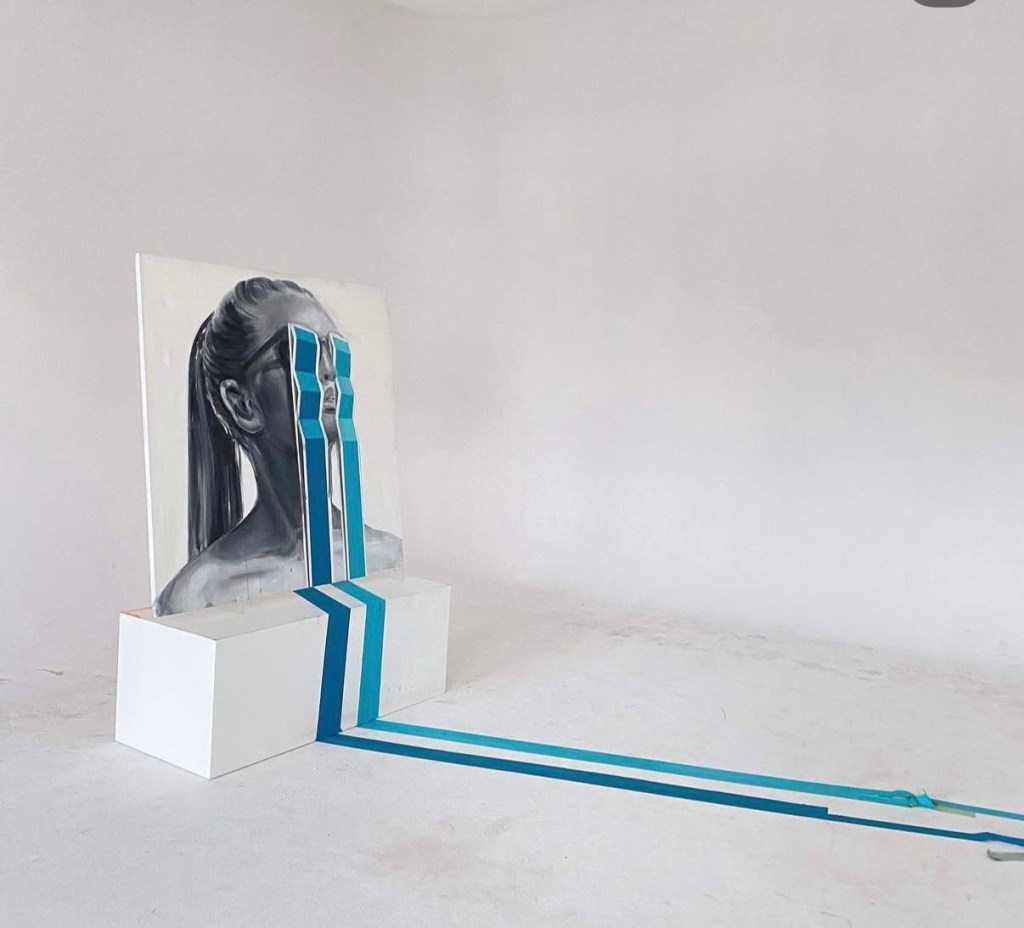
I started my series of the “fragmented paintings” during the pandemic. Because of the disruption that the Covid caused in our life, I had abandoned a couple of paintings that I had started in 2020, and I only finished them in 2022! Because of the effort to combine various photos to have the perfect image, I had difficulties “closing the gaps” and making a realistic image to use as a reference for my painting. They also represented realities that had now changed, for example, in “When We Were Together” the two girls who had been a couple, had broken up and I didn’t feel like representing them in the same erotic scene anymore, so I deleted partially the face of one of the girls and I gave a stronger presence to the other girl, the rest of the image is a juxtaposition of several moments that I intended to represent the past.
In the end, the way we read, the way we consume images and media content in the age of the social media and the smart phones, is not anymore lineal, and our brain is getting used to process bits and pieces to come to a conclusion, avoiding the effort to see or understand “the whole picture”.

8. Could you describe a typical day in your studio or while traveling? How do you structure your time, and what routines help you stay productive and inspired?
I don’t have typical days. I wish I had, but living a nomadic kind of life means that one needs to adapt to the circumstances and create a different routine in each place. For example, in Florida I usually sport in the evening in a gym with air conditioning but I just spent the months of July and August in Madrid, and in those hot months, not having access to a gym, early morning is the only time when the temperature is bearable for sporting. Also, I was doing a project on portraits and stories of immigrant artists and I had to quit painting to dedicate time to just writing.
Here in Florida I usually start my day doing admins, emails and phone calls, many of which are with Europe, and because of the time difference, I can only do those in the morning. In the afternoon I paint for around 5 hours, then I go to the gym to do some exercise 3 or 4 times per week, then I might go out or spend some couples time. However, the administrative work is sometimes overwhelming and there are several days in the week where I cannot really paint because I need to deal with other important things. I usually take the Sunday off, and I try to have a social life whenever possible.

9. What upcoming projects or exhibitions are you excited about, and what future directions are you considering for your work?
I am excited about my new solo exhibition in Galería Ansorena, Madrid, with my series of “fragmented paintings” in March or April 2025. It will be the first time that I will be exhibiting solely this new line of work, and I am so happy that it will happen in the city where my career began! Other than that, I will be working on completing a book called “Immigration Stories from Florida Artists”, in which I interview, portray from life and tell in my words inspiring stories of immigration, uprooting and the building of a new sense of identity in creatives from a wide variety of countries who came to the US.

10. What advice would you give to emerging artists who are navigating their careers and seeking to develop their unique voice in the art world?
Explore, expand, experiment, play. Don’t stop at one technique, or one discipline, take time to learn all that you can, and make the process enjoyable by having variety. Everything, even the experiences that you make in life outside of your art, will eventually come together and form who you are in your art. There is nothing less interesting than a young person who paints the same motif over and over again. Therefore, my advice is, essentially, to go beyond and expand.

 ART HUB
Leave a comment