Falling in the funnel of internet content, it might be challenging to find a meaningful substance. However, we all know that the internet is not that bad after all, and social media such as Instagram or TikTok can even teach us something from time to time. And with that being said let me introduce to you – Solo Show.
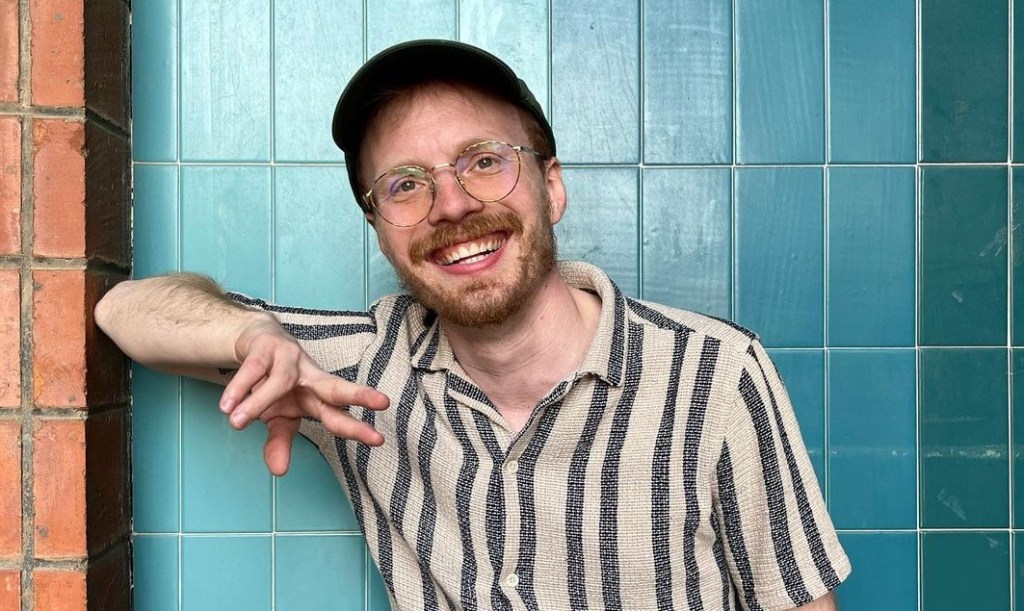
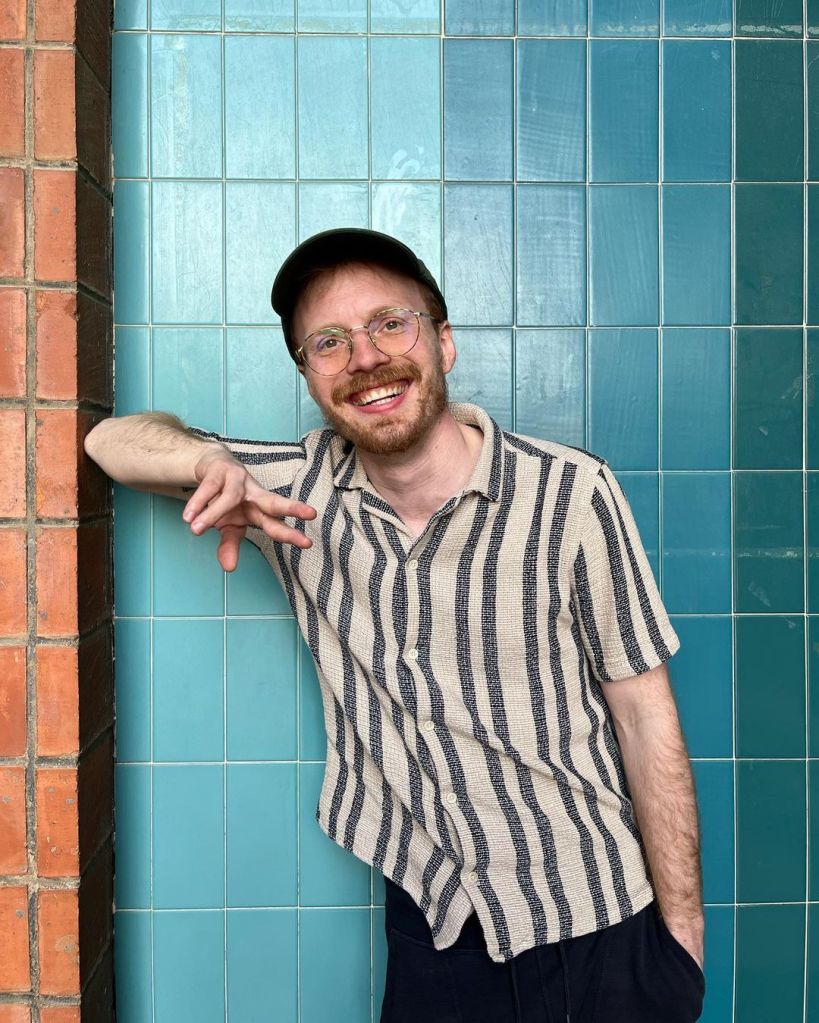
Solo Show is a channel created by Tomasz Szymański, whose content is dedicated to contemporary art. Through short videos on Instagram and TikTok, he presents the work of visual artists. A philosopher and accountant by education. A supporter of the idea that contemporary art is for everyone, you just need to find an interesting language to talk about it! This last thought truly inspired me to meet with Tomasz to talk about his work, how art can be inclusive, and what is the genesis of his project. Initially, I asked Tomasz about the roots, what was the idea, and basically how Solo Show was born:
By default, my target audience isn’t people who are interested in contemporary art, nor creators or artists. Instead, it’s people who are completely outside of this world, who have never really heard about contemporary art. It’s for people who just randomly come across it through the algorithm. And this, in a way, shapes and sets up all the content because you kind of have to assume that these people don’t know artists you’re talking about or what they do. You have to show them everything, and at the same time, make it visually attractive enough to catch their interest. I actually started with quite long forms, classic documentaries, I would say – ten-minute profiles of “artists with talking heads”. People would say, that it’s “cool”, and they still do. But, sometimes they add, “It’s a shame there’s no longer material with those artists,” especially when they see a 50-second video. At the same time, I see my role differently – someone else might make a full-length documentary and truly dive into the subject, as Łukasz Ronduda does so well. However, I prefer to be like a fishing rod, a hook that gets people’s attention and makes them want to find out more. People won’t dive into a longer topic, they won’t go to an exhibition, read a book, or watch an entire film about an artist if that initial spark doesn’t take root in them first. And that’s the point.
Why do you think it’s important to target people who aren’t typically part of the art world?
Why these particular recipients? It’s a funny question. Why not create content, as I understand you’re suggesting, only for professionals, for a narrow group of professionals, and instead make short, popular content. I guess, simply put, art has given me and continues to give me a lot personally. My entry point, is precisely my background, which is not art history-related, because I graduated from [three different courses] Philosophy, Accounting, and Artes Liberales. This whole background makes me a kind of outsider’s voice. That’s why I don’t really want to enter the field, the direction of professional art audiences because that’s what critics and curators do. They formulate this multi-layered narrative, based on references to art history, breaking it down into elements. And from the very beginning, it couldn’t be my thing. The question is, what role am I playing? I don’t play the role of a professional, even though I have some experience working in a gallery, but it’s a practical experience, I’d say. So, all I can do is share my passion and tell my story. After a while, I really wanted to incorporate a personal perspective into all of this. In a sense, these materials have value for me, for example, with more famous artists such as Katarzyna Kozyra, Koji Kamoji, and Paweł Althamer. Not because they are super famous, but because these are people I grew up with, who shaped my sensibility. I reckon the strength of this channel is that I talk about my experiences, but they are not the experiences of a professional, curator, or critic, but of an enthusiast. And I can only move in this area, that’s my feeling. So, in a way, I’m targeting people like me or who I was until recently.
It’s interesting that you call yourself an enthusiast, even though I have noticed that you contribute much more than some people who supposedly do it professionally. Before the interview, we talked about that action with the “advertisement” that was appearing all around the city promoting your channel. For me personally, that was what pushed me to ask you for this interview as I felt that Poland is lacking in integrating art into the fabric of its cities and towns in ways that would promote inclusivity. Could you talk a bit about that?
I don’t think “advertisement” is an adequate word. It was, to put it directly, a barter collaboration, meaning non-monetary, between me and Jetline, which owns over 400 screens in Poland. In my opinion, it fits into a very current tradition in Poland. Not only in Poland, of course, yet for example AMS made its billboard spaces available to artists like mentioned before Kozyra. There were all those scandals where she suddenly presented her nudity on billboards across the country. The Tworzywo Group also fits well into this. With their performances, integrating cultural content into the media, pop-cultural message. This also has simple market reasons because it increases pedestrian interest in these screens. And right after me, a laundry detergent would pop up. But I don’t see anything wrong with that! These were selected ten-second clips that were visible in such, as you say, non-matching places. I loved it when there were screens near a gym or a liquor store. And suddenly, completely random people, I could say, had contact with contemporary art. That was interesting.
So, it was a collaboration, not something you had to spend money on.
Yes, it was a collaboration.
It’s interesting, because okay, I’m not saying such things don’t happen because you’re the best example that they do. However, I feel there aren’t enough of them. It shows that there are opportunities for such collaborations to happen, and they don’t necessarily have to be costly. In your case, it’s not financially burdensome to say, “I’d like to, but I can’t afford it.” I think it’s cool mainly because it integrates into everyday life. And that’s how art should be, it should be more present. What do you think is the key element to make that happen?
For me, the key element is shaping the language appropriately. If we’re talking about popularizing and reaching the broadest audience, that’s the biggest hook. How to build this message from existing blocks? For example, I’m increasingly reaching for archival artists who are no longer as present in the art scene as they used to be, and these things are available in a way. It’s not like suddenly, with a large reach, I have access to treasures I didn’t have before. It’s about creating a form of communication that is both attractive and communicative. And not trying to cram too many things into it, which is also a problem. It’s a bit the same with exhibitions and cultural life, that there’s a lot of great exhibitions, cultural events, etc. But an ordinary recipient can’t process it all. So, it’s also a reason for channels like mine to function, to point out interesting things subjectively through personal preferences. This can have a much greater impact than weekly listings of all exhibitions, which also have enormous value but for a different group such as professionals who want to stay up-to-date.
Do you think that the language might be some kind of an obstacle? Is shaping that language that reaches these recipients a challenge? For instance, sometimes during exhibitions, there are descriptions that make you stand there, and wonder what’s that all about… Is it more of an issue in the other direction, that someone thinks it will be over-intellectualized, or is it about finding that balance, to present it in a way that is, let’s say, not just understandable but engaging and pleasant to listen to? Does it come naturally to you?
These are two separate topics. Those are two completely separate languages and two separate functions of language. The curatorial text for an exhibition is supposed to provide something; once you’ve arrived at the exhibition, it should offer you a deeper entry into it. Generally, that’s how I perceive it; that’s its function. The language I use on social media is meant to be as synthetic as possible, for communication purposes, and for me at least, creating it comes with great difficulty. You have to, in a sense, rid yourself of everything you already know, and the hardest part is to empathize with the person who knows nothing, who receives this material, who can get discouraged and turn it off at any moment and at the same time really has no clue about what you’re talking about and how to create this message, how to arrange the sequence of sentences, which terms to choose to make it understandable.
Another thing is what happens within the gallery, in cultural institutions, and what language they use. They, as I said, should provide this in-depth insight, and indeed, it’s a bit like what you said. I don’t even have a problem with the fact that sometimes these texts are difficult, although I would prefer them to be more communicative, but that’s somewhat their function, to introduce you to a higher level. However, the problem really starts when they turn into empty rhetoric, operating in some hermetic slang. I’m actually trying to combat this quite a bit in Solo Show, creating these texts and talking about this hard work. Most of my messages are created in such a way that I simply take, for example, the curatorial text and just chop it down, considering what is important. It often turns out that it could have been significantly shortened, that there’s very little essence there. That’s problematic then. But the very hermetic language is hermetic, and I also feel that many of us were drawn to this world a bit because it has its own rules, its own language, and it’s not so readily available at various stages. This is a formulation that I really like and use quite often: contemporary art gives a lot, but it also requires a lot, and you need to devote some time to really enter into it.
I’m more concerned about that sometimes these are just mountains of wording, that doesn’t bring anything. Interestingly, sometimes when I look at English descriptions they are much more simplified.
That’s interesting; I actually don’t have any reflections or experiences on that, but it is intriguing.
Your channels has been there for 2,5 years. How have you expirienced it developing over this time, especially since you’re progressing quickly and everything is moving forward? For instance, reels are a big part of Solo Show, did they come out yet when you have started the channel?
That’s a good question. They probably came out similarly to Solo Show; that’s what I think.
But generally, how do you feel about what works and what doesn’t? For instance, what attracts people, and what attracts them less, and whether it matters more? Have you given up on something that didn’t work?
What have I given up on? That’s a funny question. I’ve given up on a lot of things. Well, I don’t know; in the beginning, for example, I had the ambition to use English to ostensibly broaden my audience, and I gave up on that. And that was a huge breath of fresh air for me, that I could finally express myself in my native language, which made the content feel a bit more natural and spontaneous, generated as if under the influence of the moment, and that’s what it was about. I definitely gave that up.
Did you have the similar impression on “giving up” something when it comes to, for example, some communicative things—like, the way you express yourself or a specific way of filming?
Yes, now I’m collaborating with an operator. Well, those aren’t things I’ve given up on; they’ve rather been added. For example, I now have an operator, which is a huge convenience, or I have an app for adding subtitles, which is also a game changer and saves a lot of time. Another thing, which is something cool I gave up on was having editors for those Instagram materials. I’ve started out editing videos myself. I watch a lot of TikTok and Instagram and I try to implement different editing styles and techniques on the fly. If I didn’t edit myself, I would feel a sense of loss because it’s important to me.
It’s interesting that editing and operating seem to be jobs that many people overlook. They think social media content is something anyone can do. This caught my interest; I didn’t know how much effort you put into it.
In the whole battle of being an operator, creating offshoots, and editing, it seems to touch on that DIY feeling. I also gave that up; my direction is no longer about mimicking the quality of documents about art from TVP Kultura, or that television quality, or even YouTube quality. Most YouTube content is filmed with mirrorless cameras. We shoot everything with a phone. For me, it’s important that the content’s honesty and its naturalness and spontaneity are tied to the visual form. The fact that it looks unrefined, as if I spent little time on it—though the opposite is true—brings me great joy.
Did you have any moments where you felt overwhelmed by it? Did you have something that really surprised you when you started working?
Well, there’s an element that’s very delicate, almost surprising every time, and that’s arranging meetings with artists. For no one it is a natural process to enter their studio with a camera; it creates stress for them, as they worry they’ll show something they don’t want to reveal or present themselves in a way they don’t wish to. For me, it’s also a constant stress not to put them in an uncomfortable situation, not to misrepresent reality, while also getting the content that matters to me and that I feel will benefit them. Creating that space for the meeting with the camera often takes a lot of time. In fact, the editing and operating work, and writing the offshoots, even though they are significant, are still just the tip of the iceberg. Some meetings are arranged three or four months in advance; we usually schedule with very busy people, so those dates often change. It’s interesting and very delicate because it relies heavily on trust. Especially in the case of my content, which is also a bit humorous, attempting to strip contemporary art of its standard, elitist, somewhat mysterious aura. I think that’s part of it—that fear of losing that mystery is the biggest concern. So it’s an interesting shock every time, and then there’s immense satisfaction when you see the material that’s been released, and you recall those few months when you thought it wouldn’t work and it ultimately does.
What other surprises were there? The biggest surprise was how widely and quickly the Art One Shot series took off. That was a huge surprise. I was actually doing very different things. From making quizzes on stories to posting documentation of various exhibitions. I was doing a lot of different things, and they were met with such a modest reception. Even though you believe in what you do, there’s always that moment, when it finally starts to take off, and it’s such a total shock. And it really happened so suddenly.
Okay, let me ask two last quick questions. I really liked what you said a moment ago, that you are stripping away the elitism, and that there’s a bit of a loss of that mystery, and do you feel somewhat like an intruder of some kind because of this idea? On one hand, it’s something innovative and interesting, and on the other hand, well, the art world is becoming more and more open, but not entirely. How do you feel about that? Moreover, we are still learning how to operate on the internet, because, well, it’s still very new and like everything is increasingly being integrated there, and yet I feel that as human beings, in general, we’re struggling with the usage of the internet and what works, what doesn’t, so…
Yes, I agree. Do I feel like an intruder? No, I don’t feel like an intruder. Could all my activities have some negative context? The biggest risk is that there’s a need, precisely for social media, to flatten that artistic message a bit, reducing it to a few key points. And that’s in a way the risk, and that’s the problem, because in this short form, you can never tell everything, which is both a plus and the biggest problem of it. It’s a continuous task of how to mediate that, how to give space to the artist and create a platform where they can reach a wider audience while still being themselves, and not turning it into some kind of caricature. A certain risk is that everything tends to lead to people’s interest, that here the focal point is always art. The worst thing is if it just gets stuck on a handful of colorful characters that fly by on Instagram.
I have so many questions now, but I’ll close it with two quick ones; How do you see Solo Show in 2.5 years?
I can confidently cut that question off, because I try not to think that way at all. That comes from several things. One of them is that everything is changing really fast. A lot in my content changes regularly, but that also comes from the fact that people get bored very quickly. I can even tell you that the format of studio visits, “Art One Shot” is… well, I’m recording some last episodes now, and I intend to do completely different things. I see that both people and I are starting to get bored with that formula. In a way, the biggest joy for me is that I can start searching for new ideas almost every week. Of course, some develop quite far and will only be realized later on, but that’s a great value. I want to keep enjoying that there are still so many meetings that completely surprise me, and I still take so much from them. I hope it stays that way.
Just recently, we recorded with Paweł Althamer, with whom we were supposed to do a standard interview, and he is an artist-shaman. A person who creates an incredible atmosphere, that element of participation, inviting others to create. An artist who is at the top, and at the same time deeply sheds his ego. He doesn’t cultivate those standard forms of celebrating his popularity. Suddenly, without telling me anything, he invited a group of Nowolipie, meaning people with multiple sclerosis, with whom he works. They usually have some small room, this time he brought them to the studio. In a way, he did it to contradict me [laugh], and I couldn’t record my interview as I wanted. But we recorded something completely different and we’ll see how it will turns out. At the same time, for the last two weeks, I’ve been constantly thinking about that meeting.
These are such things that are the positive sides of not running, in a sense, a profile about art, but being an influencer, that this is very much my personal story.
Do you like to call yourself an influencer?
I used to dislike it a lot, but today I like it, because in essence it comes down to all the points I do. That is, I encourage people to see exhibitions that I like, I show them artists I enjoy. It’s obviously a completely different form of being an influencer than how it usually is, but yes, I think so. Maybe even for the sake of contradiction I’ve come to like it. It’s about those best moments, that it’s an element of your passion.
Talking to Tomasz, after being quite mad at the art world reacently, he’s showed me that light in the tunell, and the bright side of social media. I even told him that he’s unexpectedly humble calling himself an influencer, and an art enthusiast, at the same moment bringing such a valuable and educational elements to the both worlds of art and internet. Even though, if someone, wants to go deeper, they have to reach for that themselves, I believe that is the strength of Solo Show that it helps you start. However, from the time we’ve met in April there’s been going on a lot on Tomasz’s channel. No matter, if you passionate about art, completely new to it, or perhaps even a professionalist you should check out what’s going on @sholo.show!

 ART HUB
Leave a comment