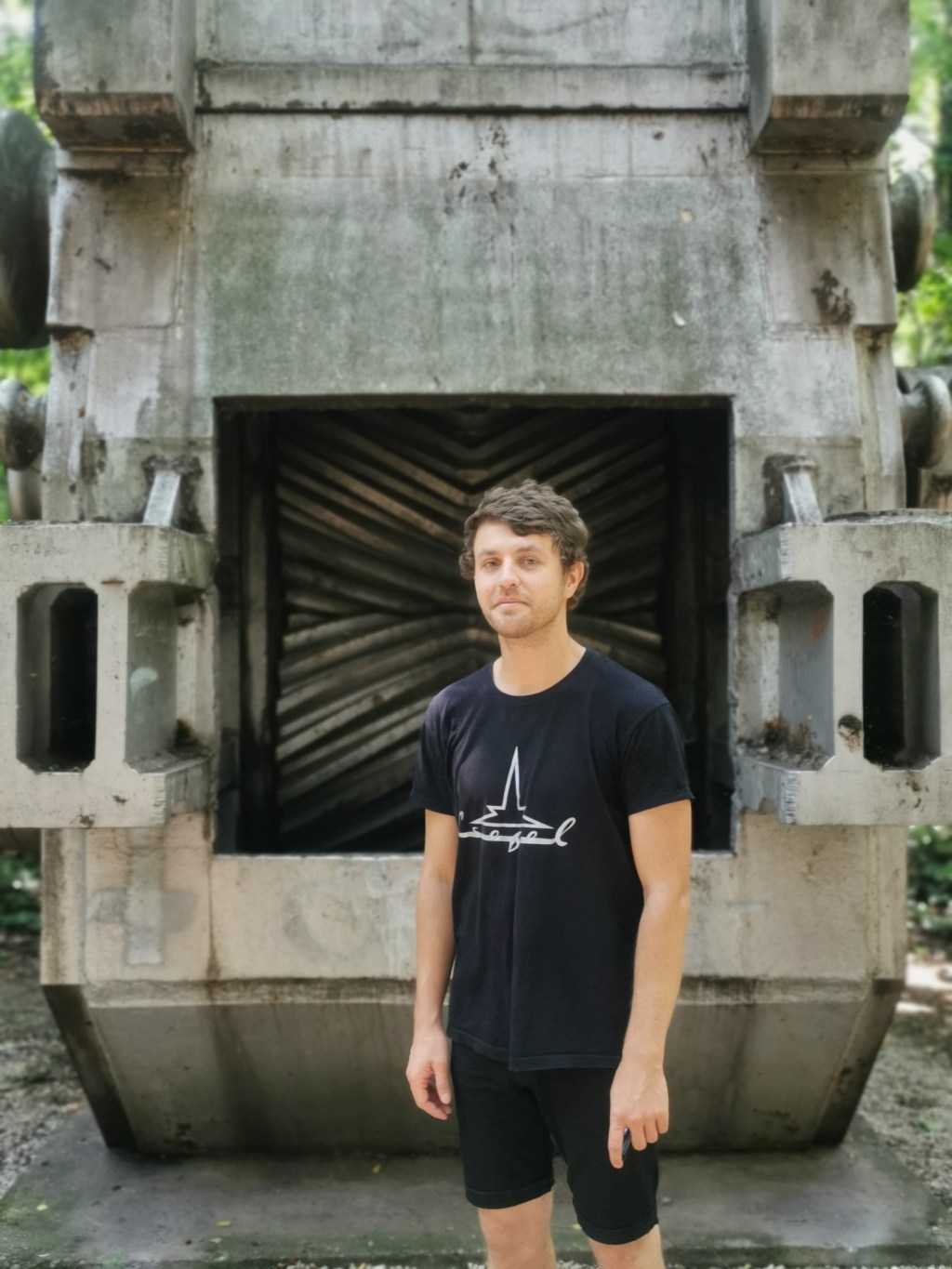
Born in the early 2000s in Beijing and currently based in London, Li Chengcheng, known artistically as LEMO, is a rising talent in contemporary art. A student at the prestigious Slade School of Fine Art, UCL, LEMO’s work spans a diverse range of media and styles, blending cultural narratives and personal experiences. Since 2019, LEMO has exhibited in various group shows, from collaborative projects in London to curating exhibitions in China, reflecting an expanding international presence. In this interview, we delve into LEMO’s artistic journey, inspirations, and evolving creative practice.
1. Can you tell us about your journey as an artist and what initially drew you to fine art?
I started to be obsessed with thinking about the nature of existence since very young and I came across the meaning crisis when I was constructing my general value, but it didn’t stop me from enjoying creating narratives and role-playing games with pen and paper for me and friends in school, so I think that was how the idea of doing something creative in the future was embedded in my mind. I was aware of an intangible barrier between what I imagined and the matter in my hands, and the creative process was to practice putting it together the best I could. It had been magical for me, familiarising the leap from the abstract concepts to structures, and then to what can be made accessible. I enjoyed how my journey was recognisable in constructionist discourses, and understanding semiotics was how I was introduced to fine art.

2. How has your experience at the Slade School of Fine Art influenced your artistic development and the themes you explore in your work?
Among all I think the most celebrated concept during my time in Slade was subjectivity. As I always say I make my art with my playing hands, but I’d say I was ‘toy playing’ before, uncontrolled and ignorantly building around my own perception, and it was not what I wish ‘a work of existence’ or ‘a work of my observation’ should be like. ‘Toy playing’ is innocent but not honest in the way I expected.
I had believed that my work was to focus on the ineffable and to achieve it I had to overlook the paths that are ‘not relevant enough’, yet the selection was presumptuous as it takes all conditions of the artist for granted. In other words, my approach and attitude denied the intimacy between the work and the artist by seeing the works as objectives. It was revealed to me after seeing the ways of other artists’ accountability for their choices of materials and I laid low to the floor stretching all my canvases. It was when I realised that there was more to reconsider about structures, especially the conventions to myself, I never had reconsidered my position while making works. Dust, sweat, traces, marks, textures, hair, and all, I think I learned to call me back to my‘thrownness’ to create my works.
3. Being born in Beijing and now based in London, how do these diverse cultural environments influence your art?
I grew up from a time in Beijing where everything was about openness and acceptance, and it could be quite different from what you might experience there now. When I first came to London, I think it was because I moved from a diverse culture to another one, I couldn’t immediately realise there was a great difference. But as I grew up a bit older and experienced more, there is this part of my making process that treats this difference as a crucial topic to discuss, for many reasons. I do feel obligated to translate my cross-cultural experience to my audiences as it would be different from others’; and the value is not just the nostalgia for me, but also its political and sociological narratives for people to hear about, and what I love the most – the absurdity about it.
Glad to mention that I will soon start studying cultural studies at SOAS and I hope this experience would aid my works to present this aspect of my creative concept to a more deliberate articulation.
4. Can you describe your creative process and how you approach developing a new piece of artwork?
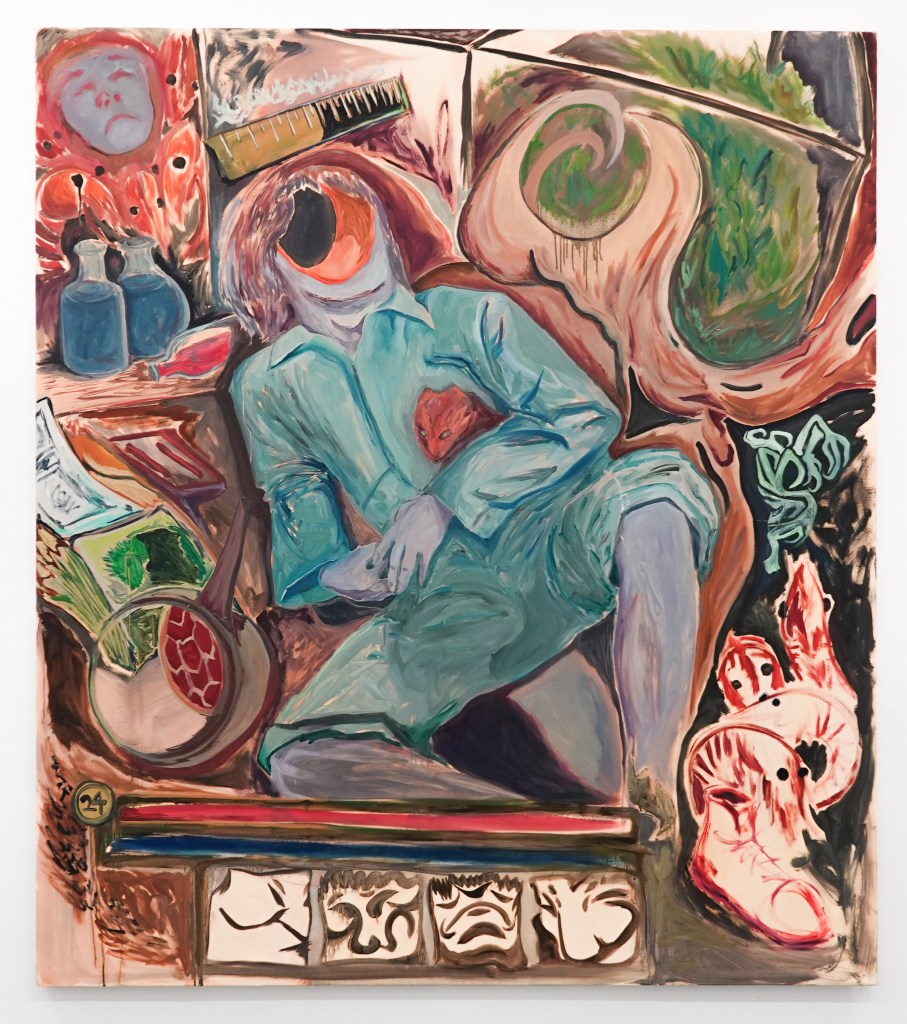
I think the most important part of the creative process is where it starts, and it also is the hardest. For me to start a new piece, I need to find myself ‘punctured’ by something I observe or come across in mind. I would usually expect this ‘puncture’ to be related to any topic that I had been focused on; for instance, when decided to make the painting Those Who Live, a painting of a moulting cicada, I had encountered it at a very absurd moment of my life and I had been making works about absurdity and metamorphosising figures in my former works, and this one would then be expected to extend my narrative of paintings to a new chapter. Similarly, after a few months of summer holiday, I started painting Carrots, when I’m still young as an extension to the cicada painting.

150 x 210 cm
5. What themes or concepts are you currently exploring in your work, and how do they reflect your personal experiences or broader societal issues?
In my latest work A Bit of Everything, I managed to summarise my latest three years of experience of doing art in Slade, and I still not yet figure out whether to extend that chapter of work, or turn to brand new theme of works, or even trying a new medium. Everything might be decided after I find a new studio space.
6. How do you see your work evolving in the future, and are there any new mediums or techniques you are interested in exploring?
After finishing my undergraduate dissertation, which bases on quite some game study theories, I am looking forward to being developing a digital work of narratives with a team in the future.
But more realistically speaking, I look forward to what I will learn from this upcoming postgraduate programme on cultural studies. I am expecting to gain a better control on the aspects of literal expression, conceptual discussion, and social concerns in my work; and I am also expecting to merge more specific topics from my case studies into the contents that I make.
7. What has been your most significant artistic achievement or experience so far, and why?
I’d say finishing this course at Slade was quite an amazing and significant experience of all time for me, did a dissertation I am satisfied with and putting up a degree show and most importantly the four years of time with the studio and the course mates and tutors was precious and unforgettable.
8. What advice would you give to other young artists who are just beginning their artistic journeys?
I think enjoying the passion is definitely important, and always find a way to step back from your own creative stream, taking that breathe gave me a lot of eureka moments.

 ART HUB
Leave a comment