
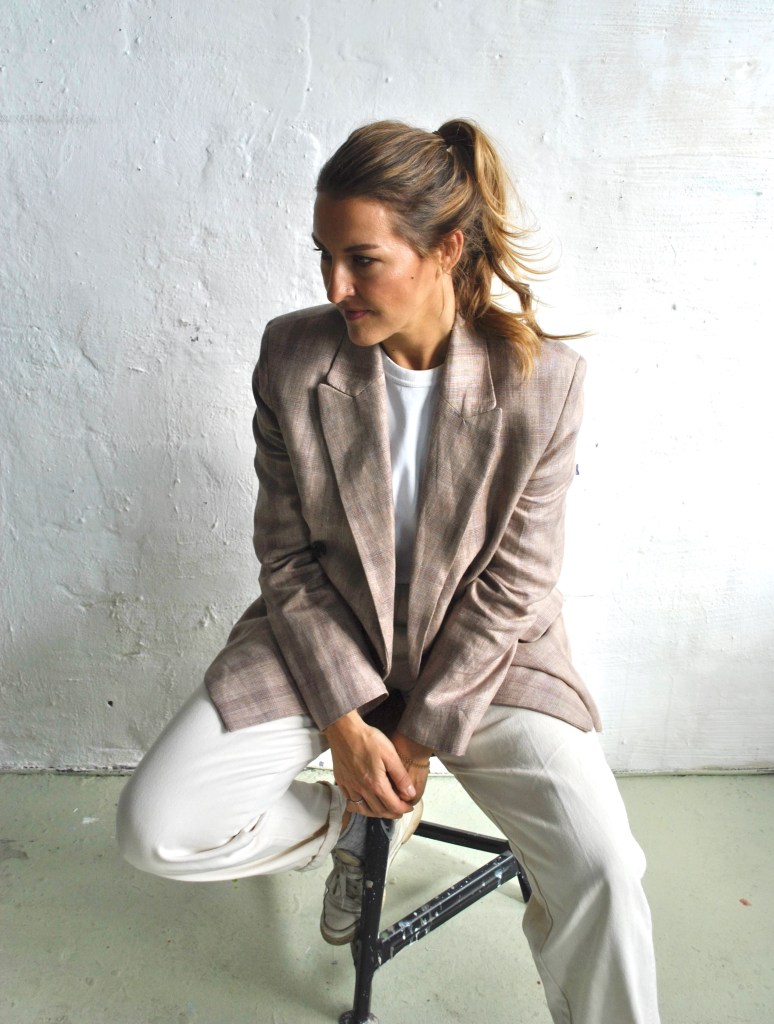
Johanna has exhibited her work in group and solo shows across Germany and abroad. She gained recognition from an international audience in 2017, thanks to Saatchi Arts classing her as „One to watch“. She has also received mentions in Flux Magazine, among other publications.
The CAC (Contemporary Art Collectors) selected her for the Emerging Artist Programme of 2022 and she has completed a residency with Zuecca Projects in Venice in late 2023. She then spend the beginning of 2024 in London for another residency with the The Fores Project which she successfully completed in February.
Her works are held in private collections in Germany and several countries around the globe such as Denmark, Norway, Finland, Sweden, Switzerland, France, the UK, China, Korea, Australia, New Zealand, The United States, Canada and South America. Johanna Bath lives and works near Dortmund, Germany.
1. What inspired you to pursue a career in art and illustration, and how has your journey shaped your artistic voice?
Initially I wanted to study industrial design as I had a soft spot for interiors and furniture but the internship with a design company got canceled so I had to change plans and started with illustration instead. At the time, I didn’t even know what illustration was but I knew I wanted to do something creative.
I never planned to become an artist but it was in the midst of studies that I got obsessed with painting – with the freedom it offers and the messy part of it, it was just pure bliss. It was also a huge outlet for me to cope with feelings and as someone in her early Twenties, a way to handle heartbreak and all the emotional messiness that comes with becoming an adult. As soon as I discovered the vastness and limitlessness of painting, I never looked back.

2. The theme of time is central to your work. Can you share more about how you translate the abstract concept of time into your paintings?
It happened very organically and again, I never decided one day that my work is about time. It seemed like the themes of time, vanishing of time, timing, memory and so on were always the center of my reflections. I also did journal back in the day and collected snippets from poetry, song lyrics, lines from books that resonated with me and all of those circle around these topics as well. To me, creating paintings is just another way of thinking and reflecting on things. So when I developed my style over the years, I never planned anything but rather just painted from intuition and found painting to be a way to understand myself and cope with life really.
Time is something everybody experiences but it is not tangible, you can’t see it. So in order to get hold of it, you need to connect it to emotion – which is memory. I found this challenge of making a painting about something invisible extremely interesting and love that it embodies so many aspects of the human experience. So when I create a painting, I am not doing it to depict something in particular but rather to create an atmosphere. The painting should have the ability to transport a feeling and connect my vision to the viewer’s vision.
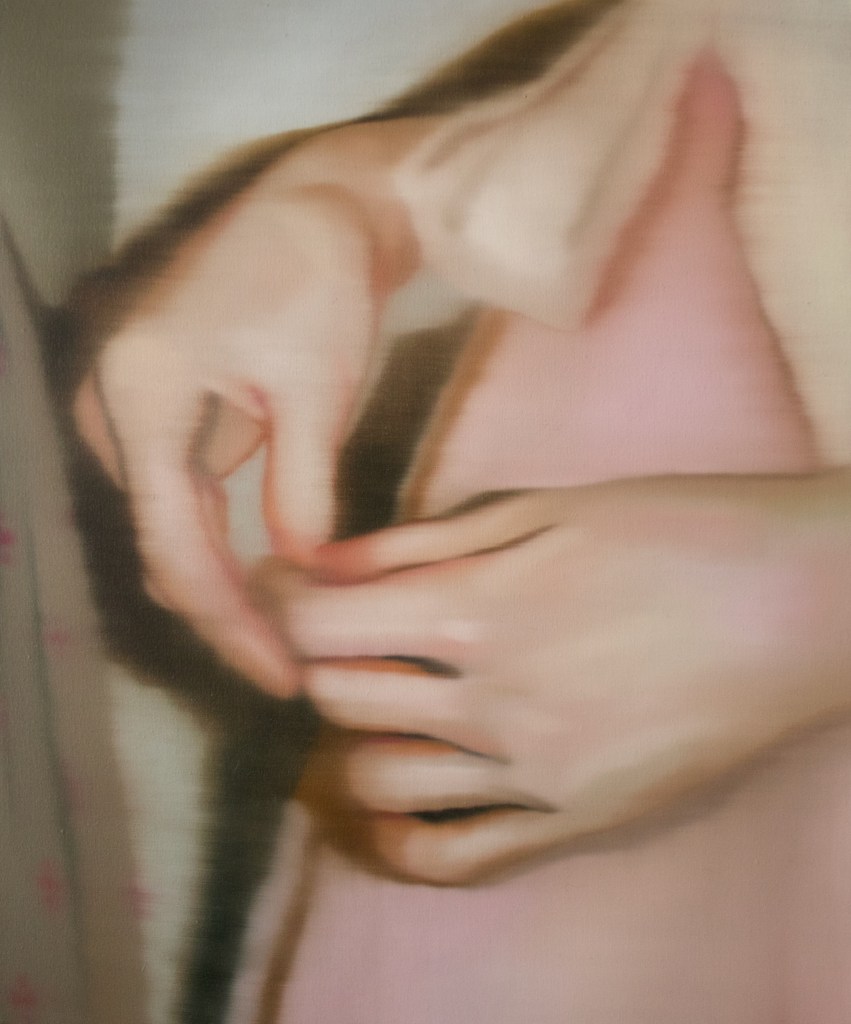
By cropping the image to a detail, showing only a closeup of a face, hand, an expression, it feels like I am replicating the way we look when we take our time to carefully (and slowly) observe our surroundings. It is like a zoom to emphasize something I believe is worth seeing.
I have also noticed that my recent work is slightly moving into a direction that deals with intimacy, romantic encounter, the sensuality of the body – again all rooted in personal experiences. In a world that is overly saturated and fast paced with porn, graphic images of sex, the vulgar and obscene and that literally lost touch to the sensation of the tender, I want to make work that champions the intimate. Not bluntly showing nakedness and sexualizing bodies but returning to the wonder of touch, the sacredness of connection – the elegance and beauty of it.

3. You often incorporate elements like plants and hands in your artwork. What significance do these motifs hold for you?
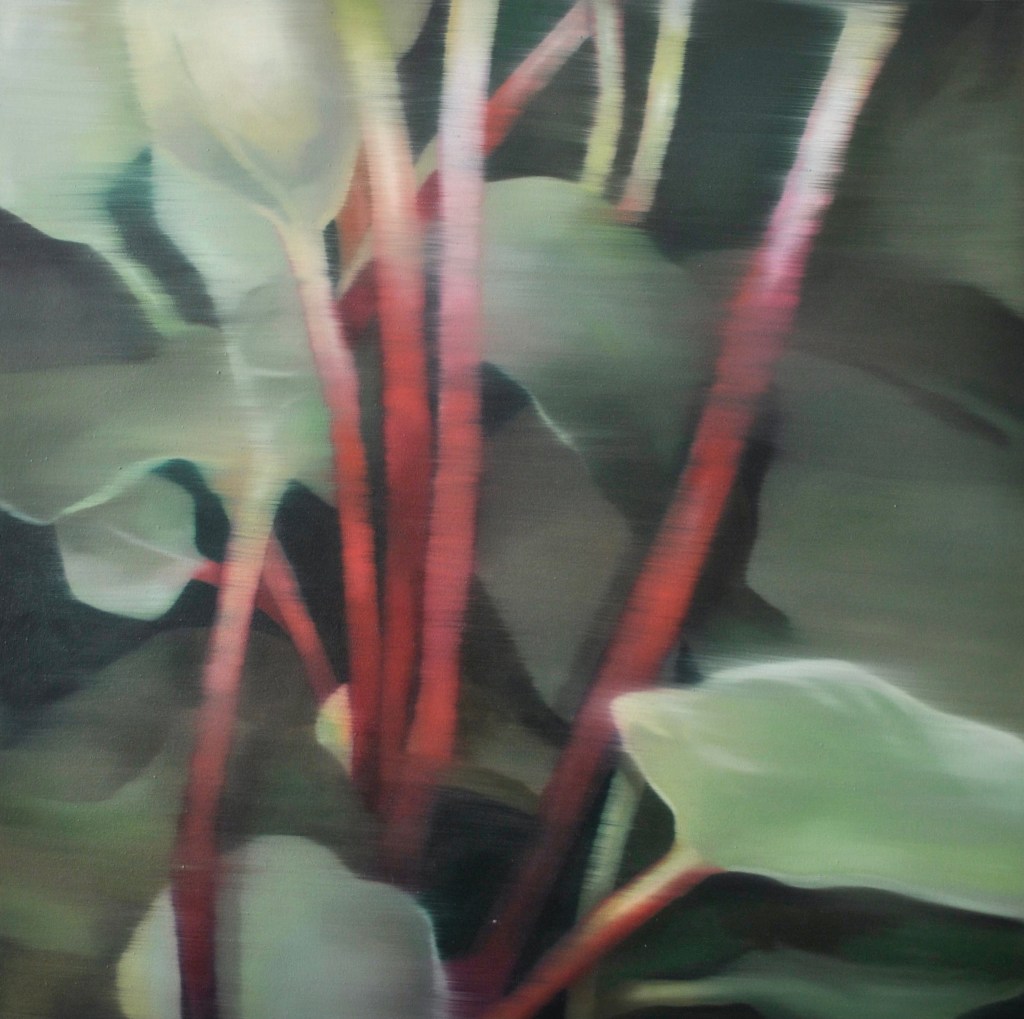
With flowers or plants, you can witness time passing before your eyes. You can watch them changing shape and form or when having flowers in a vase, how they descend. So they are a beautiful allegory on the time theme. With the hands, it is much more personal. I thought about connection, love, significant love that changed me as a person. For example, how touch has left such an imprint on me and whilst I have forgotten so many things along the way, some details (mainly connected to touch and therefore hands) remain prominent even years later. So all hand paintings are equally a longing for my past but they are also longing for the future: for connection, beauty, touch, bliss, a moment that will forever become a memory. I enjoy being in a melancholic state but with the paintings as in life: keeping a balance is key. The work should be a good mix between nostalgia and some heart drench but should leave you hopeful.
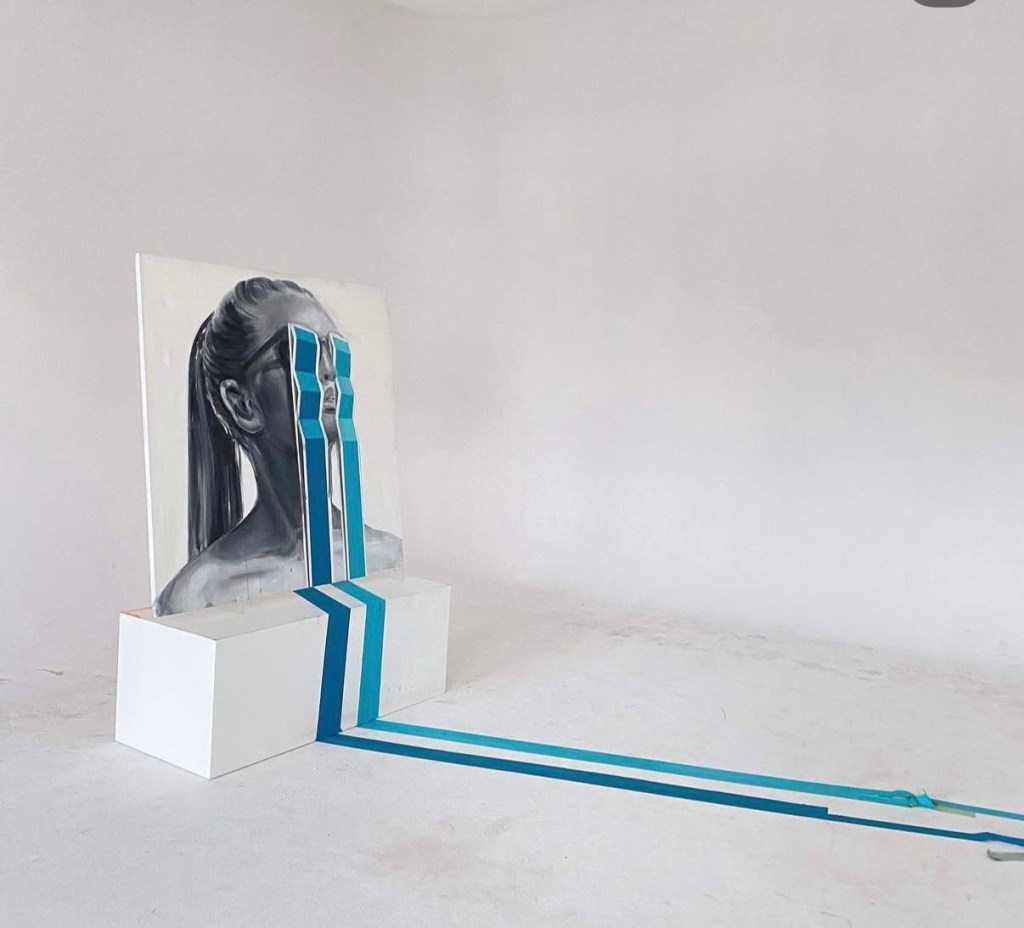
Regarding my studio practice: I go through phases and will switch from hands to plants to faces – just to keep it exciting and make sure, I don’t bore myself and get too comfortable with one topic. I recently incorporated objects into my work, based on photographs so the range of motifs is slowly broadening and so is the oeuvre.
4. Your artistic statement mentions the importance of capturing fleeting moments. How do you approach this challenge in your creative process?
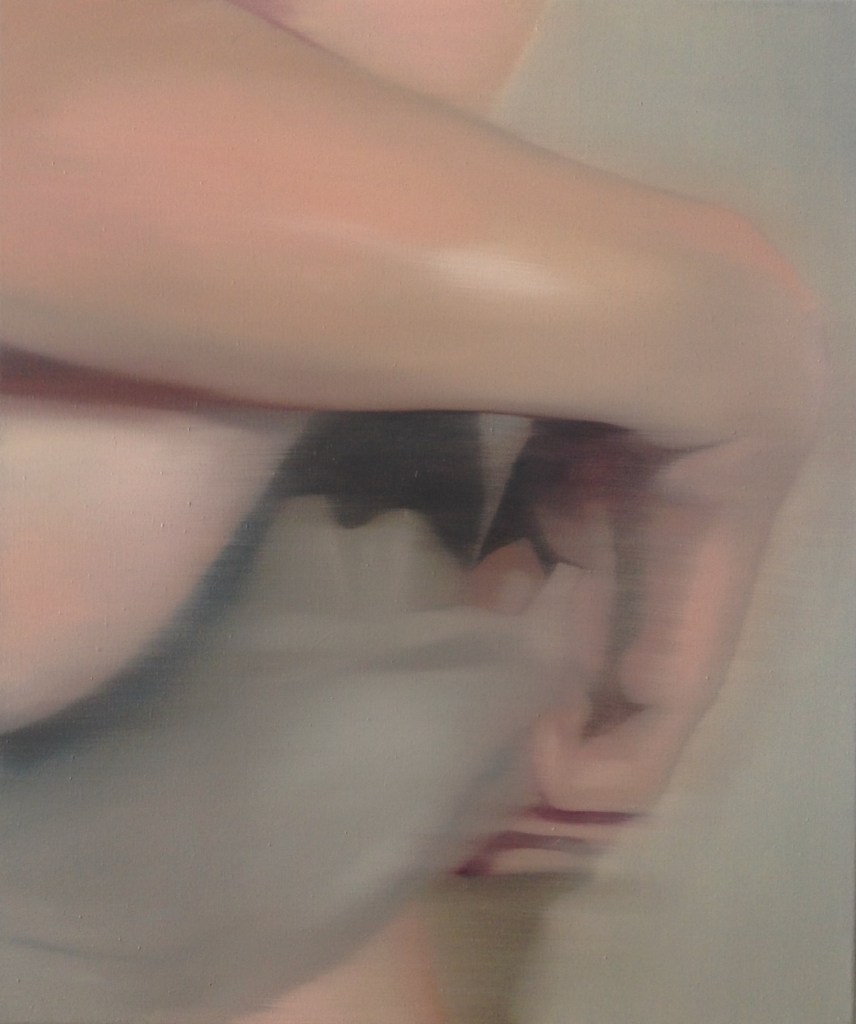
My paintings have a signature blur to them, some only slightly blurred, some washed out to a point that it almost becomes an abstract painting.
The ephemeral dominates our life. Only the present is clear and accurate, both past and future are blurred. I want to translate this idea onto canvas.
The creative process formed by accident: I would paint with acrylics exclusively and my work was quite realistic and sharp. Coming from illustration, I felt it was still very rigid and stiff so I experimented with oil paints gifted by a fellow artist. I had no idea what I was doing and treated the paints just as acrylics and, of course, created a huge mess with the first attempts. But then, when scraping the oil from the surface to start all over, I was thrilled with the distorted and blurred image I created by chance and found it complimented my message so well that I mastered the process over the years.
It is both: a blessing and a curse because the blurring part can fail and does so a lot of times. I paint the image quite realistically, which is the part that requires craft and then drag a brush through which is the fun part as it opens the door to accident and randomness. When it works, it can lift the piece from being just a painting to a piece of art – it can create an aura or a sensation around the canvas that is just super exciting. But it can also look horribly wrong, blurred in the wrong places, too blurry where it looks like I want to cover up my inability to paint. The difference is sometimes a very thin line. I like the playfulness of the process and the fact that I never know what the end result will look like.

5. Can you discuss your choice of color palette and how it contributes to the overall atmosphere of your pieces?
I think my palette was never a choice but in tune with all art I create, coming from a place of intuition and the unconscious. Very early on, all my work, even the early illustrations, had this strong sense of melancholy and nostalgia about it which I never forced. I spent a lot of time in the South of France on vacations when growing up. So the memory of this particular washed out palette of windswept and bleached colors is a very fond memory and rubbed off on my work, I suppose. I also think that the work is only an extension of myself, like clothing or the way I arrange my apartment. Muted, slightly weary colors are just colors I enjoy. I like my universe to be calming, soothing, sensuous, daring to be vulnerable, elegant, never loud or flashy and this applies also to my art. I think the world produces plenty of horrific and horrible images on a daily basis and I just don’t want to contribute to this. It is not necessarily escapism or ignorance, but more emphasizing the blissful and tender.
6. Your work reflects on both memory and transience. How do these themes influence your daily life and artistic practice?
I believe that it is part of my job to reflect on being human. With this comes the reflection of the preciousness of life and how fast our lives move forward towards an end really. I don’t see this with a negative perception, I am an optimist to the fullest. I think a huge responsibility of my profession is to make people aware of things. I have a mad tenderness for the world and sometimes, beauty can be found in the most insignificant and mundane situations. So overall, I feel incredibly blessed to be an artist and get to do this on a daily basis.

7. You mention the transformation of imagery when it becomes part of your paintings. Can you elaborate on this process and what it means to you?
I am sure every artist knows the feeling when they have done good work, it is like a drug. It starts with a certain excitement about an image, having a rough idea on what I want to create. My work is based on imagery, mostly photographs – images I collected over the years via magazines, the internet or my own archive of photographs. I have a huge collection of those and will go through them to kickstart my practice. Some have been inside boxes for 10 years + and eventually, they speak to me for whatever reason that day and just trigger this certain excitement.
I will do a quick sketch directly on the canvas with pastels and start painting right away. If it is a good day, I will step into this blissful state of flow where concentration meets fun meets connecting to some unconscious source and everything just aligns. When I step back from the painting to get a coffee or do a quick walk with my dog, return to it and then get this tingly feeling in my stomach, almost like falling in love, then I know I am on the right path. There is this shift happening with every piece that is of quality. It is very hard to describe as it is so subjective and art has no rules to begin with but I can tell it right away. I think for me it’s when the piece alienates itself from me during the process. When I can’t tell or recall how I did it and when there is a strangeness about it that is totally independent from the original image source and has totally separated from it. To get this tingly feeling, that is probably the reason that keeps me going and that keeps me on track even after weeks of failure.
8. How do you balance the melancholic aspects of your work with the positive energy you aim to convey?
Again, I think it is unconscious. The work is so personal and so entwined with myself that it holds my energy – which is always positive. On the one hand, I am blissfully content with being in a melancholic state: to be longing for moments long gone. I have a bad memory to begin with and find myself oftentimes desperately trying to piece together favorite moments – but rarely can. They remain always blurred and fragmentary somewhere on the edge of my brain. But as going back in time is impossible and you will drown when you get too attached to nostalgia and memory, I am equally longing for the future. Daydreaming for a time even more blissful, beautiful, touching. My work should contain both: this hazy, dreamlike quality of the future but also the heartbreaking loss of time. The paintings are a monument for remembering beautiful slices of time, connection, love, bliss, desire and the grieving process that these have inevitably passed.
9. What is your hope for viewers when they engage with your art?
My work should make them feel something – it is that easy.

10. What are you currently working on, and what can we look forward to from you in the near future?
I had a crazy start to the year with residencies in London and Venice back to back. When I returned to the studio, I found it quite tricky to process the intense amount of inspiration I took from both places. Don’t get me wrong: the residencies were both fantastic, so I am definitely not complaining. But I needed some time to figure out how I could incorporate my experiences without changing my style completely or doing unauthentic work. When you are exposed to so much great art, the mere skill of artistry and genius can be intimidating and it is a very humbling experience. I felt like such an idiot for weeks because nothing really worked but then I made it through and got a good grip on work again.
I am looking forward to some exciting group shows and projects in late summer/fall in Europe yet to be confirmed and the participation in PAN Amsterdam with my gallery Enari in November. Aside from that, I am busy creating new work for two solo shows in 2025. One with Enari in Amsterdam and then my first US solo show in New York early 2025.

 ART HUB
Leave a comment