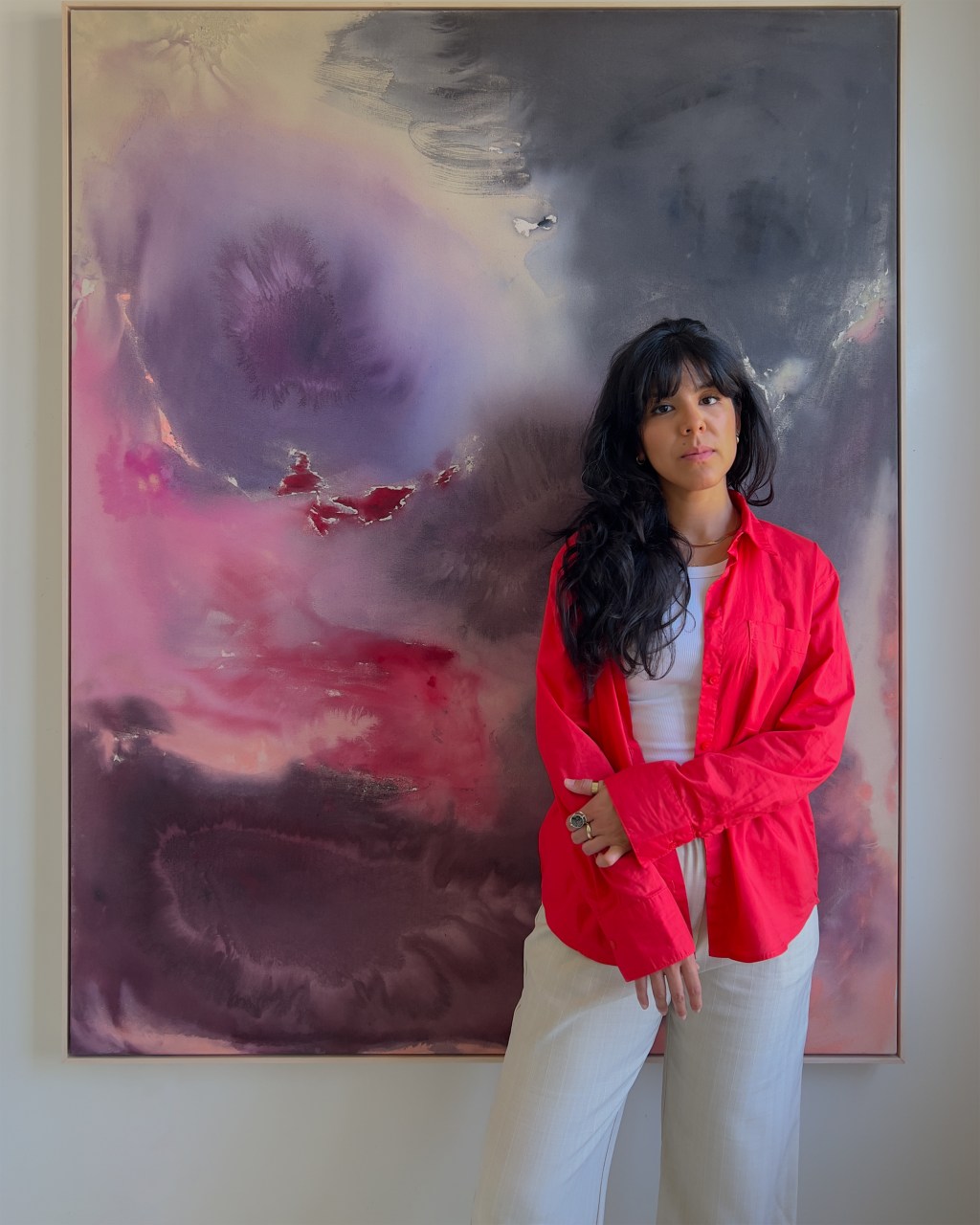
Gisela A. Lazarte (b. 1989) is a Venezuelan abstract painter based in New York City. With a background in film, her artwork places a special emphasis on conveying movement, allowing sound and music to greatly influence her process.
- Can you tell us about your artistic journey? How did you transition from a background in Film and Communication to becoming an abstract artist?
I wanted to be an artist since I was very young. In my early teens, I took some art classes but at the time I didn’t think a career as an artist was possible. Coming from a family of immigrants, the importance of being practical about these choices was instilled in me since young. I decided to study Communication in college because it seemed to be a broad enough degree to let me explore alternatives that could be practical while having a creative outlet. I’ve always loved movies and while in school I fell in love with the creative process behind it, so I graduated with a concentration in Audiovisual Arts.
After this, I worked in video production for several years and, while I learned a lot and enjoyed my work very much, I knew I still wanted to explore the more creative side of the industry. Around this time, with the critical situation in Venezuela, my home country, reaching a new high, I left to study Film Directing in Barcelona, Spain. There, I started realizing that my interest always pulled to the more abstract, metaphorical, free-interpretation type of content.
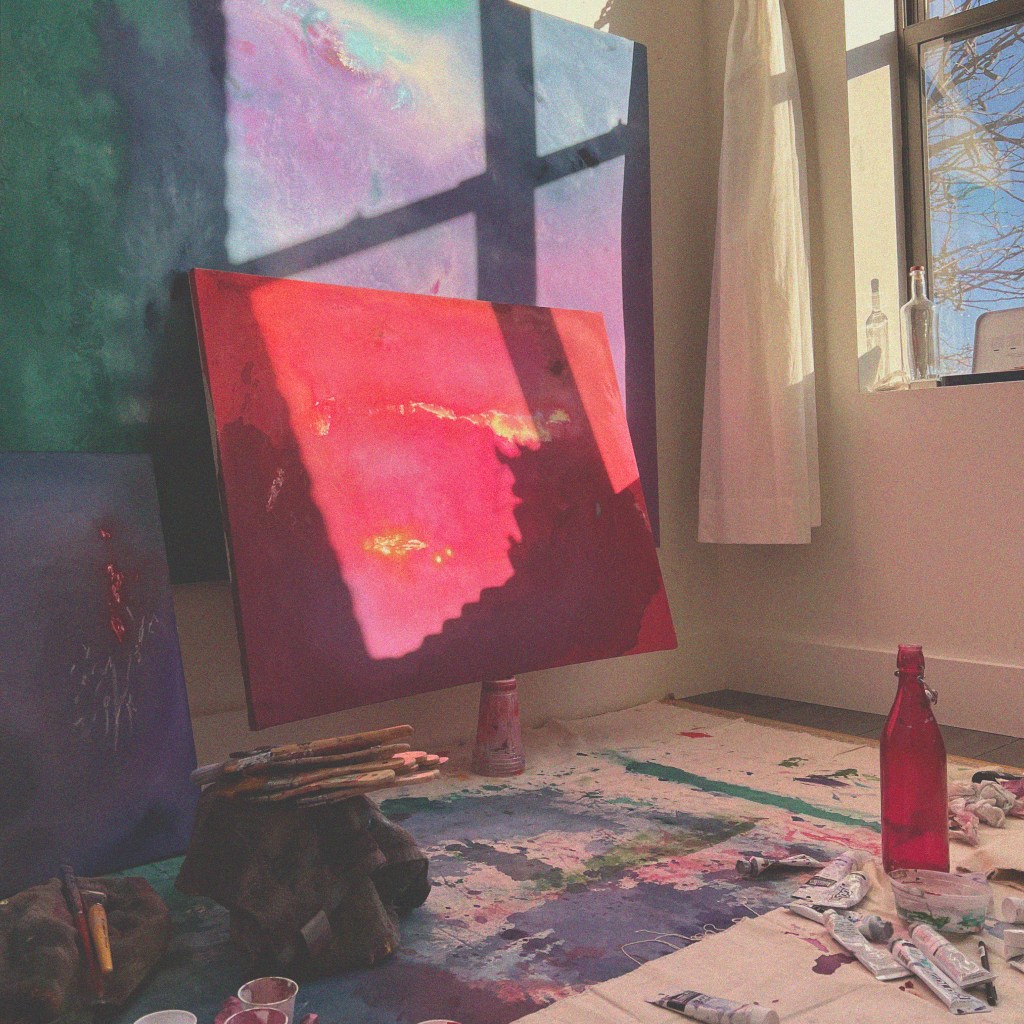
Fast-forward to living in New York, many years and odd jobs later, some pivotal events in my personal life led me to paint again, which I hadn’t done in years through all my migrations (after Spain and before coming to New York, I lived briefly in Lima, Peru, where my family relocated). The first thing I did was abstract, which I had never explored before, but felt this urge to express and release. It wasn’t, however, until some more years later, that I recognized that this pull to painting as a career path was never going away and that it was where my true spirit laid.
I think also living in New York, and with social media expanding and opening the art world, it seemed more plausible now. I’m still interested in film and writing, and they influence and inform my work, but I think that these were always alternatives to the thing I truly wanted to do since early on. I’ve been dedicated to my painting practice since that moment where it all clicked.
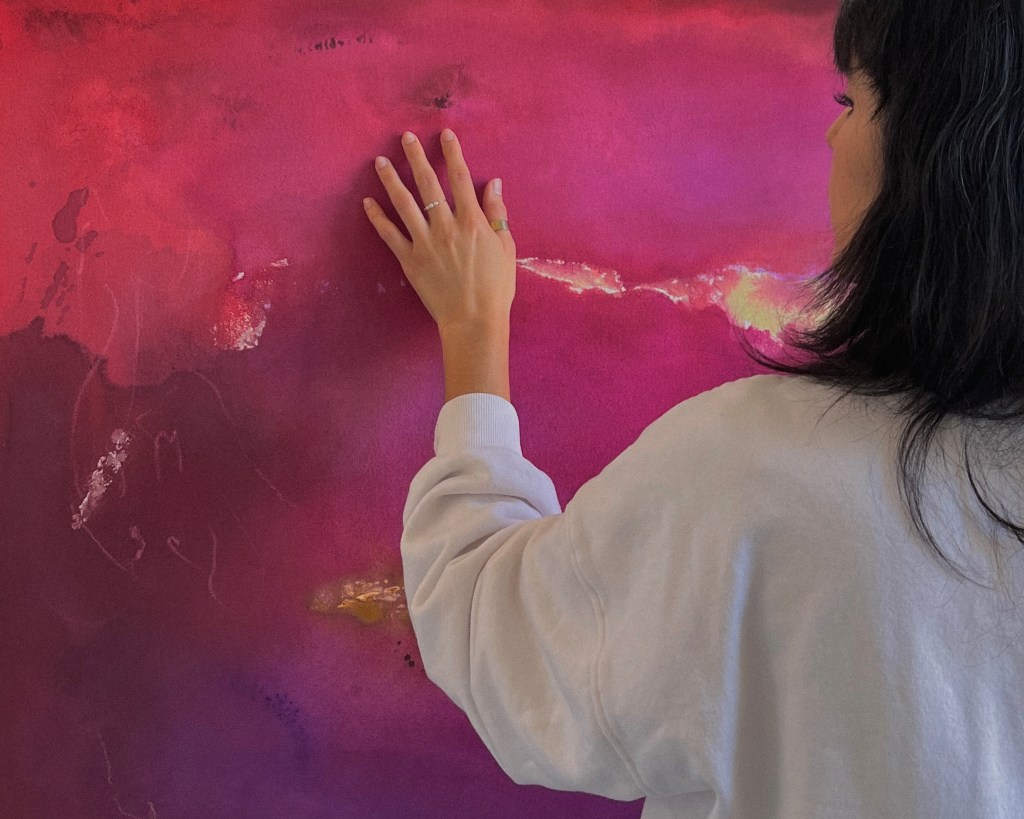
2. Your work often explores themes of identity, belonging, and your experiences as an immigrant. How do these personal experiences shape your creative process?
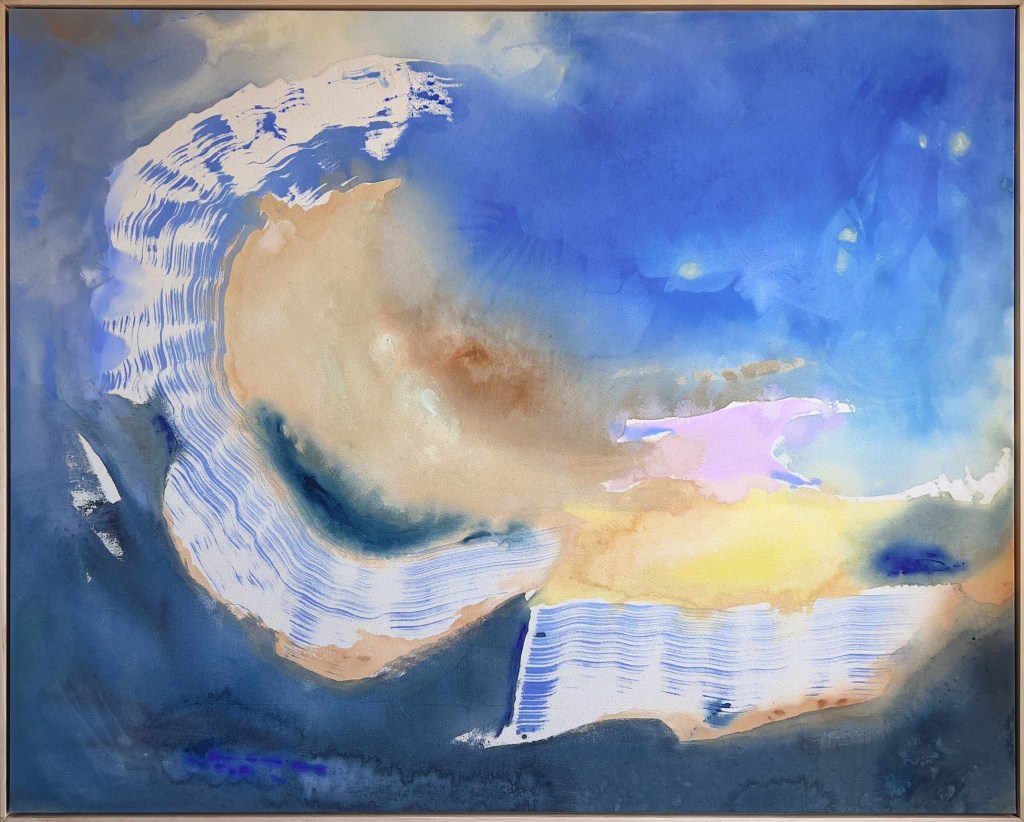
My work is expressive and intuitive. I like to think of it as a visual journal, therefore my experiences as an immigrant are always weaved into the fabric of that internal dialogue that I express through color, brushstrokes and marks.
My parents are originally from Peru, and they migrated to Venezuela individually, met there and built a life and a family. Growing up, I would always notice a gap between what was customary at home and that of the other kids. Back then we would also visit family in Peru every few years and so I grew up with this sense and awareness of not fully being from here nor there. As I grew older and constructed my identity, I witnessed my parents do the same in their connection to what they now consider their true home, in Venezuela. Fast forward to me being an immigrant here in the US, those questions are even more present, and just as you would a written journal, I process a lot of these conundrums on my canvasses.
These questions go from more philosophical or existential reflections about identity and belonging to the simple awareness of those things that we can take for granted when we are constantly submerged somewhere, and the deep feeling of loss when realizing they’re no longer there. Things as simple as year-round good weather or old friends and family in your same city. There is a sense of nostalgia in the works that emerges from this; my own nostalgia, if you will, or my need to release and transform it. Also, the themes of my bodies of work always relate to these inquiries in one way or another. I usually don’t plan out these themes in advance, just start with a few works and then see where the common thread is, what they are talking to me about, and then continue exploring it.
3. How do you approach the balance between intuitive creation and careful observation in your work? Can you describe your process in more detail?
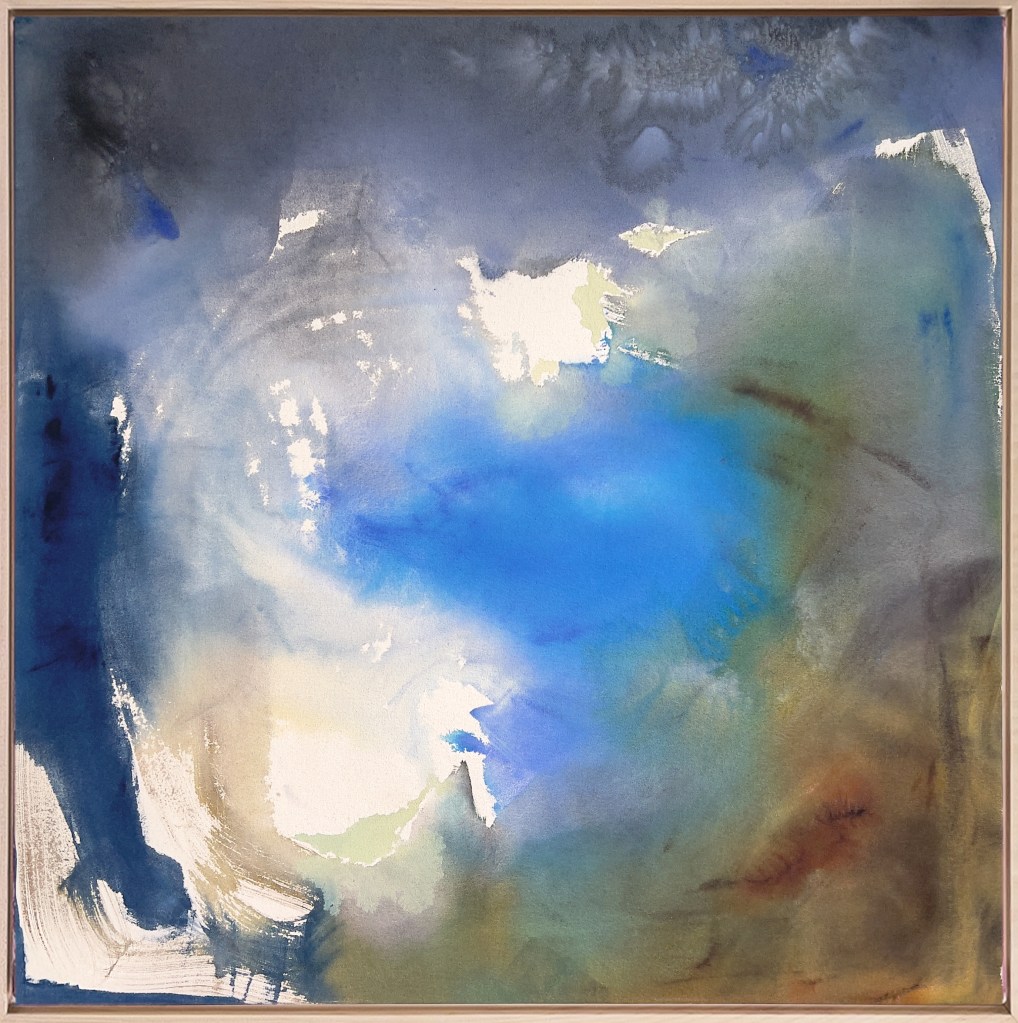
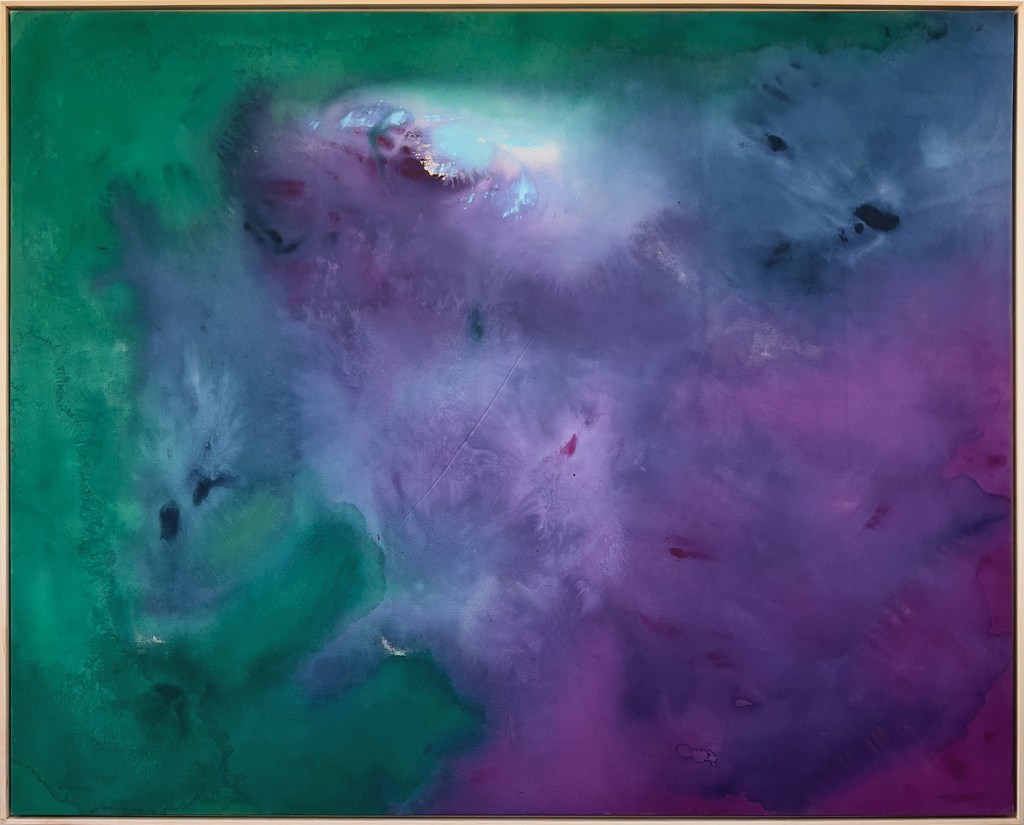
I often call my process a meditation-in-action. It has become highly intuitive through the years, meaning that I don’t usually have a plan for the pieces, I just have a lose starting point and then let the process lead me.
The fluid nature of my materials and the absorbing quality of the raw canvas creates a process where a lot falls out of my control, and the process becomes a sort of dance with the piece, where I’m pouring paint or applying brushstrokes, the materials react on their own and then I respond to these reactions, and so forth. It enables the so-called flow state that doesn’t allow much time for thinking, as the washes move quickly and, the first marks especially, settle onto the canvas fast. I feel that something within, maybe my subconscious, maybe something beyond, comes to the surface when in this state.
Then after working a few layers, there does come a time of reflection in the process, of analyzing what has been created and making conscious decisions, observing what’s working and what isn’t regarding mostly composition and colors. Also thinking about what I feel the piece is saying and how to further enhance it or let it be.
4. How do sound and music influence your artwork? Are there specific pieces or genres that you find particularly inspiring?
Music is one of those sensory stimuli that has an important influence on my work. I’ve always relied on music to channel moods and feelings. In film, I was always interested in the impact sound and music have on our interpretation of the images we see on the screen. Therefore, in the studio, I use music to tune into that immersive state and go inwards to be able to go outwards; to channel feelings to be able to express them.
It can be any kind of music or sounds that spark an emotional response or just a more mindful state, it varies each session. However, I do find music that is emotionally charged to be particularly inspiring, so I very often listen to songs about love/heartbreak, social issues or that have an overall nostalgic feel in different genres, including music from back home, from my heritage or that my family would play around the house growing up.
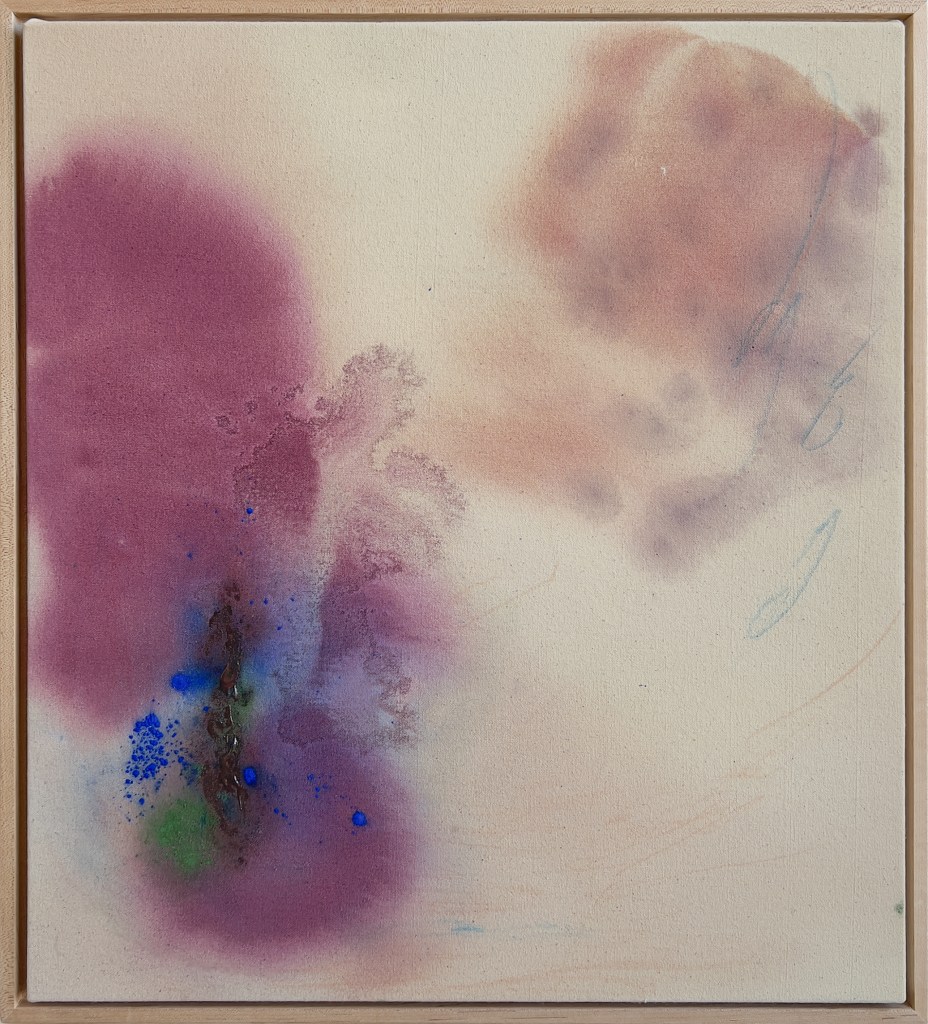
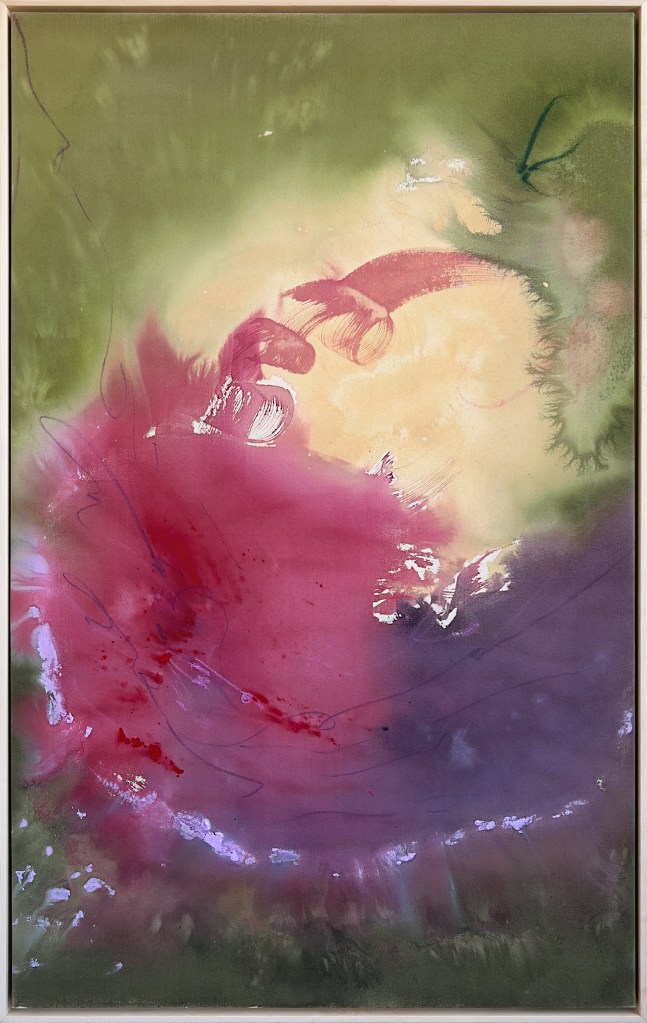
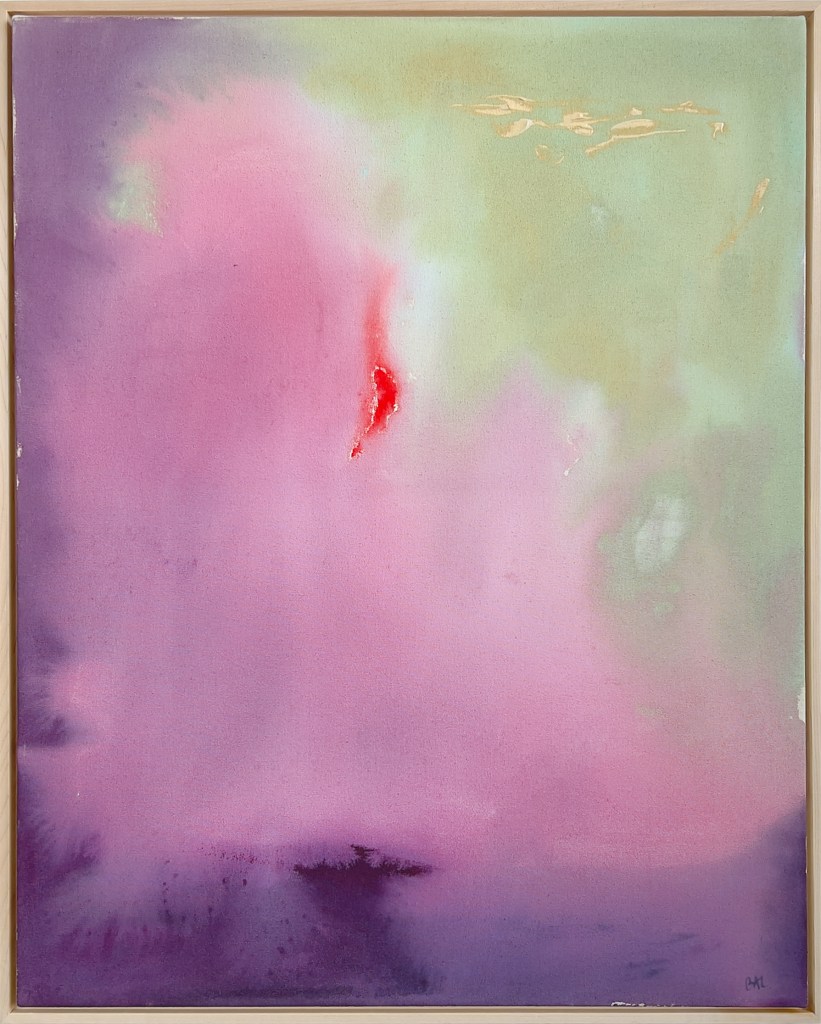
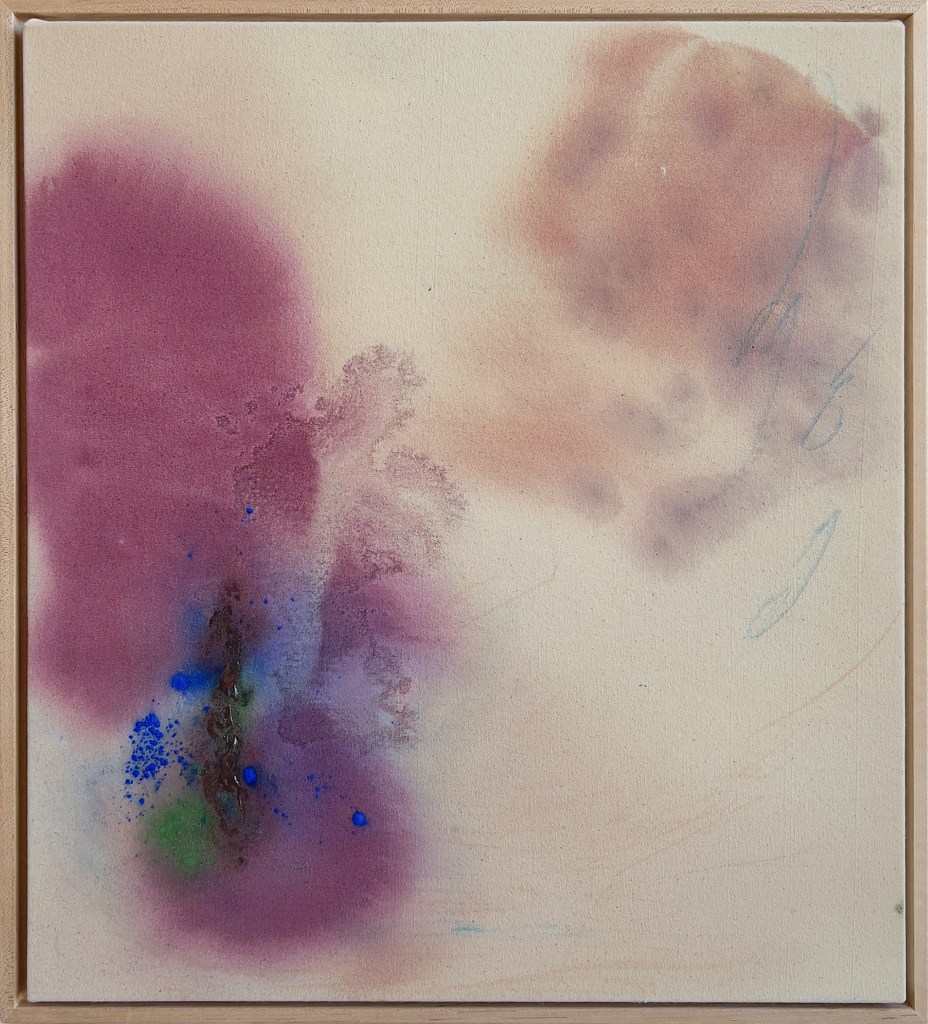
Additionally, another influence film has had on my work is the expression of movement. My work places an emphasis on this element of the composition, as I want each piece to convey a sense of motion. Sound and music influence my gestures on the canvas during the process, and these become imprinted on the piece as a snapshot of an active instant.
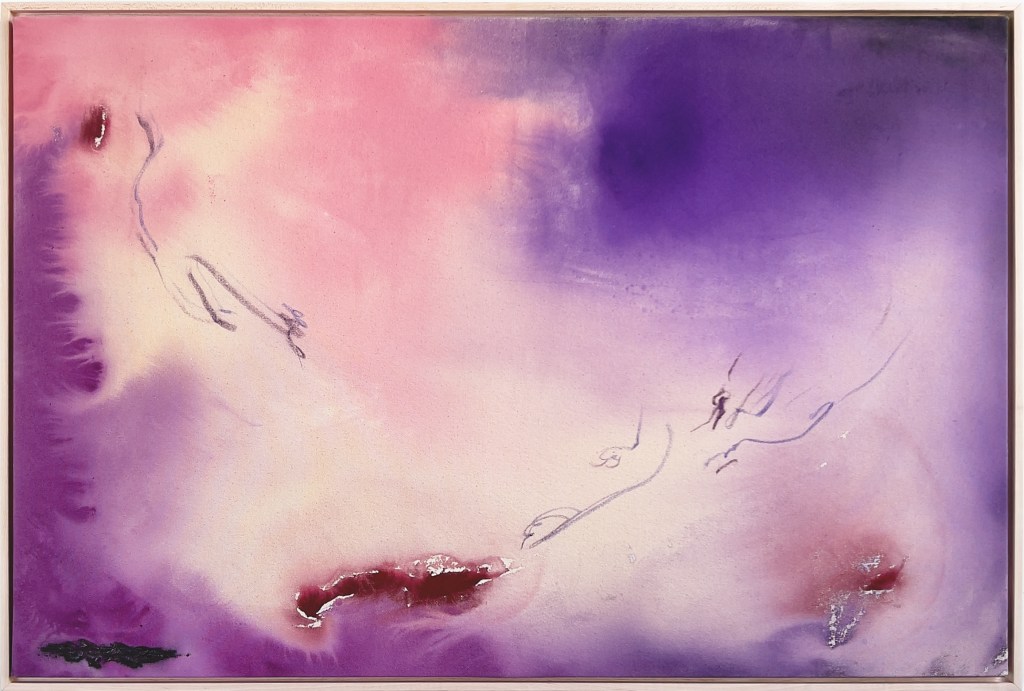
5. Your work is known for encouraging a dialogue between the viewer and the piece. How do you aim to achieve this interaction through abstraction?
Along the lines of what I was saying before, I like each piece to have a sense of movement, that something is happening within the frames that may expand beyond its confines. I like to push a balance between an overall feeling of serenity and unexpected moments that create contrast, whether by color choices, marks or brushstrokes, or composition. Abstraction already allows for freedom of expression and interpretation, which is my favorite aspect of it, so I want this sense that there is something going on inside an otherwise static creation to spark an inner response from the viewer, and where a dialogue is formed by this active experience the more time you spend with a piece and explore each detail. It can be a dialogue without words, it usually is in that initial response.

6. What role do memories and sensory stimuli play in the creation of your artwork? How do they influence the final outcome?
Memories are part of that subconscious world that is awakened by the sensory influences such as the music I’m listening to as I mentioned, or the sounds of the city, the light on that particular day, seasonal elements and all other sensorial factors. They form a medley that inspires the work intuitively and lets it flow.

7. Could you share some of the challenges you’ve faced as an abstract artist, particularly as someone who has moved from Venezuela to New York City?
This is a great question. It’s something I’ve been reflecting on a lot for a while. On the one hand, I don’t know if I would have pursued a career as an artist if I hadn’t moved to New York City. Being here makes it more possible as it’s still the heart of the art world, but it’s also highly competitive, which makes it both inspiring and challenging. I try not to focus too much on that and just keep working and putting my work out there as much as I can, however sometimes it’s hard not to (think about it).


It’s no secret that women are still largely underrepresented in the art world; add to that being in a minority group such as being an immigrant and a person of color. The longer I live here, the more aware I become of these factors in relation to how it makes the path that much more difficult. However, this has made me embrace those qualities and my background even more. I think part of the challenge for me has been finding a balance between letting the work speak for itself while also bringing my personal story more explicitly into the mix. Understanding my role in evoking awareness on my culture, roots and origins is something that I’m still working on.
There was a time when I struggled to identify if it was best to not let my personal story and background get mixed in and, again, just let the work speak for itself. But I’ve come to realize that my story and background are already part of the work and if someone doesn’t want to support that, they are simply not the right people for my work. And that’s okay. It adds to the challenges of making it in this industry. But, in the end, being an immigrant already means choosing a path full of challenges so, if anything, you’re already hardwired to push through the obstacles.

8. How has your experience living in different countries influenced your perspective on art and the themes you explore in your work?
I think I elaborated on this in more depth in the previous questions, but the experiences that have shaped me, such as living in different countries, contextualize that medley of external influences and internal feelings. They are part of my subconscious that comes into play on that flow state where the mind is quiet, but movement is constant. Additionally, in terms of my perspective on art, both Barcelona and New York have had a major impact in my perception of it. First, simply from being able to witness and experience the work of great masters and contemporary artists right where I live or in its vicinity. Then, also witnessing the possibility of pursing this life as a full-time job.
9. What does a typical day in your studio look like? How do you maintain creativity and motivation?
Though I would love to, I don’t paint every day. I wear all hats in my practice, so there’s also a lot of time allocated to admin work, photographing, editing, social media, canvas stretching and prepping, shipping, and so on.

However, a typical day in my studio always starts with some coffee, and then usually going over some emails or admin work. Then I either do prep work or if I’m painting, I change the music to something soft and calming first. I always light some sage before each painting session and do some movement exercises to warm up and get in my body. Once I start, I’ll typically take short breaks while paint dries, often to catch up on admin work, but I prefer to use these breaks for creative fueling: actively listening to music or signing along, reading, doodling. Going for walks, either before the day starts or at the end of it, is also a good way to reset and recharge.
Longer breaks, however, are important to feed creativity and maintain motivation. Getting out of town every so often, going to the beach in the summer, hiking, reading at a café, taking some time for cooking mindfully, watching good movies or television, spending time with good friends, quality time with my partner; these are all great and important small ways to keep creativity going for me. Also visiting museums and gallery shows ignites my own creativity of course, but even going to other types of openings or premiers can have the same effect – it can be so inspiring and motivating seeing all kinds of artists release their creations into the world. Also, to keep motivated, I think that doing some planning and scheduling the work ahead each week is also important to not lose focus and avoid getting overwhelmed or burnout.

10. Lastly, what message or feeling do you hope viewers take from your art?
I hope it brings them closer to their own human experience. That it leads them to discover something about themselves that was either unknown or had been quiet. That it allows them to feel a little deeper and this way, feel seen. I’m convinced that art has profound healing power in the way it can build bridges for our own human experiences and bring us closer: to ourselves, to others and to the universe. And I hope my work can do a little bit of this for others as it does for me.

 ART HUB
Leave a comment