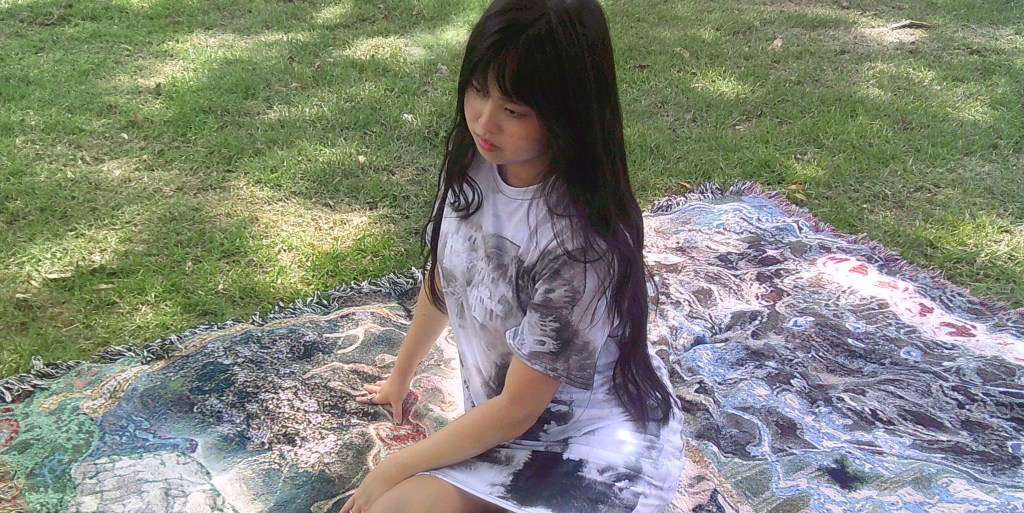
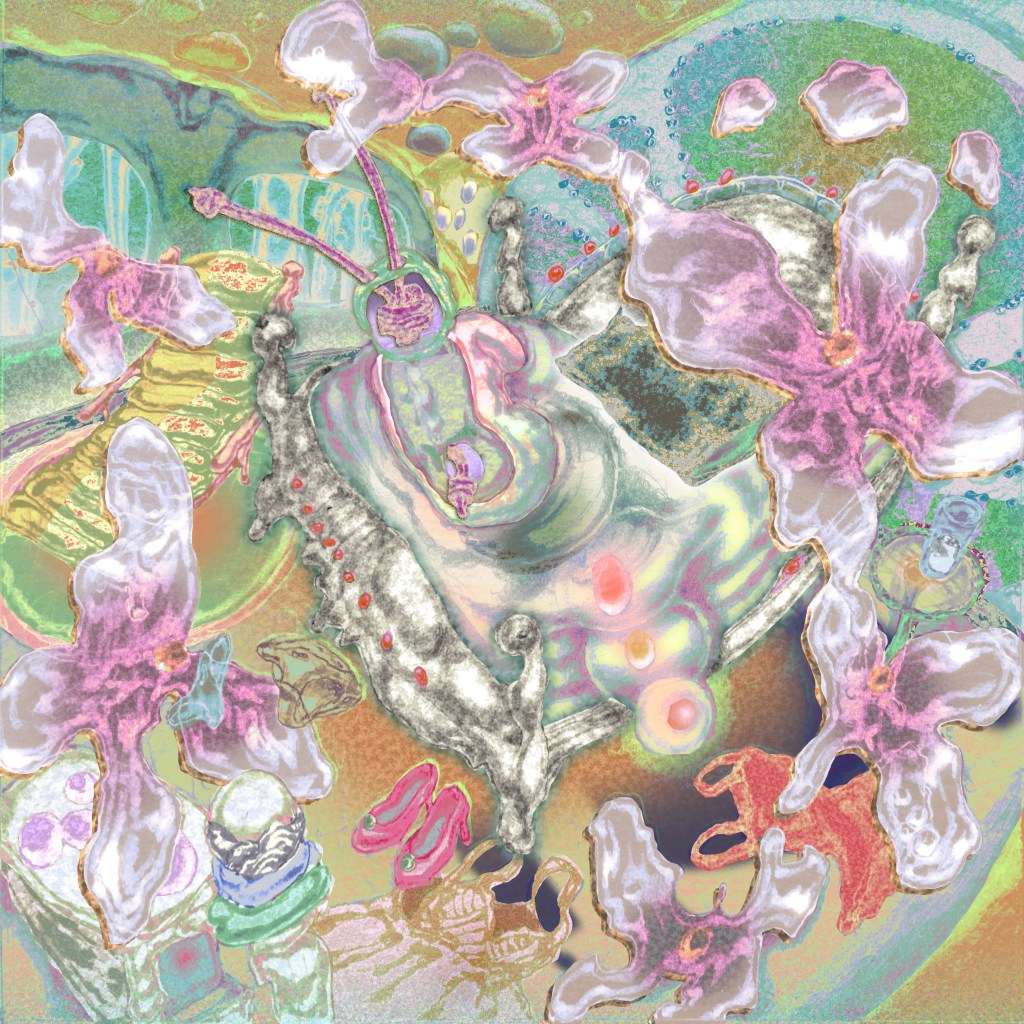
Evelyn Tan (b.2002) is a Vancouverite artist currently based in Los Angeles. Her narratives stem from dreams, memory, and fable, chasing nostalgia whilst exploring a coming of age. This often takes the form of hybrid mark- making methods including graphite, ink, digital rendering, and paint. The resulting sanctuaries meticulous, glassy, and dreamlike, and often present dynamic situations of irony through a lens of girlhood and adulthood. Her work is featured in several publications including It’s Nice That, Office Magazine, Metal Magazine, MAPS Korea, and Hypebeast, and is exhibited internationally.
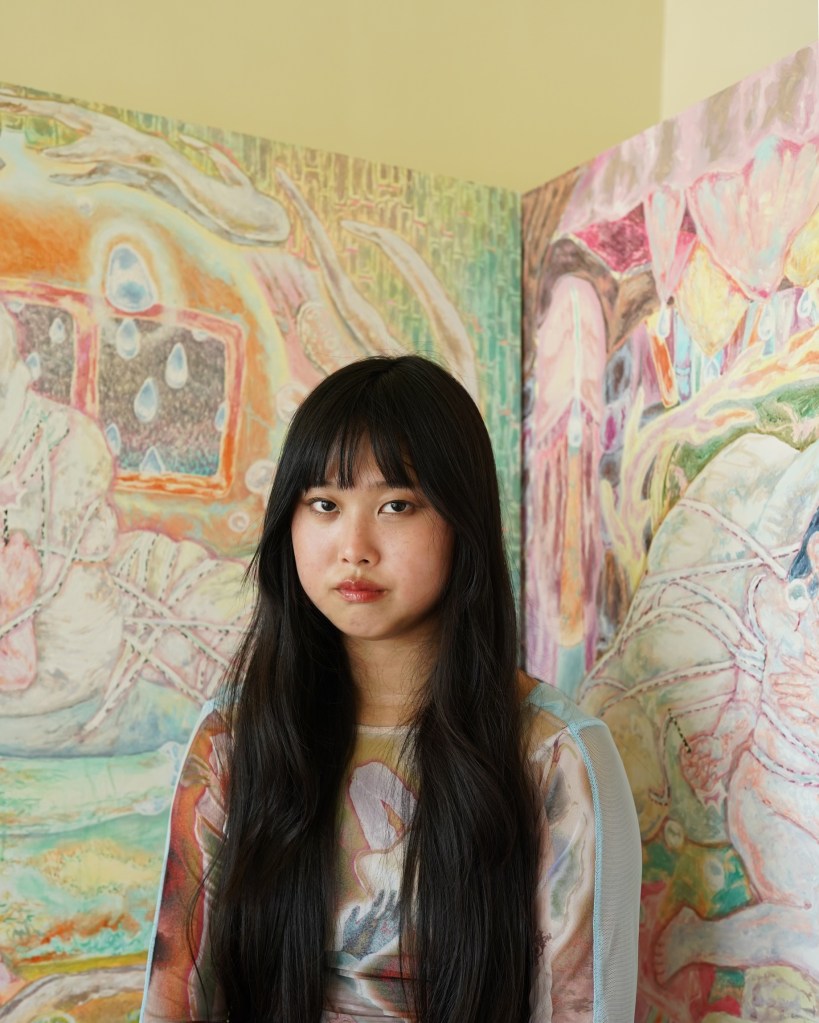
Can you tell us a bit about your background and what initially inspired you to pursue a career in art?
I was born and raised in Vancouver, and got my BFA in illustration at the Rhode Island School of Design. I’m now currently based in Los Angeles where I’ve been painting and drawing and frolicking here and there 🙂 I think I was really fortunate that art was always a part of my life–my mom and dad always read me picture books and we had reproductions of Klimt and Van Gogh in the living room. I grew up watching Bob Ross, and my dad would draw rubber hose cartoons for me like Woody Woodpecker or Bugs Bunny and I’d sit beside him, pencil in hand, trying to match them (he’s not a practicing artist, but a rather good draftsman). I was lucky to realize at a young age how cathartic art was for me, and it was fun for me to see how I could capture the likeness or feeling of something down to the closest degree.
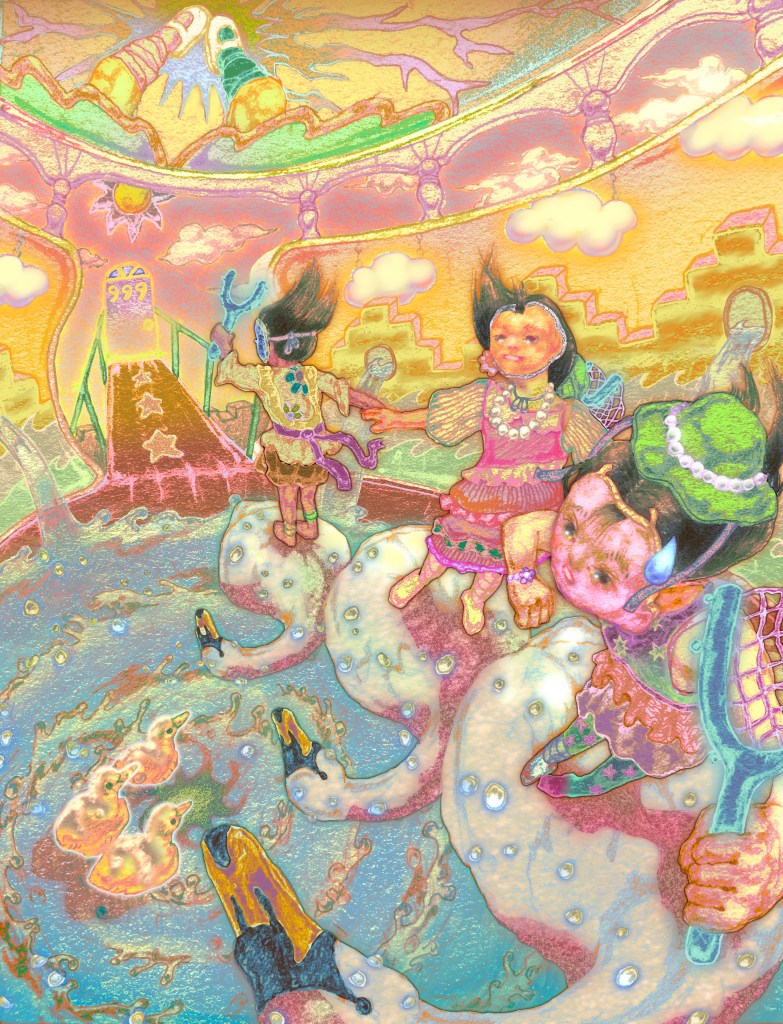
Your work often explores themes of nostalgia and coming of age. Can you share more about what drives these themes in your art?
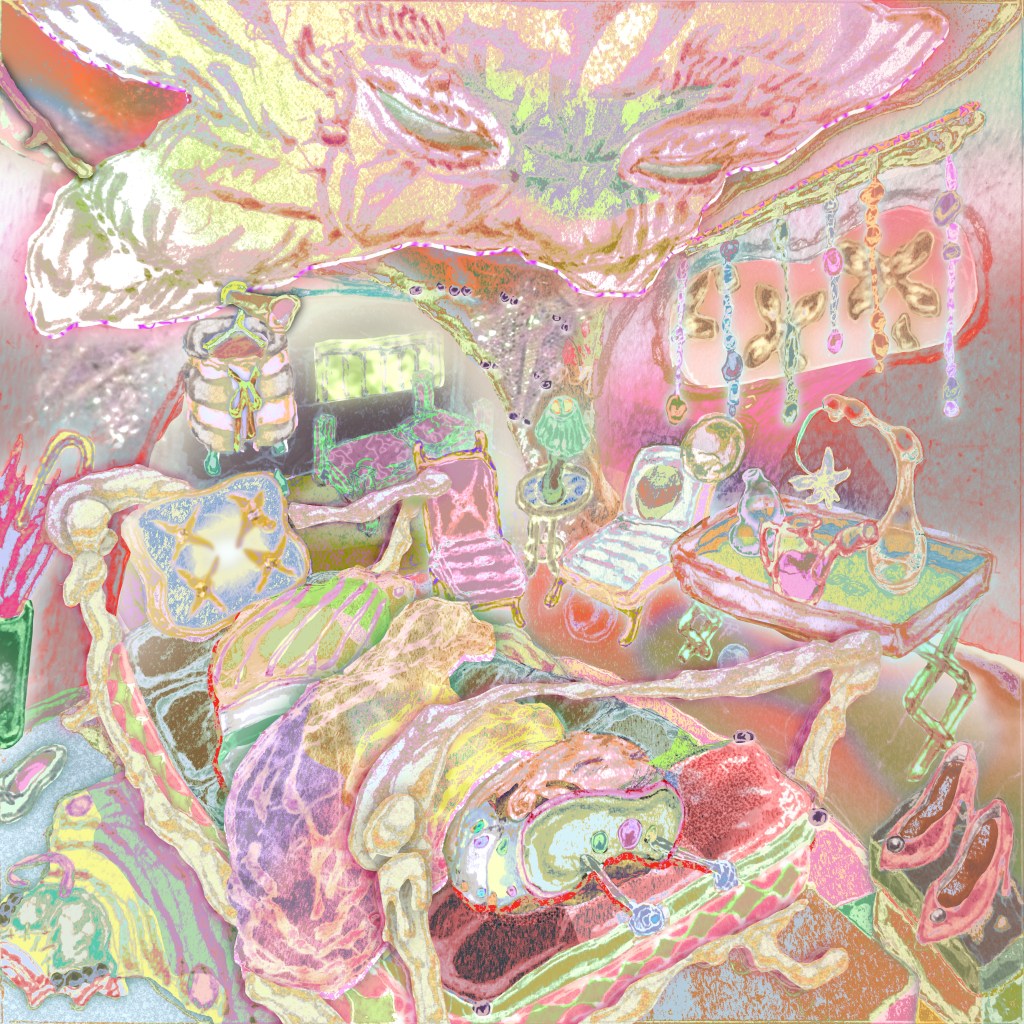
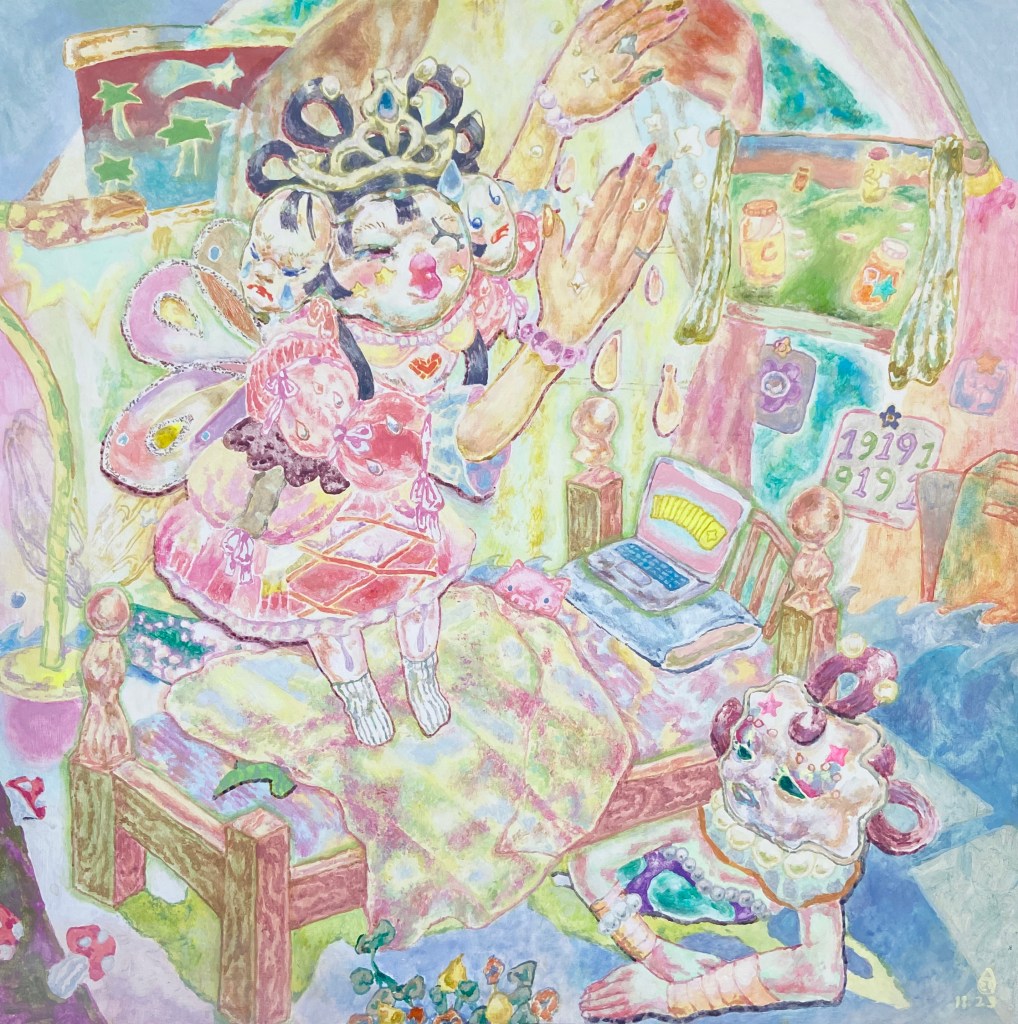
I’ve always considered myself a very sentimental person, and often find myself recounting memories of childhood and childlike wonder. I think the theme of nostalgia comes from a desire to tend to the same wonder and joy–to preserve them in some amber haze and coax them into a physical format. I grew up in the same house all the way up until college. Proximity to my small community shaped me in a very specific way which I hold tender to me, but moving out resulted in a me that was much more malleable and exponentially formative. I’ve been curious about the ways in which I’ve deviated from previously held tenets and ideas of what is sacred to me.

How do dreams, memory, and fable influence your creative process? Do you have a particular method for translating these abstract concepts into your visual work?
I think I’ve become rather known for my dream-based work but I would say 70% of my work is actually based on conscious experience. I consider most of my main bodies of work with the exception of my ink dream diary series to be reflections and augmentations of things that permeate my life at that given moment. Having had the privilege of growing up with bedtime stories, I recognize them as a more accessible way to connect people to larger themes, so I think that’s where fable comes into play for me. I’ve recently been reading books based off of Greek Mythology, Circe by Madeline Miller has been a great inspiration as of late in terms of the idea of the boundary and what that means in relation to time. I’m also a fan of tales like Alice in Wonderland which infuse whimsy and turbulence into an otherwise mundane environment. I don’t follow a formula for translation; sometimes I’ll write a little poem to kickstart my drawings, most of the time I go in with a word web of larger concepts I’d like to illustrate and specific objects I see working in relation to said concepts. I then thumbnail everything out and get to work. It’s much rarer for me to have a vision and get it down immediately–my work is not intuitive in that sense; it’s actually quite anal in terms of planning. I often feel as if I’m searching for what I’m trying to convey visually until the very end of the piece.
Your art features hybrid mark-making methods including graphite, ink, digital rendering, and paint. What inspired you to combine these mediums, and how do they contribute to the narrative of your pieces?
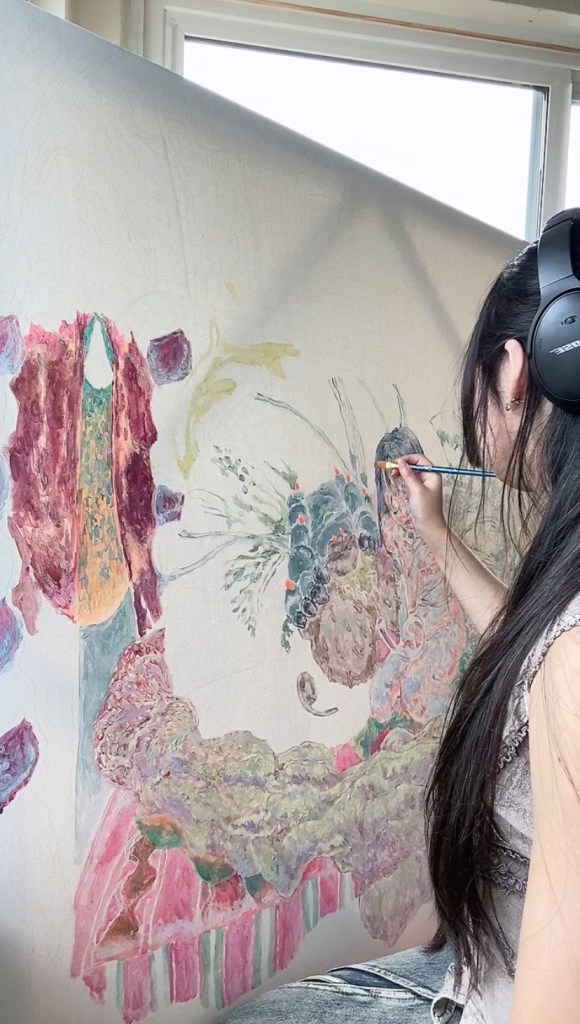
Probably a desire for experimentation–digital art was encouraged in the illustration sphere while I was in school, so I tried to emulate game art like the splash work of League of Legends despite never having played myself. Ultimately though, I felt most comfortable and most free with a pen and paper, but i enjoyed the vibrancy of color that i was now achieving on my tablet–it felt like an ode in a way to my childhood as well–I could combine the pencils that drafted shitty Woody Woodpeckers but also explore the aesthetics of the pixel art and RPGs that graced my childhood. That’s when I began bridging these things together. Now, i still like to combine these mediums but I use the digital tool more as a vehicle for deciphering color rather than an end project (exception for things that follow a digital format such as an album cover)–as much as I enjoy my digital renders, I’ve also found much joy in the textural possibility that comes with a physical piece.

Many of your pieces present dynamic situations of irony through a lens of girlhood and adulthood. How do you balance these contrasting elements, and what message do you hope to convey through this juxtaposition?
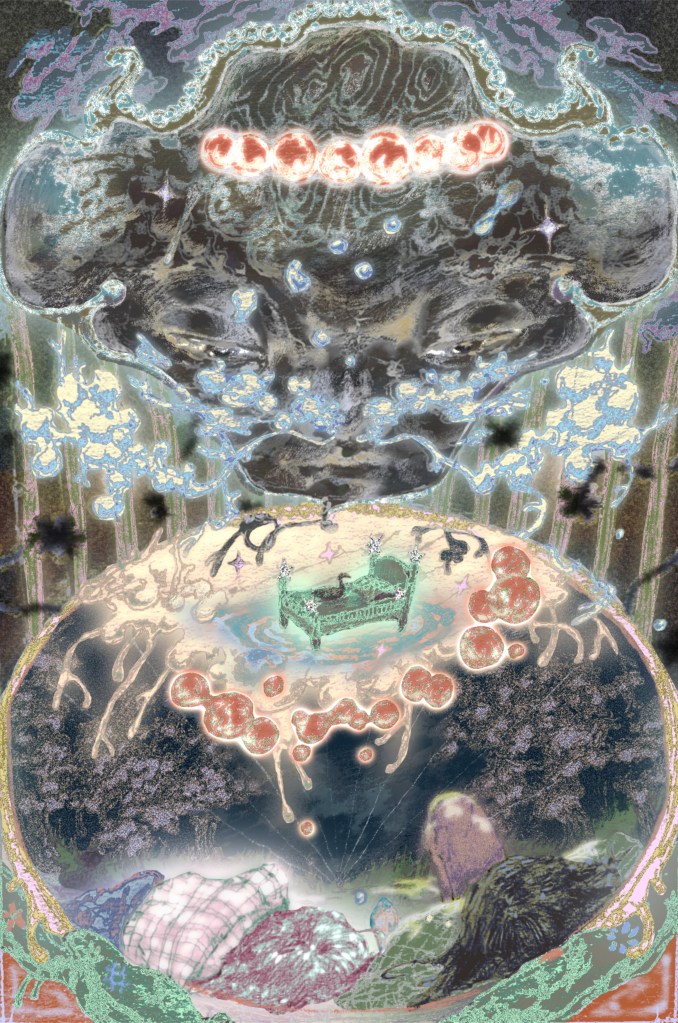
Truthfully there’s often no message in place–rather than a resolution, I think my pieces are more so about exploring and pinpointing moments of change. I tend to construct ironic narratives for the pieces I create, because I view the internal characters as anchor points that question, embrace, or oppose each other. The characters often function as projections of themselves at different points in time and evolution, however it is not as if one serves primarily as a mentor–rather, they contend with each other. I don’t believe in a right answer between maturity or so-called naivete–I think as adults, it’s easy to lose so much of the goodness that comes out of the boundlessness of the child-heart and psyche. We have restrictions and societal tenets to abide by. That being said, adulthood also grants one the potential of greater freedom, and oftentimes the ability to see more of the world, and there is beauty in growing too. There’s a tension that I like here–I don’t believe in being a child forever, but I think it’s important to intermittently revisit and care for the child-heart so as not to readily accept all the impositions and limitations of the adult world. But there is no hierarchy.
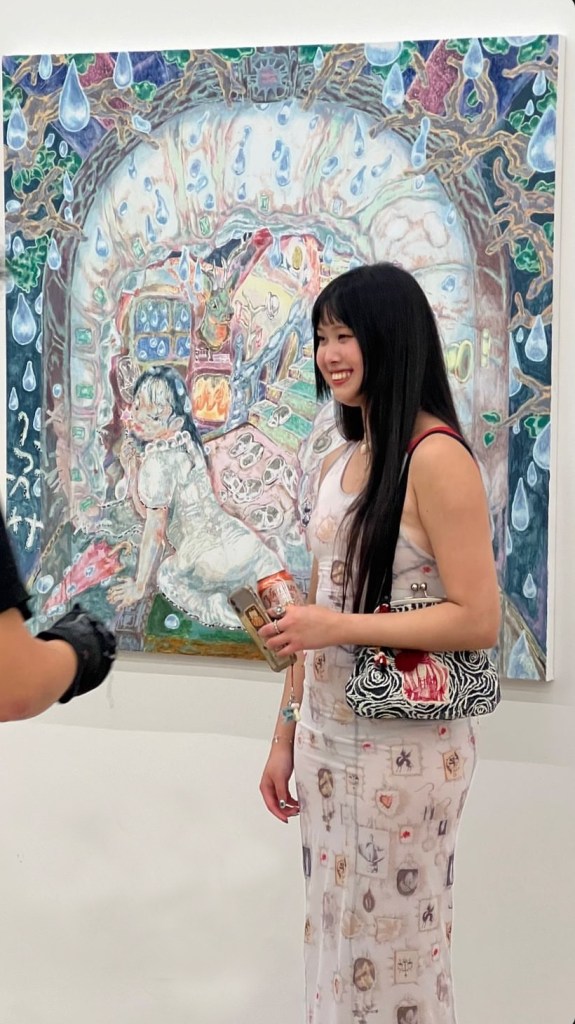
Your work has been featured in several notable publications and exhibited internationally. How have these experiences impacted your career and artistic development?
It’s been so immensely cool to see how my work resonates with varying audiences. In school, I found it difficult to find spaces for creations that were most personal to me. I tried out as many avenues for my work as possible–game design, editorial, publishing, typesetting, but I often felt held categorically in the sense that my work felt far too illustrative for a gallery and far too convoluted for commercial illustration. To see my work gain traction as it was, in all honesty was very validating. In school, I often felt selfish for creating things that were so largely autobiographical, because for me, my pieces are oftentimes projections of things that are always percolating and in need of an output. Having people resonate with my work despite my perceived sense of specificity for it brings so much joy to my practice and has been very encouraging.

Can you describe your typical day in the studio? How do you maintain your creativity and focus?
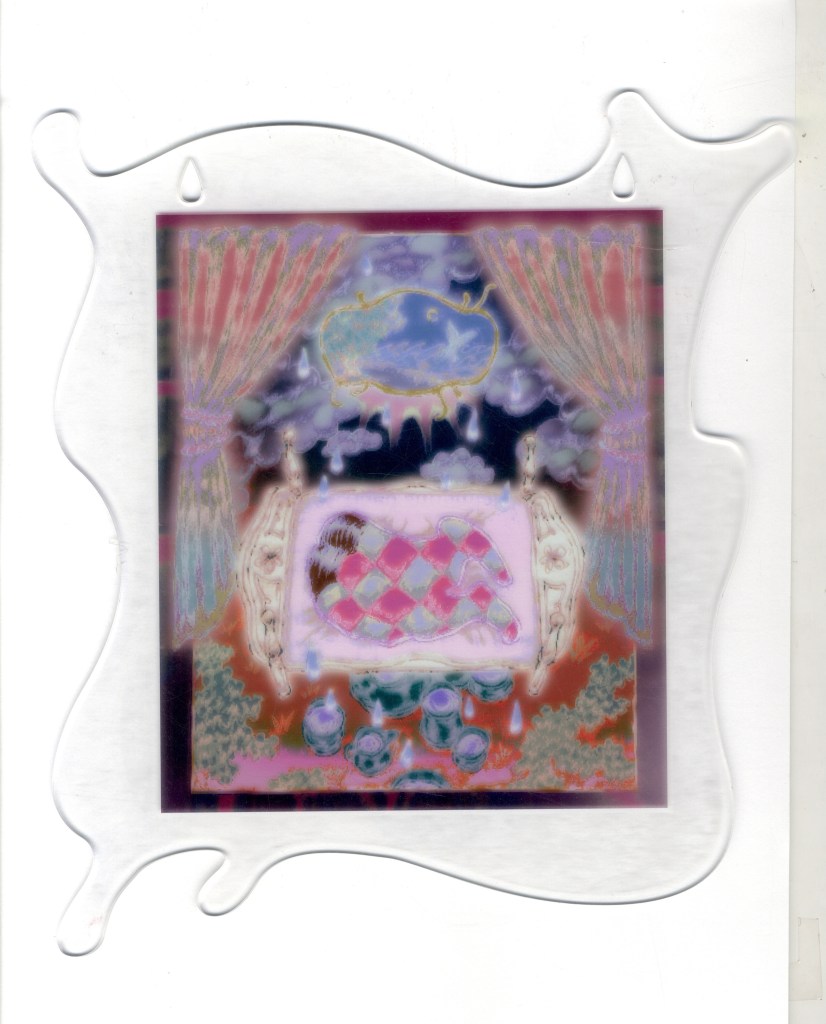
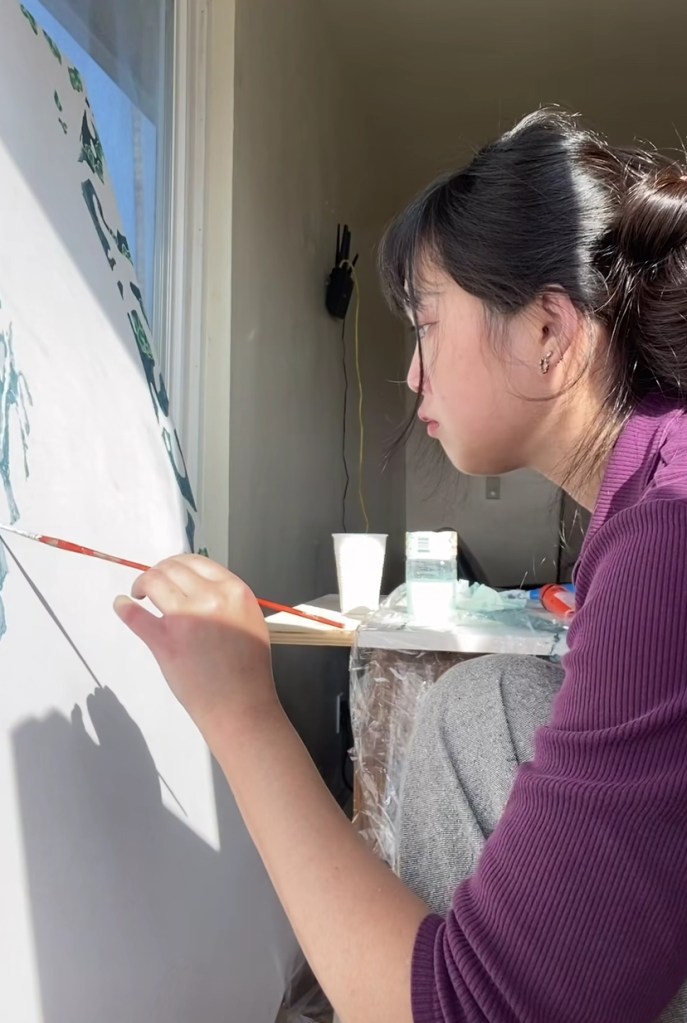
It can be hard to organize time when there’s no specific authoritative figure at your toes, so I set benchmarks for myself in my reminders app broken down into stages. For example, for my recent silkworm series, I knew that I wanted to create something that would yield around 4 pieces, and set a goal date for the conception, then the priming of each surface, and halfway and full markers for getting each piece done. Because painting on a large scale takes a long time, I also like to work on other projects simultaneously so I don’t get ‘familiarity blindness’ from looking at the same piece. I often draft ideas, or color other pieces as I’m working through a large scale painting. There will be times when I’m working on something with a more specific deadline such as an album cover too, in which I will also factor in additional time for that and maneuver my benchmarks accordingly. In terms of maintaining focus, playing music or an audiobook or podcast has been really helpful for me–more so for the brainless aspects of creating such as laying down color rather than thumbnailing. When it comes to planning the piece itself, I need total concentration–the only things I can listen to are instrumentals (recently a lot of Takashi Kokubo). In terms of maintaining creativity, I also make sure to allot myself time to go on walks, to meet friends, and to read–all of these things, while psychically fulfilling, also ultimately inspire my practice so much.
Are there any specific projects or exhibitions you are currently working on or have recently completed that you’re particularly excited about?
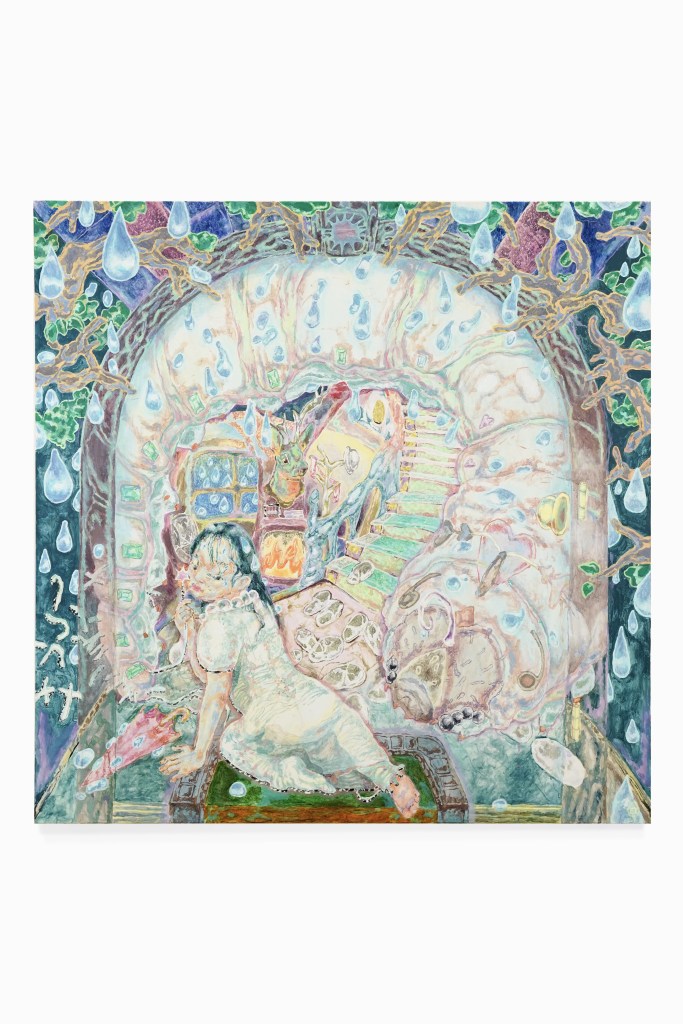
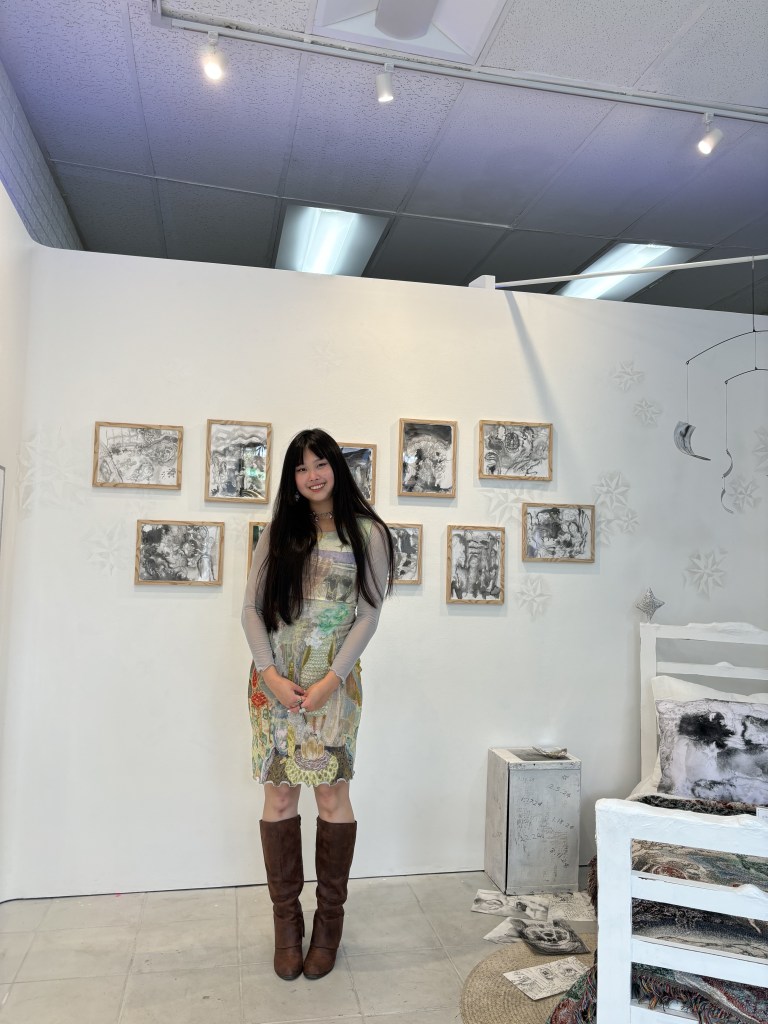
I just had my first solo show at Andand gallery in Los Angeles in May which I loved working on–I was so lucky to have so much creative freedom with the space and to be able to co-curate a dreamworld with my gallerist, Edie Xu. I also just showed with La Beast Gallery, also in LA alongside some extremely wonderful artists –that was the first larger scale work that I’ve ever shown so it was super exciting to see it in space and in conversation with other work that I admire so much. I don’t have any specific shows planned at the moment, but I am really excited for an upcoming project–I can’t say too much about it yet but it involves wearables ❤
How do you see your work evolving in the future? Are there any new themes or techniques you’re eager to explore?
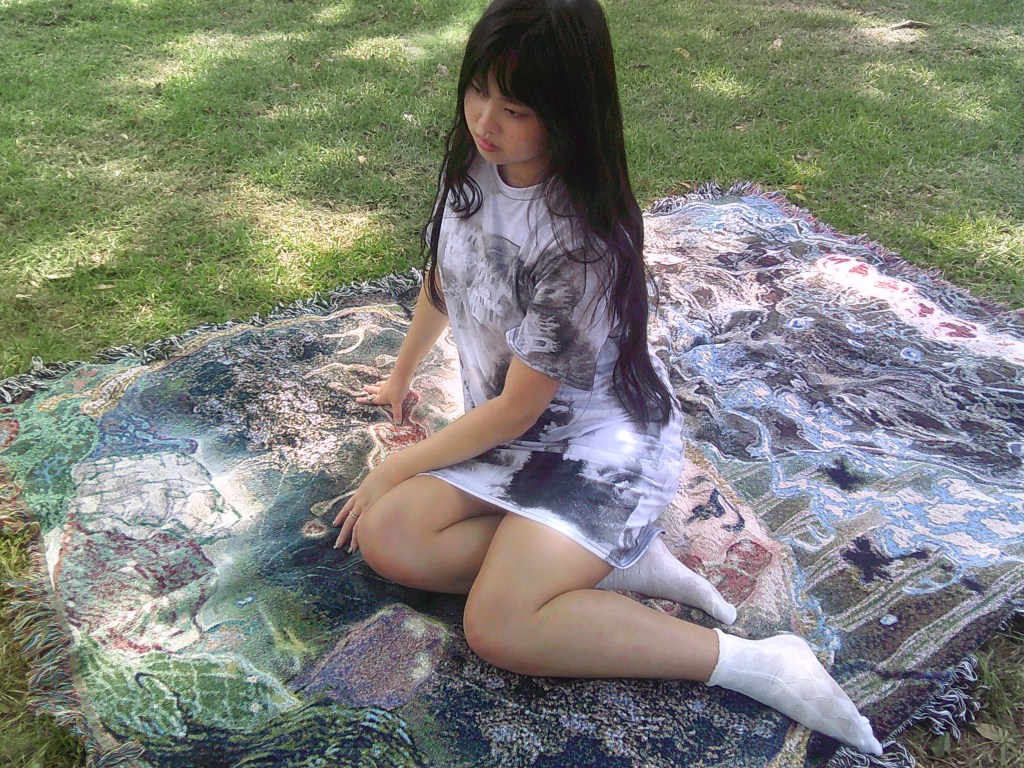
Since I’ve been shifting towards physical media more, I’m hoping to play around with physical textures, using spackles, sand, gels/epoxies, or translucent or metallic substrates to add more dimension to the work. Thematically, I’ve recently become more interested in the idea of what it means to be a sovereign body–to tread lightly and gracefully or to fall completely into trepidation.

Is there any advice you would give to emerging artists who are trying to find their own unique voice in the art world?
Thumbnails(small rough drafts of a final drawing) and sketchbooks are your best friend! Don’t tie yourself down to the scarcity of a blank page–continue to draw frequently and find aspects of different artists that inspire you. When I first got started, I tried to dissect what I most enjoyed about various artists’ work that I really resonated with–whether that be palette, composition, line quality, or subject matter, and I’d try and mash it all together with thematic conceptual language that was important to my life at the time. Eventually my style emerged from my ‘collages’ and I developed a visual language that was strong enough to build upon internally, ie. I developed symbols that I enjoyed working with and could build upon, and started a more personal visual style that I could explore without relying on a set list of artists as a crux.

 ART HUB
Leave a comment