
If you have ever encountered the name Joseph Beuys, you likely know his famous performance where he explained the meaning of his works to a dead hare at an exhibition, believing that even a dead hare “possesses greater sensitivity and instinctive understanding than some people with their stubborn rational thinking“. Or perhaps you have imagined yourself at the Galerie Clert (La Galerie Iris Clert), where Yves Klein showcased one of his two invisible works “The Transformation of Sensitivity into Primary Matter Stabilized in Pictorial Sensitivity” (La Transformation de la Sensibilité en Matière Première Stabilisée en Sensibilité Picturale). You stand surrounded by white walls, “in the void and freedom of action,” as Albert Camus, who visited the exhibition, said, and you think, of course, you can do the same.

This essay, contrary to what you might think, will not be dedicated to Beuys or Klein. I will briefly outline my idea of how art (an artwork or an exhibition) can be “read” in terms of the presence and loss of aura, intertwining in the modern world. To delve deeper into this idea, we first need to focus on the curator’s role. According to Adrian George’s well-known classification, curators fall into four types: the scholar-curator, the independent curator, the artist-curator, and the administrator-curator. In practice these four classifications often merge to some extent (project owner, curator, project manager, exhibit developer, designer, and additional team members all in one) except for scholar-curators, who can be called “institutional curators”. For independent curators, who create their projects from A to Z, it can be confidently stated that they play a key role in how the artwork will be perceived by the public.
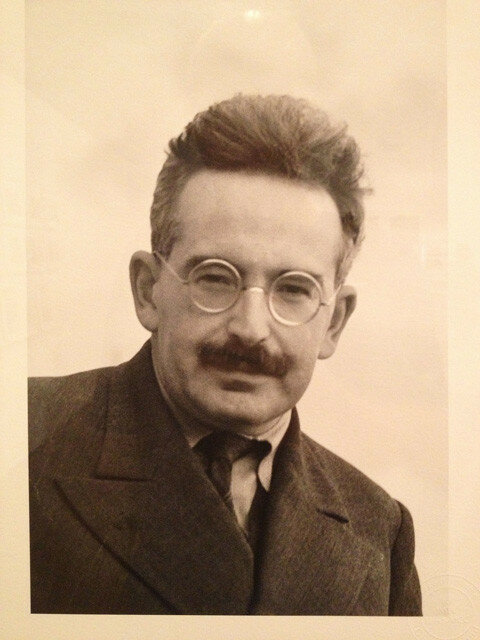
Following the logic and title of the essay, let’s delve into the basics of Walter Benjamin’s aesthetic theory. In his terminology, “aura” is a “way of perceiving” that involves creating an “atmosphere” and religious content, affecting the viewer’s emotional component. Creating a spatial experience through the “sensation of distance” and attempts to “bring the object closer” leads to a loss of authenticity in the modern world, where the concept of “art for art’s sake” loses its meaning. As the German philosopher writes, art no longer requires the audience’s concentrated feelings, making it easier to manipulate. The most vivid example of aura and its loss would be one of the most renowned international art fairs, Art Basel. In the context of Art Basel, the aura can manifest in unique artworks, as some pieces may be created specifically for this fair, having a unique connection with the place and time of the event. Unique exhibitions and installations that can only be seen at Art Basel support this “auratic” nature. On the other hand, Art Basel also demonstrates the loss of aura, as many artworks presented at the fair are already familiar to the public through reproductions in catalogs, online editions, and social media.

However, let’s move from large-scale examples to more everyday ones – exhibitions. Exhibitions can take any form and category, whether it is an exhibition in a state cultural institution or in an informal space, including private galleries. Let’s extract the obvious theme of project ideas – the theme of death. In a museum, the theme of death will be so obvious that we almost won’t notice it among the theatrical decorations, confirming that in a museum, we observe the “sensation of distance” and sacredness regardless of whether we are looking at an ancient artifact or a work of art. In an exhibition created by an independent curator in an informal space, sacredness can only be created by the curator. Based on the exhibition’s goal, they can thoughtfully arrange: the placement of objects, the path, lighting, smell, temperature, sound, and accessibility.
“What emotion does the curator want to evoke?” “What desire should arise in the viewer?”
“Who is the viewer?”
In the case of “commercial” exhibitions, we see the “bringing the object closer”: white walls, catalogs, labels, precise lighting. In such a space, the spatial experience occurs through the viewer’s imagination, who envisions the artwork in their home or apartment. If an art consultant is nearby, and a collection is being created or expanded, sacredness is out of the question – only the commercial value of the item and possible catharsis are considered.
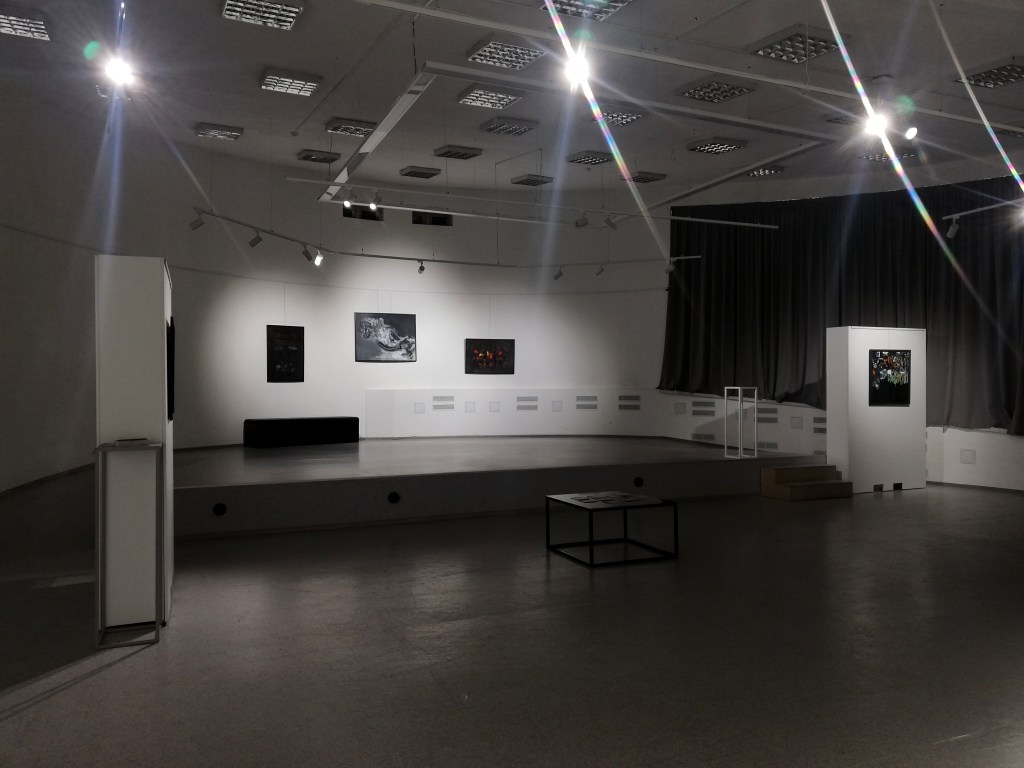
P.S. Let’s note one similarity between a permanent museum exhibition and an exhibition, for example, in a former hospital, as an informal space: the already mentioned “path” of the viewer. The viewer’s path is the most important topos of the exhibition, and changing the path alters emotions and perceptions, whether of a single artwork or an entire exhibition. It is no coincidence that in an archaeological museum, we first pass the Egyptian and Sumerian sections, and then the Roman ones.
One of the key challenges for an independent curator, especially in an informal space, is creating a harmonious “mésalliance” between attempting to create the sacred for the masses and the desacralization of art. In the first case, the focus shifts to social and cultural contexts, in the second – to an attempt to revive the “aura”. An example can be the exhibition at the Metropolitan Museum “Heavenly Bodies: Fashion and the Catholic Imagination” in 2018, where papal garments and accessories from the Vatican were combined with haute couture from Balenciaga to Chanel, creating a dialogue between the sacred and the secular.

However, it should not be forgotten that an exhibition is the death of aura, and only the critic allows it to reappear.
Resources:
- Benjamin Walter, The Work of Art in the Age of Mechanical Reproduction, M.: Medium, 1996.
- Goldberg RoseLee, Performance Art. From Futurism to the Present, Thames & Hudson, 2011.
- George Adrian, The Curator’s Handbook: Museums, Commercial Galleries, Independent Spaces, Thames& Hudson, 2015.
- Wieczorkiewicz Anna, O funkcji i retoryce wypowiedzi muzealnej, „Polska Sztuka Ludowa. Konteksty”,1996.
- The exhibition at the Metropolitan Museum “Heavenly Bodies: Fashion and the Catholic Imagination”:https://www.metmuseum.org/exhibitions/listings/2018/heavenly-bodies
- The photo of the entrance to the Galerie Iris Clert for the opening of the “Void” exhibition: https://www.yvesklein.com/fr/archives/index?sb=_created&sd=desc&r%5B%5D=photo#/fr/archives/view/photo/45 8/entree-de-la-galerie-iris-clert-lors-de-l-inauguration-de-l-exposition-dite-du- vide?r[]=photo&sb=_created&sd=desc
- The photo of the “Ensemble” by Alexander McQueen, spring\summer, 1999: https://www.metmuseum.org/met-publications/heavenly-bodies-fashion-and-the-catholic-imagination

 ART HUB
Leave a comment