

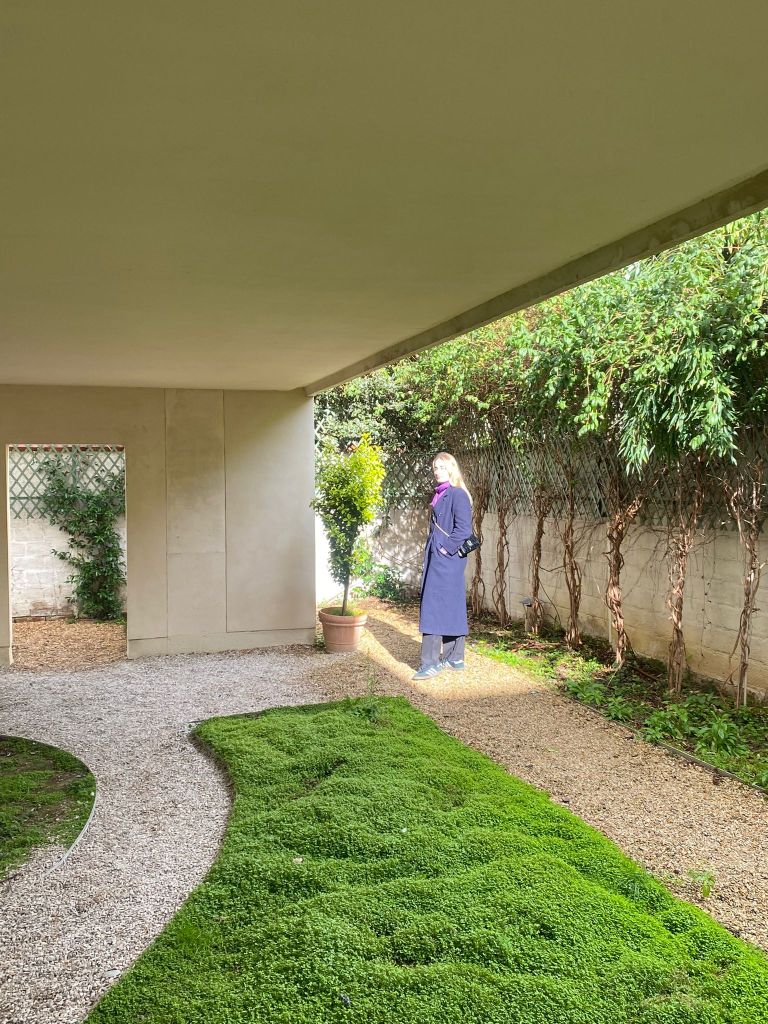
Recently, I had the pleasure of exploring Maison La Roche in Paris, an architectural gem crafted by Le Corbusier and his cousin Pierre Jeanneret between 1923 and 1925. Situated in the serene neighborhood of Auteuil, near to the Bois de Boulogne, this Parisian enclave, known for its elegant ambiance, captivates visitors with its Modernist and Art Nouveau architecture. As I strolled through the charming streets of Village d’Auteuil with my family, we encountered hidden gems like Galerie 54, a 1920s townhouse designed by Robert Mallet-Stevens and Villa Reifenberg, each adding to the neighborhood’s unique character and charm.


Originally commissioned by Raoul La Roche, a Swiss banker and visionary art collector, Maison La Roche stands as a testament to his enduring friendship with the co-founders of Purism: Swiss architect Le Corbusier and French artist Amédée Ozenfant. In the heart of Paris, La Roche curated a remarkable collection of Purist and Cubist masterpieces by artists such as Georges Braque, Juan Gris, Fernand Léger, and Pablo Picasso. Today, Villa La Roche proudly houses the Fondation Le Corbusier, preserving its rich artistic legacy for future generations. Notably, in July 2016, Maison La Roche, alongside Villa Jeanneret and sixteen other Le Corbusier works, received the esteemed honor of UNESCO World Heritage Sites, recognizing their profound cultural significance and architectural innovation.

I love exploring smaller, more intimate spaces, finding them to offer a refreshing alternative to larger collections, which can sometimes be overwhelming during shorter city break visits. Thus, I made the decision to bring my family to Villa La Roche due to my admiration for Le Corbusier. I still vividly recall my first encounter with his work when I stumbled upon his cathedral, Notre Dame du Haut, within the pages of my middle school Art History book. Its striking, minimalist, and somewhat brutalist aesthetics left an indelible impression on me.
However, when discussing Le Corbusier, whose birth name was Charles-Edouard Jeanneret-Gris, it is impossible to overlook the controversy that still surrounds his legacy. Many argue that his unconventional background in architecture and affinity for concrete and minimalism led to the disruption of classical architectural norms, resulting in the proliferation of concrete urban landscapes worldwide. Despite being hailed for his visionary designs, the large-scale nature and mixed success of his collective living projects have cast a shadow over his reputation. While I understand the criticisms leveled against him and his projects, I believe it is important to acknowledge his role in post-World War I reconstruction efforts, particularly in addressing the housing crisis in French cities. The minimalism, cleanliness, and tranquility inherent in his designs may have served as a source of solace amidst the memories of wartime turmoil and violence. However, I leave it to your own judgment to weigh the complexities of his legacy.
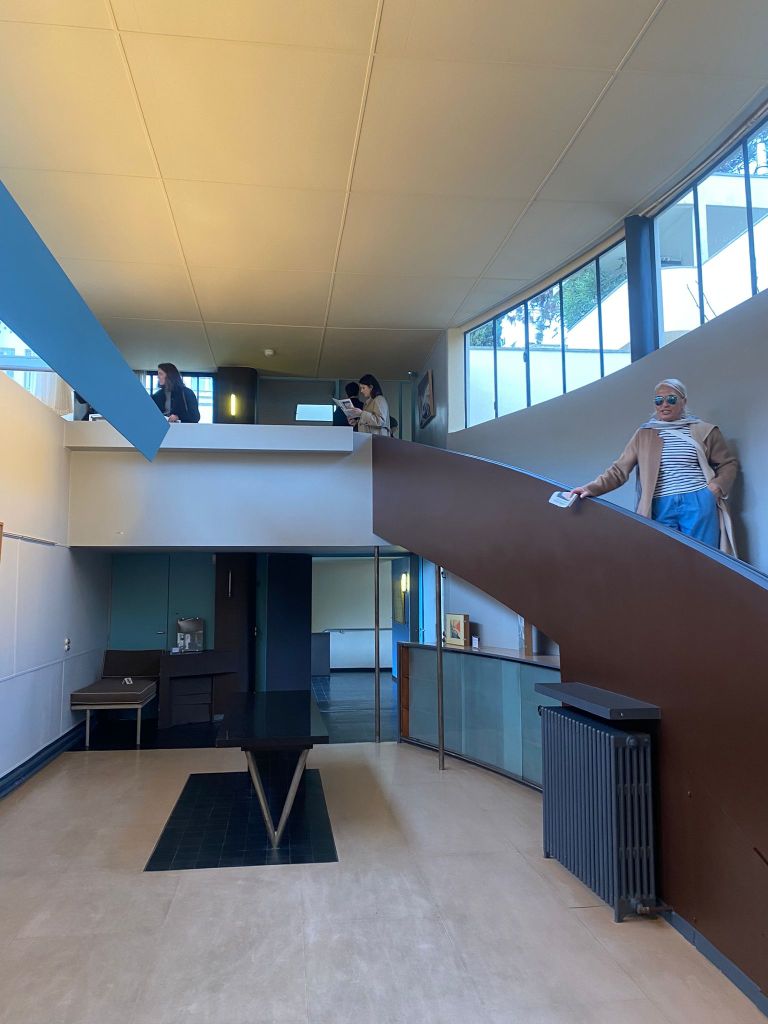
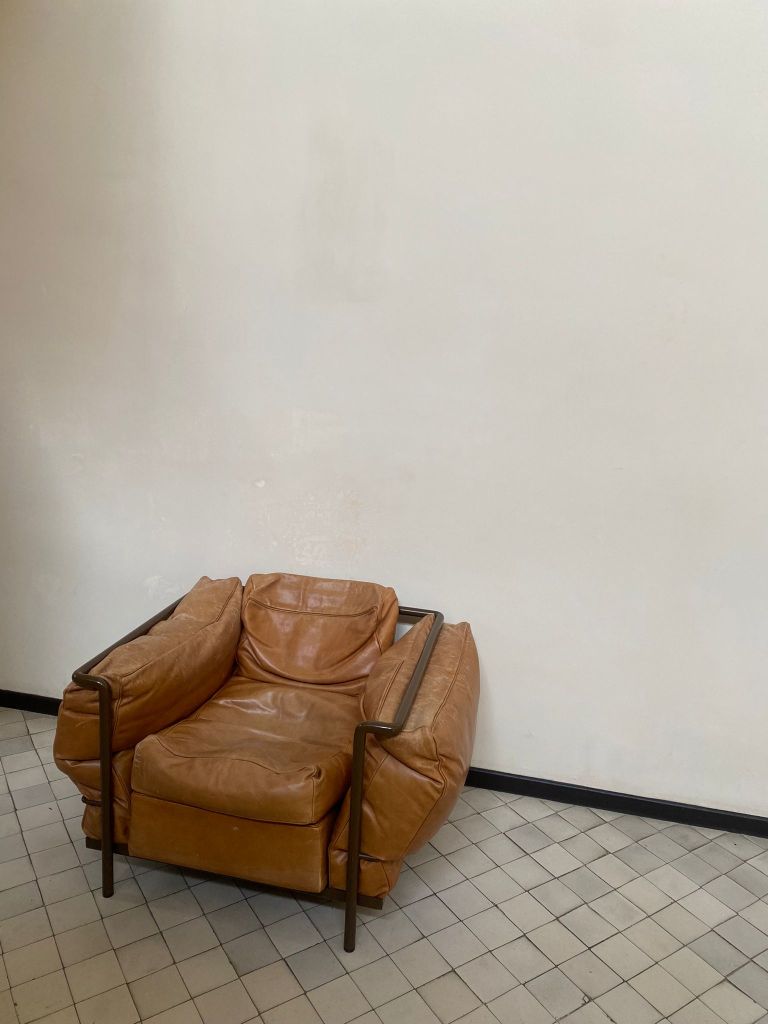
Maison La Roche proved to be a true delight, captivating me with its blend of simplicity and sophistication masterfully executed by both architects. One of the standout features was the living area, where a ramp replaced traditional stairs, a design choice that struck a perfect balance between functionality and elegance. The space exuded symmetry and practicality, creating a harmonious atmosphere. The presence of Le Corbusier’s iconic chairs and sofas further elevated the experience. In 1929, Le Corbusier revolutionized the concept of the club chair with designs like the LC3 Chair, also known as Le Grand Confort Armchair. These pieces became design icons, showcasing the chair and sofa frame as integral elements of the design rather than hidden structures. As an enthusiast of this innovative design, I can envision incorporating one of these classics into my future interiors, adding a touch of timeless sophistication.
Exploring spaces like Maison La Roche prompts me to wonder what life was like within such environments nearly a century ago and underscores the visionary nature of these architects. Remarkably, the house remains as modern and inspiring as any contemporary creation, if not more so. It is a wellspring of inspiration for my own future home endeavors. I wholeheartedly recommend a visit to Maison La Roche for anyone seeking a glimpse into architectural history and timeless design brilliance.
Reference:
- Book, & Facts,” Encyclopedia Britannica, April 2, 2024, https://www.britannica.com/biography/Le-Corbusier.
- Come to Paris, “Auteuil District in Paris,” n.d., https://www.cometoparis.com/discover-paris/neighborhoods-of-paris/auteuil-s992.
- Françoise Choay, “Le Corbusier | Biography, Architecture, Buildings, Painting, Furniture, “Le Corbusier, the Story of a Controversial Architect,” Engel & Völkers, n.d., https://www.engelvoelkers.com/en-fr/paris/blog/le-corbusier-the-story-of-a-controversial-architect/.
- Steven Loiseau, “Maisons La Roche Et Jeanneret – Le Corbusier – World Heritage,” Le Corbusier – World Heritage, June 14, 2022, https://lecorbusier-worldheritage.org/en/maisons-la-roche-et-jeanneret/.

 ART HUB
Leave a comment