
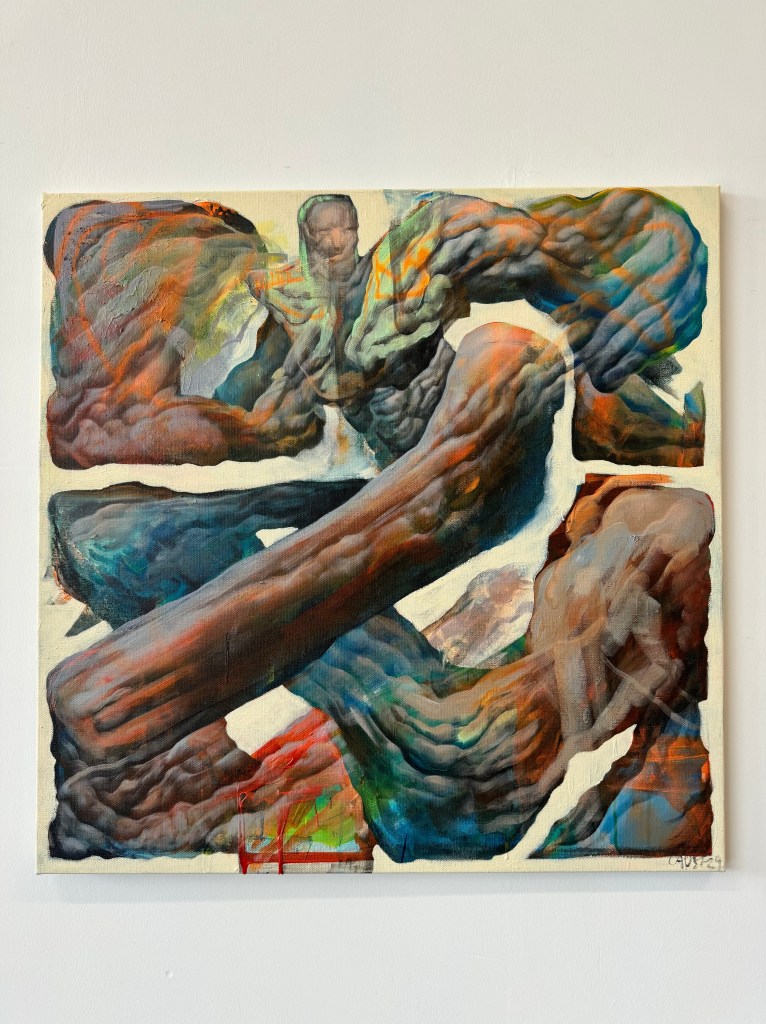
“I have been working intuitively, allowing my curiosity for shapes and colors to guide my process. The common theme for the three artworks is human transformation inspired by the metamorphosis of butterflies. I tried to incorporate this organically driven process not only in my visual language but also in the way I worked with the painting. Pure intuition and letting the shapes that appeared organically define the final motive.” – Laust Højgaard
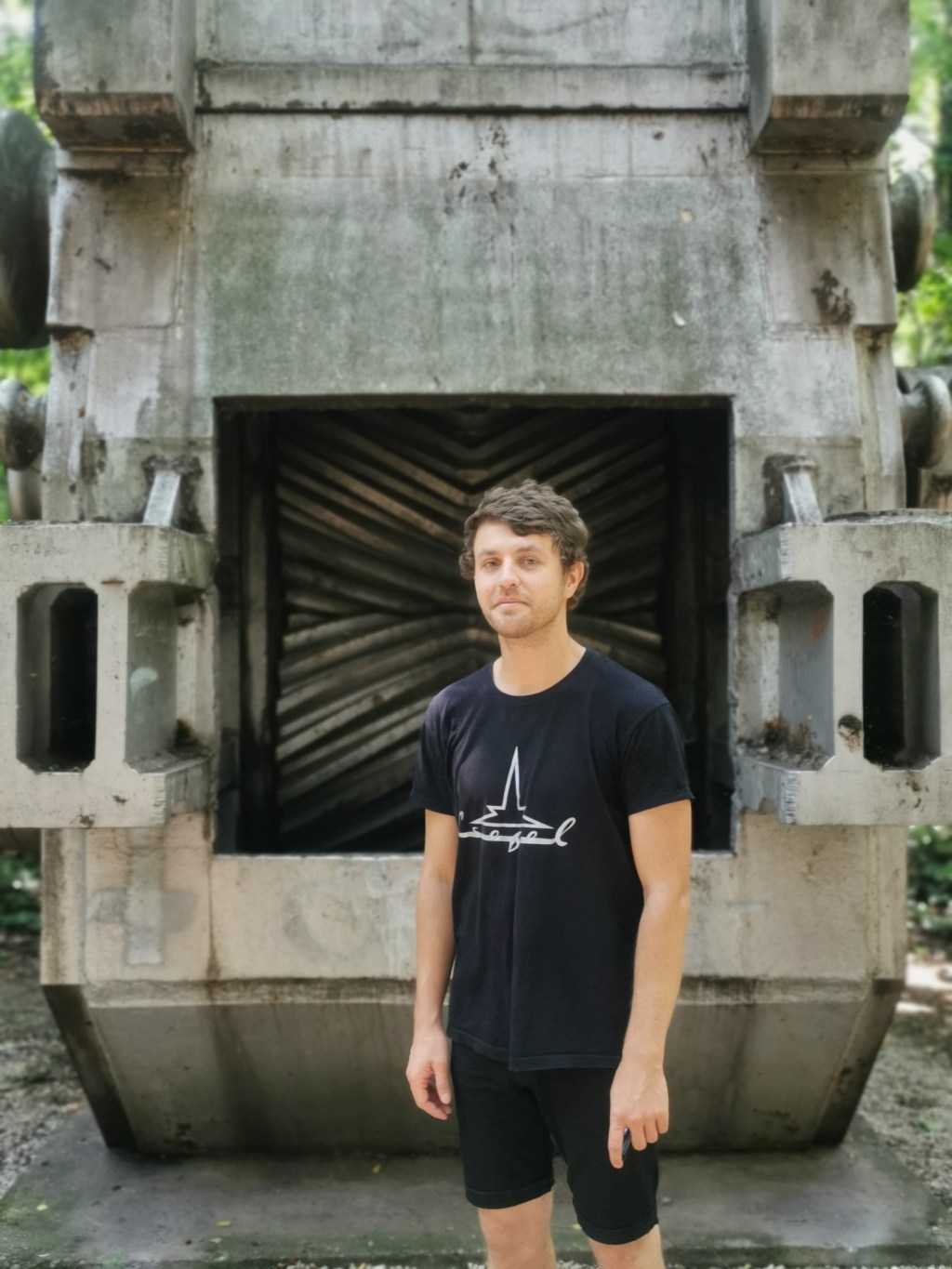
Laust Højgaard, a Danish artist born in 1989, masterfully combines elements of exaggeration, intricate detail, thoughtful textures, and deliberate distortions in his vibrant works. Graduating from the Design Academy in Odense, the Drawing Academy under the guidance of Artem Alexeev, and the Danish School of Media and Journalism in Visual Communication, Højgaard now resides and creates in Svendborg, Denmark. His educational background and diverse influences shape his unique artistic vision.
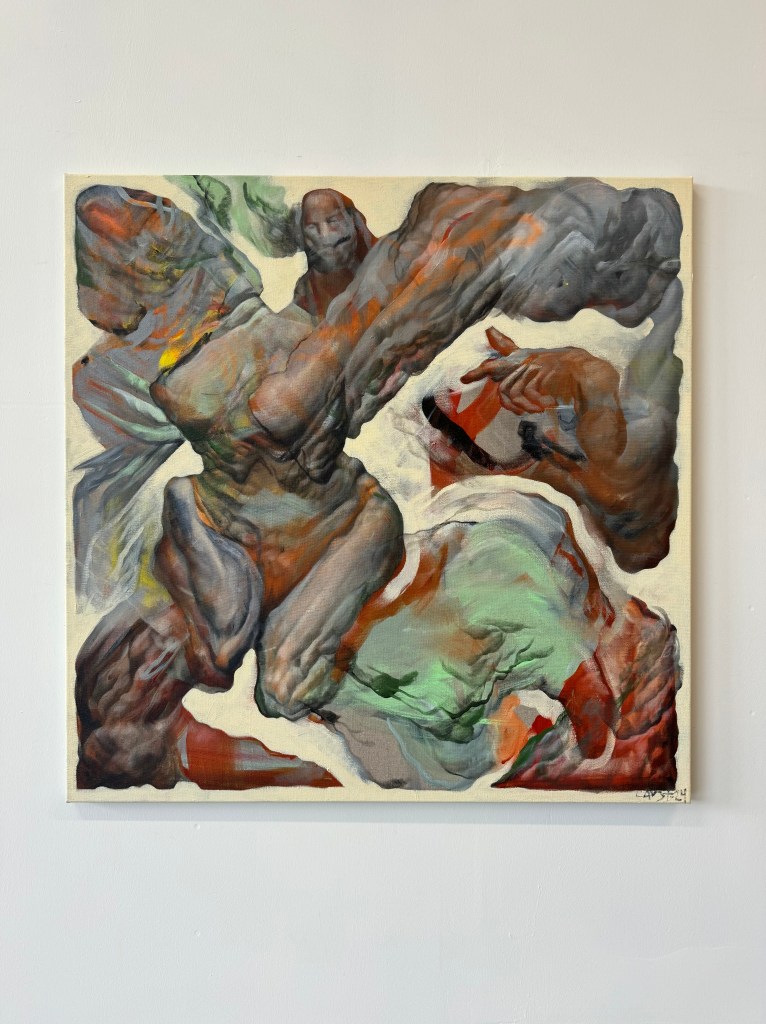
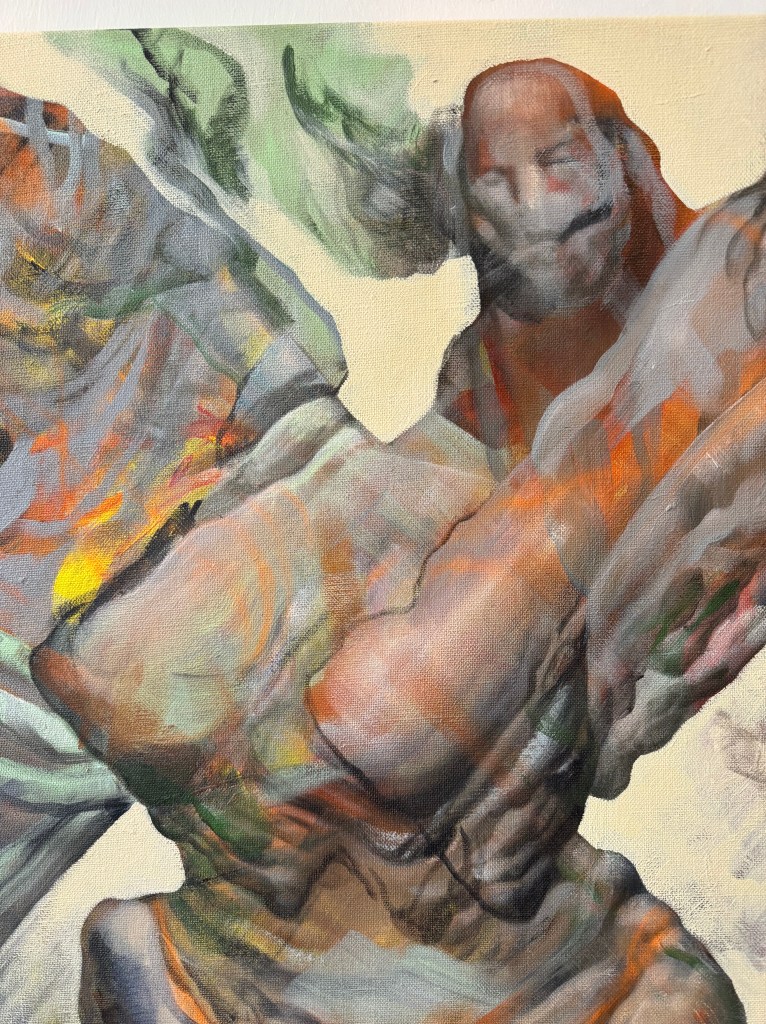

Højgaard’s artistic process is deeply intuitive, driven by a fascination with shapes and colors. He allows his curiosity to guide him, resulting in artworks that feel organic and spontaneous. This intuitive approach is evident in a series of paintings inspired by the metamorphosis of butterflies, where human transformation is a central theme. By embracing an organically driven process, Højgaard lets the shapes that emerge on his canvas define the final motifs, creating a visual language that feels both fluid and dynamic.
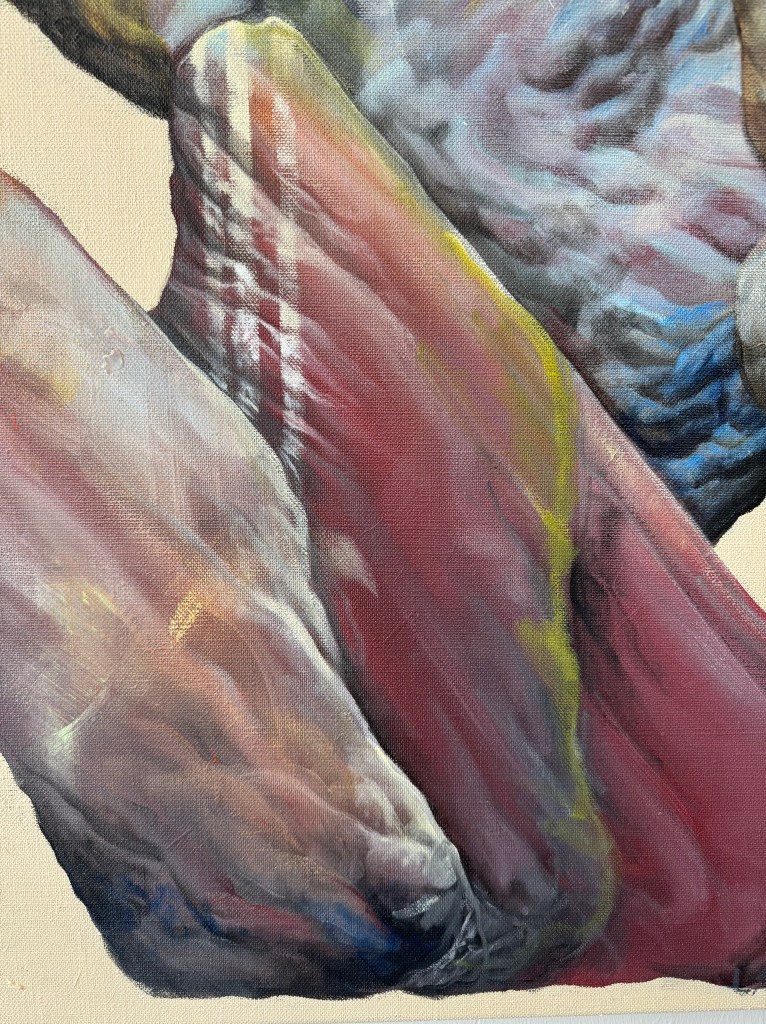
In his studio, Højgaard often works on multiple canvases simultaneously, fostering a cohesive body of work where sources of inspiration resonate across different pieces. His acrylic and oil paintings are like boxes filled with myriad references, blending influences from mythology, pop culture, and urban life. Characters in his works are marked with symbols, playing with geometry, irony, and gigantism. Each figure adopts a unique body language, materialized through layers of paint that create palpable depth.
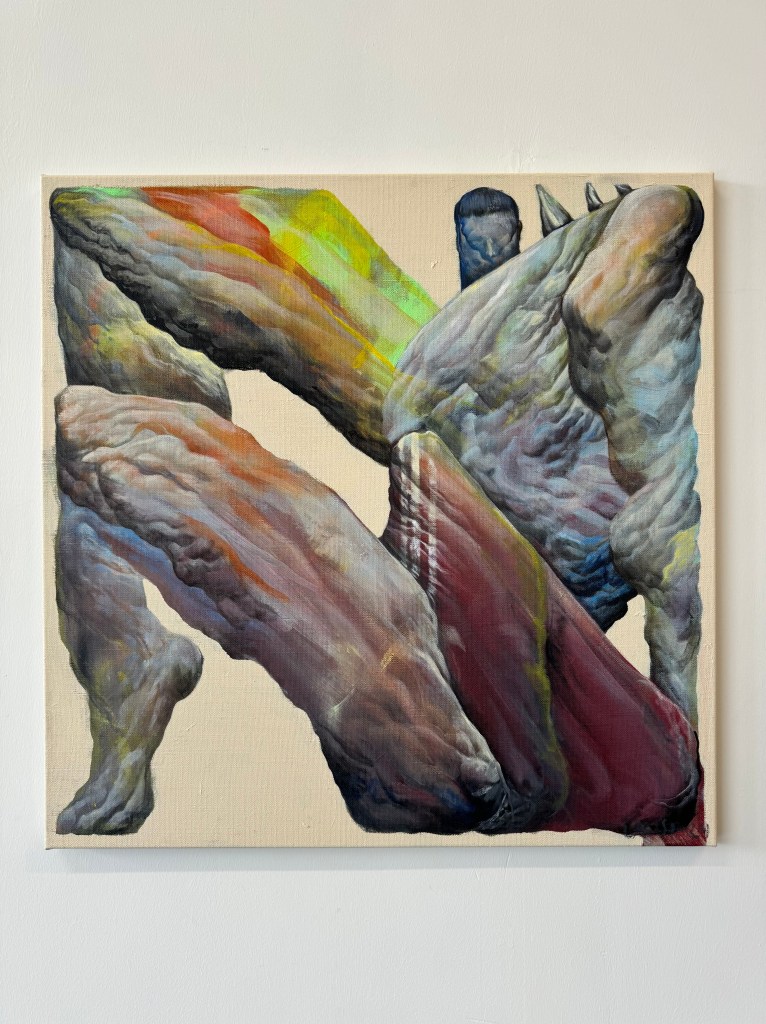

Højgaard’s characters, often perceived as embodiments of exaggerated masculinity, challenge conventional notions of gender and ethnicity. Despite their muscular physiques, these figures conceal an inner fragility and sensitivity. They are thrust onto a stage, forced to play roles they never anticipated, resulting in distorted forms that reflect this tension. This metaphorical representation invites viewers to look beyond the surface and uncover the nuanced emotions and themes hidden within.
The depth of Højgaard’s work requires time and patience to fully appreciate. His compositions, rich with personal and universal references, reveal new layers upon closer inspection. Like revisiting a beloved novel or film, each viewing offers fresh insights and discoveries. The references in his work blend mythology with modern influences, creating a tapestry where Greek and Egyptian figures coexist with elements of fashion, design, and graffiti.

Mythology plays a significant role in Højgaard’s art, with figures from Greek, Egyptian, and Nordic traditions appearing transformed on his canvases. These mythological elements add a timeless quality to his work, inviting viewers to explore the deeper narratives and themes they represent. Nordic mythology, in particular, introduces rough, martial, and earthy figures that, despite their imposing appearance, suggest hidden vulnerabilities and sensitivities.


Højgaard’s art encourages us to rethink our ideals and challenge our preconceptions. His work provides a space for expressiveness, unspoken emotions, and nuanced feelings to surface. By doing so, he invites us to reconsider our perspectives and embrace a more complex understanding of identity and transformation.
If you’re in New York and not Ibiza, you can catch Laust Højgaard’s work in the group show Monomythology opening at “The Hole” and “Collaborations” (Thomas and Tania Asbæk). Don’t miss this opportunity to experience his transformative art in person.




 ART HUB
Leave a comment