Last week, I had the pleasure to immerse myself in an extraordinary exhibition called Apocalyptic Changes of State curated by Jack Trodd, the visionary curator behind Brushes with Greatness Gallery (BWG Gallery). This captivating showcase featured the works of 21 diverse international artists, each piece serving as a reflection on the present state and potential future trajectory of our society, taking into consideration the subject of the upcoming apocalypse. As we embark on this journey of exploration together, let us delve into the depths of artistic insight and introspection, seeking to unravel the complexities of our contemporary condition. Join me as we navigate through this thought-provoking exhibition, curated to confront the profound apocalyptic questions it lays bare and, perhaps, discover newfound perspectives on the challenges that lie ahead.
About the gallery
Before delving into the themes encapsulated within the exhibition, it is worth pausing to reflect on the innovative business model of the gallery. BWG transcends the traditional role of a gallery, offering a multifaceted array of services that extend far beyond mere exhibition curation. At the helm of BWG Gallery stands Jack Trodd, whose vision encompasses not only showcasing compelling artworks but also providing comprehensive art advisory and handling services. Yet, what truly sets BWG apart is its forward-thinking approach to business. Through BWG Agency, the gallery offers a diverse range of B2B services tailored to meet the needs of corporate clients. From managing corporate exhibitions to facilitating art and artist procurement and installation, BWG Agency serves as a one-stop destination for businesses seeking to enhance their spaces with curated artistic experiences.
However, BWG Gallery’s mission transcends mere commercial interests. At its core lies a deep commitment to fostering meaningful connections between artists and collectors. Embracing the mantra that “artists thrive as collections thrive,” BWG Gallery seeks out artists whose visions and beliefs resonate with their own. Through nurturing these relationships and facilitating thought-provoking discussions on a myriad of topics, BWG Gallery aims to create a symbiotic ecosystem wherein artists and collectors can grow and evolve together.
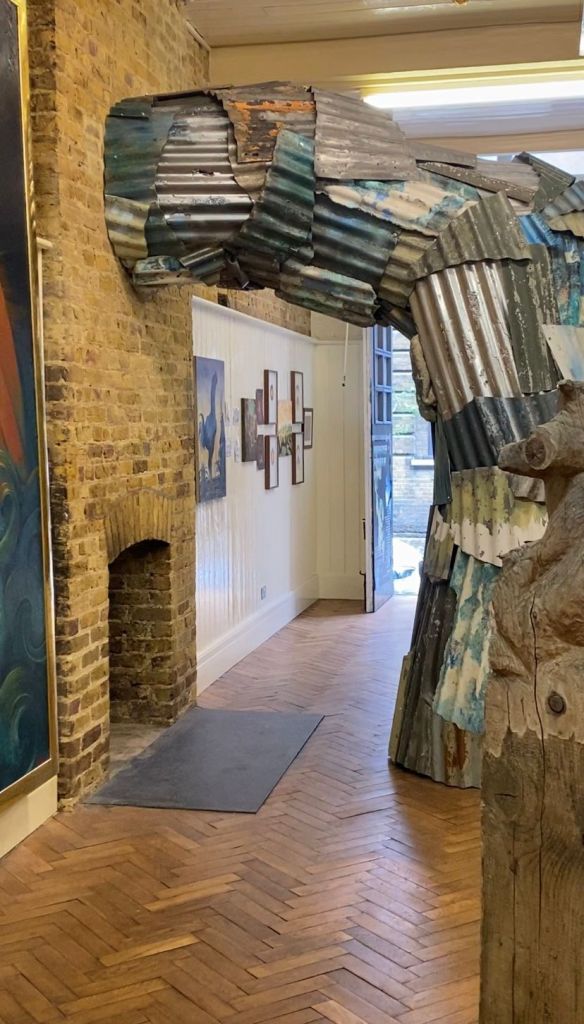
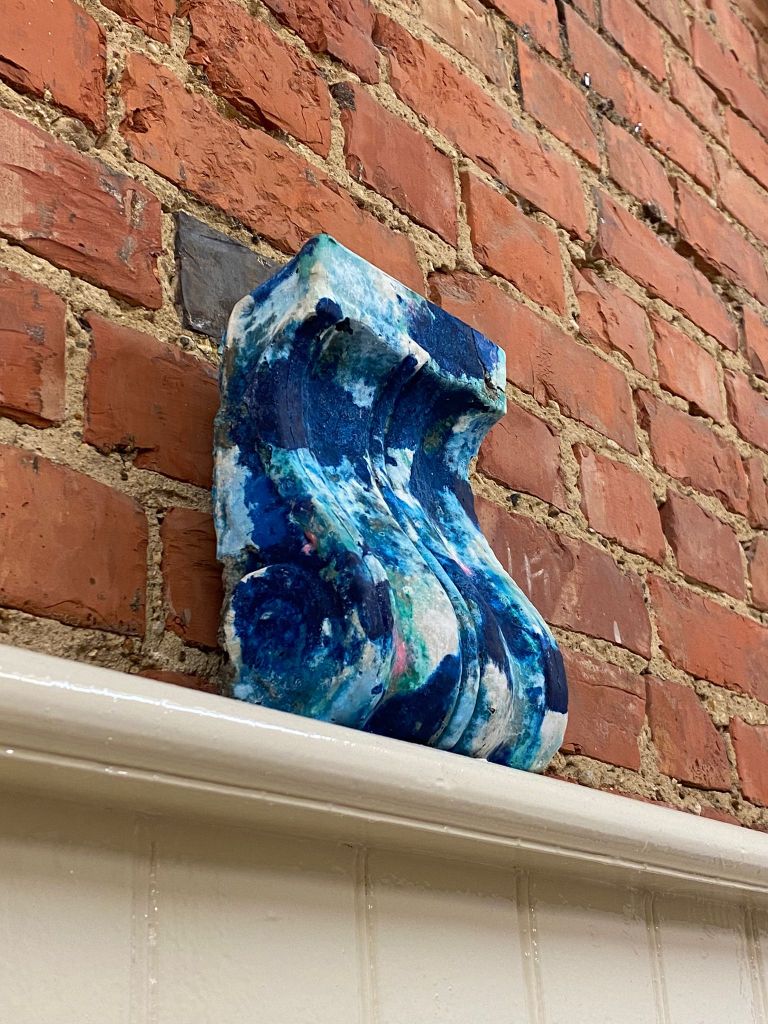
About the show
Against the backdrop of a world grappling with shifting climate patterns, geopolitical unrest, sweeping social transformations, and the rapid advancement of artificial intelligence, the exhibition beckoned visitors to contemplate the dawn of what some may term the “apocalyptic era.” Through a kaleidoscope of artistic expressions, Trodd skillfully orchestrated a narrative that prompts us to confront a pressing question: in the face of accelerating change, do we possess the agency to shape our collective destiny, or are we resigned to mere spectators of an unfolding crisis?
As I strolled through the exhibition, I found myself immersed in a world unlike any I had ever experienced before. It was a realm teeming with nature’s beauty, illuminated by light yet shrouded in darkness and mystery. This multi-environment exhibition offered visitors a journey through diverse landscapes.
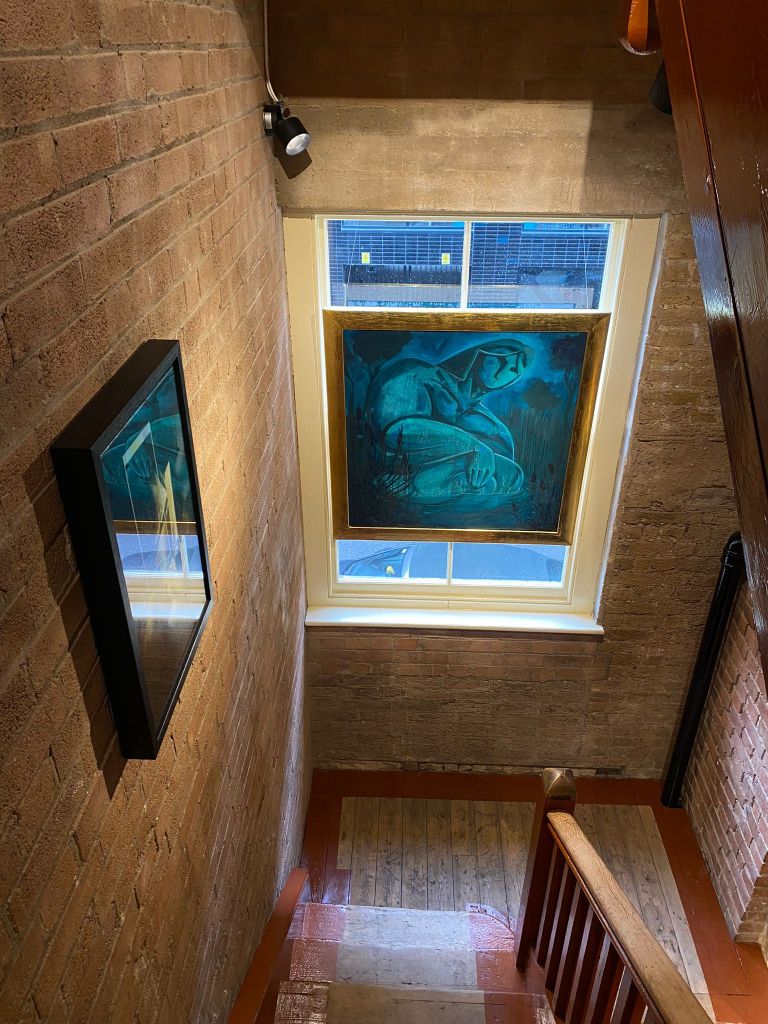
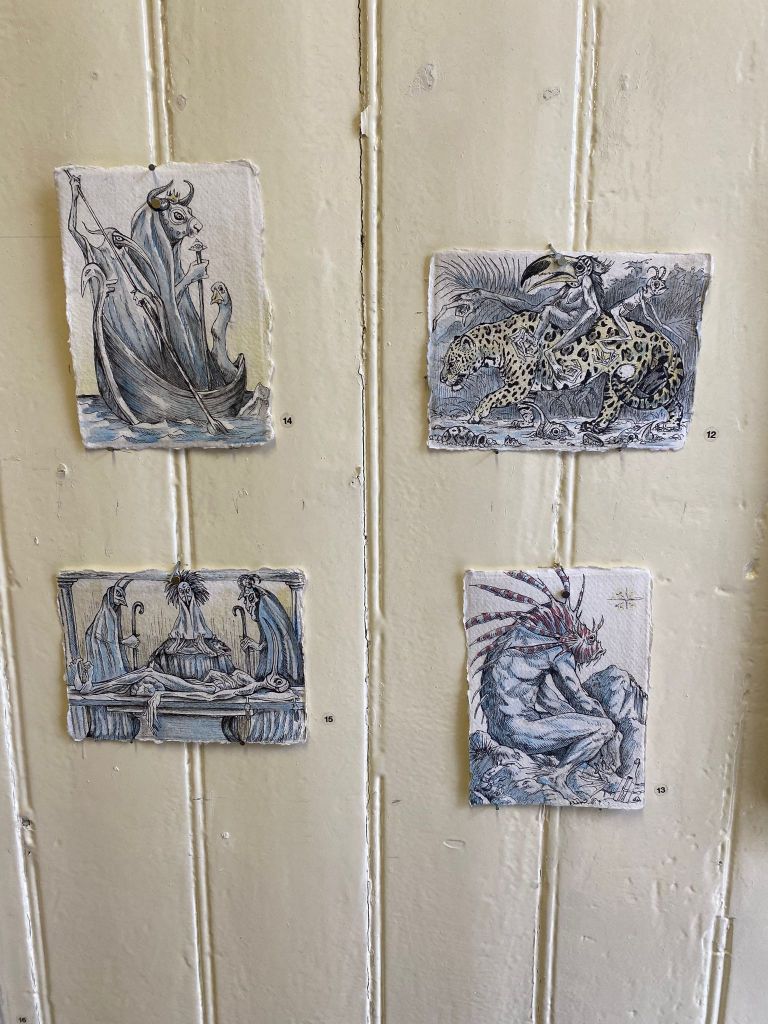
Descending into the lower level, I found myself immersed in scenes evoking nature, folklore, and faith, reminiscent of the Slavic stories and legends of my childhood. Memories flooded back to me, particularly of Noc Świętojańska (Kupala night), a cherished summer solstice festivity celebrated on the 20th of June among Slavic peoples. Looking at all the artworks in the room, I vividly recalled one such night from my childhood. Together with family and friends we gathered near the river and the forests, danced and talked near a crackling bonfire. My mother had crafted a wreath of early summer flowers and plants collected from the fields. Laughter filled the air, accompanied by the sounds of birdsong. As the sun dipped below the horizon, we released our wreaths into the river, each of us silently making wishes for our dreams to come true. That magical night, we were also treated to the sight of fireflies dancing in the air, a truly enchanting experience. In light of the exhibition’s themes of climate and social change, these memories evoke a sense of longing for the past, a wistful reflection on what once was and can never be again. The mysterious creatures depicted in Cayetano Sanz de Santamaria’s works and the enlightened figures brought to life by Maxim Burnett transported me back in time, prompting contemplation of the myths and legends that have shaped our collective consciousness. In our quest to reclaim a sense of purpose and meaning in our lives, we turn to art, tradition, and culture as beacons of hope. Amidst the chaos and uncertainty, we pause to reflect on the richness of our shared past.

As we ascended the stairs, a noticeable shift in atmosphere greeted us, signalling our transition into a futuristic dystopian like era. Reminiscent of themes explored in literary classics like, for example, Huxley’s Brave New World and Orwell’s Nineteen Eighty-Four, the exhibition’s upper gallery offered a departure from conventional narratives. As Trodd says we are “entering space, we are immersed in futuristic dystopias and utopias.”
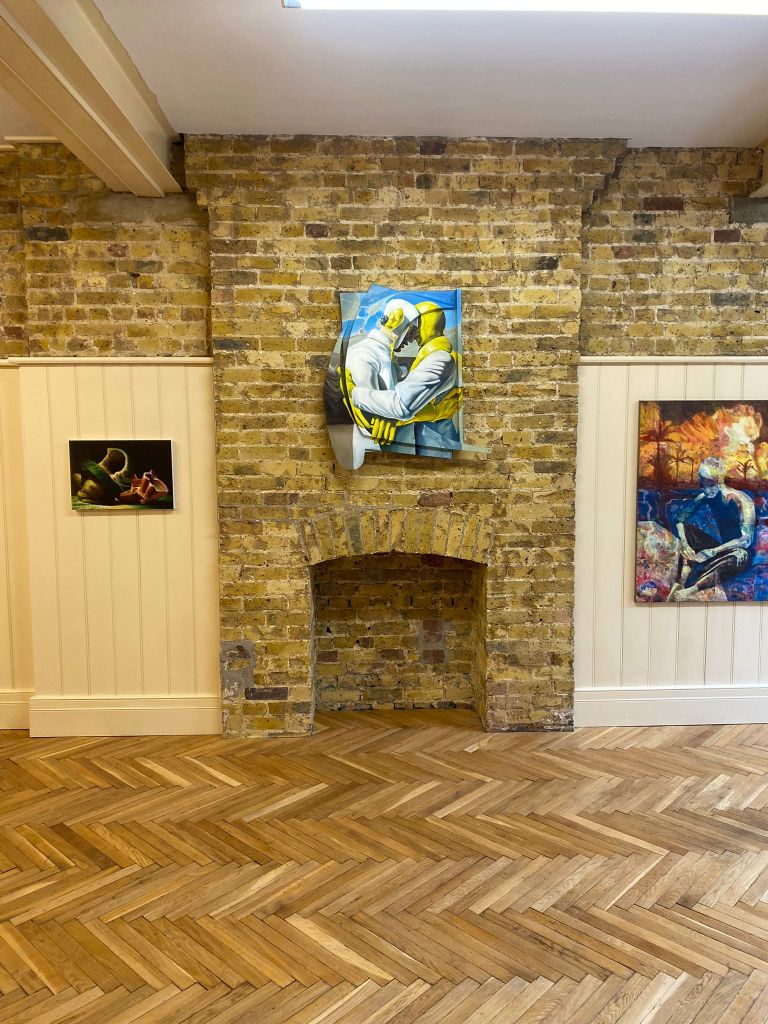
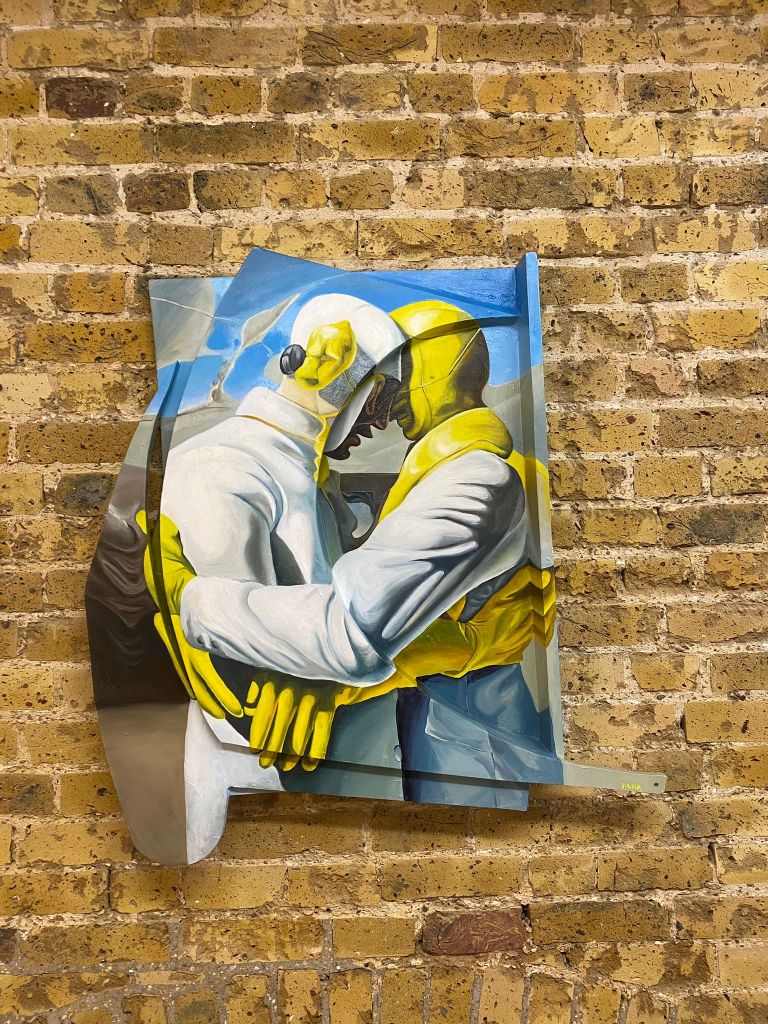
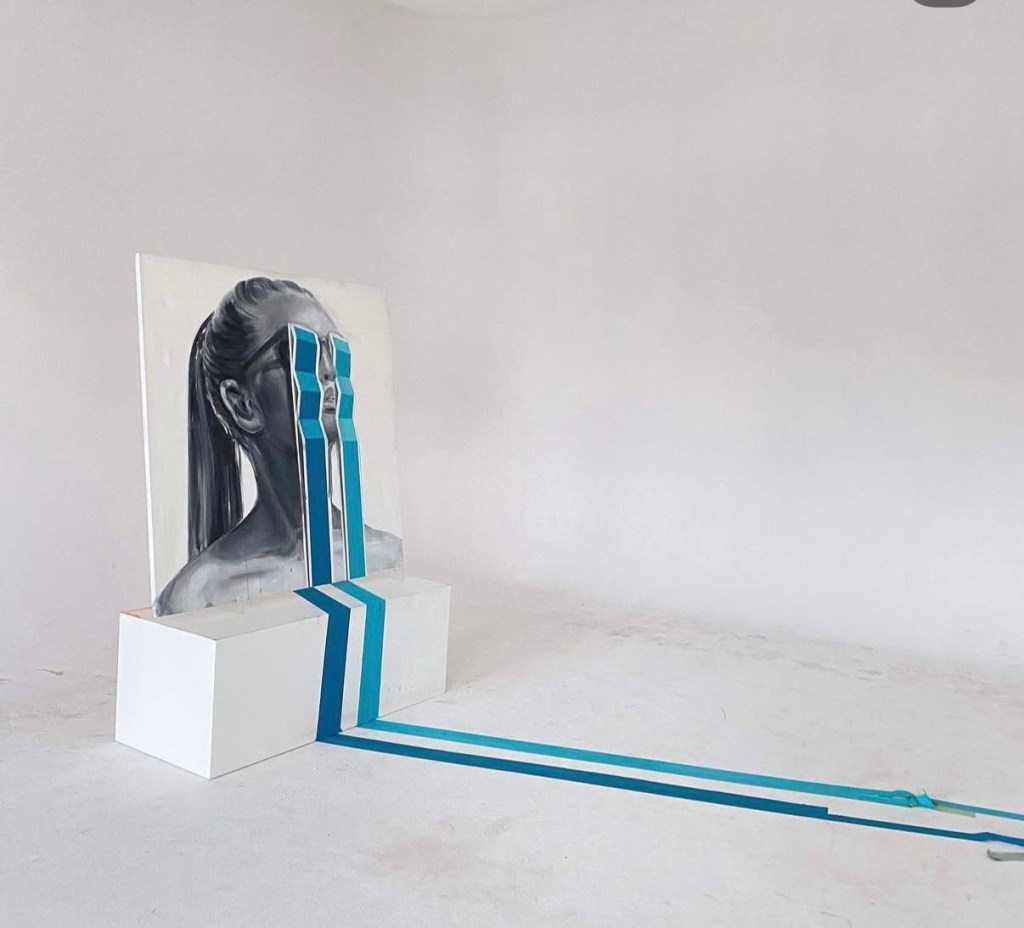
The figure depicted by Australian multimedia artist Emily Hana reflects on topics such as sexual and emotional trauma, healing and learning to befriend these places of discomfort. She is exploring the concept of dimensionality, often working with wood, cutting it into shapes that challenge the traditional take on canvas. What is more, the artist often uses recycled materials for her works, rewriting the stories of useless objects, giving them another life. Her work Artificial Intimacy made me think about generational healing, but also the portrayal of power dynamics and the justification of the world’s morality of the present, discussed in Orwell’s Nineteen Eighty-Four.
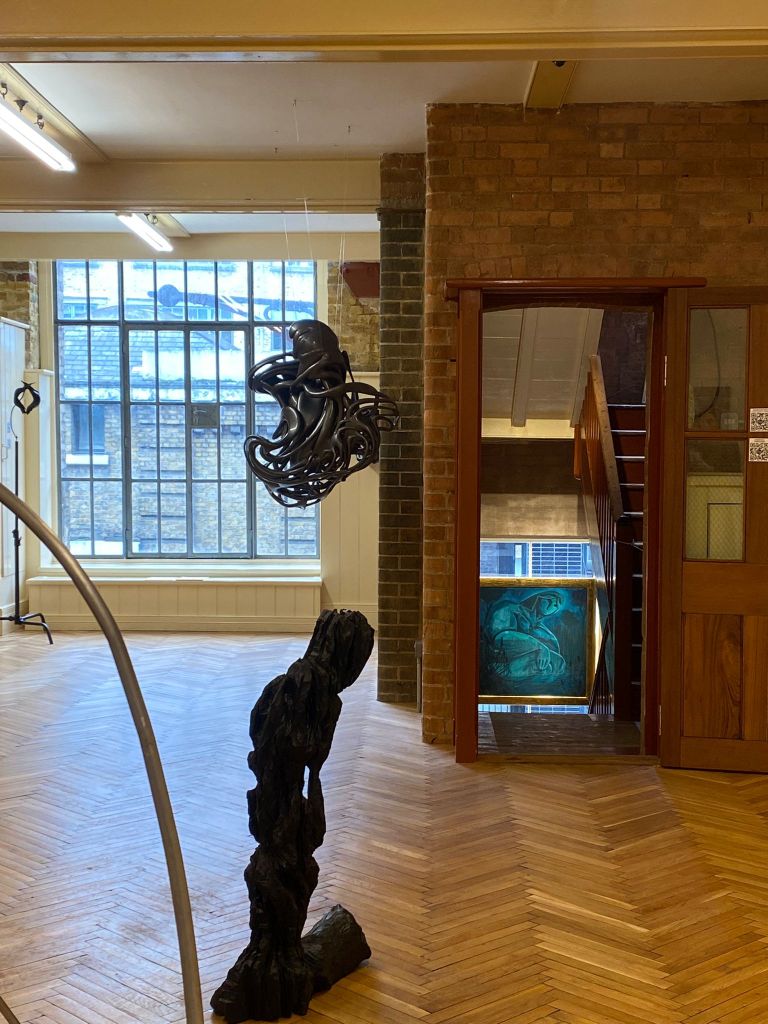
Viardin evoke comparisons to the dehumanised inhabitants of Huxley’s Brave New World. These images prompt contemplation of evolutionary psychology, suggesting scenarios of genetic manipulation and the potential degradation of our species.
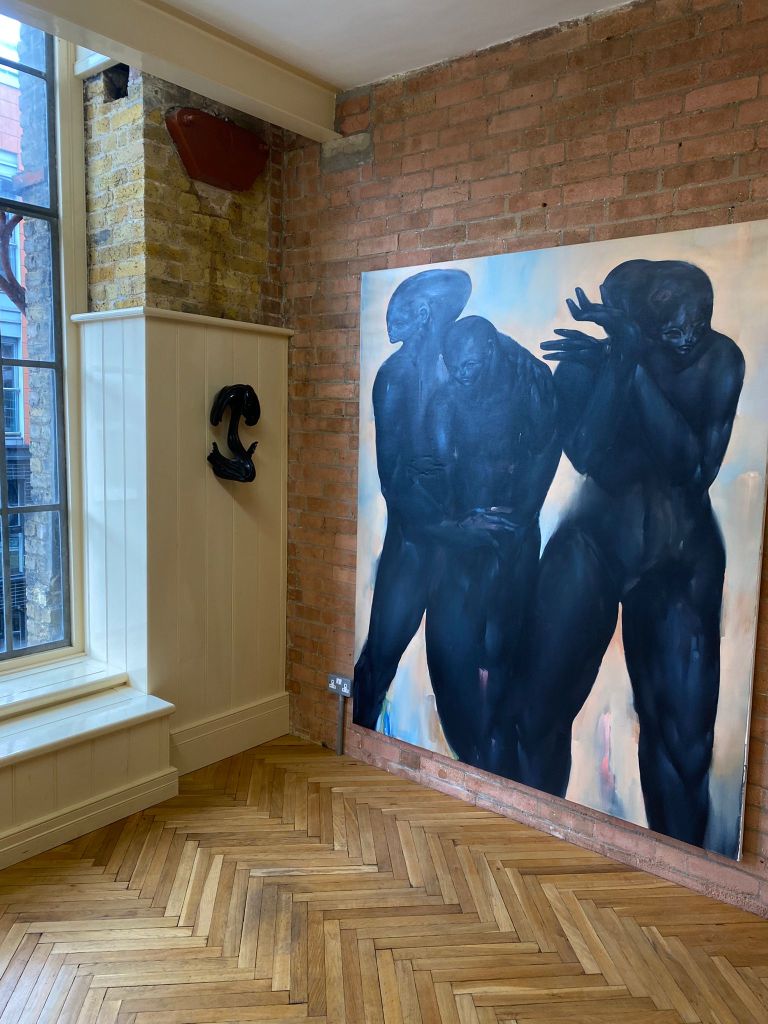
In essence, the exhibition’s exploration of these themes offers a sobering glimpse into potential futures, challenging viewers to reflect on the implications of societal and technological advancements. Each piece offered a unique perspective, inviting viewers to engage in deep introspection and contemplate the complexities of our contemporary world. Through thought-provoking artworks, the exhibition confronted pressing questions and encouraged viewers to reconsider their perspectives on the challenges we face, stating that art might be the only answer to fight with the apocalyptic changes of state. I wholeheartedly recommend to see the upcoming shows of BWG gallery and to follow their programme on their Instagram page @brushes_with_greatness.
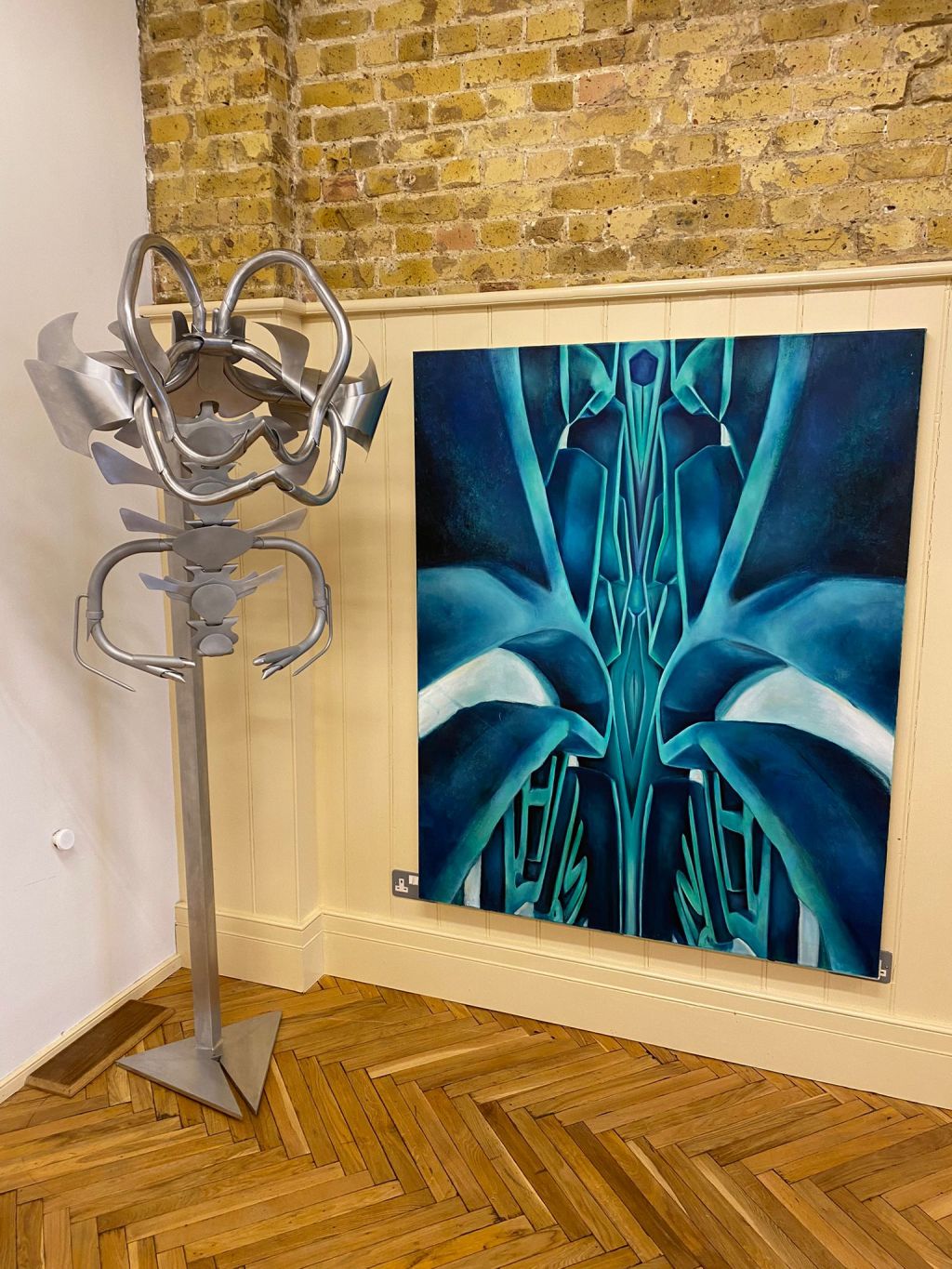
Preview photo: on the left work EXO 02 by Amos Nappo; on the right The Place Beyond Here by Angélique Nagovskaya.
Reference
- “BWG Gallery & Agency | London,” BWG, n.d., https://www.brusheswithgreatness.co.uk/.
- Cook, Annabel. “Ivan Kupala Night.” FT.Com (Jul 07, 2016).
- Congdon, Brad. “”Community, Identity, Stability”: The Scientific Society and the Future of Religion in Aldous Huxley’s Brave New World.” English Studies in Canada 37, no. 3 (Sep, 2011): 93.
- Dalkılıç, Leyla Çiğdem. “Celebrieties of Ivan Kupala Day in the Russian Folk Culture”, Folklor/Edebiyat no. 81 (2015): 151-159.
- “Emily Hana,” Felstead Art, n.d., https://www.felsteadart.com/artists/50-emily-hana/.
- Sava, Toma. “G. Orwell’s Nineteen Eighty-Four Beyond Dystopia.” Journal of Humanistic and Social Studies 10, no. 1 (2019): 53-59.
- Saunders, Judith P. and Victoria Ingalls. “Evolutionary Science and Literary Design: Teaching Huxley’s Brave New World in Interdisciplinary Collaboration.” Style 47, no. 2 (Summer, 2013): 274.

 ART HUB
Leave a comment