
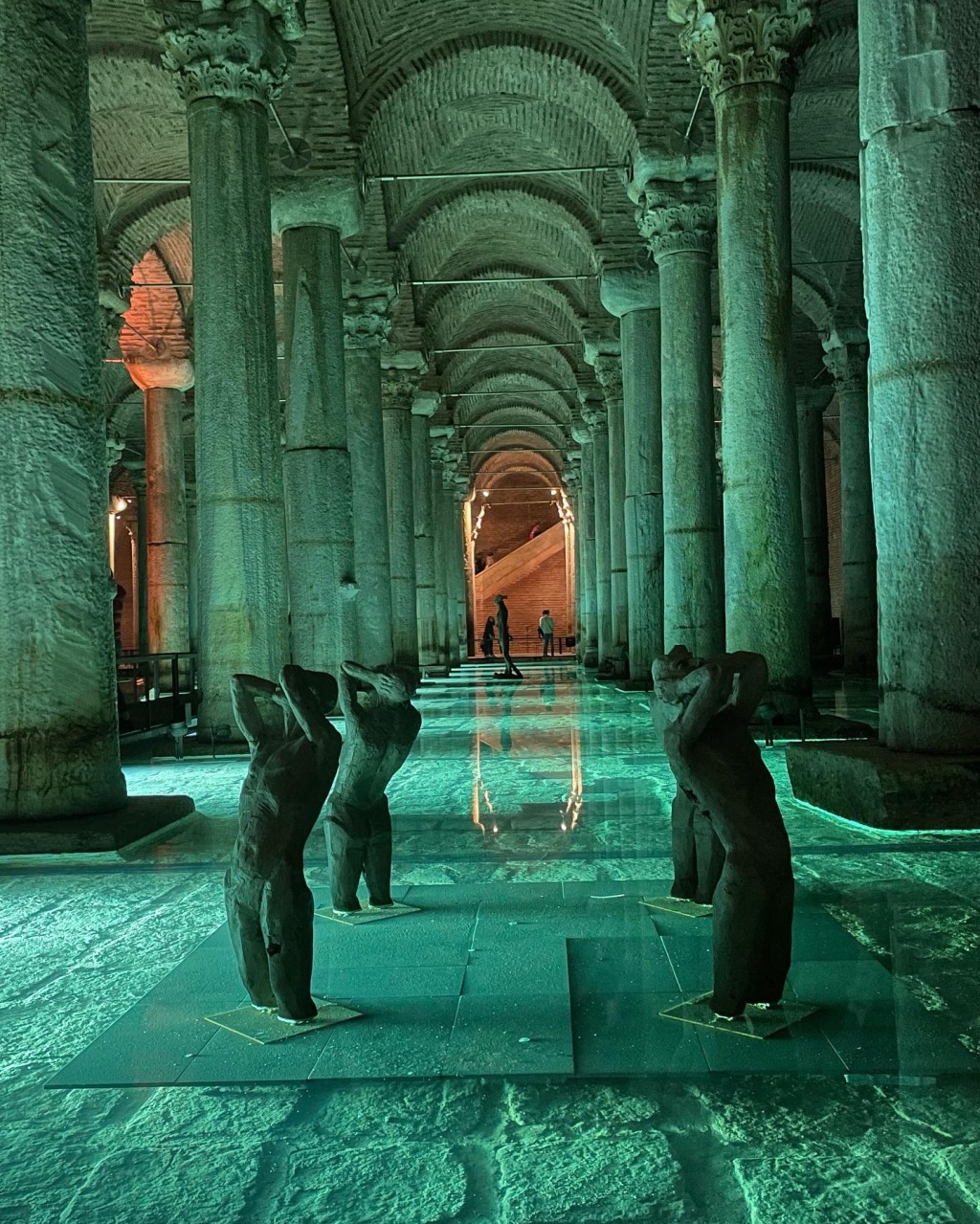
The Basilica Cistern in Istanbul holds immense historical significance as it was founded by Justinian I in the 6th century AD to provide water supply for the city between 526 and 527 AD. This underground reservoir gained its name from its location beneath the Basilica Stoa, a vast public square situated on the First Hill of Constantinople. Prior to the construction of the cistern, the site was occupied by a grand basilica serving as a center for various activities such as commerce, law, and art, dating back to the early Roman period from the 3rd to the 4th century AD. After a devastating fire in 476 AD, the basilica was rebuilt under the supervision of Illus.
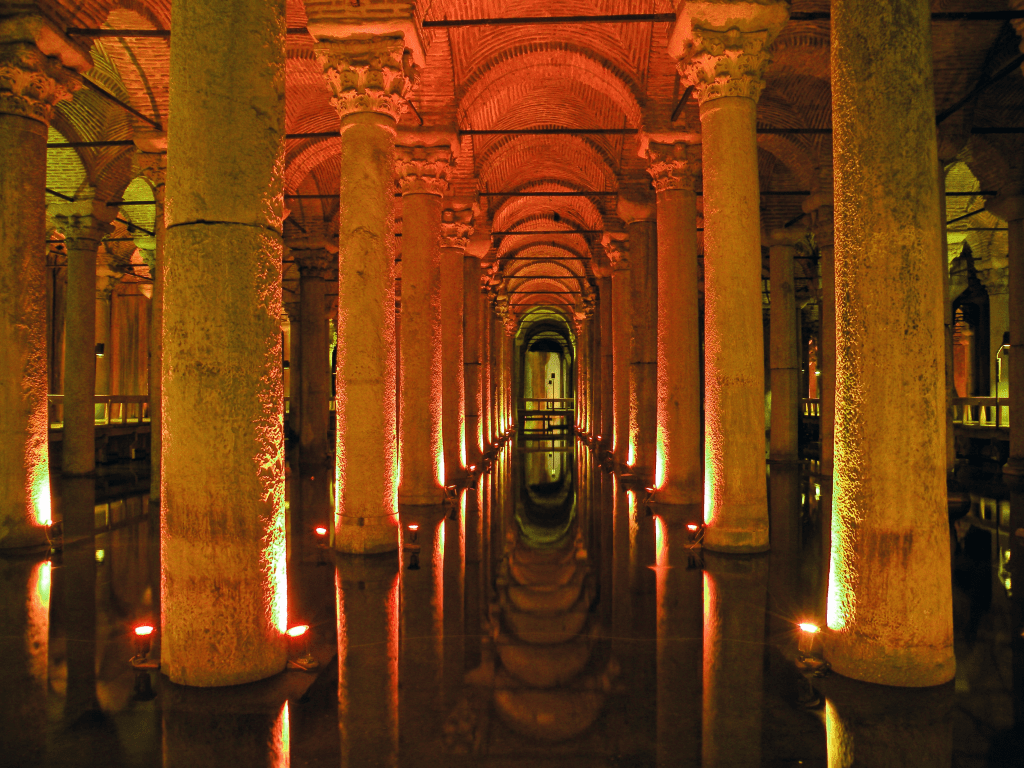
Historical records describe the interior of the Basilica Cistern as a lush gardens surrounded by a series of columns, offering a panoramic view of the majestic Hagia Sophia. According to accounts from ancient historians, Emperor Constantine initiated the original construction of the cistern, which was later renovated and expanded by Emperor Justinian in response to widespread destruction caused by the Nika riots in 532 AD, resulting in significant damage to the city’s infrastructure.
Historical manuscripts documented that a staggering number of 7,000 enslaved individuals were tasked with the construction of the cistern, highlighting the immense scale and complexity of the project.
The provision of water filtration system for the Great Palace of Constantinople and other buildings on the First Hill was possible by the presence of the enlarged cistern, which also played a crucial role in supplying water to the Topkapı Palace even after the Ottoman Conquest in 1453 and throughout the modern era. The significance of this cistern eventually faded from the memory of most people, except for the local residents who continued to use it as a water source until 1565 when the French explorer Petrus Gyllius documented his observations of the cistern. Gyllius meticulously described his experience of rowing among the columns in the cistern and witnessing the graceful movement of fish swimming beneath the water’s surface surrounding his boat.
The Basilica Cistern has undergone several renovations since its initial construction, with the first round of repairs taking place in the 18th century under the reign of Ottoman Sultan Ahmed III in 1723, supervised by the architect Muhammad Aga from Kayseri. The second significant renovation project was carried out during the reign of Sultan Abdulhamid II (1876-1909) in the 19th century. Following these efforts, in 1968, the cistern went through another repairs to remove cracks in the wall and damaged columns, followed by further conservation work in 1985 conducted by the Metropolitan Museum in Istanbul. The conservation work in 1985 involved removing 50,000 tons of mud from the cistern to build new platforms to replace the boats that were previously used for tours of the cisterns. Ultimately, the cistern was officially reopened to the public on September 9, 1987. In May 1994 additional cleaning procedures were made and then in 2017, the cistern was closed again for renovation and earthquake protection measures. Finally, in 2022, the Basilica Cistern was reopened to the public, marking the completion of the latest phase of renovation and conservation efforts.
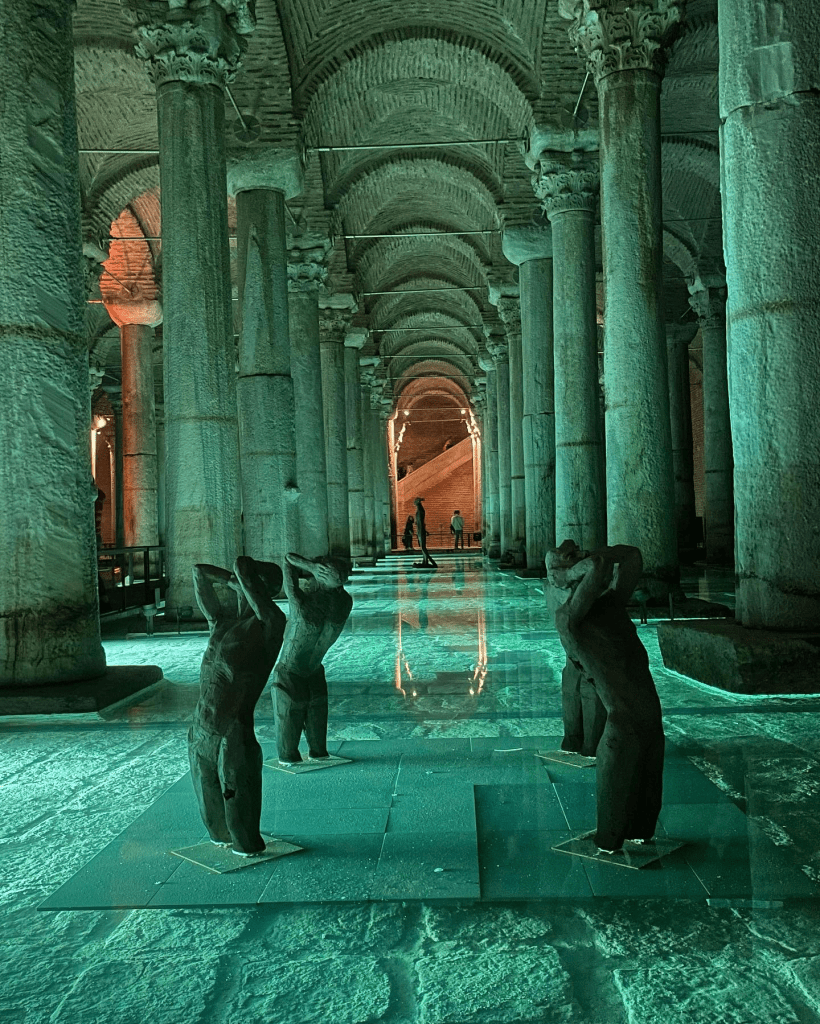
Fans of James Bond may recall the film From Russia With Love, in which Bond rows a small boat through a forest of marble columns. This scene was shot in the Yerebatan Sarnıcı (eng. Basilica Cistern). Inside the cistern, there are 336 marble columns adorned with striking decorations, Corinthian column capitals, and Medusa head capitals.
Among the column capitals in the Basilica Cistern, the most interesting are the Medusa capitals. They belong to the most beautiful symbols of sculptural art of the Roman period, considered masterpieces. The origin of the two heads is unknown, although it is believed that they were transferred to the cistern after being removed from a late Roman building. There is no evidence to suggest that they were previously used as column bases. Legends about the head of Medusa are still remembered. Tradition holds that the blocks are oriented sideways and upside down to negate the Gorgon’s gaze.
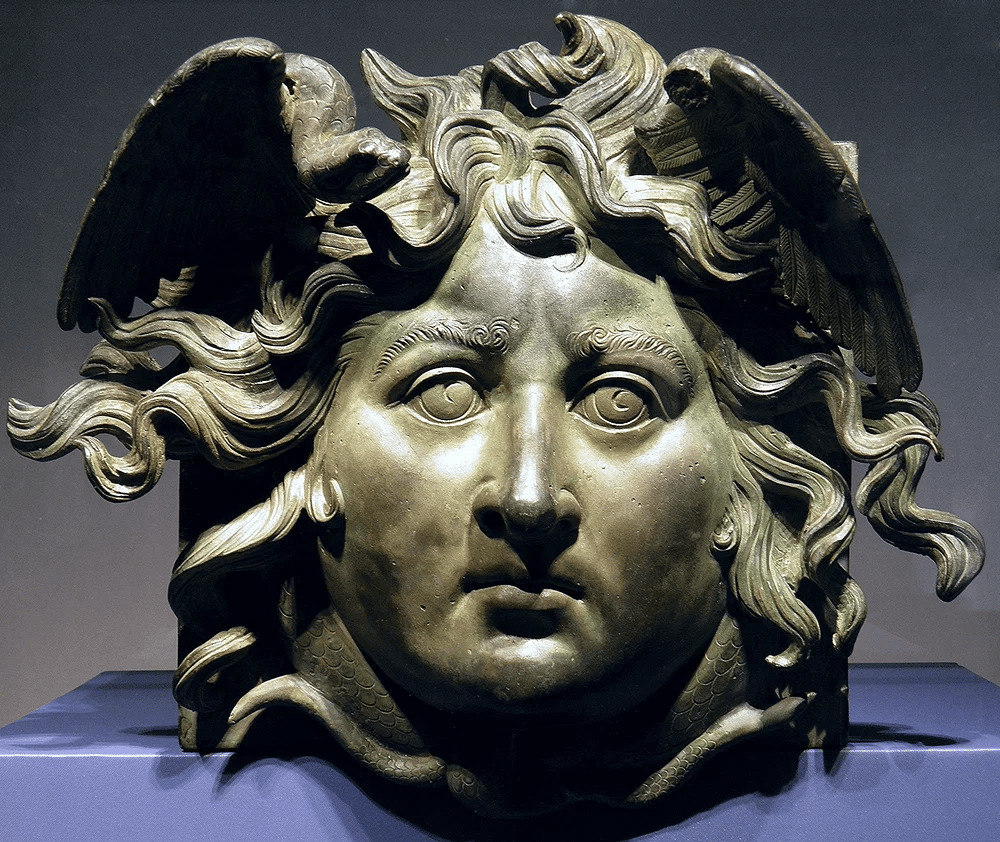
The collective name of the three Gorgon sisters (later Gorgons) comes from an onomatopoeic element present also in the word gorgos, which in Greek means wild, terrifying, reminiscent of the Polish word groza (eng. terror). The meaning of the name Medusa is Ruler. Perhaps she was previously named Eurymedusa, meaning Broadly Ruling, which was later shortened.
Medusa was the youngest of the three Gorgons, daughters of Phorcys and Ceto, with her older sisters being Stheno and Euryale. Unlike her immortal sisters, Medusa could be killed.
In ancient mythological stories, it is said that Medusa possessed unparalleled beauty characterized by captivating jet-black eyes, flowing locks of hair, and a flawlessly proportioned body. Narratives further develop a specific legend describing a tumultuous situation that arose due to the mutual affection that both Medusa and Athena harbored for the esteemed son of Zeus, Perseus. As a result, overwhelming feelings of jealousy consumed Athena as she witnessed the deep bond between Medusa and Perseus, leading her to take drastic action in accordance with ancient tradition, which claims that Athena transformed Medusa’s luscious locks into a mass of writhing serpents. Additionally, common beliefs suggested that Medusa’s gaze itself held an inexplicable power to petrify any unfortunate soul that met her gaze, turning them into lifeless stone statues.
The narrative of the second story revolves around Poseidon, known in Greek mythology as the Lord of the Waters, who engaged in numerous romantic relationships that led to the birth of many offsprings. In ancient tales, it is said that Phorcys, the sea deity, and his wife, Ceto, were blessed with three incredibly beautiful daughters known as the Gorgon.
These daughters earned their name due to their somewhat monstrous appearance, despite being extremely attractive young women. Among them, Medusa stood out for the exceptional beauty of her hair, although she was the only mortal among her siblings. When Poseidon saw Medusa, he was deeply infatuated with her, and they shared intimate moments in a temple dedicated to Athena, the goddess of Wisdom. However, upon discovering this forbidden relationship, Athena was consumed by wrath, followed by a curse on Medusa and her sisters. Consequently, Medusa’s once beautiful hair transformed into dangerous snakes, and she herself was cursed with the ability to turn anyone who met her gaze into stone.
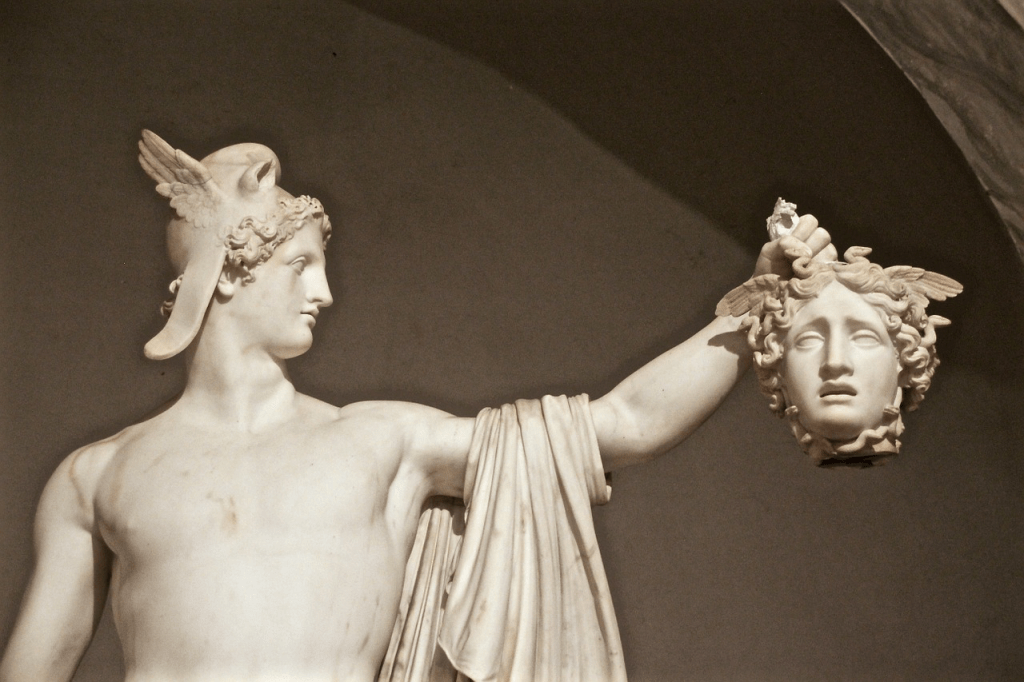
It is worth noting that the famous hero Perseus, a prominent figure in Greek mythology, embarked on a dangerous quest to confront Medusa. This was prompted by a promise he made to King Polydectes.
Perseus bravely opposed the king’s relationship with his mother. One day, at a great feast, the king revealed his desire to marry Hippodamea of Elis, eliciting promises of lavish gifts from the attendees. However, Perseus proved unable to present the monarch with a grand offering, leading him to propose a bold solution – obtaining the head of Medusa. Surprisingly, the king eagerly accepted this proposal, anticipating the downfall of the bold Perseus. There is a variant of the myth suggesting that Perseus began his mission against Medusa on behalf of Athena, with whom Gorgona competed. This alternative account is supported by the writings of the ancient author Apollodorus.
Athena aided the unfortunate hero, enabling him to reach the three sisters and guardians of the Gorgons – the Graeae, whom he forced to reveal the whereabouts of the Gorgons by stealing their shared eye and tooth. Armed with the invisibility-inducing helmet of Hades, crafted by the Cyclopes from the hide of a dog, as well as winged sandals, and eventually a curved knife from Hermes to decapitate Medusa, Perseus reached the Gorgons and found them sleeping on the shore of the ocean. He stood behind the sisters to avoid being turned to stone, only looking at his copper shield, polished so that he could see the monster’s face in it. According to another version, Athena herself held the shield before him. Using his winged sandals, he ascended into the air, cut off Medusa’s head, and concealed it in a bag before flying away. From Medusa’s neck emerged the sons of Poseidon, first Pegasus, then the giant Chrysaor holding a golden sword. At that moment, the remaining Gorgons, Steno and Euryale, awakened and began to pursue the murderer. However, thanks to the helmet of Hades, the “Cap of invisibility” he was out of sight, and they could not see him or kill him to avenge their sister.

Medusa was slain by the Greek hero Perseus, who then used her head, which retained the ability to turn onlookers to stone, as a weapon until he gave it to the goddess Athena to place on her shield. In classical antiquity, the image of Medusa’s head appeared in a protective device known as the Gorgoneion. The sculptor depicted Medusa in three different positions depending on the angles of reflected light.
With a deep understanding of its associated historical significance, the experience of discovering the Cistern located in Istanbul rises to an entirely new level full of deeper meanings and a captivating aura. As you embark on a journey to uncover the secrets behind all the intricate symbols and stunning architectural wonders found within the Basilica Cistern, every moment becomes a magical adventure immersing you in the rich tapestry of history and art. To reach this enchanting place, simply take the Tranva, one of the convenient available public transportation options, and disembark at the Sultanahmet stop, where a world of wonders awaits your exploration.
The museum’s opening hours run from 9:00 a.m. to 5:30 p.m., offering visitors plenty of time to immerse themselves in the timeless beauty and historical significance within its walls.

 ART HUB
Leave a comment