
Nowadays, the immersive exhibitions don’t need much explanation. However, if you’re still not sure what exactly it is, just close your eyes and imagine the galaxy of colors, images, and everything you could dream of. Sounds like magic? A plethora of people think so, finding it very soothing and hypnotizing. This topic has been coming and going but those kinds of exhibitions seem to gain more and more attention. Is this whole effort worth it, or is it quite the opposite?
Immersive art traces its roots back to the ‘60s, however, recently the development of technology and the growing popularity of the idea per se has made the amount of visitors to such exhibitions astonishing. However, the understanding of so-called immersive exhibitions has changed over the years. Currently, usually, most of us wouldn’t think initially about Yayoi Kusama’s Infinity Mirror Rooms – especially after she’s become a phenomenon of her own -, or perhaps Gustav Metzger Liquid Crystal Environment. Nevertheless, back in the ’70s, ‘80s, etc., there were quite a few such things, and those mentioned would be called the immersive ones. However, with time they’ve drifted away, almost gaining their own unofficial category, while the 21st century has proliferated the “new” immersive experiences seemingly almost everywhere in the world. Since the advent of digital technology, it seems that many galleries have started focusing on not only presenting the art in the original sense of meaning when it comes to immersive exhibitions but with the addition of re-imagined pieces of old masters. On top of that, the new centers were built aiming to present only the so-called immersive experiences that focus on the beloved painters in a new version. Consequently, immersive art exhibitions have exploded in recent years, and that is when the issue begins.
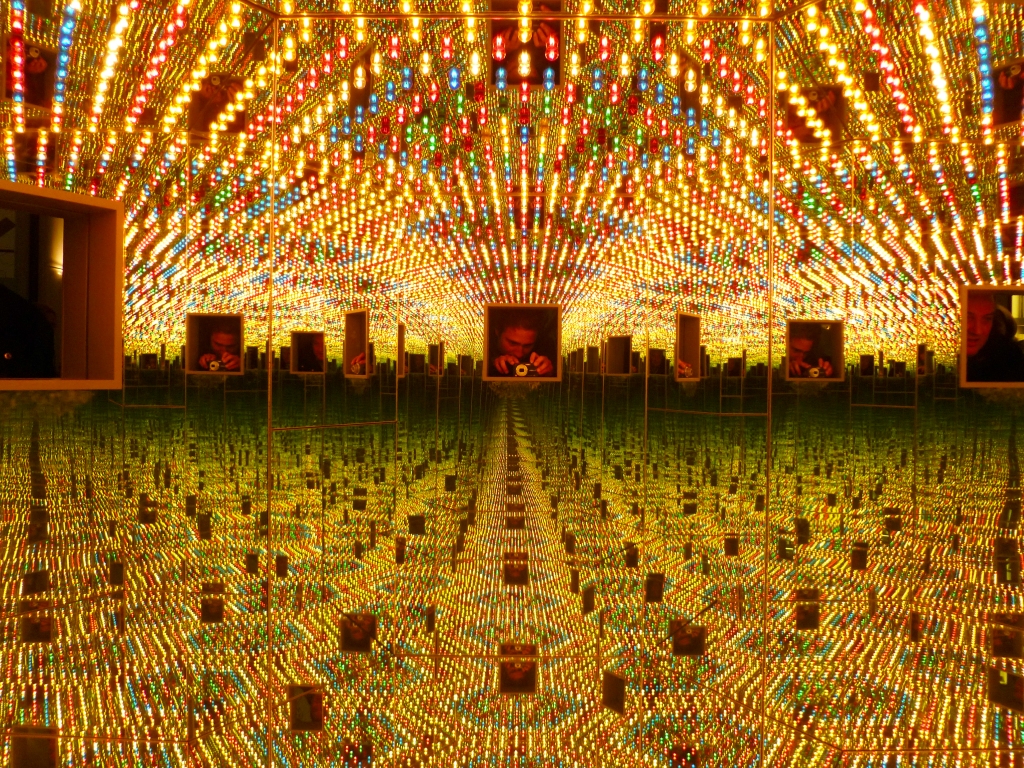
Even though the art world is much more accessible nowadays it still has its flaws. It lacks people from various backgrounds, which is why galleries try to make it as inclusive as possible (at least some of them). But is it really about inclusivity or perhaps money? The first time I heard about those immersive exhibitions, was almost 10 years ago. For a kid like myself back then, it was quite fun, that our teacher for the first time didn’t decide to go, during a school trip, to watch all over again the pieces from the Middle Ages. I think it is quite a good idea to introduce canon (and not only) artists to people for whom museums are not priorities, or simply to kids. However, since then in my hometown, which is actually the capital of Poland, there’ve been thousands of exactly the same Van Gogh exhibitions. Not only are they repeatable, but also quite expensive – The Guardian published an article “Immersive exhibitions: the future of art or overpriced theme parks?” two years ago, and nothing has seemed to change since then… But let’s go back in time a bit, shall we?

It was Annabelle Mauger who developed the very first immersive experience dedicated to Vincent Van Gogh back in 2008. During the preparation of “Imagine Totale”, she was inspired by the creation of a model that was made by her husband‘s grandfather. And with “Imagine Van Gogh: The Immersive Exhibition” everything’s begun. The idea back then could appear inventive, however, the problem is that with time it seems like many people in the industry decided to take the most clickable artists and turn them into such ‘experiences’. Picasso, Klimt, Monet, Khalo, especially those names are repeatable in the current immersive world. Nevertheless, not only painters are featured, there are many more for instance musicians such as Abba, Bowie, etc. Moreover, the catchy titles are supposed to advertise it as stepping into a different, unknown world: “Imagine Picasso: The Immersive Exhibition”, or “Meet Vincent van Gogh”, etc. This approach to art, apparently is supposed to be “the bridge between culture and entertainment”, the creators of such “events” say. They promise that it’ll be possible to “immerse” yourself and get lost between physical and digital realities. If such an experience is seemingly taking you to those magical places full of art, why do the critics hate them so much?
Undeniably, the growing technological possibilities make it expand, however, it is nothing that was not seen before. Apart from some extras for gadget lovers such as bigger, wider, better holographs, VR glasses, etc. But shouldn’t art itself be enough entertaining? Such exhibitions usually say they mix those two worlds of entertainment and art making the experience more joyful. The truth is, currently the only thing that they actually do is fall in the continuum of copying each other. Moreover, I also believe that the paintings that they use lose out a lot transforming into moving pictures. Those private concerns, that usually are responsible for the shows try to make it out as unique venues where you find animated shows that are fairly easy to digest, no matter if you sit, stand, or lay down, while projected on the walls and big screens. “Curators” of those experiences say it is not about passive looking anymore but experiences that are appealing to people of all ages. It feels that the word experience is truly overused here. Don’t get me wrong, I’m not trying to be a boring traditionalist, but aren’t we all tired of Van Gogh this and that? This phenomenon of immersive Van Gogh experiences is so widespread that it has its own Wikipedia page! The organizers of such ventures usually say that involving smell, touch, and all of the senses and more, especially after the global pandemic is needed for modern society. But do we really have to make a playground out of the exhibitions to get anyone’s attention?
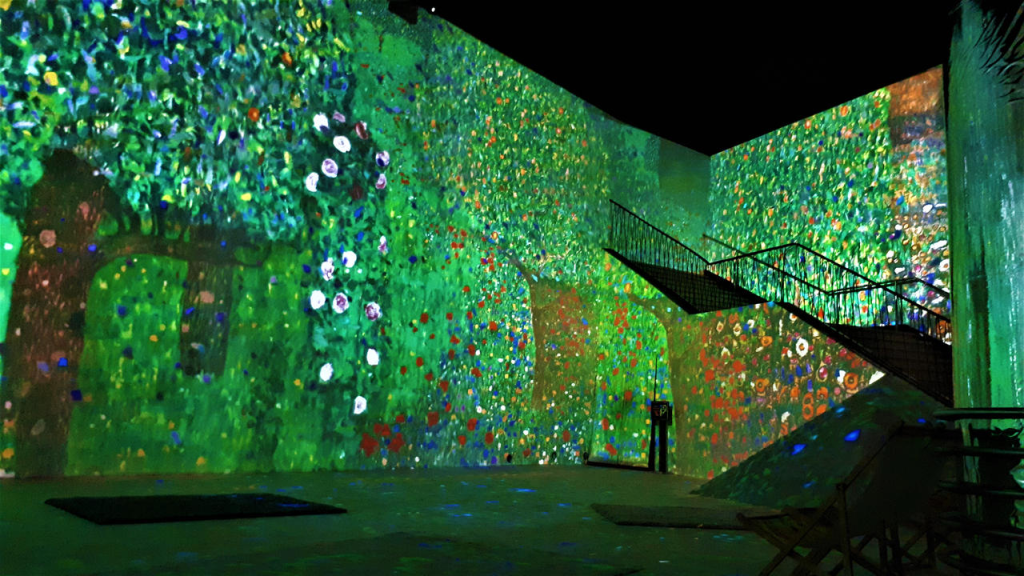
As I mentioned before, ten years ago it was something new and fresh but now we should let it go. Especially, since all those exhibitions take place in major big cities that already have great art. Perhaps, making it circuitous while traveling to small towns without museums would make much more sense because that could actually involve such towns artistically. However, showing all over again similar exhibitions in cities that have much more to offer when it comes to art seems to defeat the purpose. I wish that after seeing “that” people would immediately buy tickets to go see the originals, but it rarely happens. Besides, art has never been about passive looking (sic!), and I reckon it is a common misconception to present it as something exclusive that should be long-dead. Moreover, the intimidation towards art comes from many different aspects such as bad art education in schools which should be worked on rather than spending fortunes on those odd ideas. On top of that, usually, those exhibitions do not give much explanation because they don’t delve into the artists’ biographies, and usually make mistakes such as calling Van Gogh an “impressionist”. In other words, these are the simple projections dedicated to showcasing the creations of artists who should be left where’s their place and make space for new actual digital art. In the era of the technology that’s everywhere, we don’t need to see them on a literal bigger scale.
The experiences are supposed to be family-friendly and inviting making you the “protagonist” of the show, however, feels more like a kitsch background for an Instagram story for the crowd of people that are there. Are you a protagonist then, or just someone’s background? Moreover, these days it is not even a spectacle of technology because most of the time, it is reused again and again. They claim that the art pieces become integral, and with the use of senses, holography, and digital projections create a coherent whole. It’s sad to think that the most basic Instagram content has become the investment of many galleries and museums instead of other exhibition ideas that by using the actual art can make an unforgettable experience. I guess it is true after all that art in the 21st century is only about money, right? The creators of those “shows” seem to be striving for a profound sense of importance during our generation, yet the overall execution feels like a cheap money-maker.

In the end, I wish that perhaps one day the potential of technology will fully switch to artists that create/used to create in the medium of photography and video art, as such concepts should be exclusively reserved for them. On purpose, I did not really talk about those but I think that if all the attention that is centered on those immersive exhibitions would switch with its money and gadgets like VR to the artists that create thanks to that technology, I am more than sure this part of the art scene would be more valuable and would still gain a lot of attention. Especially, that nowadays there it is all about marketing really. There are few places that defend themselves such as Lightroom in London that at least try to bring something fresh to those exhibitions, like for instance their collaboration with Hockney of transforming his art into immersive pieces. However, most of the installations rely on the ability to reproduce itself to an almost industrial scale, which does not have much in common with the idea of galleries and museums. Like the candies for kids, it’s a colorful, kitschy money-maker that’s a great bait for adults, too. Concluding, I would say there is an appetite for something simply better.


 ART HUB
Leave a comment