
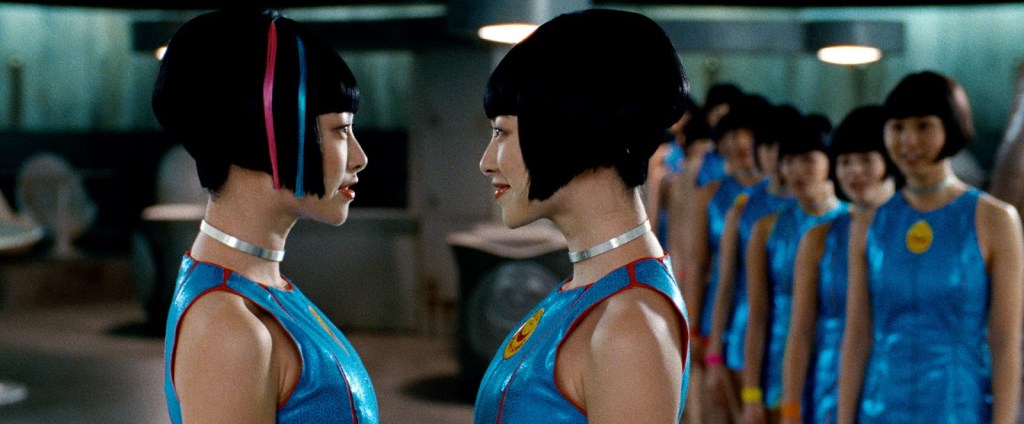
In the cinematic adaptation of Alan Moore’s iconic graphic novel, V for Vendetta directed by James McTeigue in 2005, a profound discourse on societal dynamics unfolds. At its core, the film advocates a thought-provoking thesis: that the relationship between state and society should inspire trepidation in the former, not the latter.
Central to this narrative is the enigmatic figure of ‘’V’’ whose philosophical principles emphasize the transformative potential of symbolic gestures. V argues that structures, beyond their physical manifestation, embody the ethos of a society and the authority of its governance. Their destruction, therefore, assumes a significance far beyond mere architectural demolition; it becomes a rallying cry against tyranny.
However, V’s stance on symbolism delves deeper still. He suggests that symbols, lacking human interpretation, are but hollow representations. It is the collective consciousness that breathes life into these emblems, granting them profound meaning and relevance. Thus, his assertion that ‘’with enough people, blowing up a building can change the world’’ encapsulates not only the potential for physical upheaval but also the transformative power of collective will and force.

In essence, V for Vendetta challenges viewers to reevaluate notions of power and agency. It underscores the latent potential within every individual to effect change and imbue symbols with significance. Through a lens of cinematic intrigue, the film prompts introspection on the capacity of collective action to reshape societal paradigms.
Navigating the intricate tapestry of V’s world, audiences are confronted with a poignant truth: that true power emanates not from institutions or authority but from the collective consciousness of the populace. It is a message delivered with cinematic finesse, reminding us of the profound impact that a single idea, galvanized by collective resolve, can wield in shaping the trajectory of history. Thus, this somber and unsettling world undergoes a profound transformation into a tale of hope and enlightenment.
In every dystopia lies its own utopia, just as within every utopia, there hides its own dystopia. These dualities are inseparable elements, intricately woven into the fabric of existence. Without a definition of goodness, the concept of evil cannot exist, and likewise, one cannot comprehend goodness without the contrast of evil. Restraint awakens longing for abundance, darkness illuminates the essence of light, and joy finds its significance through sorrow. It’s akin to the necessity of a concept of Hell for the validity of the concept of Heaven.
Many science fiction films depicting dystopian or utopian worlds acknowledge and even emphasize this duality, portraying realms where contrasting elements coexist and mutually nourish each other. The interplay of these opposites creates a rich tapestry of narratives, inviting audiences to ponder the complexities of existence itself.
In the realm of storytelling, this duality serves as a potent tool, enabling creators to explore the depths of human nature, societal structures, and the very essence of what it means to be alive. It’s a dance between light and shadow, hope and despair, where each side gains its significance from its counterpart.
Consider iconic works like Blade Runner where the neon-lit streets of a futuristic cityscape are juxtaposed with the existential crisis of artificial beings longing for humanity. Or delve into the intricate layers of The Matrix where the illusion of a perfect world masks the harsh reality of a dystopian nightmare. These narratives thrive on the tension between opposing forces, offering audiences a thought-provoking journey through the complexities of utopia and dystopia.

But beyond the realm of fiction, this duality extends into our own reality, reminding us that the world is not black and white but a spectrum of shades and hues. It prompts us to question our own perceptions of good and evil, to seek understanding in the midst of chaos, and to embrace the inherent contradictions that define the human experience.
In cinematic realms where technology intertwines with captivating narratives, such as Back to the Future Part II (1990), The Fifth Element (1997) and Minority Report (2002), we witness the gradual erosion of their atmospheric enchantment. These cinematic marvels paint vivid portraits of future societies where the pursuit of ease and order inadvertently leads their inhabitants into tumultuous adventures.

The allure of these meticulously crafted utopias, designed to provide solace and tranquility, eventually dissipates, leaving behind a sense of disconnection and unease. Within these fantastical realms, we encounter inhabitants lost in a sea of anonymity, navigating the labyrinthine pathways of their artificial existence with a profound sense of detachment.
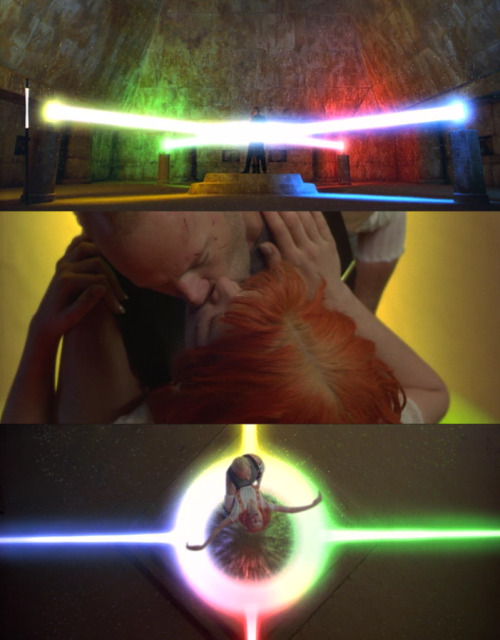
Yet, beneath the gleaming facade of technological wonders and dazzling cityscapes lies a cautionary narrative. As occupants of these imagined worlds grapple with the complexities of their artificial reality, they find themselves inexorably drawn into perilous escapades fraught with danger and uncertainty.
Indeed, the very constructs meant to offer comfort and security become the catalysts for their hazardous journeys. The once-promising visions of a harmonious existence unravel under the weight of their inherent flaws, revealing the vulnerability of the human spirit in the face of unchecked progress.
Thus, these cinematic treasures serve as poignant reminders of the perils that lurk beneath the surface of technological advancement. They compel us to ponder the true cost of our relentless pursuit of convenience and ease, urging us to tread carefully as we navigate the ever-shifting landscapes of our reality.

Much like in the novels of Philip K. Dick, the original author of Blade Runner and one of the most prominent figures in science fiction literature, many films employing this narrative approach eventually reach a point where time and reality begin to fracture, and the seemingly perfect technological order morphs into a monstrous, living mechanism. As the deceptive facade of harmony becomes increasingly apparent, we also encounter lives led under the intellectual pressure of out-of-control, consumption-focused, crowded technological societies, manipulated by media or other systems.
Just as in the futuristic narrative of Cloud Atlas (2012), this thematic framework exposes the dystopia of utopian-looking orders turned into homogeneous destruction machines. Through this motif, we witness societies where the pursuit of technological progress has led to a loss of individuality and humanity, revealing the darker underbelly of our relentless drive for advancement.


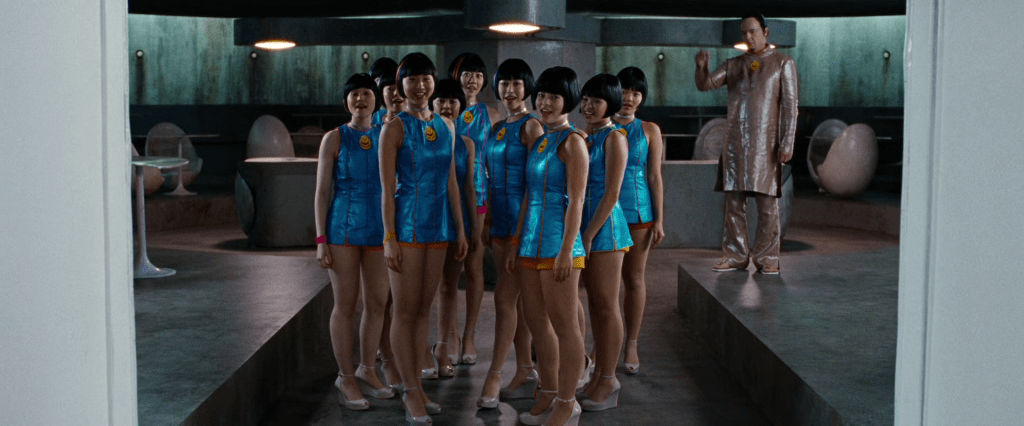
When it comes to French New Wave interpretations of this genre such as Alphaville (1965) or Fahrenheit 451 (1966), their depictions of chaos stand out for their visual and epic poetic portrayal. In Alphaville’s eerie world, for instance, we find ourselves questioning the intellectual and existential dimensions of time and reality, particularly in the iconic sequence where the blaring sirens overlay the image of Anna Karina reciting a portion of Paul Eluard’s poem Capitale de la Douleur (Capital of Pain).

These films offer a captivating blend of imagery and introspection. The juxtaposition of dystopian landscapes with poetic verses creates a unique cinematic experience that challenges viewers to ponder the essence of existence itself. Through their visually stunning and thematically rich narratives, directors like Jean-Luc Godard and François Truffaut invite us on a journey of philosophical exploration, where chaos becomes not just a backdrop but a canvas for poetic contemplation.

In these moments, we’re not merely spectators; we’e participants in a visual symphony, where the chaos of the world around us is transformed into a thought-provoking meditation on the human condition. As sirens wail and verses echo, we’re reminded that even in the midst of chaos, there is beauty to be found, and meaning to be discovered.
In this regard, although it may not strictly belong to the science fiction genre, we can also include another significant film from the French New Wave, Hiroshima Mon Amour (1959), in the same category. Within its own dystopian reality, the film constructs a utopian plane where two characters, who have seemingly met outside of time, engage in a melancholic, monologue-like dialogue that reconfigures memories as they are recalled, reminiscent of an endless act of atonement without redemption. Through this dialogue, we are plunged into the profound melancholic abyss of the simultaneous existence of comfort and misery, love and hatred, peace and war, and the impossibility born from this fusion.
Hiroshima Mon Amour, with its mesmerizing exploration of memory and identity, challenges the boundaries of conventional storytelling. As we witness the intertwining of past and present, the film invites us to reflect on the complexities of human emotions and the haunting persistence of personal and collective history.
In this cinematic masterpiece, directed by Alain Resnais and written by Marguerite Duras, the fusion of poetic dialogue and striking visuals creates an immersive experience that resonates far beyond the final frame. It’s a testament to the power of cinema to transcend genres and explore the depths of the human psyche, leaving audiences captivated and contemplative.
Alain Resnais’s other acclaimed work, Night and Fog (1956), distinguishes itself through its raw portrayal of the atrocities of World War II, stripped of any further structure, thus transforming into an exquisite visual ode of raw simplicity. This evocative interplay of intensity and brutality serves as a powerful reminder of the depths of human suffering and resilience.
In its unwavering depiction of a nightmarish dystopia, the film aims to elicit a profound emotional response, harnessing the poetic essence of tragedy to unearth a glimmer of utopian hope amidst the darkness. It’s intriguing how this dystopia’s poeticism, though chillingly grim, manages to resonate deeply within us. The film stands as a testament to the profound impact of art to communicate on an emotional level, bypassing rational thought to touch the core of our being.
Another embodiment of flawless dichotomy is found in René Laloux’s Fantastic Planet (1973). The film delves into the intricate narrative of humans trapped within the micro- reality of an alien utopia turned dystopia. Set against the backdrop of a futuristic and harmonious planet, where its inhabitants have subjugated humanity, stripping them of their autonomy and reducing them to mere instruments, the film unveils a struggle for life.


On one level, the planet embodies utopia, where beings live in symbiotic harmony, seemingly tranquil and idyllic. However, on another plane, it transforms into a dystopian realm, where humans face oppression and domination, caught in a nightmarish cycle of existence.
Laloux’s work presents a nuanced exploration of the contrast between utopia and dystopia, offering profound insights into themes of societal control and individual freedom. Through its intricate animation and thought-provoking narrative, Fantastic Planet invites audiences to navigate through a surreal and introspective world, prompting reflection on the nature of humanity, autonomy, and societal constructs.
In the film The Truman Show (1998), the protagonist Truman, a subject and lead actor of a caricatured ideal life, discovers through a gradually irresistible impulse to escape to distant places, spurred initially by curiosity, that his entire existence is a fabrication and his world is nothing more than a television set. Just as the notion that ideal worlds are mere fabrications masking horrifying realities suggests, the eventual collapse of the harmonious cinematic atmospheres depicting these worlds also embodies a form of structural self- reflection, revealing their underlying darkness.

Truman’s journey in The Truman Show serves as a compelling allegory for the human condition, inviting viewers to ponder the nature of reality, freedom, and the power dynamics between the individual and society. Through its skillful storytelling and immersive cinematography, the film takes audiences on a thought-provoking exploration of existential themes, encouraging introspection into the constructed nature of our own realities.

As Truman’s quest for truth unfolds, audiences are confronted with profound questions about the authenticity of their own lives and the extent to which external influences shape their perceptions. The revelation of Truman’s manufactured reality serves as a poignant reminder of the deceptive allure of idealized worlds and the importance of confronting uncomfortable truths.
In essence, The Truman Show offers a captivating blend of entertainment and philosophical inquiry, challenging viewers to reconsider their understanding of the world and the nature of freedom in an era marked by pervasive media manipulation.
In The Wizard of Oz (1939), a cinematic masterpiece renowned for its seamless transition from black-and-white (originally sepia) to vibrant Technicolor, a sudden rupture of reality occurs, revealing the film’s breathtaking cinematic artistry adorned with in-camera effects. This enchanting world, initially depicted in monochrome, undergoes a metamorphosis into a Technicolor extravaganza, showcasing the era’s cinematic splendor.

However, this mesmerizing realm is soon shaken by the menacing threats of the wicked witch, leading to an ultimate battle that plunges this magical land into chaos. Many critics have speculated that the film’s symbols reflect the imminent threat posed by Nazi Germany, with the portrayal of an America inevitably drawn into war mirroring the prevailing sentiment of the time.
Moreover, it is widely known that many of the flying monkeys in the film are portrayed by European refugees who fled Nazi occupation, adding a layer of historical resonance to the fantastical narrative. As this magical world abruptly intersects with reality, the inevitability of conflict arises even in a place ‘’somewhere over the rainbow’’.

In The Wizard of Oz, symbolism intertwines with spectacle to offer audiences a captivating journey through a world where fantasy and reality converge. Through its rich imagery and layered storytelling, the film transcends its status as a mere children’s tale, serving as a profound reflection of the turbulent times in which it was created.
The culmination of all the cinematic examples highlighted in this article, among a myriad of others, underscores a resolute conclusion, necessitating a comprehensive examination of the compelling interplay of duality that lies at the heart of our comprehension of complex systems. This intricate dynamic of opposites, where the impossible yet necessary relationship between contrasting elements fuels a chaotic harmony, serves as the cornerstone of our exploration.
In the realm of storytelling, an absence of either dystopia or utopia would leave a narrative incomplete, devoid of the depth required to fully comprehend the complexities of the human experience. Hence emerges a fascinating dual genre – the cinema of glaring contradictions: Dystopian Utopia or Utopian Dystopia.
Within this genre lies a rich tapestry of narratives that weave together themes of hope and despair, order and chaos, inviting audiences on a thought-provoking journey through the intricacies of human society. Through these stories, we’re prompted to reflect on the paradoxes of our reality and the profound impact of duality on our collective consciousness.
In essence, the emergence of Dystopian Utopia or Utopian Dystopia represents a compelling evolution in storytelling, offering an engaging exploration of the human condition that challenges our perceptions and encourages deeper introspection into the complexities of our being.


 ART HUB
Leave a comment