
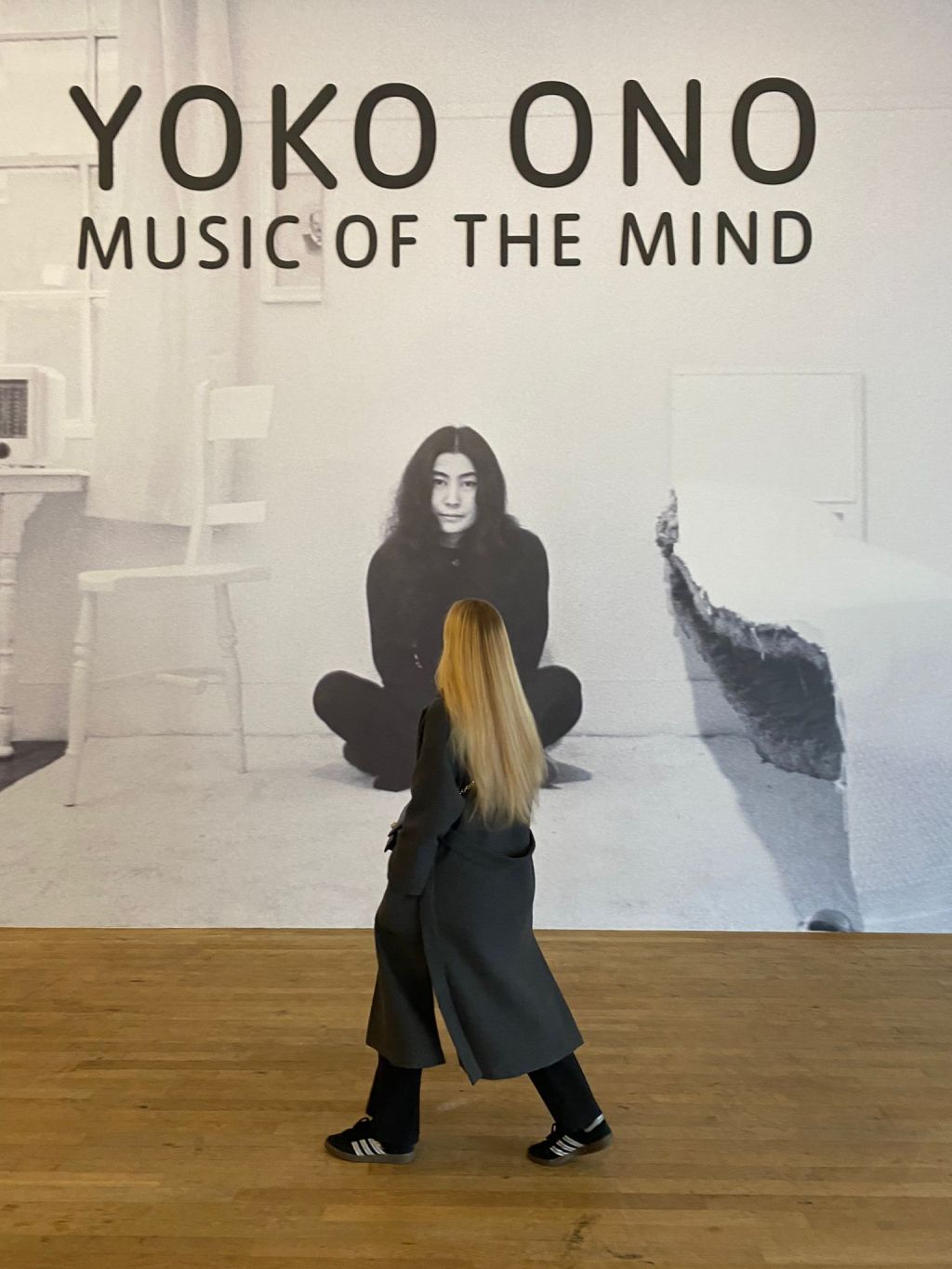
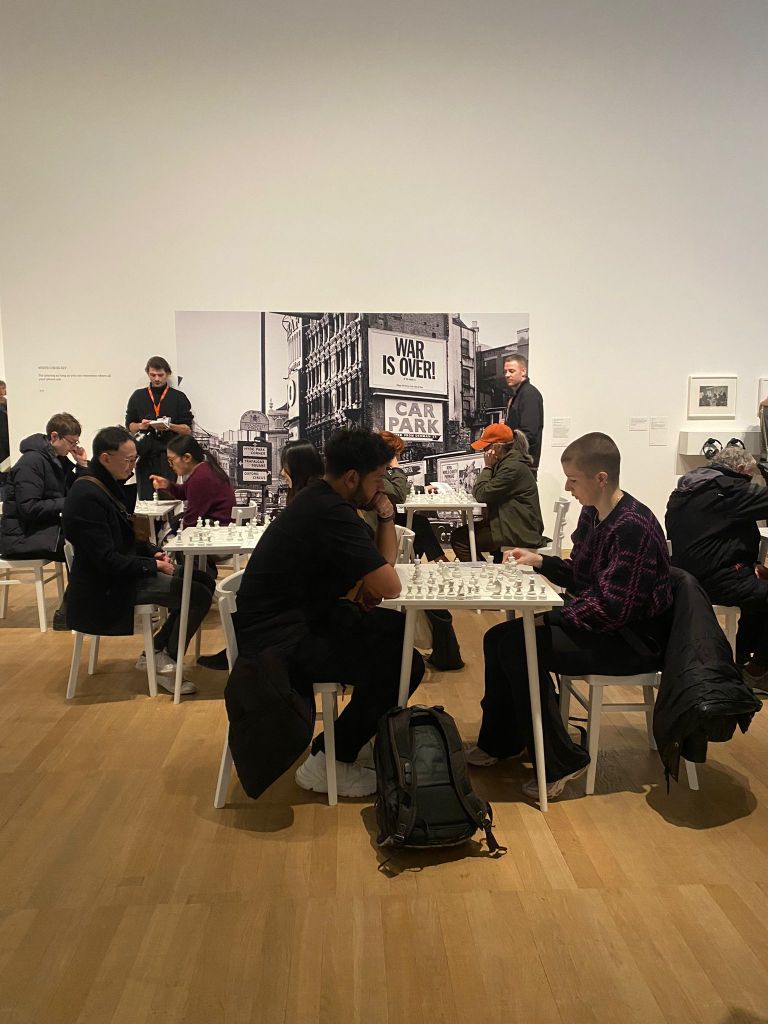
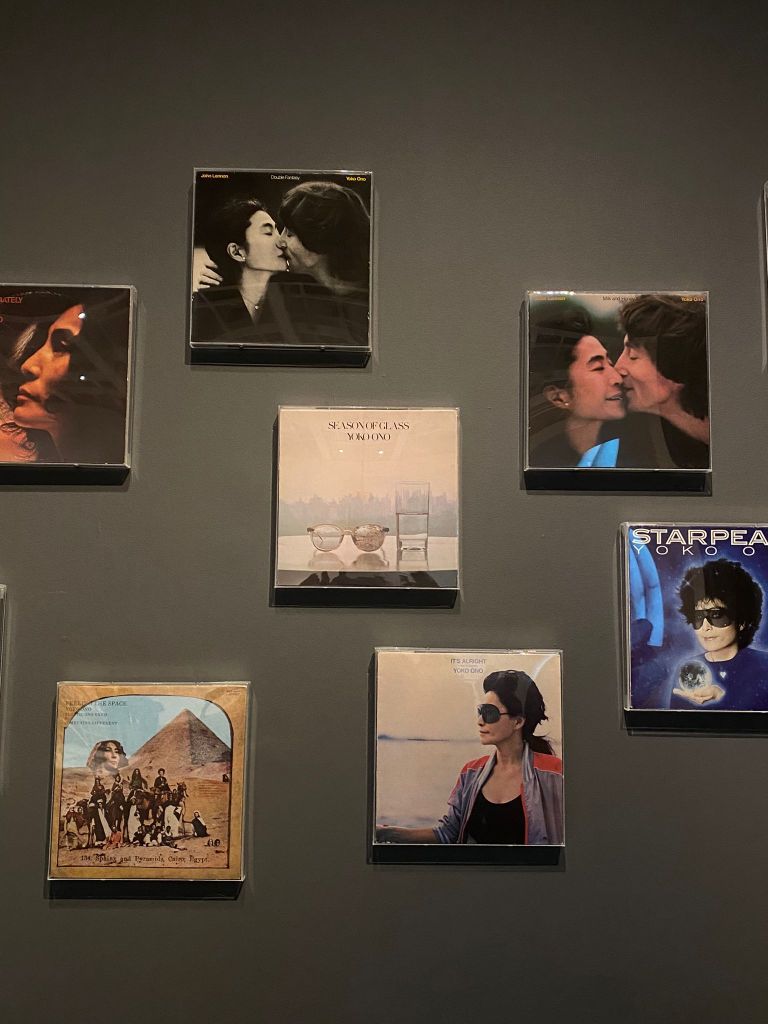
Stepping into the vibrant world of art, the YOKO ONO: MUSIC OF THE MIND exhibition at Tate Modern offers a captivating journey through the illustrious career of Yoko Ono. Opening its doors on the 15th of February, this extraordinary showcase invites visitors to immerse themselves in over seven decades of Ono’s pioneering work. From the mid -1950s to the present day, the exhibition shows pivotal moments in Yoko Ono’s multidisciplinary journey, including her transformative years in London, where she intersected with her iconic partner, John Lennon. As the UK’s largest celebration of Ono’s artistic legacy, this exhibition promises a weekend filled with inspiration and discovery for art enthusiasts of all ages.

Yoko Ono – a bit about the artist
Born in Tokyo in 1933, Yoko Ono’s journey traverses continents and disciplines, leaving an indelible mark on the global art scene. Relocated to New York with her family in the mid -1950s, she pursued her education at Sarah Lawrence College, setting the stage for her multifaceted career. Throughout the following decade, Ono’s nomadic lifestyle took her to New York, Tokyo, and London, where her innovative spirit greatly influenced the international development of Fluxus and Conceptual art. Rooted in profound, poetic, and occasionally radical ideas, her creations transcend conventional boundaries, inviting audiences into realms of contemplation and exploration.

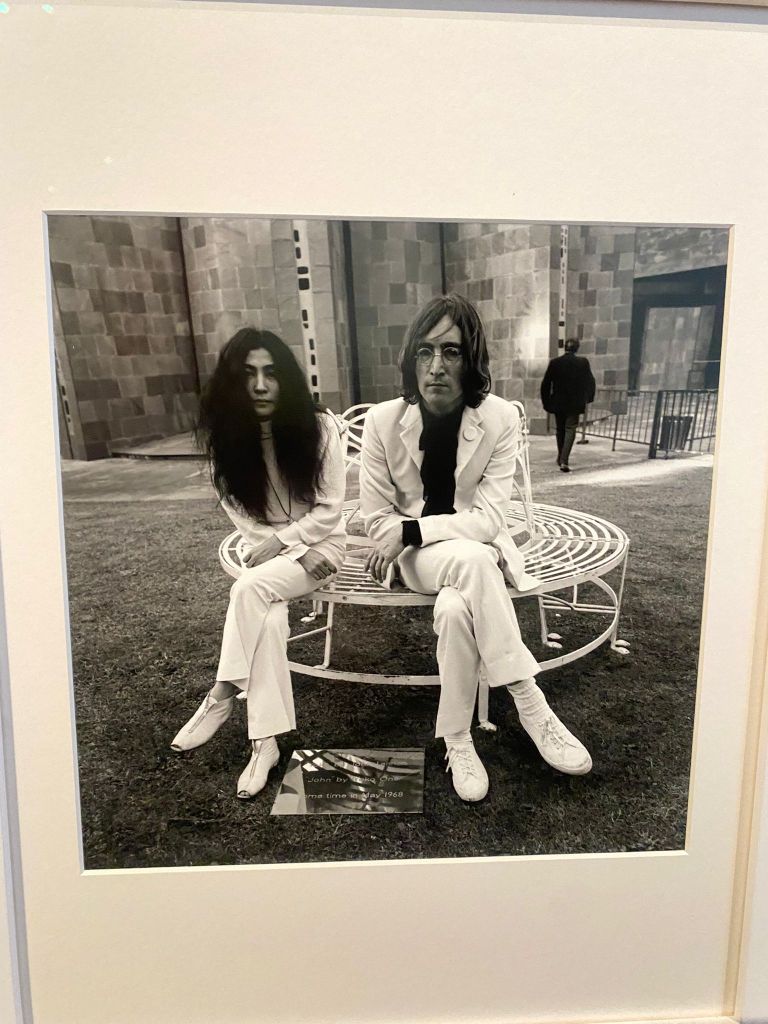
On her trip to London, she met musician and a member of The Beatles, John Lenon, who later on, became her partner and artistic collaborator. They both fought for world peace, against Vietnam war in 1969 becoming a powerful and recognisable couple, creating and singing together, propagandizing end of world violence with their WAR IS OVER campaign. With her unique blend of humor and depth, Ono invites public to explore the depths of human experience and imagination through her thought-provoking creations.
The power of participation
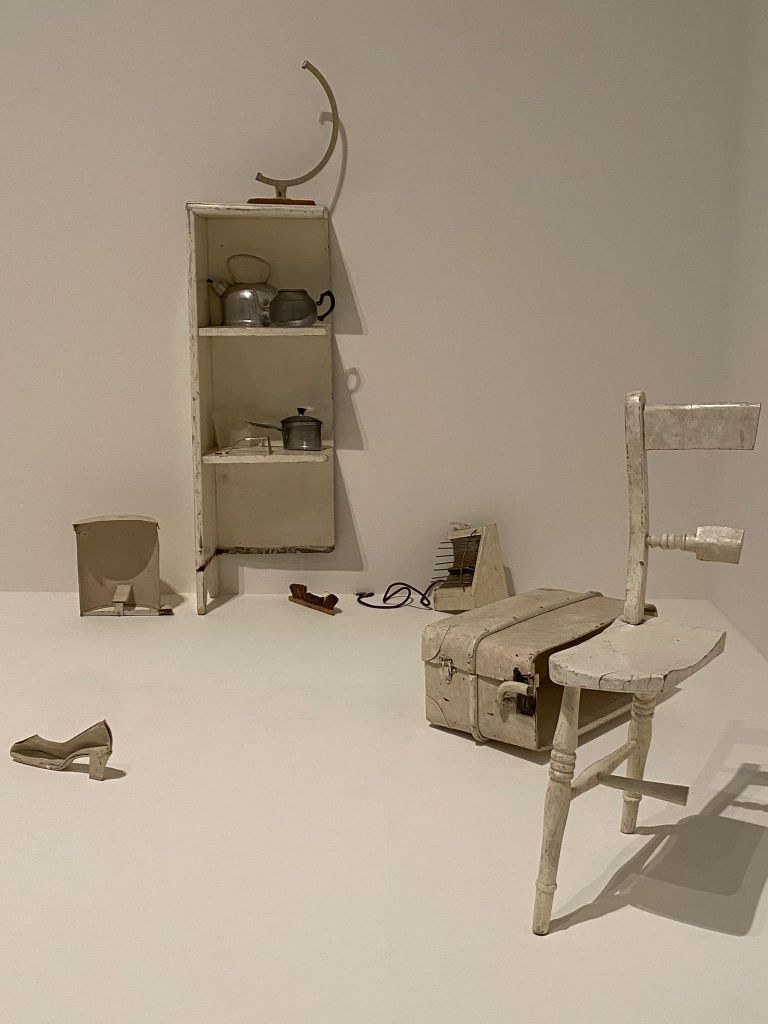
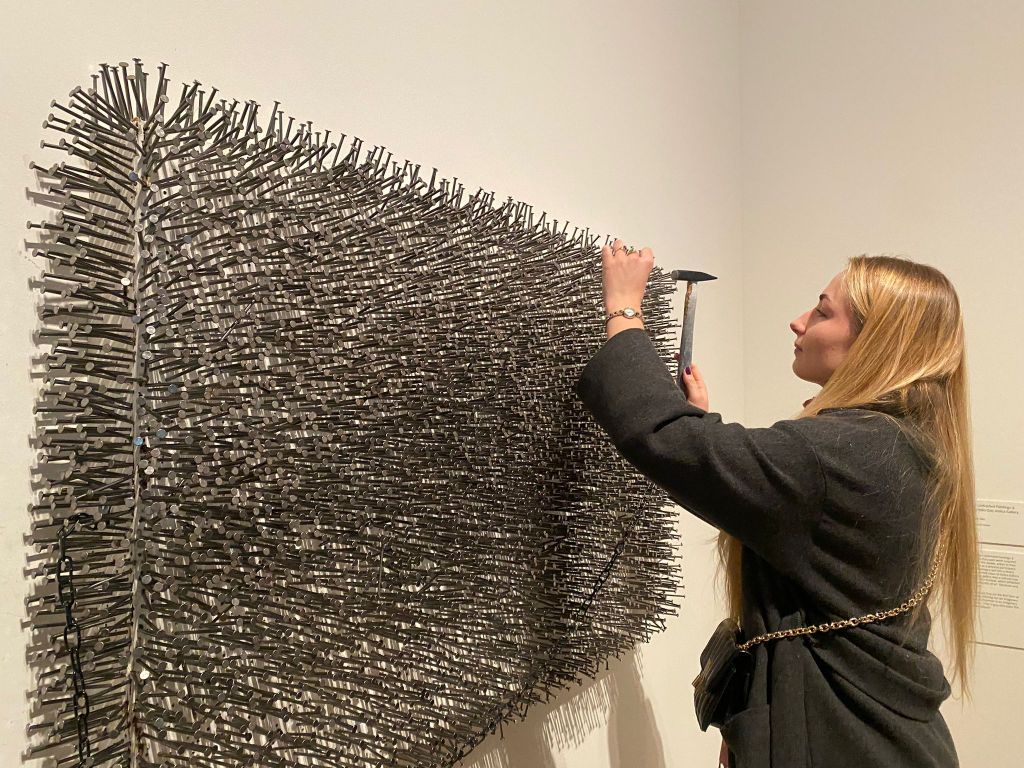
Visitors of the exhibition are greeted by a collection of over 200 works. This comprehensive showcase unveils Yoko Ono’s pioneering approach to language, art, and participation, resonating with contemporary audiences. At the heart of Ono’s oeuvre lies her earliest works, often conveyed through simple yet profound instructions communicated verbally or in written form. One such piece, The work to be stepped on, beckons participants to engage both physically and mentally, prompting discourse between the artistic realm and reality.
Similarly, The work to hold hands features a white canvas with a sharp incision down the middle, inviting participants to bridge the divide through a simple act of connection. Reflecting on my own experience engaging with this piece alongside my brother, I could not help but feel the immense power of its concept, a reminder of the potential for reconciliation and unity, even amidst apparent division. While contemplating these works, I am reminded of the myriad barriers that exist in our world, contributing to its diversity and beauty. Yet, ammong this complexity, lies the potential for change within ourselves, as evidenced by the profound impact of seemingly mundane actions such as shaking hands or choosing kindness and tolerance.
Bag piece
At the exhibition, there was a highly interactive piece composed of large, black bags made of elastic material. Visitors were invited to enter these bags to experience Yoko Ono’s conceptual vision firsthand. Ono herself expressed that “we go in the bag, and we’re very different.” Being inside the bag allows individuals to reveal a different side of themselves, one unrelated to race, gender, or age. Intrigued by this concept, I entered the bag alongside my mother. Despite initially expecting to feel awkward without the ability to see her or anyone else watching, I found myself filled with excitement and laughter as we moved together in a sort of impromptu dance within the bag.

My Mummy is beautiful
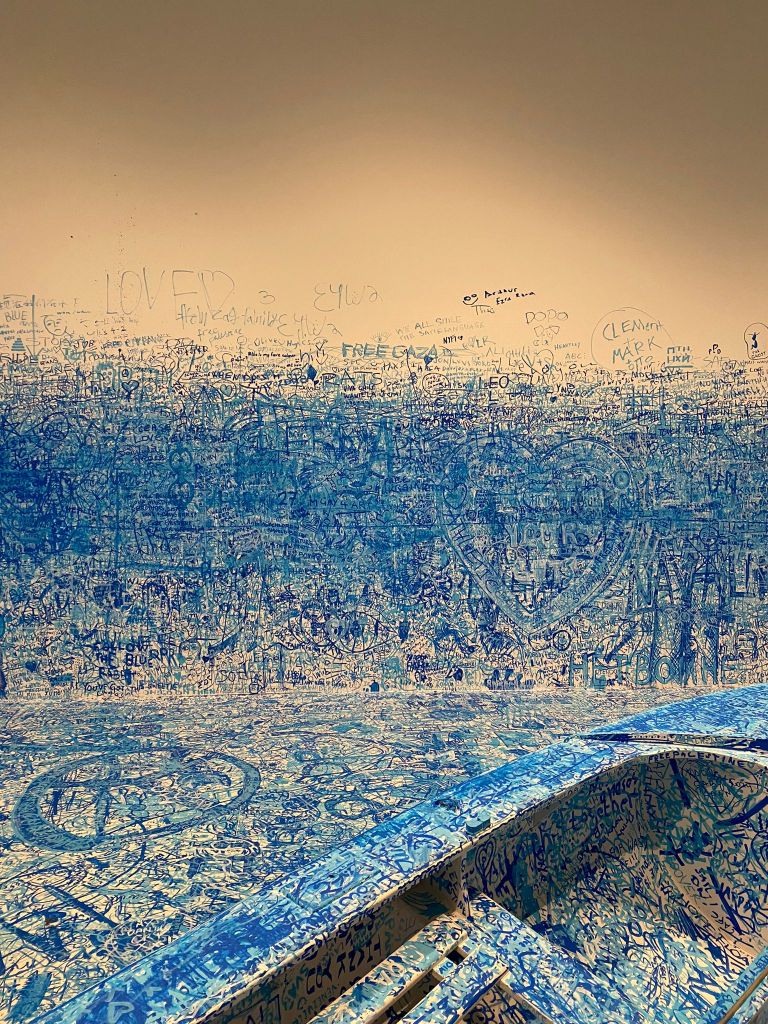
The exhibition evoked a profound emotional response within me, particularly upon encountering the final installation, My Mummy is beautiful. Here, visitors were encouraged to leave notes to their mothers, expressing their deepest sentiments. As I perused through some of these notes, I was moved by their honesty and emotional depth. It felt like delving into the intimate secrets of strangers, experiencing firsthand the complex tapestry of emotions, compassion, anger, frustration, and love that define human relationships. Amidst this array of emotions, there was a palpable sense of belonging and shared humanity.
In one corner of the room, suspended from the ceiling, hung images of vaginas and breasts, poignant symbols of birth, womanhood, and the maternal bond. These powerful visuals served as a reminder of the profound journey of pregnancy and motherhood, each image was a testament to the unique and transformative experience shared by mothers and children alike.

Wish Trees for London
Just when I believed the exhibition had reached its conclusion, a surprising encounter awaited visitors as they ventured through the shop: the Wish Trees for London installation. Positioned strategically, these trees provided a serene sanctuary for individuals to share their personal aspirations for peace. It was a brilliant idea to place them there, offering visitors a space for reflection and contemplation following an immersive experience filled with collaborative thoughts and activities. Sitting alongside loved ones, penning our wishes, and reflecting on what we had witnessed, I could not help but feel a profound sense of contribution to the exhibition’s narrative. And in the aftermath, a strangely calming sensation washed over me, akin to the collective catharsis of group therapy.

Summary
In conclusion, observing visitors of diverse ages actively engaging with the installations was a testament to the transformative influence of art in fostering unity and inspiration. From the cheerful exploration of children to the involvement of teenagers, and the participation of the elderly, each interaction underscored the profound impact of artistic expression. I extend a warm invitation to experience the Yoko Ono exhibition, The Music of Mind, in London. Running until September 1st, 2024, at Tate Modern, this immersive showcase promises an unforgettable journey into the depths of creativity and contemplation. Don’t miss out on this extraordinary opportunity to explore the visionary works of one of the most influential artists of our time.
Reference:
- “Exhibitions | Tate,” n.d.
- https://shop.tate.org.uk/exhibitions-and-tickets.
- MOMA. “Yoko Ono,” n.d. https://www.moma.org/artists/4410.
- Reporter, Guardian Staff. “Yoko Ono: ‘We Cannot Enjoy the Machoism of Fighting for Peace.’” The Guardian, December 12, 2021. https://www.theguardian.com/world/2001/nov/04/terrorism.life1.

 ART HUB
Leave a comment