
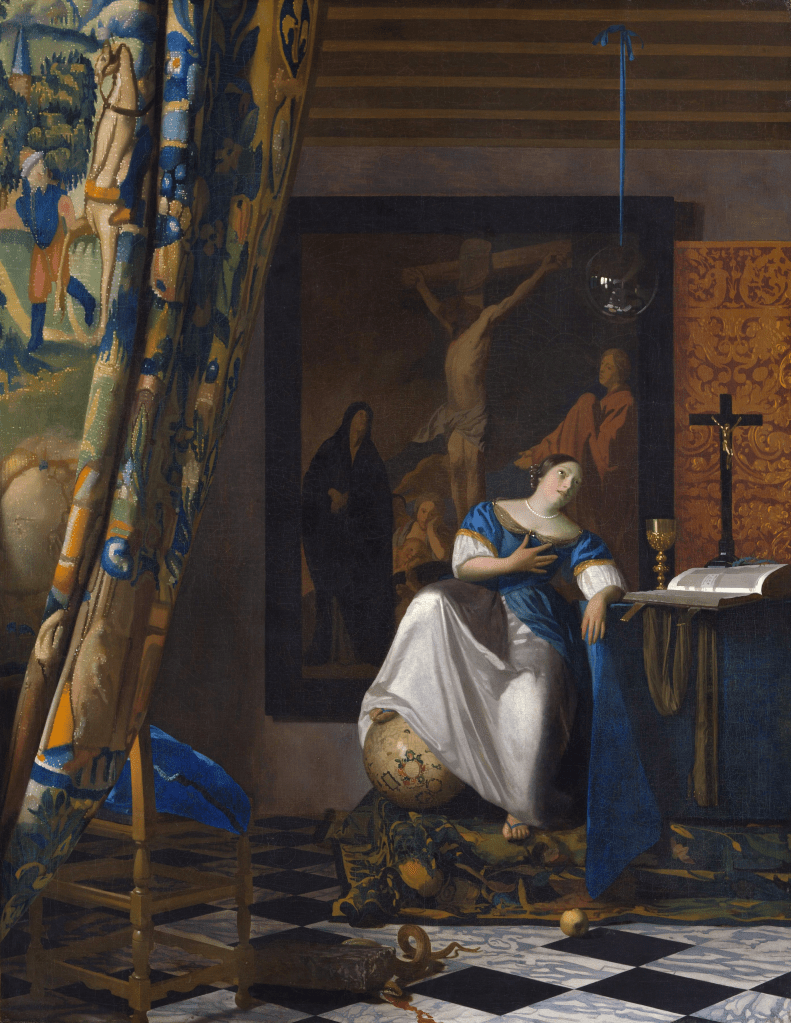
Although Johannes Vermeer did not leave behind as many paintings as Rembrandt or Rubens, the painter belongs to masters of his era. He became famous for his tronie of the young lady in exotic dress and – of course – large pearl in the ear. Gary Schwartz in Vermeer in Details says that even Girl with a Pearl Earring was the most popular and appreciated Vermeer’s work by the public; art historians had always valued his Art of Painting.
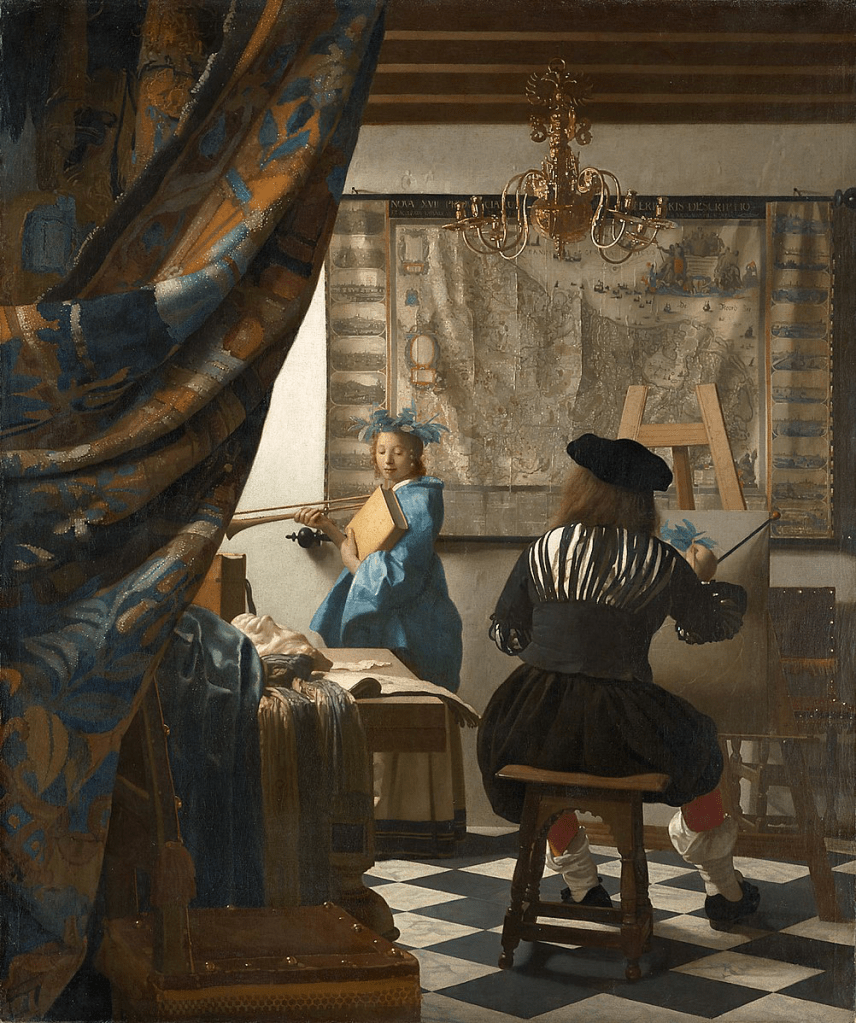
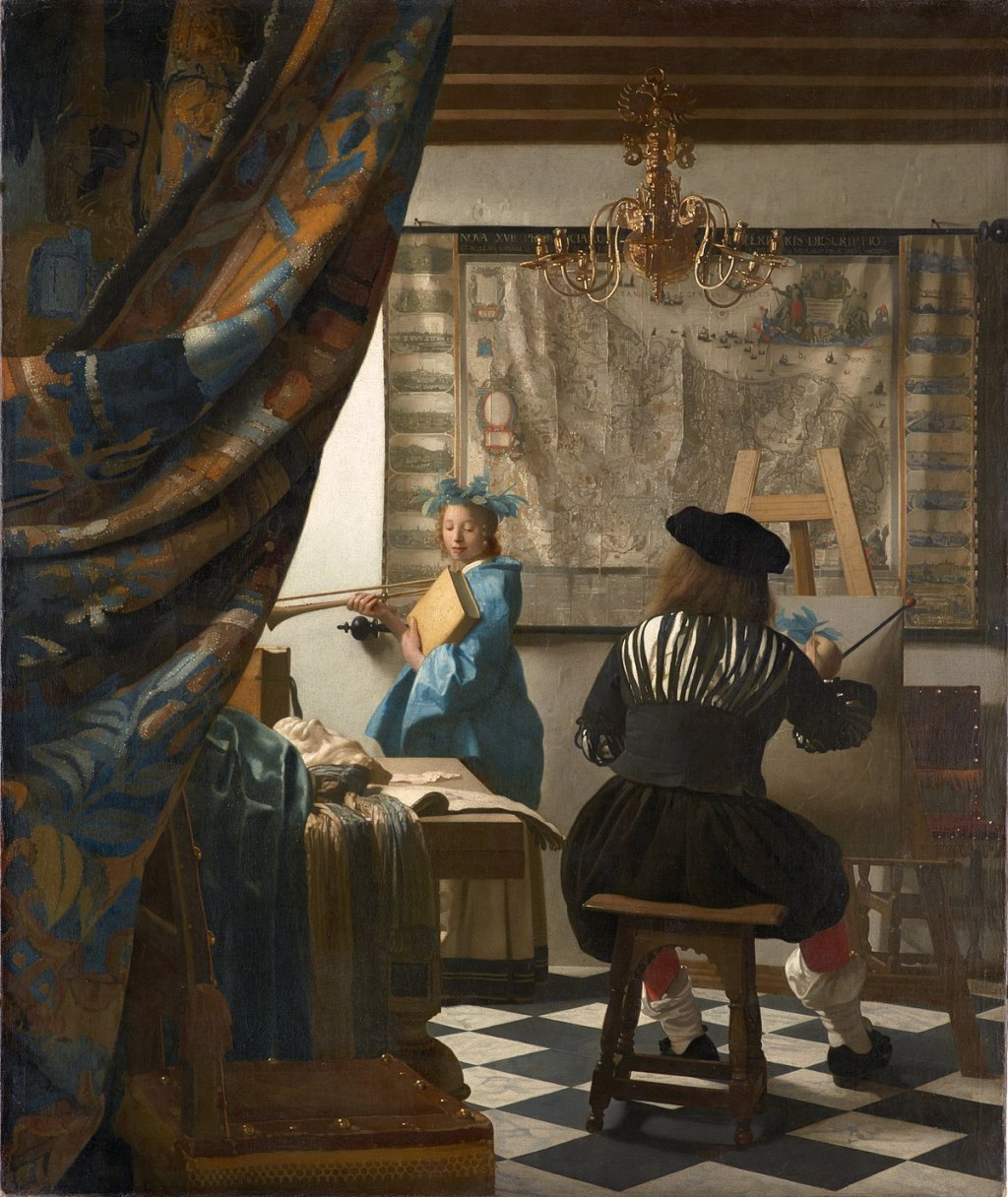
The painting has an interesting history. It was probably created for the Artists’ Guild of St. Luke between 1666 and 1668, which Vermeer was chairman of, but the work has never got there. The painter left it for himself and he was its owner until his death. After that the artist’s wife stated that the Art of Painting remained in her hands, presenting its value for the family, even though she needed to give it to her mother for debt. We know almost nothing about the fate of the painting until 1813 when an Austrian count bought it as Pieter de Hooch’s work. That was the time when the world forgot about Vermeer. The true author of the painting was discovered a few years later – in 1860. In 1940 the Art of Painting was bought by Adolf Hitler’s art advisor. After World War II the painting was found in a mine and dedicated to the Kunsthistorisches Museum in Vienna where it is until today.
Vermeer’s masterpiece is presenting a painter creating a portrait of a women sitting next to shine from a window. The whole situation seems unrealistic. The marble floor and chandelier were not popular back then in The Netherlands. Only aristocrats could have those. And who paints in a smart suit? Moreover, look at the left side of the work. As we can see, the audience observes everything behind the curtain. These elements make the scene a little magical and exalted.
In 1696, on one of the auctions it was presented as Portrait of Vermeer in a room with various accessories. But actually, we do not know if the artist in the painting is Vermeer. Historians are not consistent if his suit would not be outdated in his lifetime. Furthermore, portraits from behind were unaccepted in 17th century art in The Netherlands. That is why it is better to assume that the painter is not a real person, but an allegory of an artist.
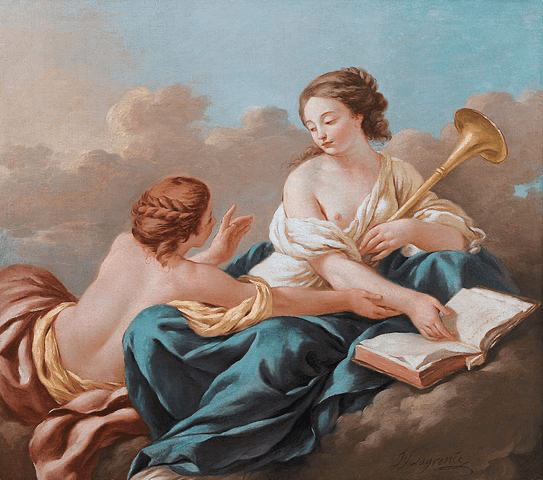
Now we are concentrating on the model. She has a few objects which are important to interpretation: laurel, horn and a book. Her laurel wreath symbolises victory, a horn indicates to glory. All three are usually interpreted as attributes of Muse of history named Klio. According to the classic theory of art, events of the past were always the major inspiration for artists. Historical paintings were a source of appreciation and fame. Some critics considered that the presented painter is trying to become famous by showing history. Others are convinced of his devotion to art. He is painting Klio in peace and harmony, without profits.
There is also another interpretation. The map behind the model is showing The Netherlands before division into the Dutch Republic and Spanish Netherlands in the south (Belgium). This region was ruled by the Habsburgs dynasty. We can see their coat of arms (two-headed eagle) on the chandelier. Some interpreters think that the author wanted to pay tribute to one country of the Dutch. That is why the painter is painting Klio. To the glory of common history.
Apart from characters and background there are more allegories in it. Next to Klio there is clay mask laying on the table. Painters and sculptors have been competing with each other for ages. Apparently, Vermeer was not indifferent to this fight. A sculpture of a face is eclipsed by the painter and his model. It is in the corner, when painting appears to flourish. The mask is not an only symbol of a different kind of art than the subject of work. There are also fabrics (tapestry weaving) and a book (art printing and literature).
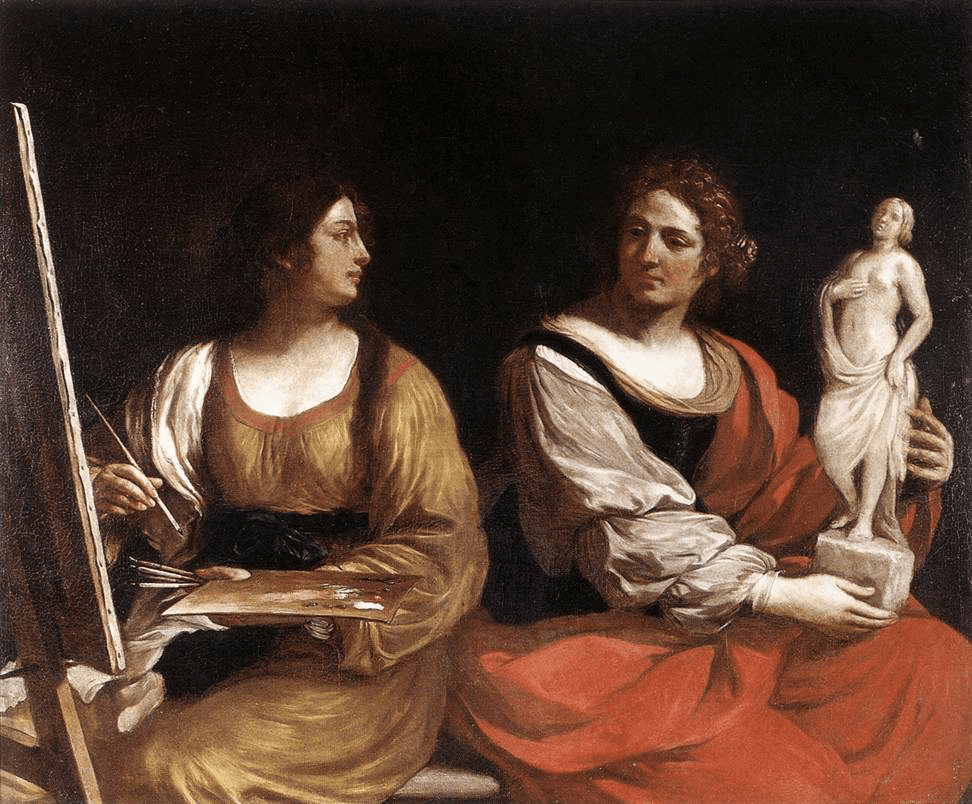
Giovani Francesco Barbieri
As you could see, the masterpiece has a lot of interpretations and unknowns. Probably it is the reason why historians and the rest of the audience still love to talk about it. However, the general subject of this work is – as the title says – the art of painting. For people around the whole world it is one of the most beautiful symbols of homage to visual art. To quote one of the Polish modernist poets: Evviva l’arte.




 ART HUB
Leave a comment