
“The Necropastoral is a political-aesthetic zone in which the fact of mankind’s depredations cannot be separated from an experience of ‘nature’ which is poisoned, mutated, aberrant, spectacular, full of ill effects and affects. The Necropastoral is a non-rational zone, anachronistic, it often looks backwards and does not subscribe to Cartesian coordinates or Enlightenment notions of rationality and linearity, cause and effect. It does not subscribe to humanism but is interested in non-human modalities, like those of bugs, viruses, weeds and mold.”
Joyelle McSweeney
The necropastoral is a theoretical and aesthetic lens through which to view our contemporary world. It is concerned primarily with embracing the degradations which human activity has wrought upon the natural world, as well as all formerly ‘natural’ relations which existed within our collective social and political realities. It does so not to revel in these degradations (though it also does not preclude such revels) but rather as a means of breaking down the false distinctions and separations which exist between the human and the natural; and by doing so to offer us a genuine encounter with the new nature of the world-as-it-is, the world of global capitalism and an industrialized Second Nature.
The necropastoral is therefore inherently political, artistic, discursive, and in all other ways rooted in the mediums through which humans encounter the world we exist in and co-create. It is deeply concerned with death, undeath, disease, toxification, exploitation, and the countless other excesses of the hypermodern. Because of these distinctions, these horrific preoccupations, it is deeply relevant to the current human experience of the world, as well as the world’s current experience of the human.

While invested in genuine encounters, the necropastoral also recognizes the deep rooted disparity between human understanding and the authentic world in which humans operate. Our existence has been heavily curated by the dominant forces of neoliberal capitalism; buried beneath a thick, knotted skein of progressivist illusion and social mores which serve to make us as amenable to capital as possible. We are burdened by Enlightenment era, fictions about the Earth and our place upon it, as well as the modern and hypermodern children which that era gave birth to. Because of this, the necropastoral, in the tradition of all aesthetic modes, chooses not to attempt to manifest the genuine head-on, but rather by the twisting and doubled-back paths of artifice.
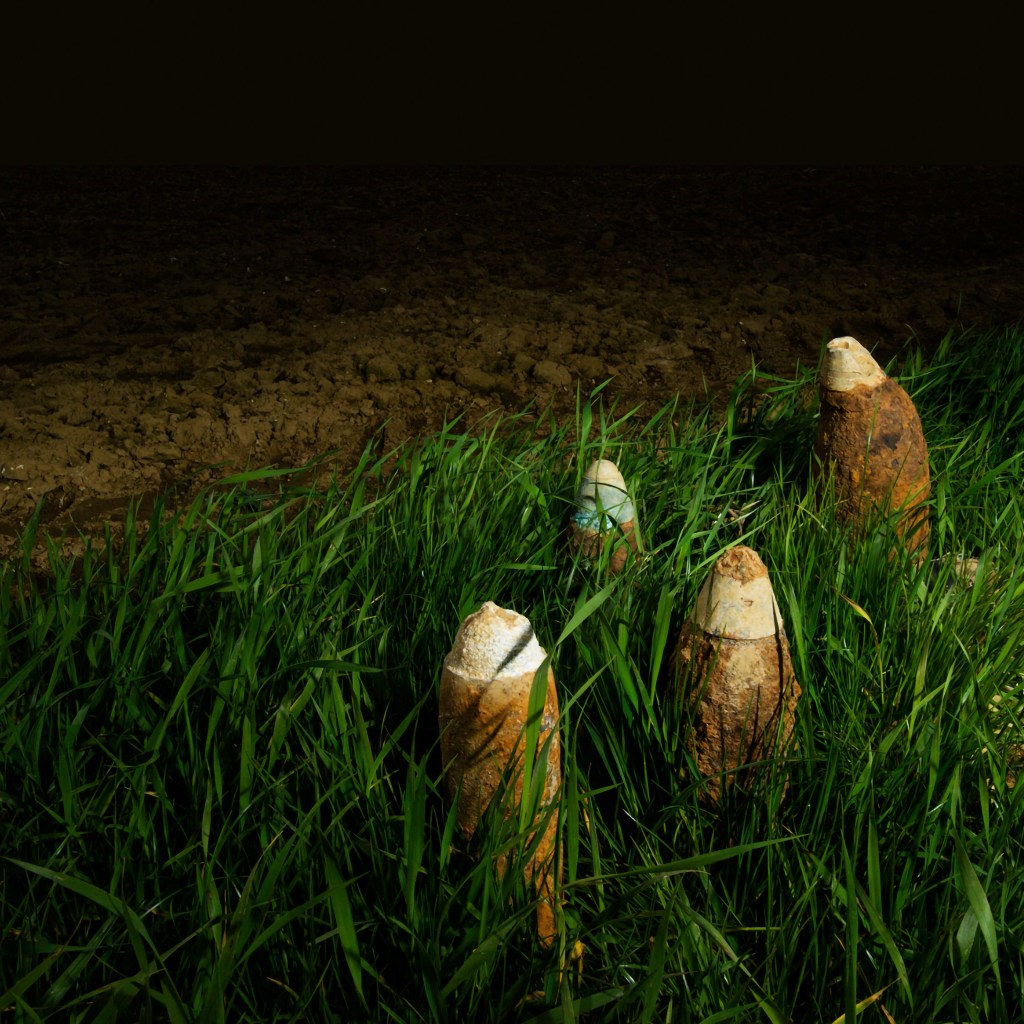
Just as the practitioners of the gothic genre used lavish and oversaturated depictions of the supernatural as a means to discuss the plainly natural, (both within humanity and without) the necropastoral embraces any and all modes which pick away at the cleanly delineated seams and borders of the post-Enlightenment world. Toxic sludge, war torn and shrapnel-studded fields, atrophied flesh, hypertrophied networks, malignant growths and viral strains; all of these and more are sites for the necropastoral to build upon. They are sites for encounters with the ‘real’ nature that is our new reality, a nature which is inseparable from the scars and open wounds of modernity.
Beyond this, it looks at the material and social relations of such a world. Relations which we live but are not meant to recognize or give name to. While the exploitation and devolution of the natural world, playing out in realtime before our eyes, would alone be enough to be concerned with, we must also learn to face the ways in which our own inner and interpersonal lives are likewise being devolved. The savage deprivations of capitalism are not limited to what we conceive of as ‘nature,’ but rather infest all arenas of human and non-human activity, breaking down the connective tissues which we once relied upon. All hailing from a common, polluted source, the collapse of the global ecosystem is inseparable from the collapse of social supports and class consciousness, as well as the rise of economic disparity, colonial and fascist rhetoric, generalized precarity, and mental health crises. It is all, despite the veils of fiction which have been erected around us, one world. And there is something rotten at the core of it.
To take a step back for a moment, an understanding of the necropastoral will be greatly aided by first understanding the tradition(s) which it builds upon. So what exactly is the pastoral? Within art and literature, it is an idealization of rural existence, created almost exclusively for the consumption of urban viewers. Note that it is the ‘rural’ and not the ‘natural’ which is lauded and fetishized within the pastoral. It is only the orderly, human-centric forms of nature which appeal to it; a peaceful and sanitized version of true nature, stripped clean of its complications and jagged edges. Pristine fields and neatly tended forests, resting serenely beneath golden sunsets, their animal inhabitants posing and neatly arranged to signal their acquiescence to human need.
Such depictions draw heavily upon the mythology of Arcadia, which was once an actual region in Ancient Greece, but which evolved into an artistic and pseudo-spiritual conception of a bountiful and inviting ‘natural’ world. Re-adopted during the renaissance, Arcadia is the embodiment of the world in its most human-friendly configuration. A place that is subservient to human mastery, but which maintains just enough pretence of genuine wilderness to amuse and delight. Arcadia is to landscape, in other words, what zoos are to wildlife.

On the surface, such conceptions may seem harmless enough, but they have bolstered and given rise to a pernicious ideology of human superiority and the infinite mutability and exploitation of the natural world. And when this particular strain of ideology encountered early Liberalism and pre-capitalist thinking, they formed a comorbidity which led to our contemporary relationship to nature. One of infinite extraction, in which the natural world is simultaneously seen as both a collection of inert resources waiting to be harvested, and an inexhaustible and eternal realm which will forever be just ‘over there’ when we desire it. And while many of us have (finally) come to understand intellectually that this is not the case, emotionally and culturally the spark of Arcadia still burns bright within us.

This brings us back to the necropastoral, which turns Arcadia on its head. Not only does it renounce the Arcadian illusion, it shatters it forcefully with its twisting and crawling necroforms, and inescapable encounters with the diseased embodiments of everything capitalism and modernity have driven beneath the surface of the pastoral’s open and over-ripe fields. And more so than simply showing us these outcomes, these buried denizens of the new nature, it seeks to return to them the agency which we have collectively (first in our minds, and then materially) robbed them of. Mold and fungus burst up through tattered seams, the dead crawl out from their industrial hells and purgatories, and the dams which hold back the filth and mercury-sick waters of tainted lands give way. What was buried rises again.
The necropastoral leads us back into a world in which human agency is subservient, where one must tread fearfully through the twisting and the overgrown, and where non-human life once again looms as both predator and source of awe. A world in which our clearly delineated senses of time and place, life and death, no longer hold, become soft and overstretched at their boundaries. The necropastoral is simultaneously a site in which the outcomes of human action cannot be concealed or escaped, and where the illusion of the Arcadian is stripped bare, placing us face to face with the truth of not only our present, but our past.
We have made our world a world of death, and within the necropastoral the dead will no longer remain quiet.


 ART HUB
Leave a comment