
The history of the Gucci Museum in Florence is deeply intertwined with the remarkable journey of the Maison itself. It all began in 1921 when Guccio Gucci, son of a family of Tuscan artisans, opened his first shop in Florence. This humble beginning marked the inception of a legacy that would transcend generations and continents. Gucci quickly gained recognition as the go-to destination for an international elite clientele, establishing itself as a symbol of luxury and sophistication.
Over the course of more than one hundred years, Gucci’s storied history has been punctuated by moments of unparalleled creativity and innovation. The Maison has dressed princesses and movie stars, leaving an indelible mark on the world of fashion. From its roots in Florence, Gucci expanded its influence globally, solidifying its position as one of the major Italian players in the fashion industry.
Throughout its journey, Gucci has been guided by visionary leaders who have shaped its identity and propelled it to new heights. One of such a pivotal figures was Tom Ford, whose role as Creative Director in the 1990s redefined the brand’s aesthetic and captured the imagination of fashion enthusiasts worldwide. Ford’s daring and sensual designs epitomized Gucci’s spirit of boldness and luxury, cementing its status as an icon of contemporary fashion.
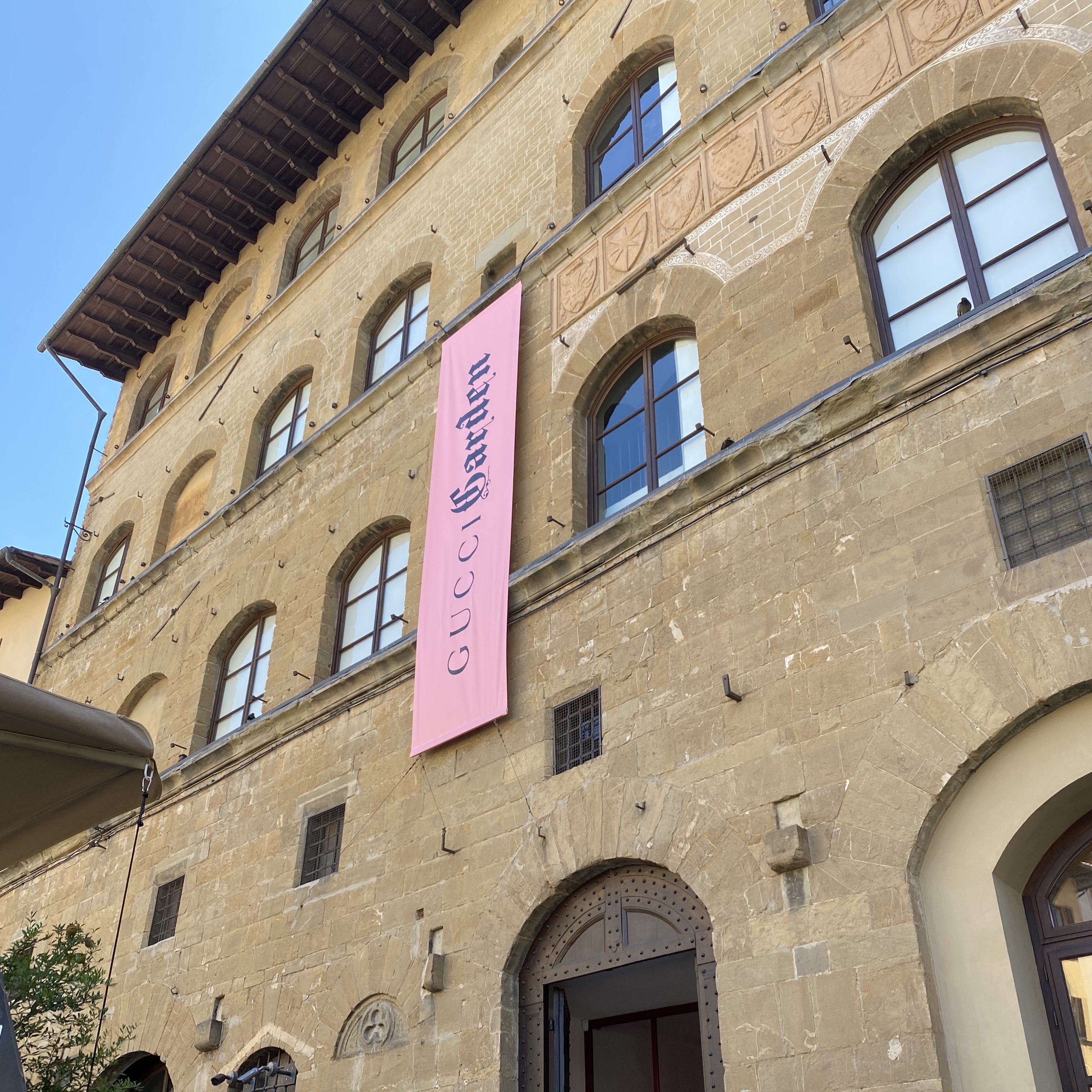
Against this backdrop of illustrious history, the Gucci Museum emerged as a tribute to the brand’s enduring legacy and cultural significance. The museum’s inception in 2011 marked a significant milestone for Gucci, celebrating its 90th anniversary. Situated in the heart of Florence’s bustling Piazza della Signoria, the museum’s location itself is a recognition of the brand’s deep-rooted connection to the city. Palazzo della Mercanzia, an architectural gem dating back to the Renaissance era, provides an exquisite backdrop for the display of Gucci’s iconic creations.

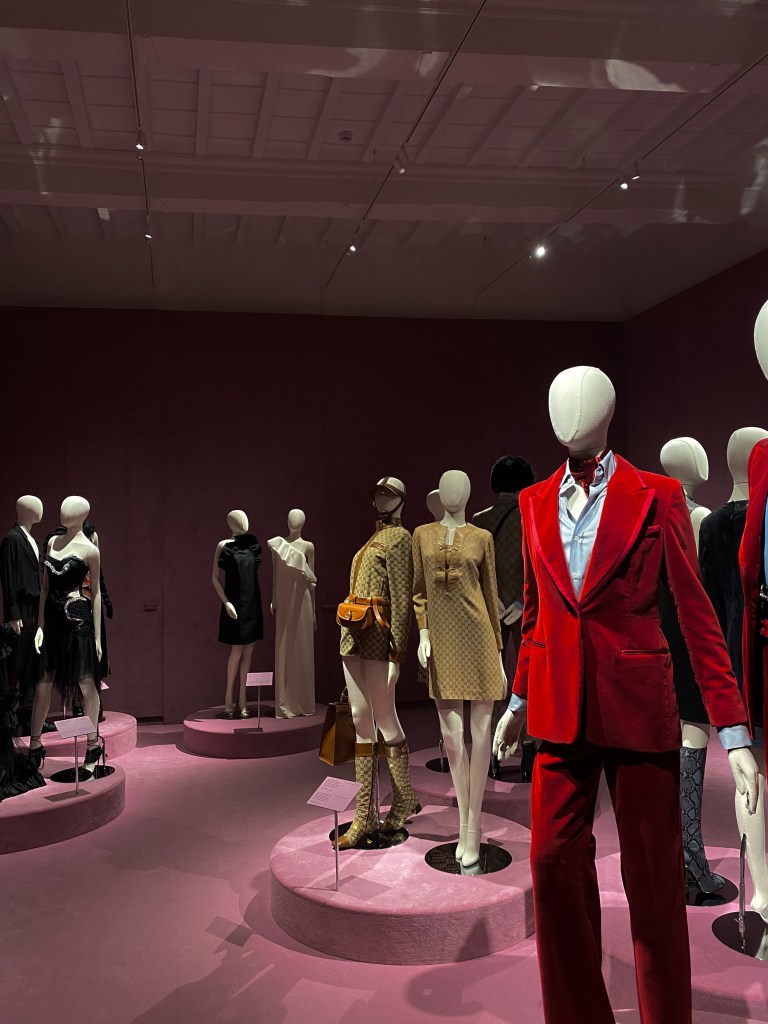
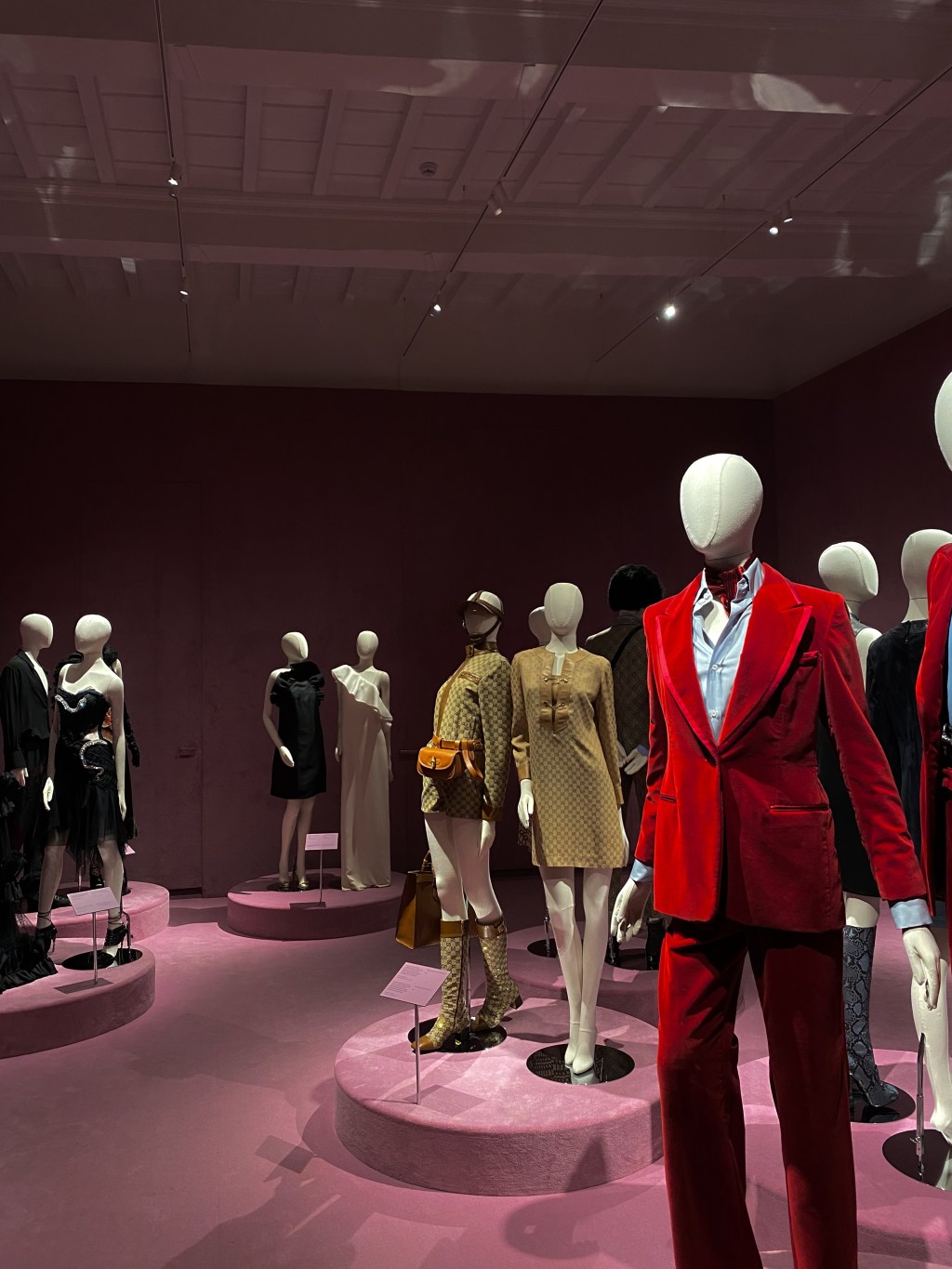
As visitors step through the museum’s doors, they are greeted by a curated collection that chronicles Gucci’s evolution from its humble beginnings as a leather goods company to its status as a global powerhouse in the fashion industry. The exhibits showcase the brand’s signature motifs, innovative designs, and collaborations with renowned artists and designers. From suitcases of the 1930s to bold floral prints of the 1950s and tricolored enamel necklaces from the 1970s, the museum offers a comprehensive overview of Gucci’s rich history.
The Gucci Museum also delves into the cultural and social influences that have shaped the brand’s identity. Creative Director Alessandro Michele pays homage to his predecessor, Tom Ford, with a dedicated section featuring Ford’s iconic designs. From ready-to-wear clothes to accessories, the exhibition showcases Ford’s daring and sensual aesthetic, with vibrant colors and bold patterns adorning the displays.
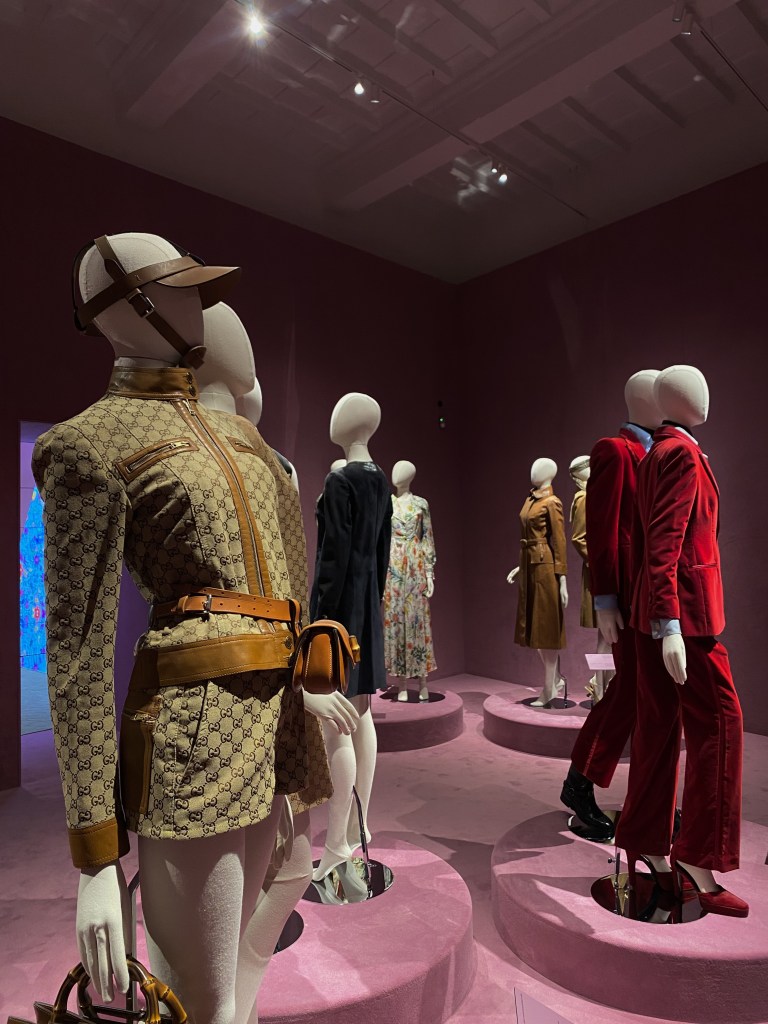
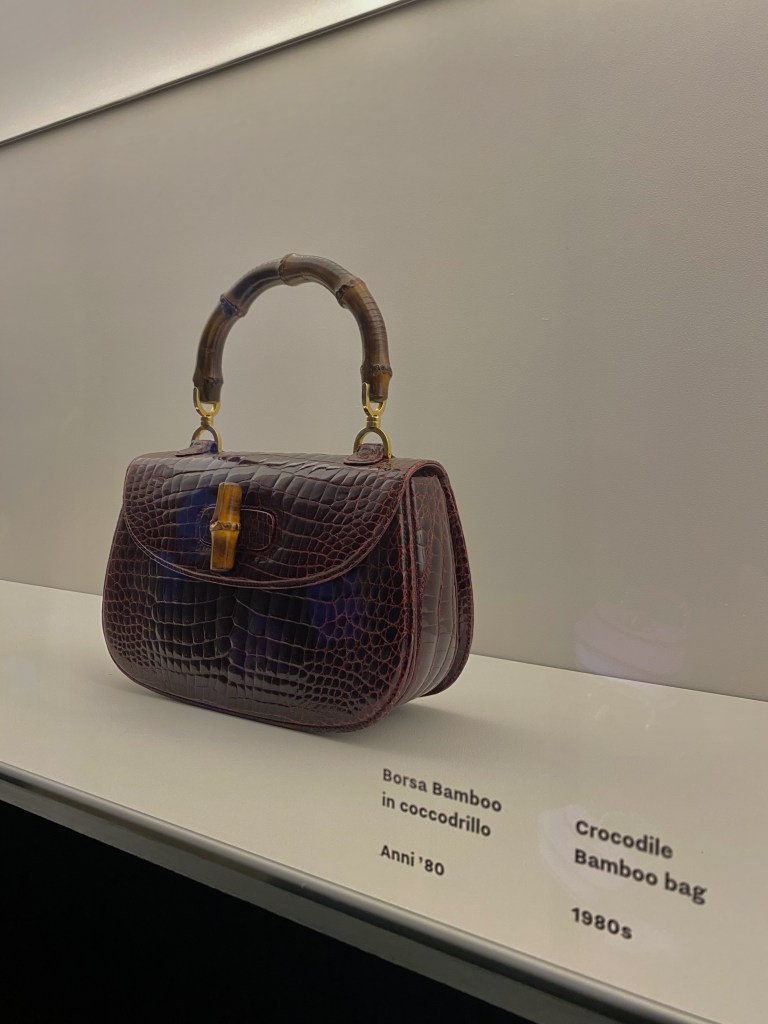
Throughout the museum, Gucci’s maximalist aesthetic is on full display. Under Alessandro Michele’s creative direction, the brand has embraced funky looks characterized by bizarre patterns, gender-neutral shapes, bright colors, and an abundance of ruffles. Modern Gucci fashion is known for its use of flora and fauna prints, incorporating motifs such as snakes, bees, flowers, tigers, and zebras into its designs, reflecting a whimsical and eclectic sensibility.
The recently redesigned space has been curated under the guidance of critic Maria Luisa Frisa. The Gucci Garden Galleria, spanning six rooms across two floors, offers a curated selection of items within its expansive exhibition space. The journey begins in the ‘Guccification’ room, showcasing objects associated with the brand’s modern social media-driven identity, including nods to new monikers like “Guccy” and “Guccification”. Ensemble inspired by Simonetta Vespucci, a Renaissance noblewoman and muse to Botticelli is notable. The exhibition continues with ‘Paraphernalia’, exploring Gucci’s signature codes, and ‘Cosmorama’, highlighting the brand’s historic international clientele.
On the second floor, ‘De Rerum Natura’ evokes natural history museum, focusing on animals and gardens, themes dear to Creative Director Michele. Noteworthy is the Gucci Flora scarf, originally designed in 1966 for Princess Grace Kelly. The museum journey culminates in ‘Ephemera’, a space retracing Gucci’s history through objects, videos, and memories.
Artistic adornments within the museum include wallpapers featuring Gucci motifs and works by artists like Jayde Fish and Coco Capitán. The Gucci Garden also houses a period room dedicated to Björk and cultural events, such as those tied to ‘L’Eredità delle donne’.
In 2019, the exhibition underwent further transformation, with six rooms presenting diverse themes such as ‘Détournement’ and ‘Bagology’. The second floor features ‘Ouroboros’, ‘Cosmic Colours’, and ‘Jardin D’Hiver’, with walls depicting a Gucci garden motif.
Beyond permanent exhibitions, the Gucci Garden hosts Il Maschile – Androgynous Mind, Eclectic Body, exploring Gucci’s influence on men’s fashion. The space itself is an artistic journey, with murals by artists like MP5 and Alex Merry, immersing visitors in a continuous narrative.
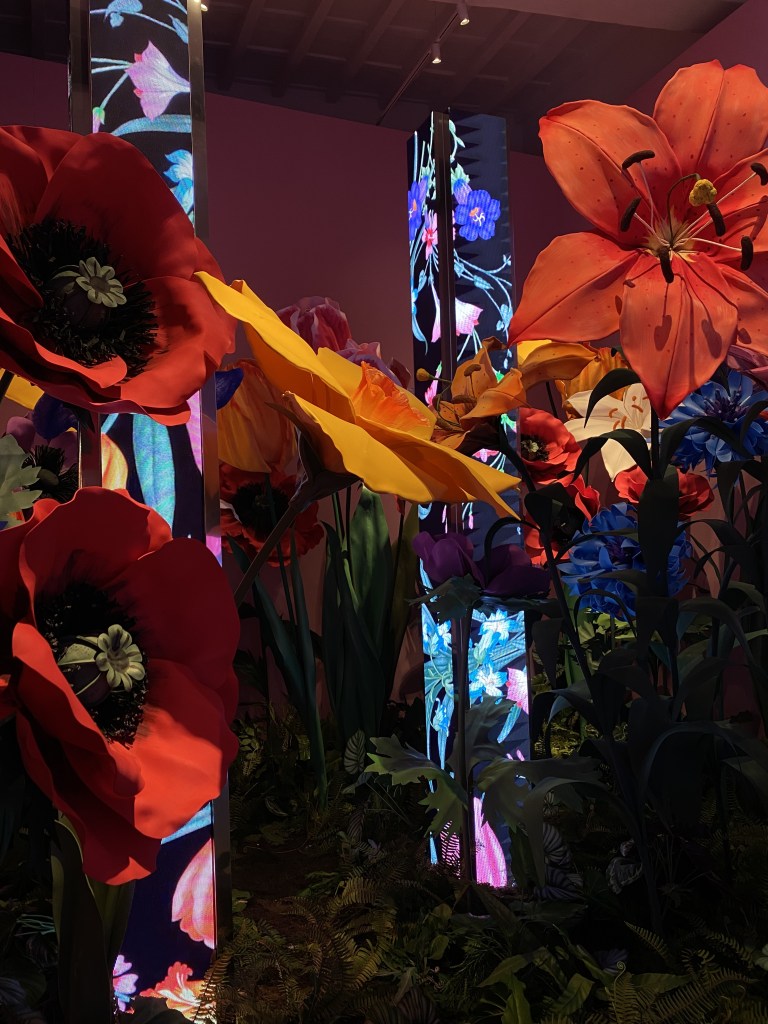
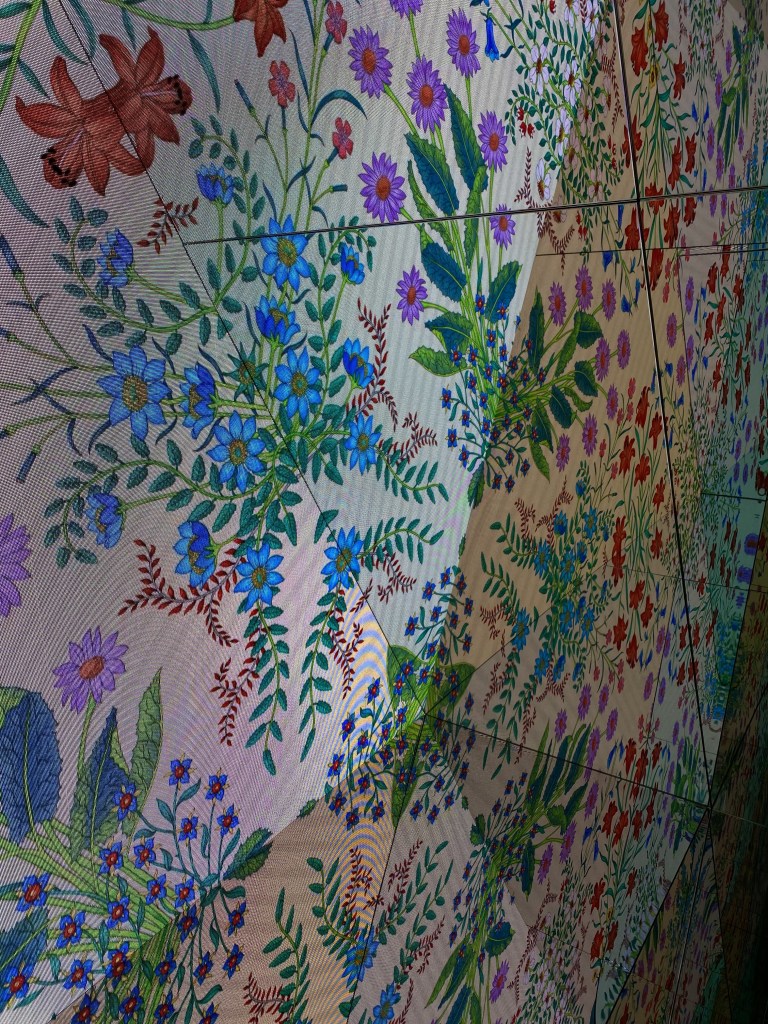
Visitors can explore exhibition accompanied by sound effects that evoke the sound of rustling leaves and chirping birds for an experience closer to reality.
The Gucci Garden offers a vibrant exploration of the brand’s campaigns, blending surreal narratives with everyday scenes across various eras and locations. From the mythological transformations of the SS 2018 campaign to the glitz of 80s Rome in the Gucci Cruise 2020 campaign, the museum showcases a kaleidoscope of imagery and sensations, inviting visitors to embrace luxury as a state of mind.
The museum journey transports visitors from the Paris of the Sixties to the colorful streets of Tokyo and the bustling energy of Detroit, capturing the essence of each locale through the lens of Gucci’s campaigns. Iconic directors like Harmony Korine and Yorgos Lanthimos contribute to the visual tapestry, offering unique perspectives on culture and style.
Beyond its visual spectacle, the Gucci Garden embodies a spirit of freedom, inclusion, and artistic expression. Proceeds from the exhibition support the restoration of select works of art in Florence, highlighting the museum’s commitment to preserving cultural heritage.
Overall, the Gucci Garden offers a multi-sensory journey through the brand’s campaigns, blending history, art, and contemporary culture into a dynamic exploration of luxury and creativity.
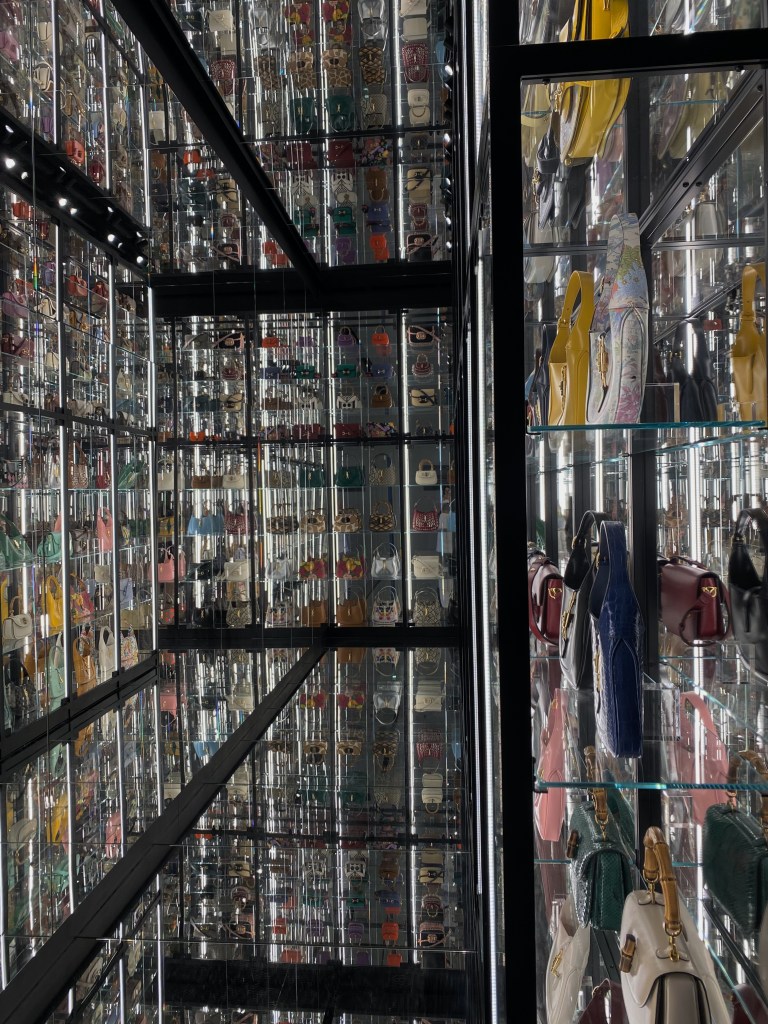
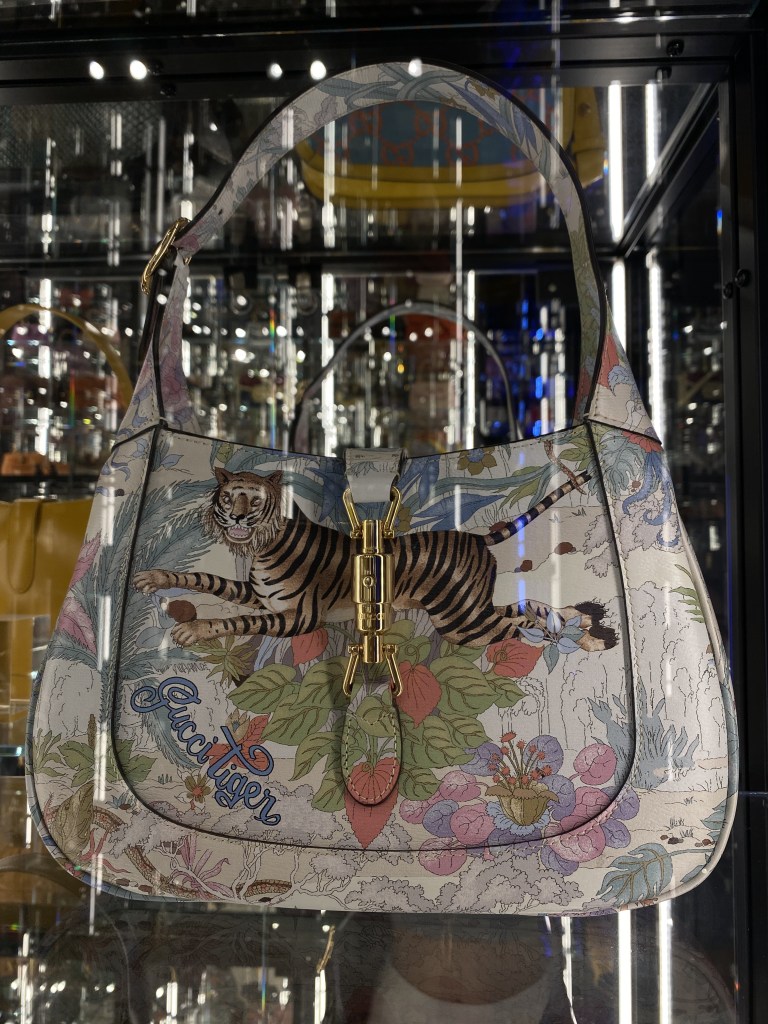
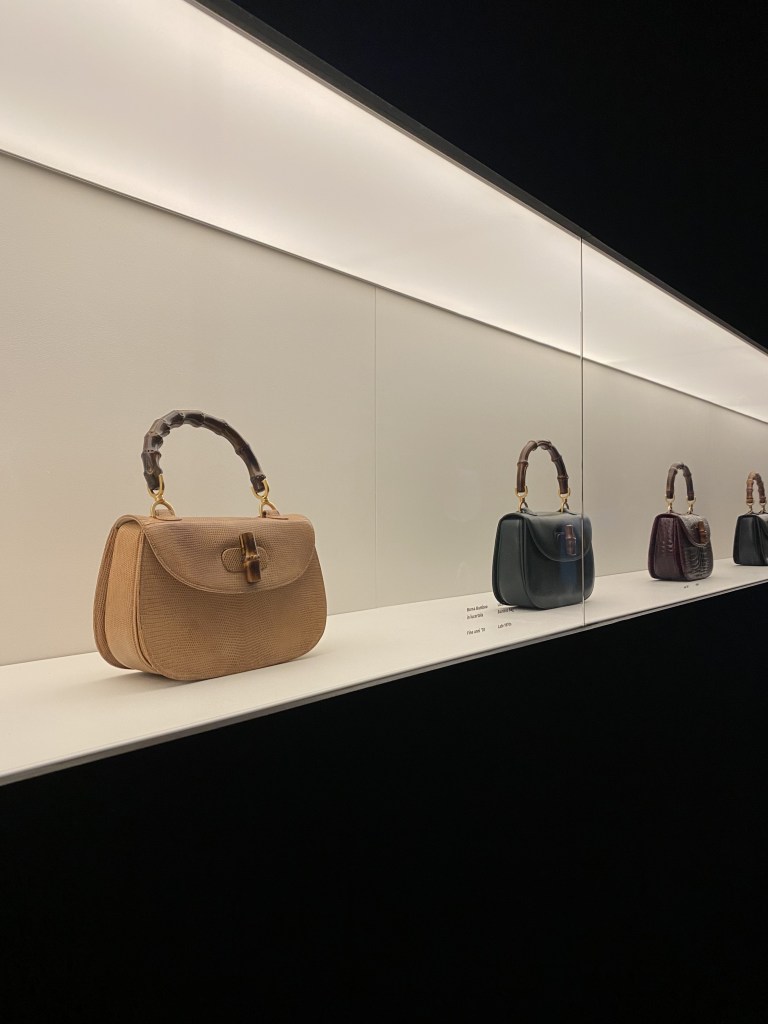
For fashion enthusiasts, art aficionados, and cultural connoisseurs alike, the Gucci Museum in Florence is a must-visit destination. With its rich history, innovative displays, and commitment to creativity, the museum offers a captivating glimpse into the world of one of fashion’s most iconic brands. Whether you’re a longtime admirer of Gucci or simply curious to explore the intersection of fashion and art, a visit to the Gucci Museum promises an unforgettable experience that celebrates the past, present, and future of this legendary fashion house.



 ART HUB
Leave a comment