

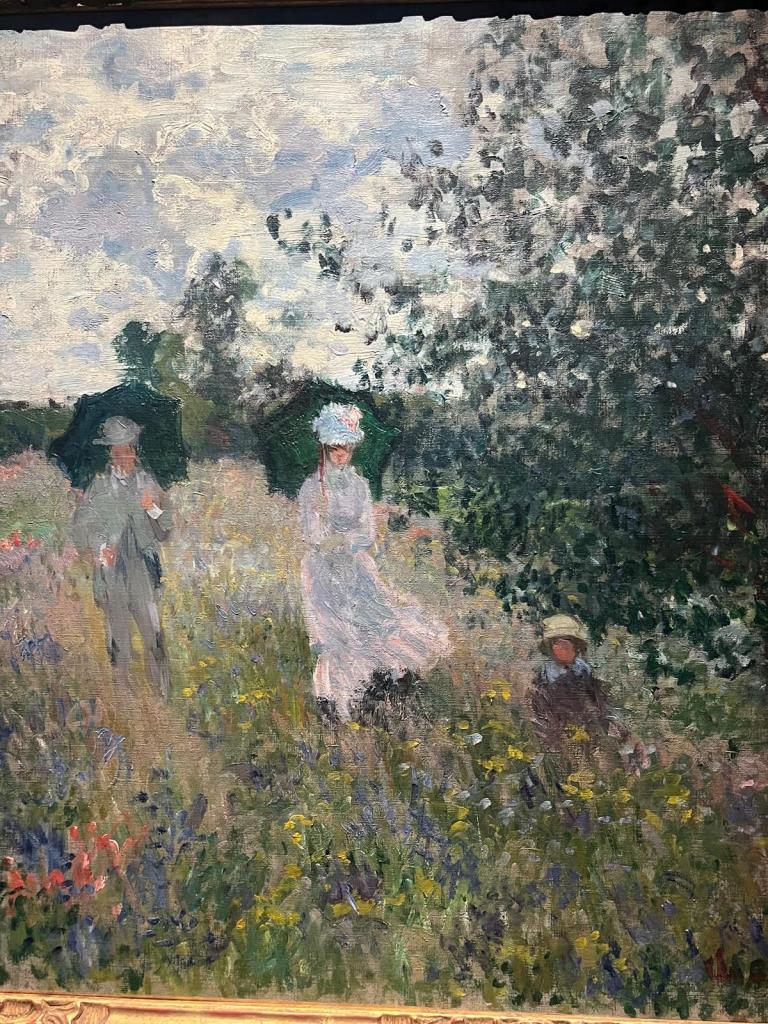
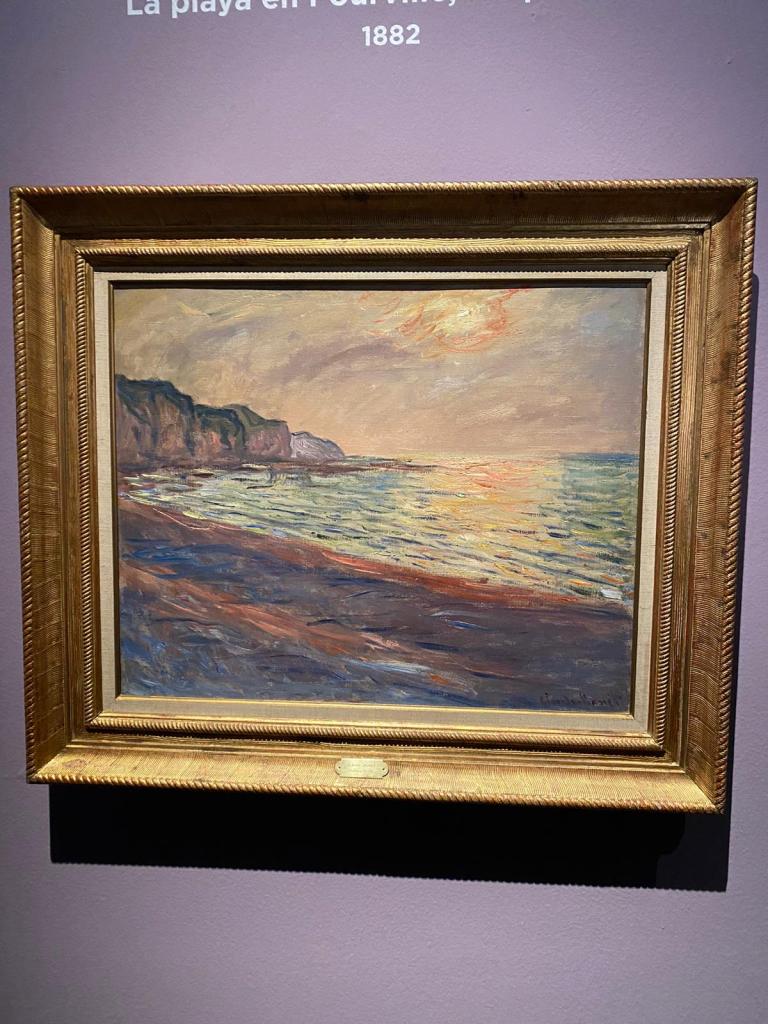
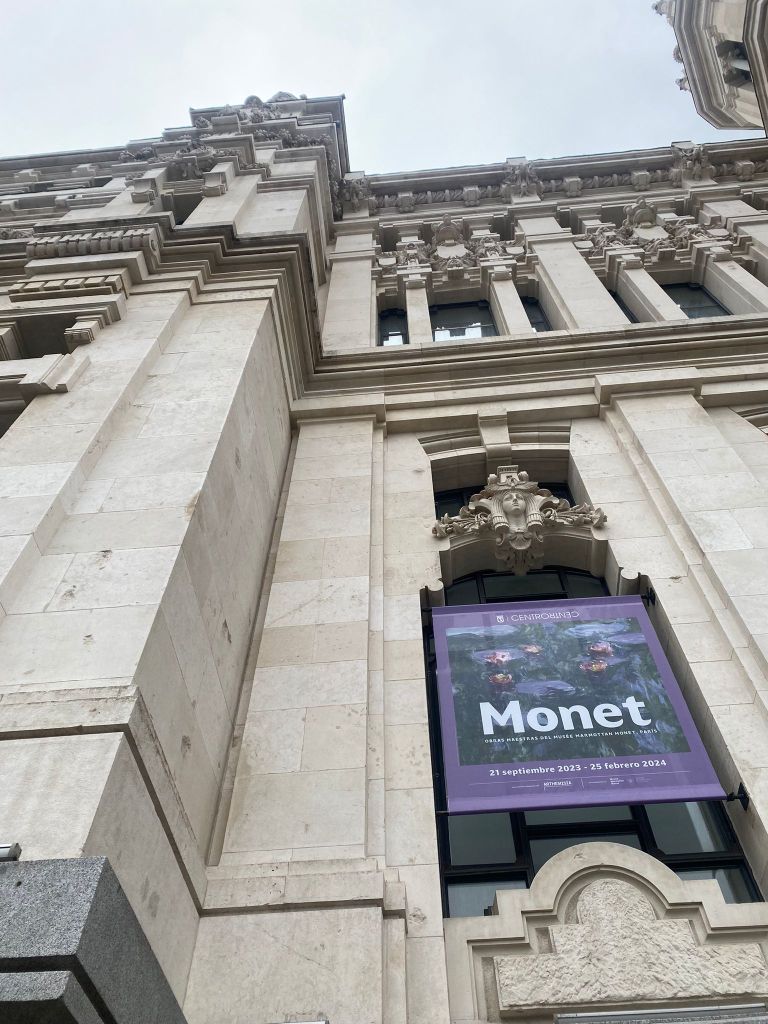
As the capital city of Spain, Madrid boasts a wealth of cultural treasures, including world-class art collections housed in renowned institutions such as the Prado Museum, Thyssen Bornemisza Museum, and Reina Sofia Museum. Visitors to Madrid have the opportunity to immerse themselves in the city’s vibrant cultural scene, encountering masterpieces by renowned artists spanning centuries from Velazquez and Titian to Picasso, Miro, and many more. Among the many exhibits from the 21st of September 2023 until the 25th of February 2024 one can explore the Monet. Masterpieces from the Musée Marmottan Monet temporary exhibition at cultural centre CentroCentro stood out as a captivating experience worth reviewing. Exhibition came from Paris, from the famous Musée Marmottan Monet, which thanks to Michel Monet, the younger son of Claude Monet, is holding one of the greatest and world’s biggest collections of Claude Monet’s works. It was curated by Sylvie Carlier and co-curated by art historians Marianne Mathieu and Aurélie Gavoille. Both Mathieu and Gavoille played integral roles in crafting the accompanying texts that enrich the selection of works comprising the exhibition.
A Glimpse into the Venue
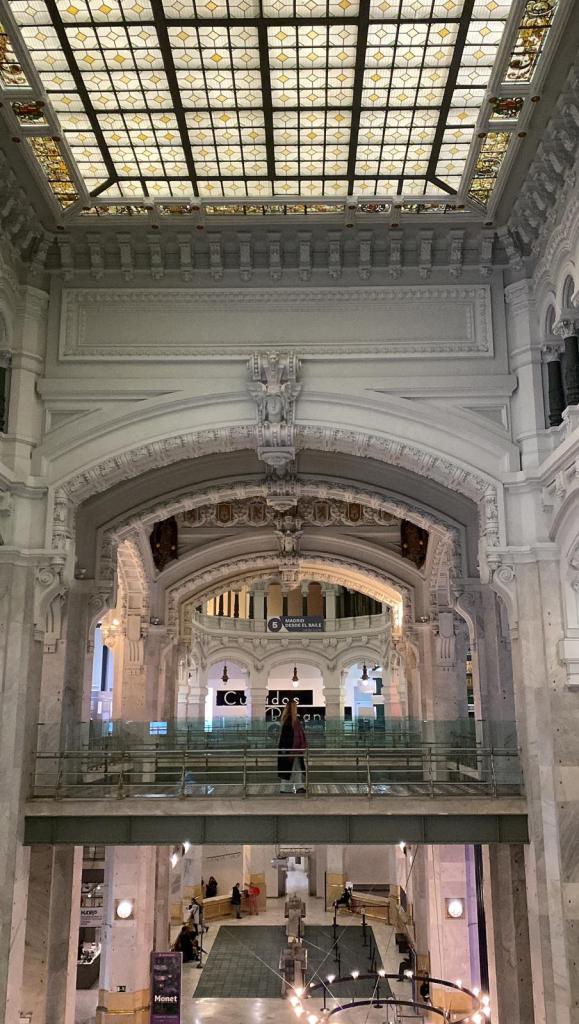
Located in central Madrid, just a stone’s throw away from the renowned Prado Museum, CentroCentro is a cultural hub housed in a building that boasts elements of Spanish Renaissance architecture. Despite undergoing reconstruction over the years, traces of its historic charm, particularly evident in the main hall, still enchant visitors. Beautiful ceilings juxtapositioned with quite modern elements such as bridges or lower ground interior, gives an interesting mix. Yet, beyond its architectural allure, CentroCentro serves a vital social function within the community of Madrid. It is more than just a venue for exhibitions, it is a space designed to foster discussion and dialogue among its visitors. This emphasis on accessibility and community engagement adds depth to the experience of exploring exhibitions hosted within its walls, including the recent Monet exhibition.
The Exhibition Experience
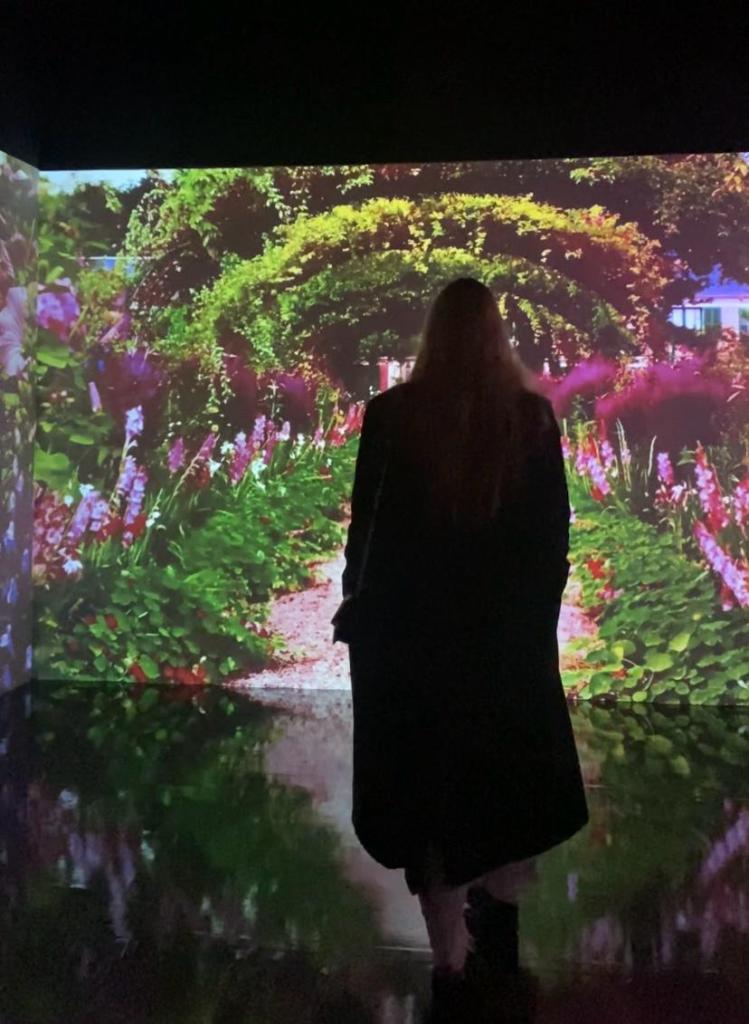
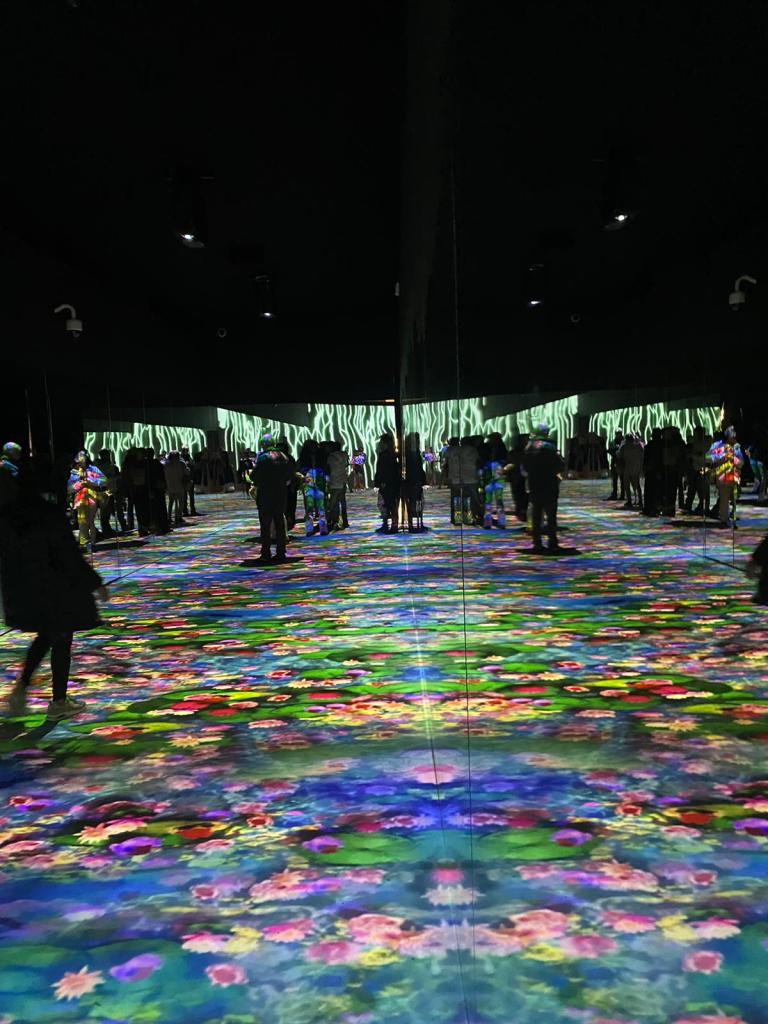
Upon entering the Claude Monet exhibition, I was immediately struck by the vibrant atmosphere pulsating throughout the venue. A steady stream of visitors, each armed with audiobooks, flowed through the space in an orderly fashion, creating a dynamic energy. What caught my attention most was the seamless integration of traditional art exhibition elements with interactive features reminiscent of a game and immersive visualisations. As guests stepped into the exhibition, they were greeted by interactive rooms with projections of Monet’s iconic works. These projections offered visitors a unique opportunity to immerse themselves in the rich textures and lush brushstrokes of the artist’s masterpieces. Intrigued by the influence of experience economy elements on the perception of art exhibitions, I observed closely how visitors engaged with these immersive features. In an interview for The Art Newspaper, Matilde Tomat discusses the impact of the art experience economy, noting a shift towards instant gratification and a lack of depth in connection. While I partially agree with this sentiment, I believe that striking a balance between enhancing the beauty of masterpieces and integrating technology can be challenging. However, in the case of the Monet exhibition, this balance was skillfully achieved. The exhibition presented a diverse array of Monet’s works alongside captivating visualisations, offering visitors a deeper understanding of the artist’s life and inspirations. For instance, the immersive experience allowed guests to stroll through the enchanting gardens of Giverny, offering a glimpse into Monet’s world. This fusion of art and technology not only enhanced the exhibition but also provided valuable insights into the biographical aspects of Monet’s life.
Catering to Diverse Audiences
After spending some time at the exhibition, it became evident that it was curated with a broad audience in mind, particularly those less familiar with Monet’s work. While this approach allows newcomers to delve deeper into Monet’s artistry and appreciate his paintings, it also poses a potential drawback. The abundance of activities, videos, and immersive experiences, such as “Monet’s Eye,” risked overshadowing the essence of the artworks themselves. As I observed the visitors, their intrigue was palpable as they engaged with the interactive features of the exhibition. I found it particularly satisfying to see them comparing what they saw with the actual artworks on display. The interactive games served not only to illuminate certain events from Monet’s life and provide context for interpreting the art but also to encourage visitors to spend more time with the artworks. Contrary to Matilde Tomat’s assertion about diminishing attention spans in the digital age, the interactive elements seemed to have a positive effect. They prompted visitors to linger longer, fostering deeper contemplation of the artworks and challenging the notion of short attention spans. This observation suggests that when utilised thoughtfully, interactive elements can enhance engagement with art and encourage meaningful interaction with the exhibited works.
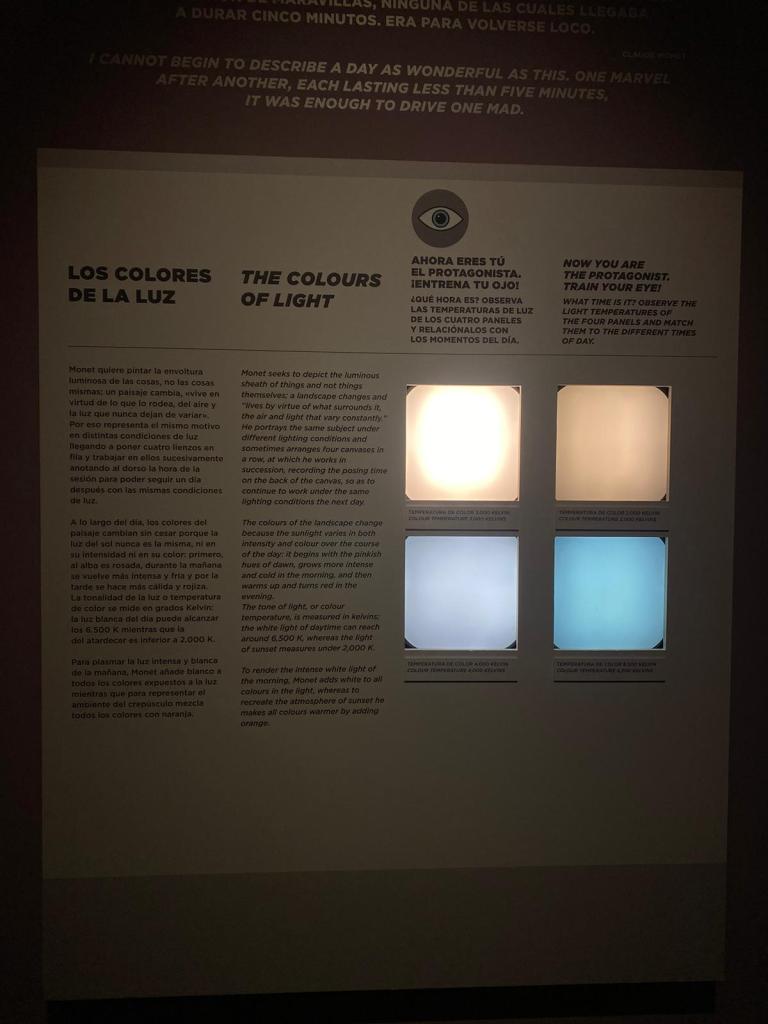
The choice of hosting the exhibition in a cultural centre known for its accessibility and inclusivity across different age groups proved to be highly appropriate for this type of show. The curators likely anticipated catering to a diverse audience, including both long-time enthusiasts of Monet’s work and newcomers encountering his art for the first time. I found the curation to be thoughtful and cohesive, albeit tailored to the exhibition’s target audience. The chronological arrangement of Monet’s paintings offered a fluid narrative, weaving together the artist’s biography with his artistic evolution. Alongside the artworks, interactive games provided insights into Monet’s techniques, pigments, and even his visual challenges, enriching the overall experience.

Conclusion
In conclusion, the visit to the Claude Monet exhibition at CentroCentro was a stimulating journey through the life and works of one of the most celebrated impressionist painters. While the exhibition’s interactive elements may appeal to a wider audience, they risk diverting attention from the inherent beauty of Monet’s paintings. Nevertheless, the thoughtful curation and engaging presentation made for an informative and enjoyable experience overall. Whether you’re a seasoned art enthusiast or a curious newcomer, this exhibition offers a captivating glimpse into the world of Claude Monet.
Reference
CentroCentro. “Monet,” n.d. https://www.centrocentro.org/en/exhibition/monet.
Musée Marmottan Monet. “The Museum and Its History &Mdash; Musée Marmottan Monet,” March 1, 2019. https://www.marmottan.fr/en/the-museum/the-museum-and-its-history/.
Reyburn, Scott. “Snap and Go: The Pros and Cons of the Art Experience Economy.” The Art Newspaper – International Art News and Events, December 2, 2019. https://www.theartnewspaper.com/2019/12/02/snap-and-go-the-pros-and-cons-of-the-art-experience-economy.



 ART HUB
Leave a comment