
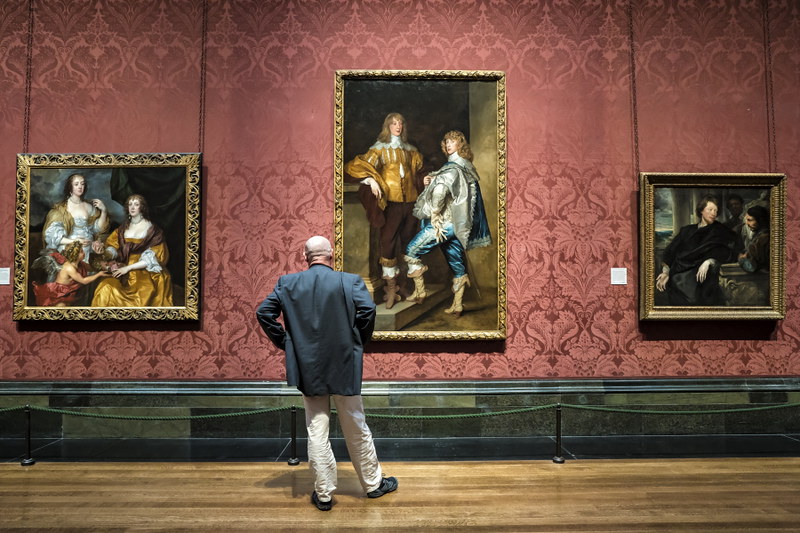
A recently published study delves into the repercussions of Brexit on the United Kingdom’s art market, revealing a widening gap between the UK and US art scenes. The research, conducted by Claire McAndrew, founder of Arts Economics consulting company, highlights the concerns of key industry players who are actively advocating for their interests in governmental circles.
Anthony Brown, Chairman of the British Art Market Federation (BAMF), expressed the challenging nature of the current times, stating, “I don’t think we’ve been through more difficult times than we are now.” Despite these challenges, the English art market remains relatively stable, holding the second-largest share (18%) in the global market, with sales reaching $11.9 billion by the end of 2022.
The study points to the difficulties faced by the Chinese art market, ranking third globally with a 17% share, struggling to overcome the lingering effects of the pandemic. In contrast, the United States continues to dominate the global art market, commanding a significant 45% share.
The negative consequences of Brexit took center stage during discussions at the Frieze London fair in mid-October. Nina Fellmann, the director of Annely Juda Fine Art, highlighted the myriad challenges faced in transporting artworks between Europe and the UK, significantly hindering museum and gallery exchanges.
As the art world grapples with these obstacles, industry leaders are actively engaged in discussions and lobbying efforts to navigate the evolving landscape shaped by Brexit. The study sheds light on the complex dynamics influencing the art market and the concerted efforts underway to address the challenges posed by the ongoing repercussions of Brexit.


 ART HUB
Leave a comment