Li Hongbo, born in 1974 in Jilin Province, China, is undoubtedly one of the most meticulous contemporary artists I have come across. He graduated with a Bachelor of Fine Arts from the Jilin University of Arts in 1996. He later earned a Master of Fine Arts in Folk Art in 2001 and a Master of Fine Arts in Experimental Art in 2010, both from the Central Academy of Fine Arts in Beijing. The 49-year-old visual artist is well-known for his expertise in creating paper sculptures.
Hongbo’s sculptures give the illusion of being crafted from marble, but in reality, they are made using paper. With a background in book publishing, he has always been intrigued by paper and its versatility. His expertise is evident in his remarkable sculptures, where Li introduces an element of surprise, enabling them to stretch in countless unpredictable directions. These sculptures, initially appearing fixed and devoid of emotion, undergo a transformation into unexpected forms.
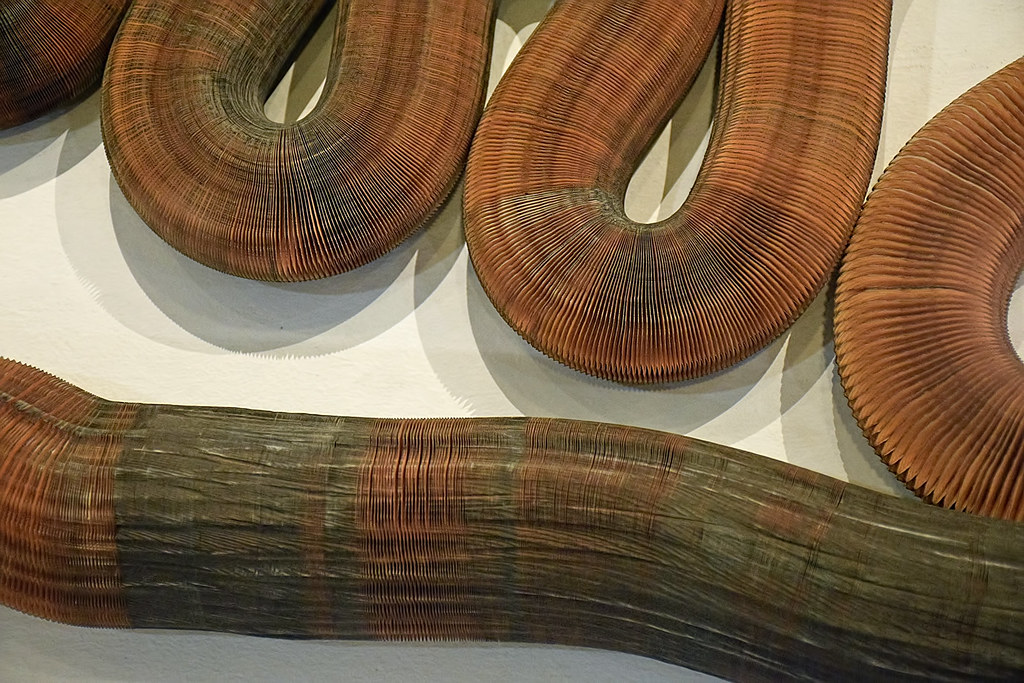
The technique used in these paper sculptures is inspired by the method of creating honeycomb lanterns typically seen during Chinese celebrations. Li creates them by stacking and manually gluing sheets of paper, which are then carved, similar to working with a block of marble. Typically, the sculptures consist of around twenty thousand sheets of paper, though the number may be higher for larger creations. Hongbo’s works are not only compact but also flexible. They can be stretched out like an accordion or bent, and they will return to their original shape. This represents a unique use of two mediums—paper and glue.
Many might not realize how much precision and incredible skill is required to bring such intriguing sculptures to life, which is why it amazes me how many the artist has already created. The ones presented in this article are just a small sample of the artist’s portfolio.

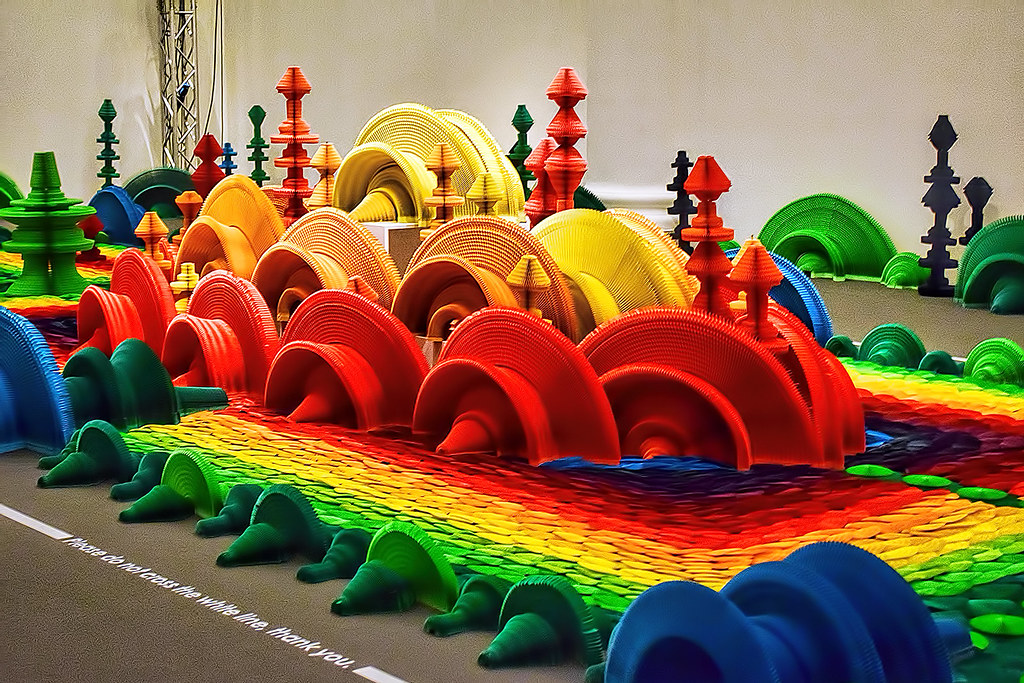
Some people claim that Li Hongbo’s art challenges conventional values. The sculptures initially appear solid and stationary but reveal surprising flexibility. Similarly, tradition and its virtues transcend their traditional classifications, emerging as liberated creations that embody contemporary art in its truest form. I believe this is why the artist creates sculptures of other famous works such as “Bust of David” or “Bust of Laocoonte” to combine both history and the present. Moreover, I strongly believe that there is a deeper meaning behind these sculptures. The artist might be making a statement about our physical bodies and their capabilities. Even when it seems that we are unable to do something, our bodies are capable of allowing us to do much more than is visible to the naked eye.
Despite his worldwide attention, personally, I only recently discovered Li Hongbo’s art. His creations have been showcased internationally in museums around the world. His most recent exhibitions have taken place at the Ludwigsburg Museum in Germany, the 18th Biennale of Sydney in Australia, and the Klein Sun Gallery in New York. Currently, the artist resides and works in Beijing, China.

 ART HUB
Leave a comment