
Contemporary art is a vibrant and dynamic realm where artists consistently challenge societal norms and push the boundaries of what is considered acceptable and conventional. Some artworks transcend mere aesthetic appreciation, stirring emotions, sparking debates, and challenging the status quo. In this exploration, we delve into five contemporary artworks that have left an indelible mark on the art world, prompting contemplation, stimulating dialogue, and evoking powerful reactions.
1. “Piss Christ” by Andres Serrano (1987)
Andres Serrano’s “Piss Christ” stands as an iconic and highly provocative photograph that continues to be a lightning rod for discussions about art, religion, and freedom of expression. The image depicts a plastic crucifix submerged in the artist’s own urine, presenting a direct confrontation between religious symbolism and the artist’s assertion of creative liberty. While some perceive it as a blasphemous assault on religious beliefs, others view it as a powerful critique of the commercialization of religious symbols and the erosion of their spiritual significance in contemporary society.

The controversy surrounding “Piss Christ” epitomizes the ongoing debate about the delicate balance between artistic expression and respect for religious beliefs. It serves as a reminder of the ability of art to challenge deeply held convictions and prompt critical reflections on the broader intersection of art and faith.
2. “Myra” by Marcus Harvey (1995)
Marcus Harvey’s “Myra” is a visually striking and deeply unsettling portrait of the notorious British serial killer Myra Hindley. Created using children’s handprints, this artwork challenges traditional artistic norms and raises ethical questions about portraying heinous acts and notorious criminals in art. The juxtaposition of the innocent medium with the dark subject matter forces viewers to confront the complexity of human nature and grapple with the limits of artistic expression.
In the realm of controversy, “Myra” raises fundamental questions about the responsibility of artists and the role of art in society. It challenges viewers to engage with uncomfortable truths and navigate the fine line between artistic freedom and societal sensitivities.
3. “The Physical Impossibility of Death in the Mind of Someone Living” by Damien Hirst (1991)
“The Physical Impossibility of Death in the Mind of Someone Living” by Damien Hirst is an iconic and provocative artwork featuring a preserved shark suspended in formaldehyde within a vitrine. This piece, emblematic of the Young British Artists (YBAs) movement, challenges conventional notions of life, death, and the boundaries of art. The artwork prompts viewers to contemplate the fragility and inevitability of mortality while igniting intense reactions and debates about the ethics of using animals in art and the commercialization of provocative works.

The shark in formaldehyde encapsulates the duality of attraction and repulsion, illustrating the power of art to elicit visceral responses and provoke discussions about the moral and ethical implications of artistic choices.
4. “The Holy Virgin Mary” by Chris Ofili (1996)
“The Holy Virgin Mary” by Chris Ofili caused a significant stir when exhibited at the Brooklyn Museum in 1999. This controversial artwork incorporates elephant dung and pornographic images, challenging traditional religious iconography and societal expectations. The piece ignited a fierce debate about cultural sensitivity, religious beliefs, and the boundaries of artistic freedom. By subverting conventional representations of religious figures, Ofili compels viewers to confront their preconceived notions about sacred imagery, multiculturalism, and the role of art as a catalyst for dialogue and social commentary.
“The Holy Virgin Mary” serves as a catalyst for discussions about the evolving landscape of art and its role in a diverse and pluralistic society, where differing interpretations and reactions shed light on the complexity of cultural dialogue.
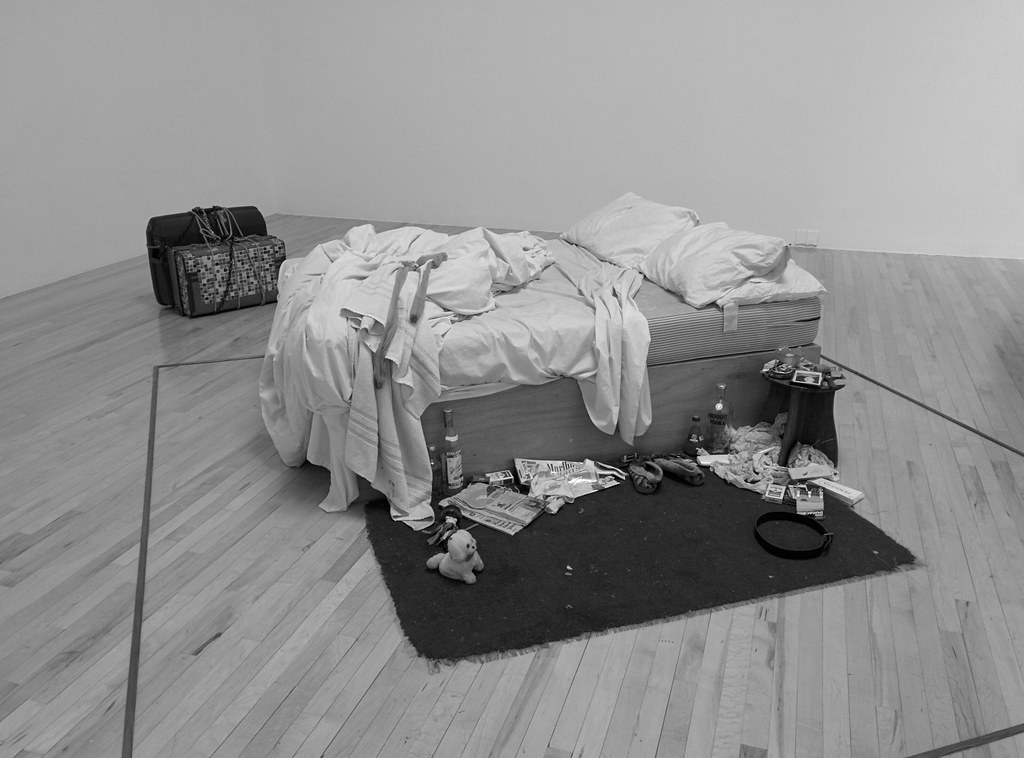
5. “My Bed” by Tracey Emin (1998)
“My Bed” by Tracey Emin is a raw and autobiographical installation artwork that challenges conventional notions of art and decorum. The piece presents Emin’s unmade bed surrounded by personal items such as condoms, cigarette butts, and empty bottles, offering a glimpse into her struggles with depression and personal experiences. It confronts themes of vulnerability, femininity, and self-exploration, inviting viewers to explore the intimate and often messy aspects of human existence.
In the realm of controversy, “My Bed” sparks discussions about what constitutes art and who gets to define it. It also prompts reflections on the role of personal narratives in creative expression and the boundaries of privacy in the context of art as a mirror to society.

In conclusion, contemporary art often serves as a conduit for challenging, confronting, and stimulating dialogue. The controversial artworks discussed here have successfully accomplished these goals, leaving a lasting impact on the art world and challenging conventional perspectives on art, society, and ethics. While controversy is inherent in these works, it is through these debates that we continue to evolve our understanding of art and its role in shaping our culture and beliefs. These artworks encourage us to delve deeper, question further, and expand our horizons as we grapple with the complexities of the human experience through the lens of contemporary art.

 ART HUB
Leave a comment