
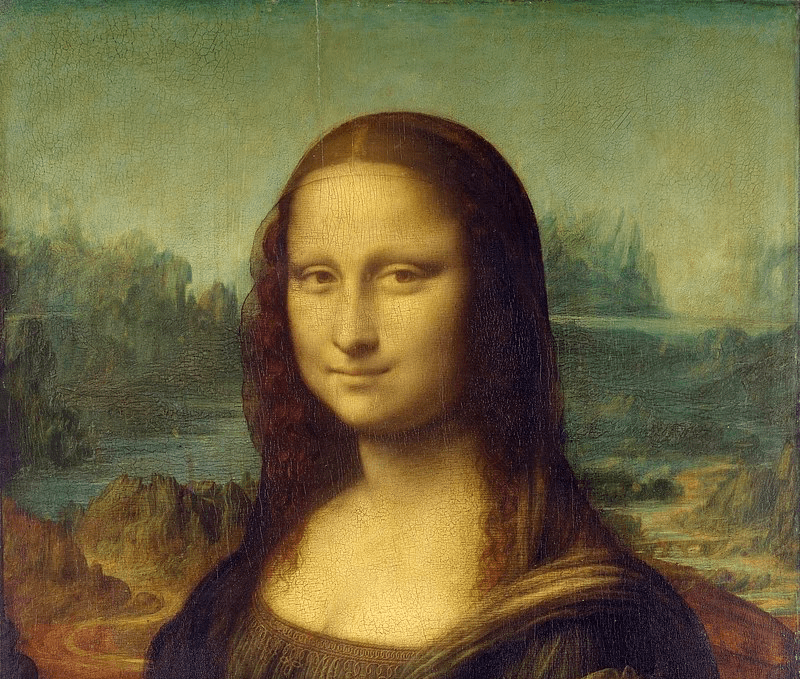
The Mona Lisa, an epitome of art and an enigma in its own right, continues to captivate and surprise the art world. Despite being one of the most extensively analyzed and celebrated masterpieces globally, the Mona Lisa has once again unveiled secrets that shed light on Leonardo da Vinci’s experimental genius.
In a recent breakthrough, scientists employed X-ray technology to delve into the intricate chemical composition of a minute speck from the renowned painting. The results of this endeavor suggest that Leonardo da Vinci might have been in the midst of an artistic experiment during the creation of the Mona Lisa.
A study published in the esteemed Journal of the American Chemical Society detailed the distinct chemical composition found in the oil paint used for the base layer of the Mona Lisa. The revelation centers around the rare chemical compound known as plumbonacrite, affirming a longstanding theory among art historians. It appears that Leonardo utilized lead oxide powder, giving rise to plumbonacrite, to enhance the texture and accelerate the drying process of the paint layers in his masterpiece.
Victor Gonzalez, the lead author of the study and a chemist at CNRS in France, emphasized Leonardo’s experimental nature, stating, “He was someone who loved to experiment, and each of his paintings is completely different technically.” The collaboration between scientists and art historians further elucidated that this specific technique was tailored for the ground layer of the Mona Lisa.
The true marvel lies in the detection of plumbonacrite, an extraordinary feat considering its minuscule presence. The minute speck of paint, barely visible to the naked eye and finer than a strand of hair, was analyzed for its atomic structure using X-rays generated by a synchrotron—a sophisticated machine that accelerates charged particles to nearly light speed.
Though rare, this isn’t the first instance of plumbonacrite being identified in the works of Old Masters. In fact, Gonzalez and his team previously detected the same chemical compound in a painting by Rembrandt. This revelation suggests a fascinating continuity of paint recipes that have transcended centuries and artistic legacies.
As Gonzalez aptly remarked, “There are plenty, plenty more things to discover, for sure. We are barely scratching the surface.” The study represents a small yet significant contribution, a stepping stone toward unraveling the rich tapestry of secrets concealed within the timeless allure of the Mona Lisa, bringing us closer to comprehending the multifaceted brilliance of Leonardo da Vinci’s artistic prowess.



 ART HUB
Leave a comment