
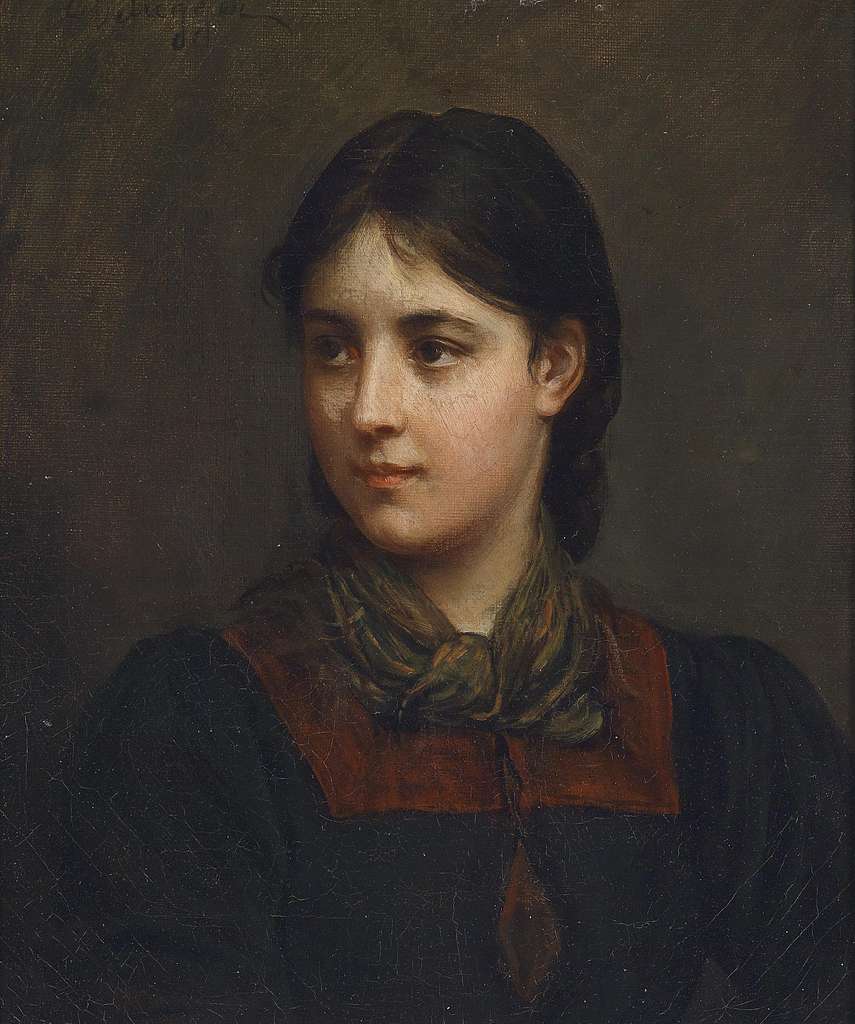
In a startling revelation, a former museum employee in Germany has admitted to a daring scheme involving swapping original paintings with forgeries and selling the genuine artworks to finance an opulent lifestyle. The 30-year-old technician stole three valuable paintings from the Munich museum between May 2016 and April 2018, ultimately replacing them with counterfeit versions and consigning the authentic pieces to a local auction house.
On September 11, the Munich District Court handed down a suspended prison sentence of one year and nine months to the culprit, in addition to ordering restitution of over €60,000 ($63,500) to the undisclosed German museum.
The man’s extravagant spending spree included acquiring a new apartment, high-end wristwatches, and even a Rolls-Royce. The stolen artworks included Franz Stuck’s Das Märchen vom Froschkönig (The Fairy Tale of the Frog King) (1891), Franz von Defregger’s Zwei Mädchen beim Holzsammeln im Gebirge (Two Girls Gathering Wood in the Mountains), and Eduard von Grützner’s Die Weinprüfung (Tasting the Wine).
For one of the stolen pieces, Das Märchen vom Froschkönig, the man successfully sold it at Ketterer Kunst auction house in May 2017, disguising the original as a family heirloom. It fetched €70,000 ($74,000), of which he pocketed approximately $49,127.40 ($52,000) after auction house fees. Subsequently, he attempted to sell a fourth painting, Dirndl by Franz von Defregger, but the sale was unsuccessful.
The affected German museum is now striving to retrieve the pilfered paintings. This incident raises concerns about the vulnerability of museum collections in storage and the challenges institutions face in safeguarding their valuable holdings.
“The defendant shamelessly exploited the opportunity to access the storage rooms in the employer’s buildings and sold valuable cultural assets to secure an exclusive standard of living for himself,” the verdict underscored.
This audacious act, reminiscent of a recent British Museum scandal, underscores the pressing need for museums to strengthen security measures and meticulously catalog their extensive collections to ensure their preservation and integrity.


 ART HUB
Leave a comment