
In the tumultuous realm of contemporary art, where boundary-pushing creations often provoke intense discussions, a recent episode involving Danish artist Jens Haaning has stirred the pot once again. Aalborg Museum, in 2021, entrusted Haaning with a hefty sum of $75,000 to recreate two of his renowned installations – “Danish Average Annual Income” and “Austrian Average Annual Income.”
The funds were not intended as compensation for the artworks; rather, they were to be visibly affixed to the canvas, symbolically representing the average annual income of individuals in Denmark and Austria.
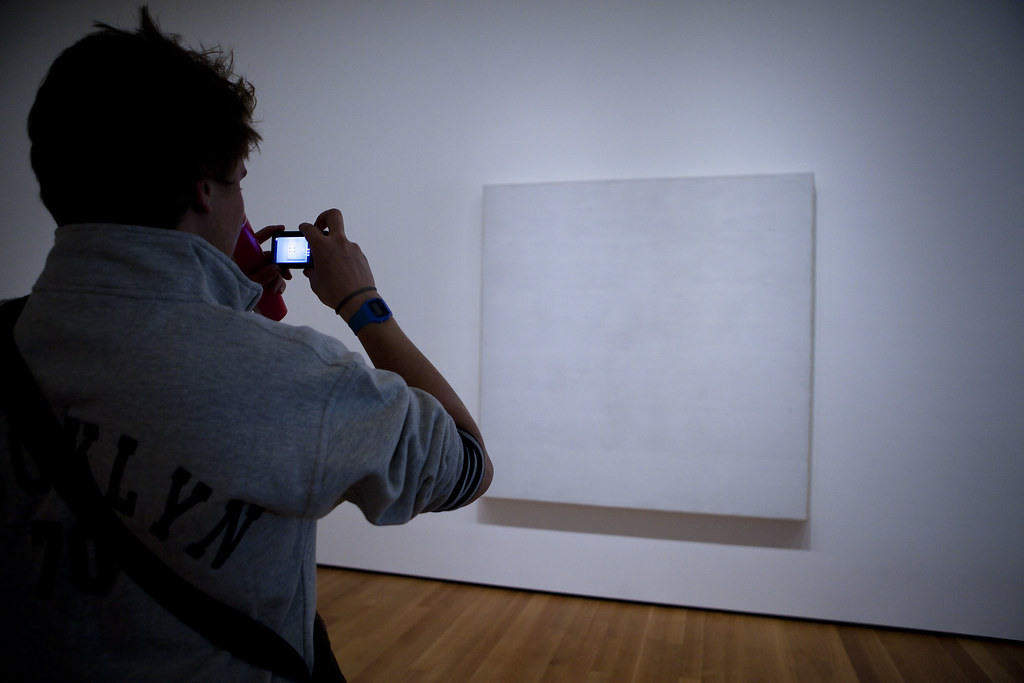
In a surprising twist, Haaning presented the Museum of Art with something entirely unexpected – two pristine white canvases, boldly titled “Take the Money and Run.” The artist asserted that these minimalist creations were a stark embodiment of the exhibition’s theme, “Future Work,” symbolizing the disheartening reality of low wages and the discord between compensation and labor.
Haaning argued that the funds allocated by the museum were inadequate to truly portray the yearly earnings in the mentioned countries. A deficit of 3,300 euros would have to be borne by the artist himself, adding a layer of personal sacrifice to the narrative.
However, the museum failed to grasp the depth of Haaning’s conceptualization and took legal action against the artist. Recently, a court ruling mandated Haaning to reimburse the Aalborg Museum, deducting $5,700 – the artist’s fee for the exhibition.
In an unexpected twist of fate, Haaning finds himself in a precarious position, unable to fulfill the court’s order due to having exhausted the funds. This turn of events further amplifies the debate surrounding art, commerce, and the radical statements artists make through their work.
Haaning’s audacious act challenges the very essence of art, forcing us to contemplate its purpose and potential for societal commentary. As the art world grapples with the aftermath of this controversy, it remains to be seen how this daring statement will shape the discourse around art and socio-economic disparities in the years to come.


 ART HUB
Leave a comment